10 Easy Training Ideas for Senior Dogs
Older dogs may move a little more slowly, sleep longer, or take extra time to learn something new, but that does not mean their learning days are over. Senior dogs can continue enjoying mental stimulation, gentle training, and meaningful activities that strengthen their relationship with the people they love. Whether your dog is a loyal Labrador, a gentle Golden Retriever, a small mixed breed, or another beloved companion, the right approach can make training comfortable and rewarding at any age.
The best Training Ideas for Senior dogs focus on patience, short sessions, gentle movement, and rewards that motivate without causing stress. As dogs age, their hearing, vision, mobility, and stamina may change, so training should adapt to their individual needs. You do not need complicated exercises or demanding routines to keep an older dog engaged. Simple activities such as practising familiar commands, finding treats, settling on a comfortable mat, and learning easy new cues can make everyday life more enjoyable.
1. Practise Familiar Commands in Short Sessions
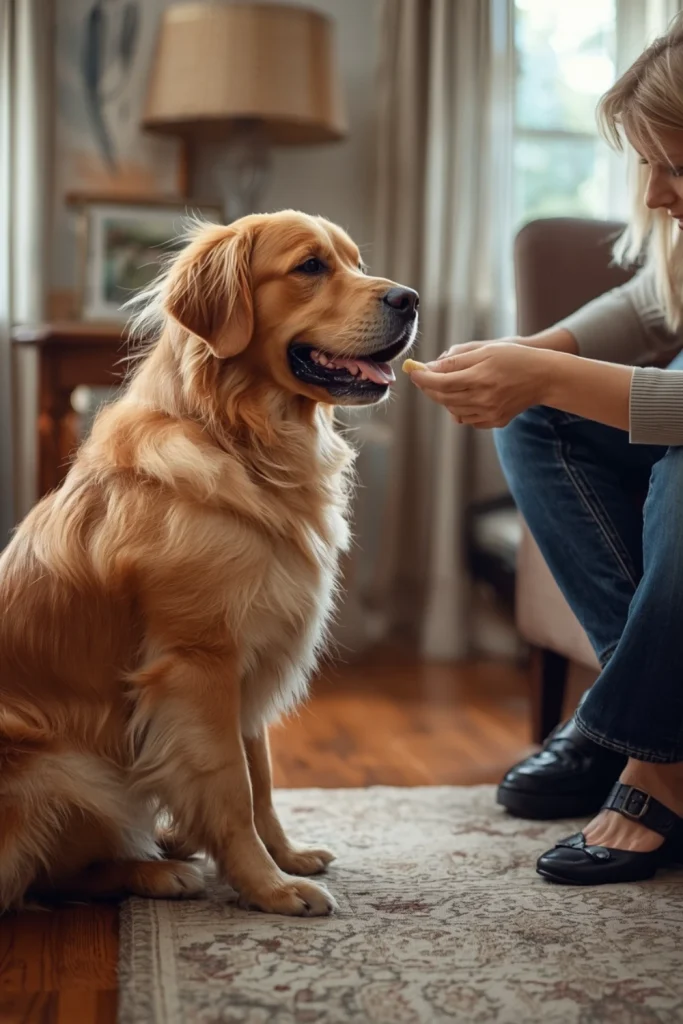
One of the easiest training ideas for senior dogs is to revisit commands they already know. Simple cues such as “sit,” “come,” “stay,” or “touch” can provide mental stimulation without requiring strenuous exercise. Familiar training can also build confidence because your dog has a good chance of succeeding. Choose a quiet room, use a comfortable pace, and reward your dog for responding. If standing or sitting is difficult, focus on commands that do not require uncomfortable movement.
Keep each session brief and stop while your dog is still comfortable and interested. Some senior dogs enjoy several short sessions spread throughout the day, while others prefer just one or two. Use treats, praise, gentle play, or another suitable reward your dog enjoys. Avoid repeating a cue insistently if your dog does not respond. Instead, make the task easier, check whether your dog understood the signal, and finish with an activity that feels successful.
2. Teach Your Dog to Touch Your Hand
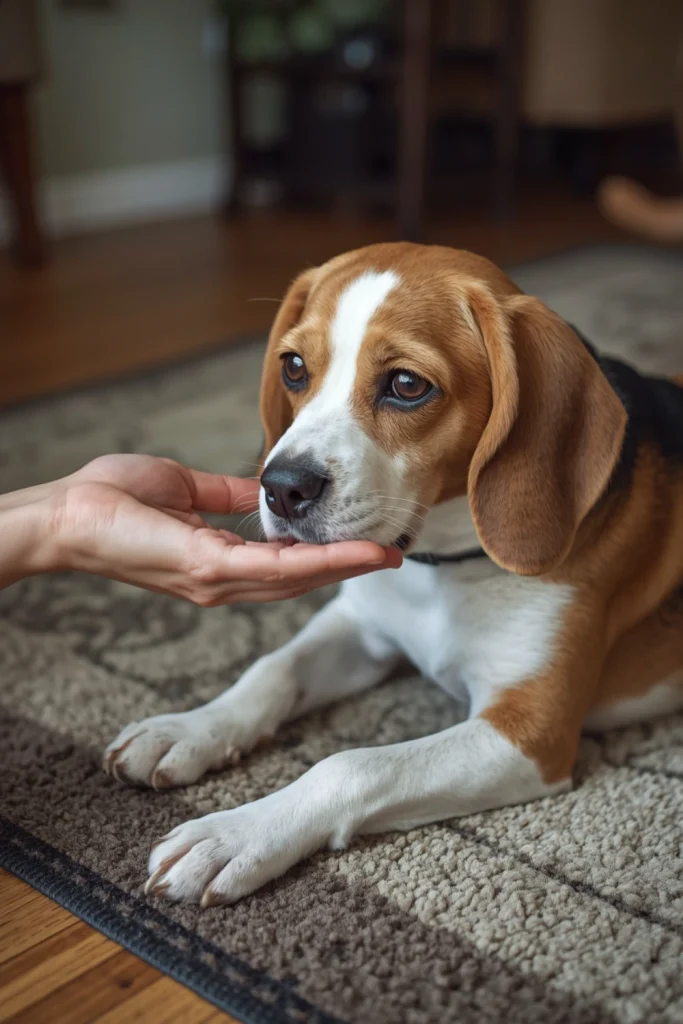
Hand targeting is a gentle training activity that can be useful for senior dogs. It involves teaching your dog to touch your open palm with its nose when you present your hand. This simple behaviour can encourage attention, provide mental stimulation, and help guide your dog a short distance without pulling on a leash or collar. It is often easier on older dogs than exercises that require repeated sitting, standing, or turning. Begin while your dog is comfortable and choose a position that does not require it to stretch awkwardly.
Hold your open hand a few inches from your dog’s nose. When your dog sniffs or touches your palm, immediately reward the behaviour. If your dog does not respond, move your hand slightly closer without crowding its face. Once the dog understands the activity, add a cue such as “touch.” Avoid practising if your dog is uncomfortable with hands near its face. Hand targeting should remain a voluntary, positive game, not a way to force an older dog to move when it would rather rest.
3. Play Gentle Treat-Finding Games
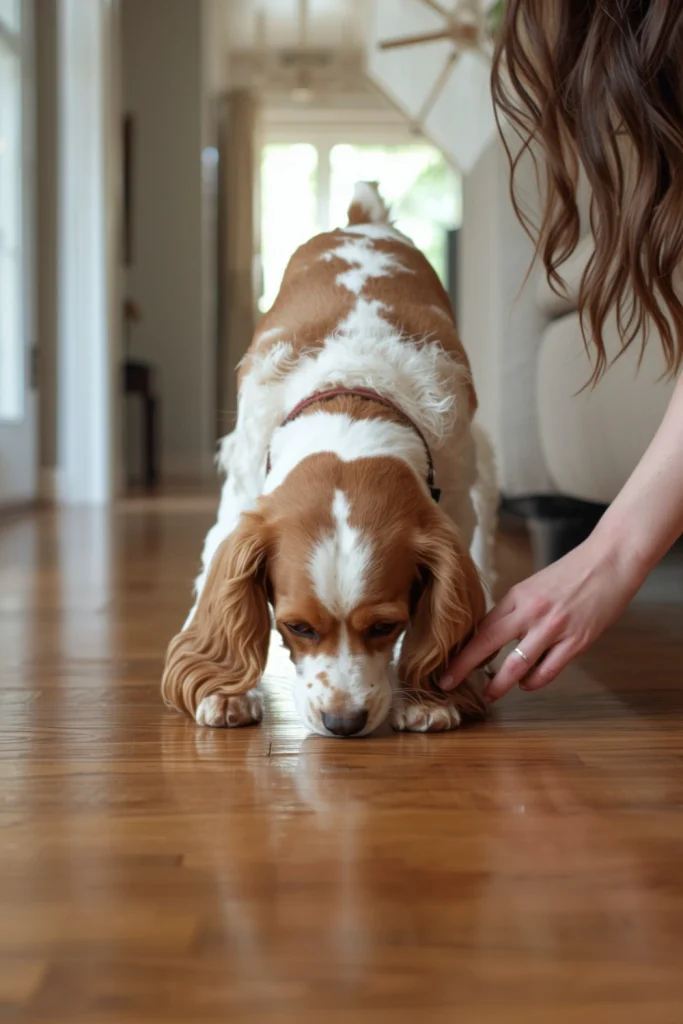
Treat-finding games allow senior dogs to use their powerful sense of smell without needing to run or jump. Sniffing activities can be especially appealing to dogs that have reduced stamina or prefer calmer forms of enrichment. Start by placing a few small treats in easy-to-find locations around a single room. Encourage your dog to investigate at its own pace, and allow it to use its nose rather than directing every step. Choose a familiar, uncluttered area to help your dog move around safely.
As your dog becomes comfortable, hide treats beside a chair leg, near its bed, or behind an easily accessible toy. Keep the treats visible or only partly hidden at first, especially if your dog has vision difficulties. Avoid locations that require climbing, squeezing into tight spaces, or stepping over obstacles. Use treats appropriate for your dog’s diet and count them toward its daily food allowance. If your dog has allergies or a medical diet, use veterinarian-approved rewards or pieces of its regular food.
4. Teach a Comfortable Settle on a Mat
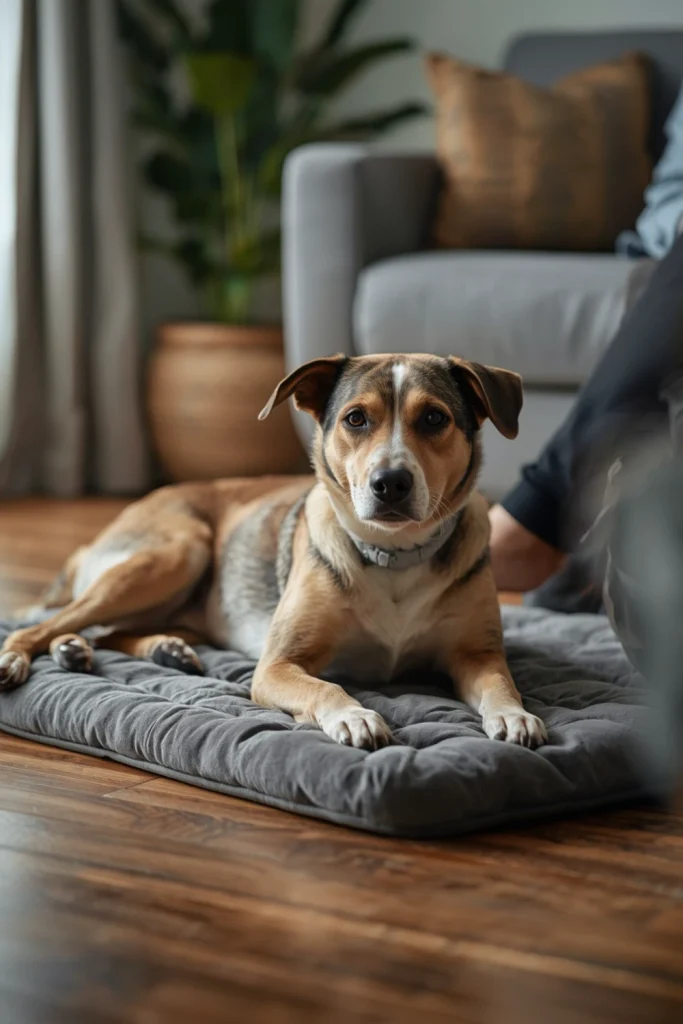
Learning to settle on a mat can help a senior dog relax while you work, prepare meals, or welcome visitors. Older dogs often benefit from a predictable resting place that supports their body and keeps them away from busy walkways. Choose a mat or bed with comfortable cushioning and a non-slip base so your dog can lie down and stand up more easily. Place it in a quiet area where your dog can rest without being disturbed by children, other pets, or household activity.
Begin by rewarding your dog for looking at the mat, approaching it, or standing on it voluntarily. If your dog chooses to lie down, quietly offer another reward. Add a cue such as “settle” only after your dog begins to understand the activity. Never push your dog onto the mat or insist on a particular posture if it seems uncomfortable. Keep the resting area available outside training sessions as well. The goal is to create a positive association with relaxation, not to use the mat as a place of confinement.
5. Practise Gentle Recall Indoors
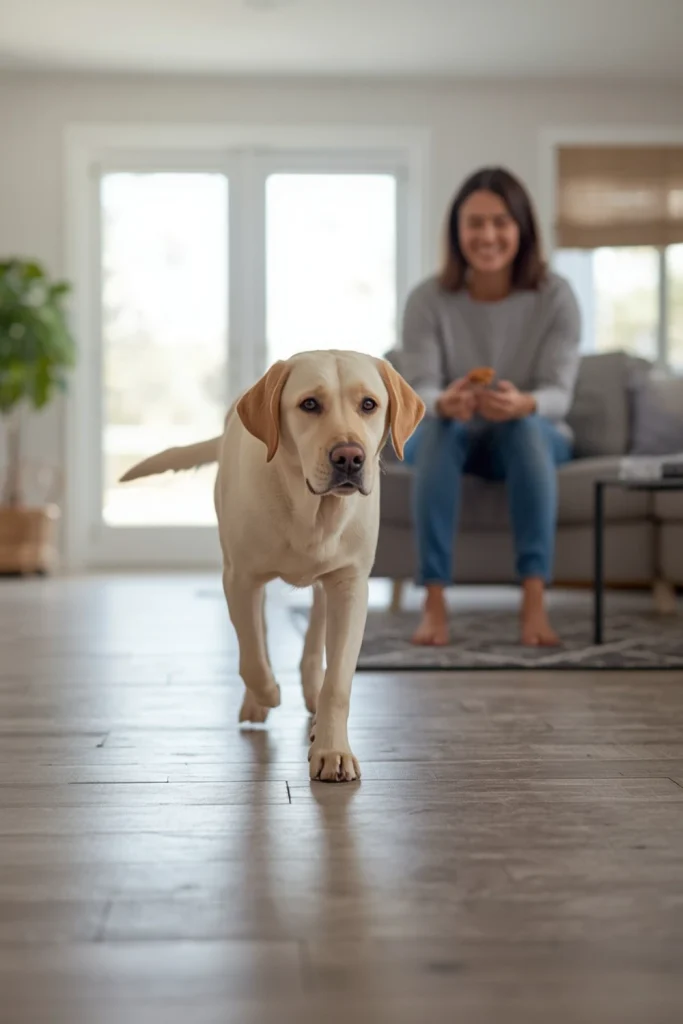
Recall training teaches a dog to come toward its owner when called. For senior dogs, indoor recall can be an easy way to practise attention and movement without requiring a long walk or a physically demanding game. Choose a quiet hallway or spacious room with a non-slip floor. Stand a short distance from your dog, say its name followed by a familiar recall cue, and reward it for moving toward you. If walking is uncomfortable, shorten the distance or practise from a seated position.
Make returning to you a pleasant experience by using a calm voice and a reward your dog enjoys. Avoid calling your dog repeatedly when it is unlikely to respond, especially if its hearing has changed. You can pair a verbal cue with a clear hand signal or another visual signal if your dog has difficulty hearing. Keep pathways free of furniture and obstacles, and do not ask your dog to hurry or turn sharply. If your dog has mobility limitations, ask your veterinarian which movements are appropriate before increasing the exercise.
6. Use Gentle Puzzle Toys for Mental Stimulation
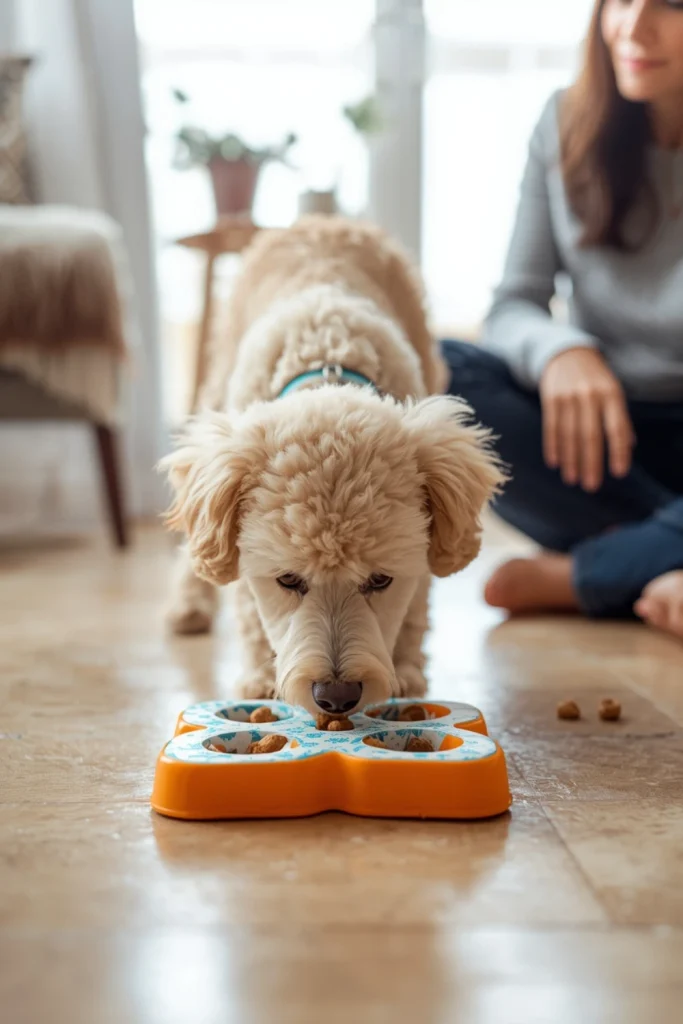
Puzzle toys give senior dogs an opportunity to solve simple problems and earn a reward. These activities can be useful when an older dog is less interested in vigorous play but still enjoys food, sniffing, and exploring. Start with an easy puzzle that allows your dog to access the reward without complicated movements. For example, you might use a simple treat-dispensing toy or place a few pieces of kibble in a shallow puzzle designed for dogs. Supervise the activity to make sure your dog uses it safely.
Introduce the toy gradually and show your dog how to access the reward if necessary. If the puzzle causes frustration, choose an easier version rather than expecting your dog to keep trying. Avoid toys with small parts that could be swallowed, and check that the material is suitable for your dog’s chewing ability. Senior dogs with dental problems may need soft toys or food-based activities that do not require hard chewing. Keep sessions short, and put the toy away if your dog becomes tired or loses interest.
7. Practise Gentle Grooming and Handling
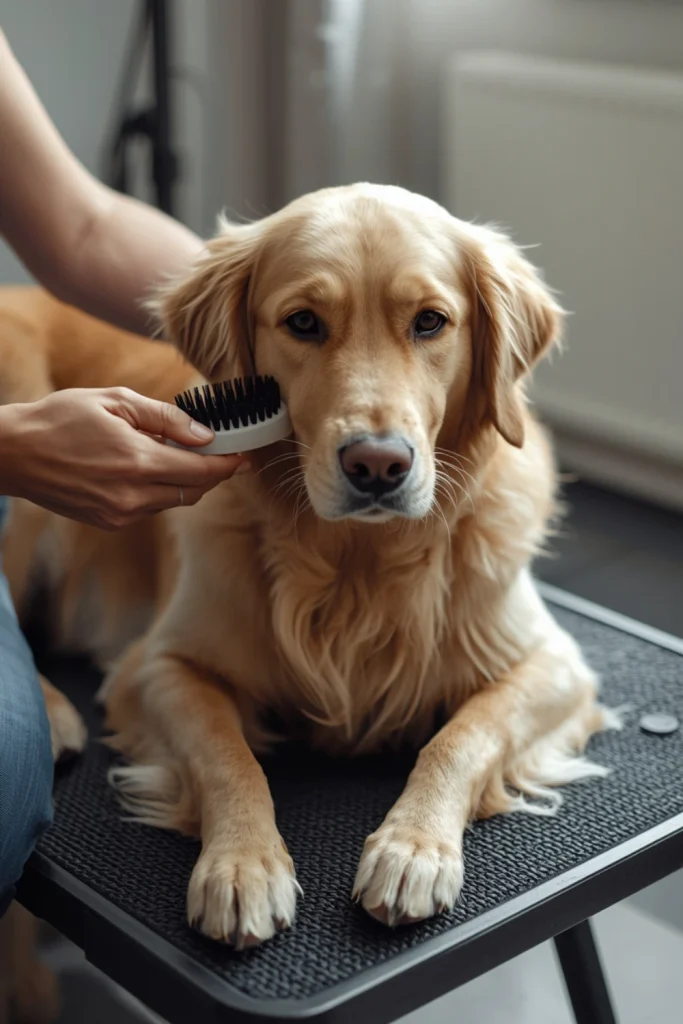
Training a senior dog to feel comfortable with gentle handling can make daily care easier. Older dogs may need more frequent brushing, nail checks, coat care, and health monitoring, but they may also develop sensitive joints or discomfort when touched in certain areas. A dog that previously enjoyed brushing may begin moving away if a painful area is handled. Take your time, use gentle movements, and never assume that an older dog is being difficult when it resists being touched.
Start with a brief touch on an area your dog normally enjoys, then offer praise or a small reward. Gradually practise touching the shoulders, back, paws, or ears only if your dog remains comfortable. Use a supportive surface that reduces slipping, and let your dog change position when needed. Keep grooming sessions short and provide breaks. If your dog growls, flinches, suddenly dislikes handling, or appears painful, stop and consult your veterinarian. A health assessment can help determine whether the problem is related to discomfort rather than training.
8. Introduce Easy New Tricks
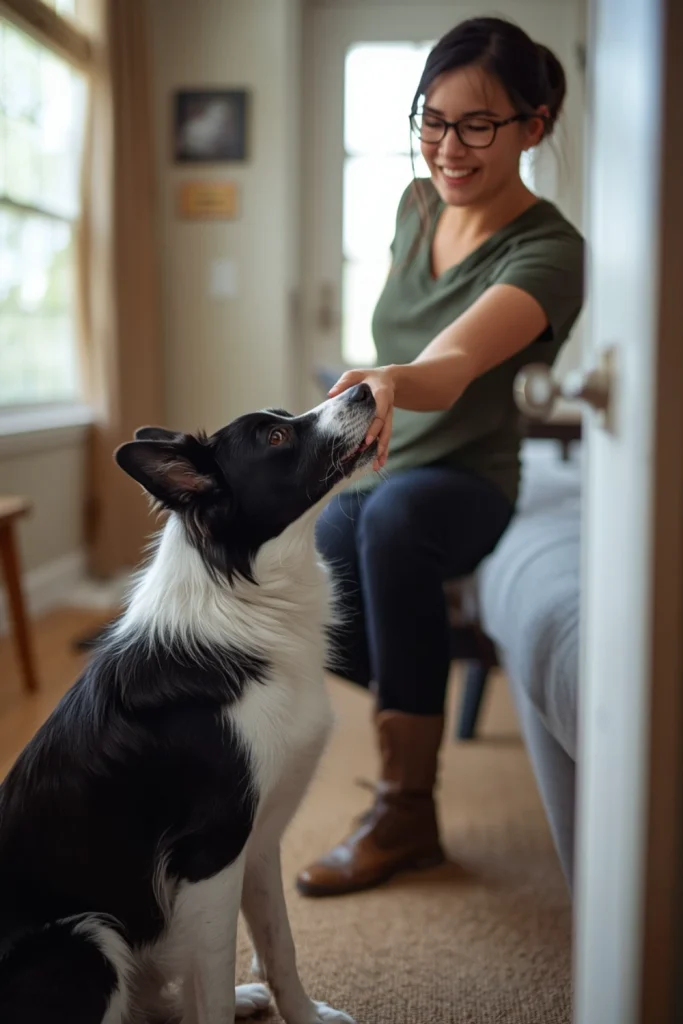
Senior dogs can enjoy learning new tricks when the activities are chosen to suit their abilities. A new cue gives your dog something interesting to practise and helps maintain a positive connection with you. Tricks do not have to involve jumping, spinning, or standing on the back legs. Simple activities such as touching a target, looking toward you when called, placing the chin on a soft cushion, or moving toward a mat can provide rewarding mental exercise without demanding too much physical effort.
Choose one trick and break it into small steps. Reward the first sign of the behaviour you want, then gradually build on that success. If your dog finds a movement uncomfortable, change the trick rather than trying to make it perform. You can also teach a new verbal cue for an action your dog already performs naturally. Keep sessions relaxed and avoid comparing your senior dog with a puppy or younger adult dog. The goal is to enjoy learning together, not to achieve perfect performance.
9. Practise Calm Greetings With Family and Visitors
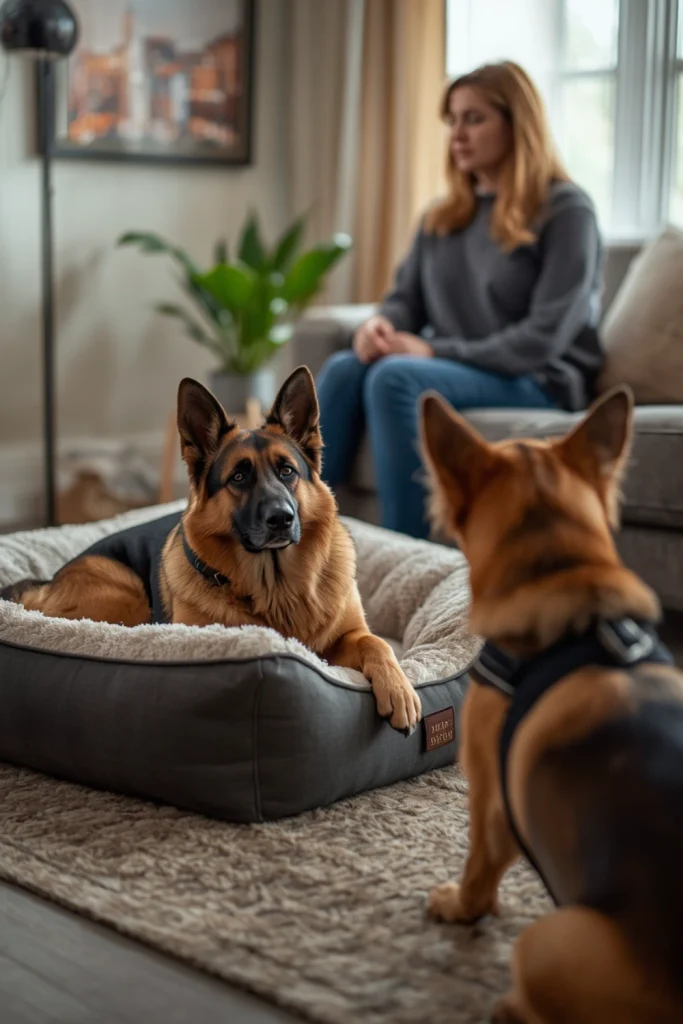
Older dogs may become less tolerant of noisy greetings or sudden movements as their hearing, vision, and comfort change. Teaching calm greeting routines can help visitors interact respectfully while giving your dog more control over the situation. Instead of encouraging everyone to approach at once, let your dog remain in a familiar, comfortable space and allow it to decide whether to come closer. Calm greetings are particularly important when children or energetic pets are present.
Reward your dog for remaining relaxed when someone enters the room. Visitors should avoid leaning over the dog, hugging it, or touching sensitive areas without permission. If your dog prefers to observe from its bed, allow it to do so. A familiar mat, quiet room, or baby gate can provide a safe retreat when social activity becomes overwhelming. Watch for signs of discomfort such as turning away, stiffening, growling, or trying to leave. Never force an interaction, and seek professional advice if your dog develops new fear or aggression.
10. Create a Gentle Daily Training Routine
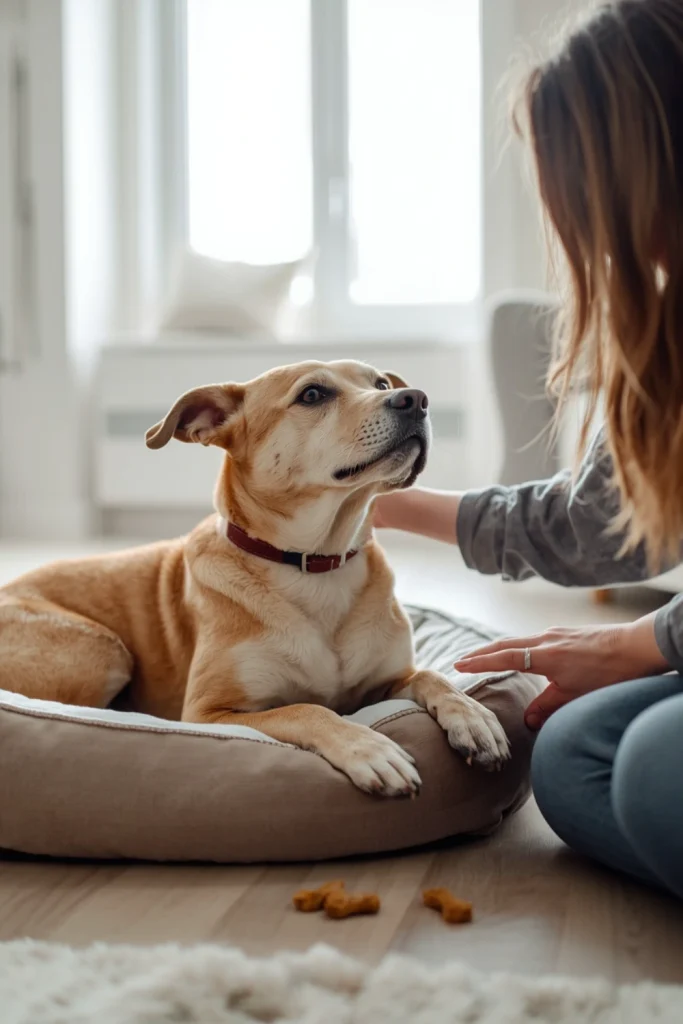
A predictable routine can help senior dogs feel comfortable and give them regular opportunities for mental engagement. Rather than scheduling one long training session, spread small activities throughout the day. You might practise a familiar command in the morning, play a treat-finding game after lunch, and work on a settle cue in the evening. Include enough time for rest, bathroom breaks, gentle movement, and affection. A routine should make life easier for your dog, not add pressure to an already tiring day.
Adapt the schedule according to your dog’s health, mobility, attention span, and personal preferences. Some older dogs enjoy food-based games, while others prefer quiet interaction or short training sessions with praise. If your dog has arthritis, vision loss, hearing changes, or another medical concern, ask your veterinarian how to modify activities safely. Watch how your dog responds and adjust the plan when necessary. A few comfortable minutes of positive engagement can be more valuable than a longer session that leaves your dog exhausted or uncomfortable.
Conclusion
The best Training Ideas for Senior dogs are gentle, rewarding, and adapted to their individual abilities. Practising familiar commands, teaching hand targeting, playing treat-finding games, encouraging calm settling, and introducing simple tricks can provide valuable mental stimulation without demanding excessive physical effort. Consistent routines also help older dogs enjoy positive interactions with their owners.
Remember that every senior dog ages differently. Some remain playful and eager to learn, while others need more rest, extra support, or activities that can be performed comfortably from a lying position. Be patient, reward small successes, and pay attention to signs of discomfort. With a thoughtful approach, training can remain a rewarding part of your dog’s life, helping you maintain a strong bond and make its later years more comfortable and engaging.