
10 Simple Steps to Brush Your Dog’s Teeth
Brushing your dog’s teeth may seem like a small task, but it can make a big difference to your pet’s comfort and long-term health. Just like people, dogs can develop plaque, tartar, gum inflammation, and other dental problems. Without regular care, these issues may cause bad breath, painful chewing, and even tooth loss. The good news is that you do not need to be a professional groomer to begin caring for your dog’s teeth at home.
Learning how to Brush Your Dog’s Teeth is easier when you follow a simple routine and give your pet time to adjust. With a suitable toothbrush, dog-safe toothpaste, gentle handling, and positive rewards, you can turn dental care into a comfortable daily habit. This beginner-friendly guide explains ten simple steps to help you get started safely.
1. Choose the Right Time and a Calm Place
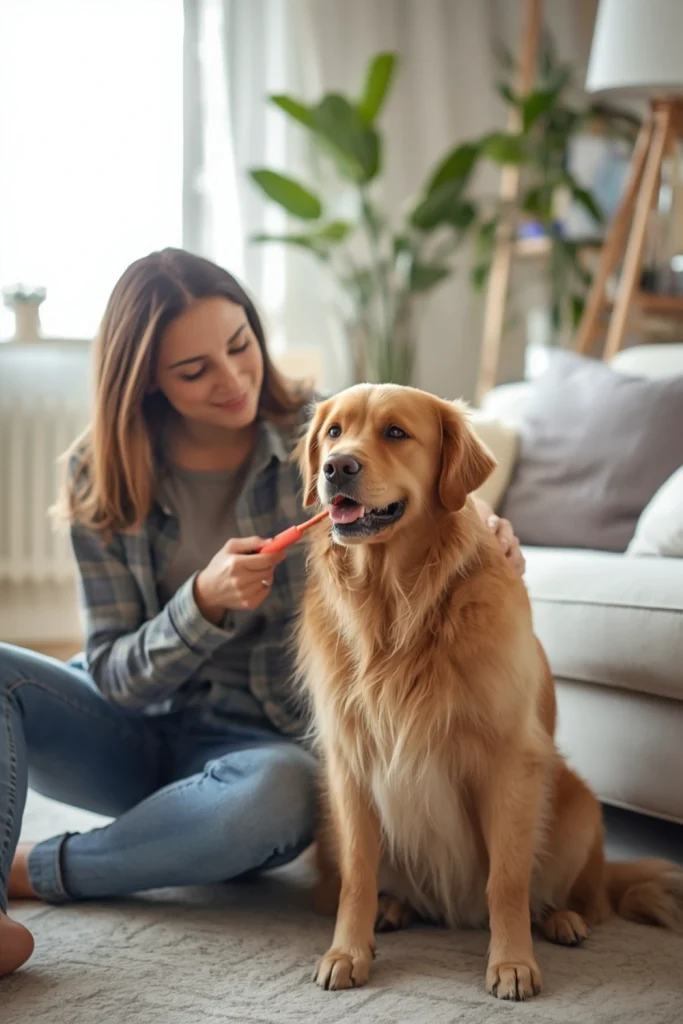
Before you begin brushing, choose a time when your dog is relaxed and comfortable. Avoid starting immediately after an exciting play session, when your dog is full of energy, or when your pet is tired and irritable. A quiet moment after a gentle walk or during a relaxed evening routine may work better. Choose a familiar place where your dog feels safe, such as a quiet room or a comfortable spot on the floor. A peaceful environment helps reduce distractions and makes it easier for your dog to focus on you.
Keep your first dental care sessions short. You do not need to brush every tooth perfectly on the first day. Begin by sitting beside your dog and gently touching the cheeks or muzzle. Let your pet become comfortable with your hands near the mouth. If your dog stays relaxed, offer praise and continue for a few seconds. If your dog becomes uncomfortable, stop and try again later. A calm beginning can help prevent fear and make future brushing sessions easier.
2. Select a Toothbrush Made for Dogs
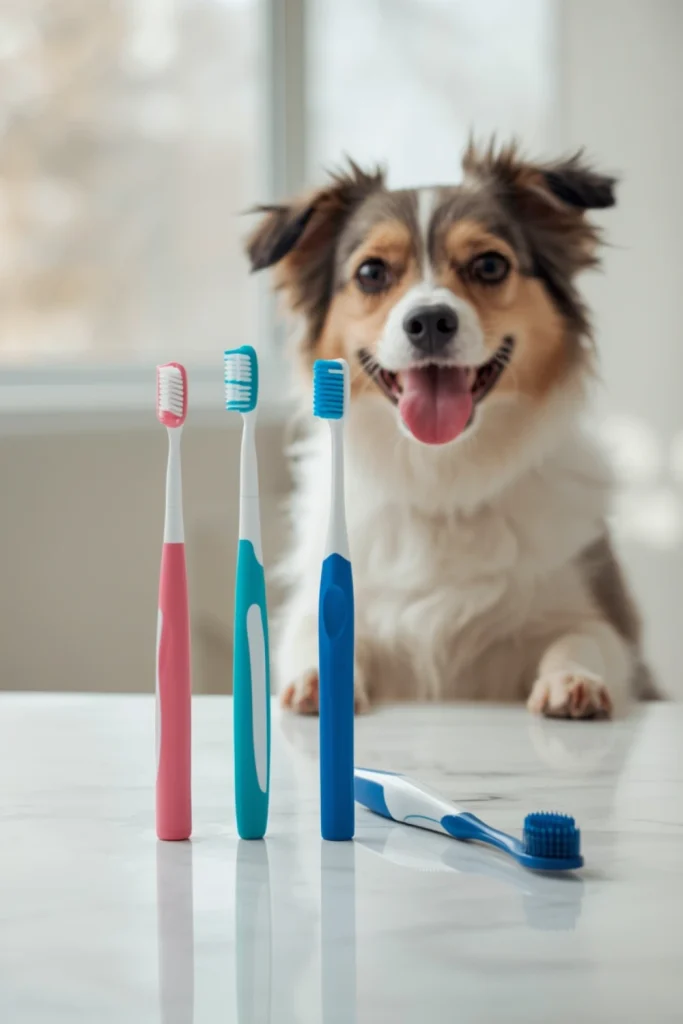
Choosing a suitable toothbrush is an important step in building a safe dental routine. Dog toothbrushes are available in different shapes and sizes to suit different mouths. Some have small angled heads that make it easier to reach the back teeth, while others have soft, flexible bristles. A small dog may need a compact brush, whereas a larger dog may be more comfortable with a longer handle and a bigger brush head. The most important features are soft bristles, comfortable handling, and a size that fits your dog’s mouth.
You can also consider a dog finger toothbrush if your pet is nervous around traditional toothbrushes. It fits over your finger and allows you to introduce gentle brushing with more control. However, it is important to use it carefully and avoid putting your finger where your dog may bite. Never use a hard-bristled human toothbrush if it irritates your dog’s gums. Replace the toothbrush when the bristles become bent, worn, or damaged. If you are unsure which style is best, ask your veterinarian for a recommendation.
3. Buy Toothpaste Specifically Made for Dogs

Always choose toothpaste that is formulated specifically for dogs. Human toothpaste is not suitable because dogs usually swallow toothpaste instead of spitting it out. Some human products contain ingredients that may be harmful to pets, including xylitol, an artificial sweetener that is toxic to dogs. Human toothpaste may also contain fluoride and foaming ingredients that are not intended to be swallowed. Using the correct product is an essential part of making your dog’s dental routine safe.
Dog toothpaste comes in different pet-friendly flavors, which may make brushing more enjoyable. Some dogs prefer poultry-flavored toothpaste, while others may accept a different flavor. Allow your dog to smell the tube and taste a tiny amount before using a toothbrush. Check the ingredients and follow the label instructions. If your dog has allergies, a sensitive mouth, or an existing health problem, ask your veterinarian before selecting a product. Never use homemade toothpaste mixtures or household cleaning products as a substitute for dog toothpaste.
4. Let Your Dog Get Used to Mouth Handling

Many dogs are uncomfortable when someone touches their mouths, especially if they have never experienced dental care before. Instead of immediately introducing a toothbrush, spend a few days helping your dog become familiar with gentle mouth handling. Begin by touching the side of your dog’s face, cheeks, and chin. Keep your movements slow and relaxed. Reward your dog for staying calm, even if you only manage to touch the muzzle for a second or two. These small experiences help build trust.
When your dog accepts facial handling, gently lift one lip to look at the visible teeth. Do not force the mouth open or hold your dog’s head tightly. Repeat the process on both sides, keeping each attempt short. If your pet pulls away, give some space and try again later. Never punish growling, struggling, or signs of fear. These behaviors may communicate discomfort. If mouth handling causes pain or a strong defensive reaction, arrange a veterinary examination before continuing.
5. Introduce the Toothpaste Before Brushing
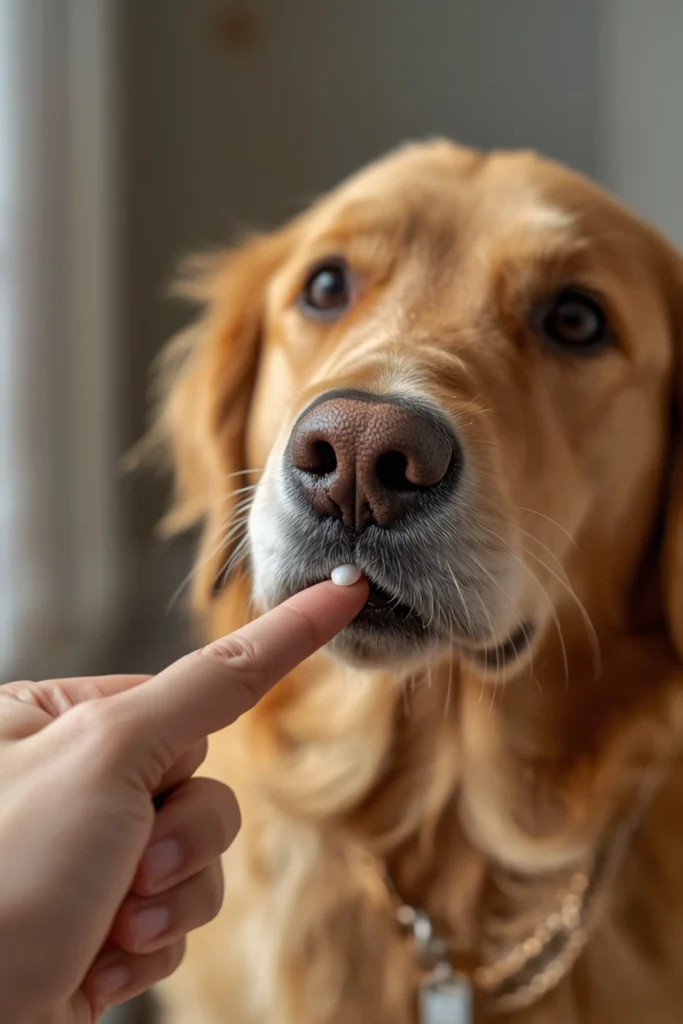
Before using the toothbrush, give your dog a chance to become familiar with the toothpaste. Place a very small amount of dog-specific toothpaste on your clean fingertip and allow your pet to sniff and taste it. Many dogs become more interested when they discover a pleasant flavor. This first introduction helps your dog understand that the new product is not something to fear. Keep the experience positive and avoid placing too much toothpaste in the mouth.
Once your dog accepts the taste, gently rub a little toothpaste onto the outside of a few teeth using your finger, if your dog is comfortable with this. Focus on making the experience brief and relaxed rather than trying to clean the entire mouth. Praise your dog after each successful attempt. You can repeat this step over several sessions before introducing the toothbrush. If your dog dislikes a particular toothpaste flavor, ask your veterinarian about an alternative product designed for dogs.
6. Start Brushing the Front Teeth Gently
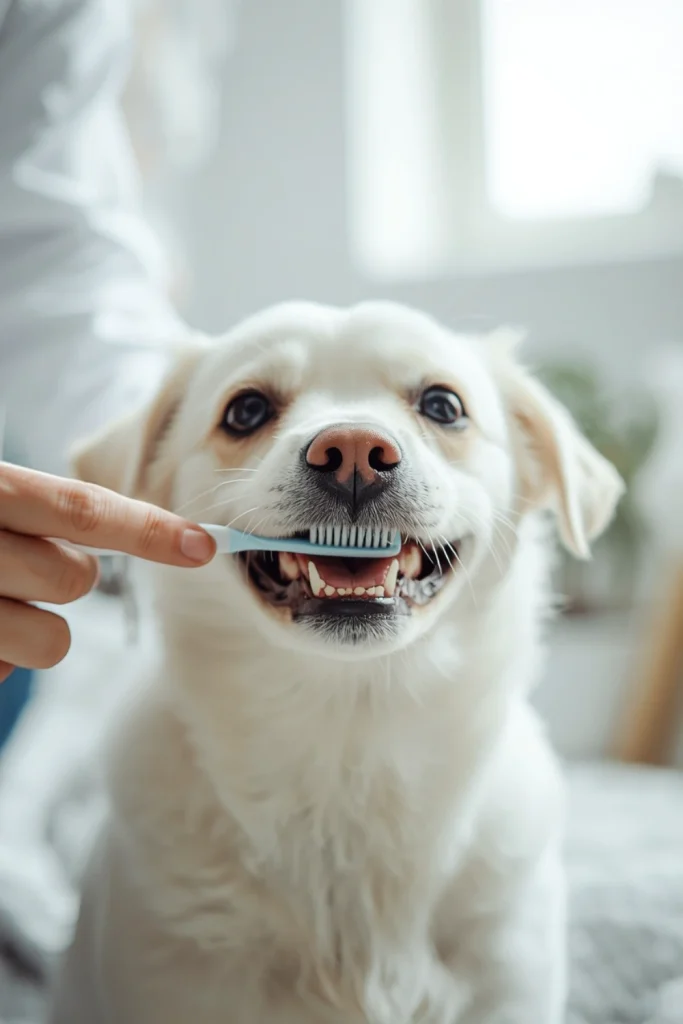
Once your dog is comfortable with the toothbrush and toothpaste, begin with the front teeth. Apply a small amount of dog toothpaste to the soft bristles. Gently lift your dog’s lip and brush a few visible teeth using small, controlled movements. Keep the toothbrush at a comfortable angle and avoid pressing hard against the gums. The aim is to remove plaque from the tooth surfaces without causing irritation. A short first session is perfectly acceptable, even if you only brush a few teeth.
Pay attention to your dog’s body language throughout the process. A relaxed dog may remain still, accept gentle handling, and show interest in the toothpaste. If your pet turns away, stiffens, cries, or tries to escape, stop and give them a break. Do not hold the mouth open forcefully. Gradually increase the brushing time as your dog becomes more comfortable. If you notice bleeding, swelling, or signs of pain, stop brushing and contact your veterinarian for advice.
7. Clean the Outer Surfaces of the Back Teeth

After your dog becomes comfortable with front-tooth brushing, gradually move toward the side and back teeth. These areas are important because plaque can collect along the outer surfaces near the gumline. Gently lift the lip and brush the visible outside surfaces using small, soft movements. You generally do not need to force your dog’s mouth open widely. Many dogs allow easier access to the outer tooth surfaces when their mouths remain mostly closed and their lips are gently lifted.
Work from one side to the other, giving your dog short breaks if needed. Avoid pushing the toothbrush deep into the mouth or forcing it against the back of the throat. If your dog has a small mouth, use a brush head that provides comfortable access without stretching the lips. Do not rush to reach every tooth in one session. Build up gradually, and ask your veterinarian to demonstrate suitable brushing techniques if you are unsure how to reach the back teeth safely.
8. Brush Along the Gumline Without Pressing Hard

The area where each tooth meets the gumline deserves gentle attention because plaque often collects there. Hold the toothbrush at a slight angle toward the gumline and use small, controlled strokes. The bristles should touch the teeth and the edge of the gums lightly. Avoid scrubbing aggressively or applying strong pressure. Rough brushing can irritate sensitive gum tissue and make your dog less willing to cooperate during future sessions.
Healthy gums are generally pink, although normal pigmentation can vary between dogs. Look for unusual redness, swelling, bleeding, or discomfort while brushing. If your dog has inflamed gums, loose teeth, or a painful area, do not continue brushing that spot until your veterinarian has assessed it. Brushing is a preventive habit, not a treatment for advanced dental disease. Gentle technique, appropriate toothpaste, and regular veterinary advice help make the routine safer and more effective.
9. Reward Your Dog and Keep Sessions Positive

Positive rewards can help your dog develop a comfortable association with toothbrushing. Offer gentle praise during the session and reward your pet after a successful attempt. A small dog-safe treat, affection, or a short play break may help reinforce calm behavior. The reward should come after cooperation rather than turning brushing into a struggle. Keep your voice relaxed and avoid sudden movements that may surprise your dog.
Some dogs need several weeks to become comfortable with a complete brushing routine. That is normal. If your dog only accepts a few seconds of brushing at first, treat that as progress. Gradually increase the time and number of teeth you clean. Avoid scolding or punishing your pet for moving away. If brushing becomes stressful, take a break and return to an easier step. A positive routine is more likely to become a lasting habit than one built around force or pressure.
10. Build a Regular Brushing Routine
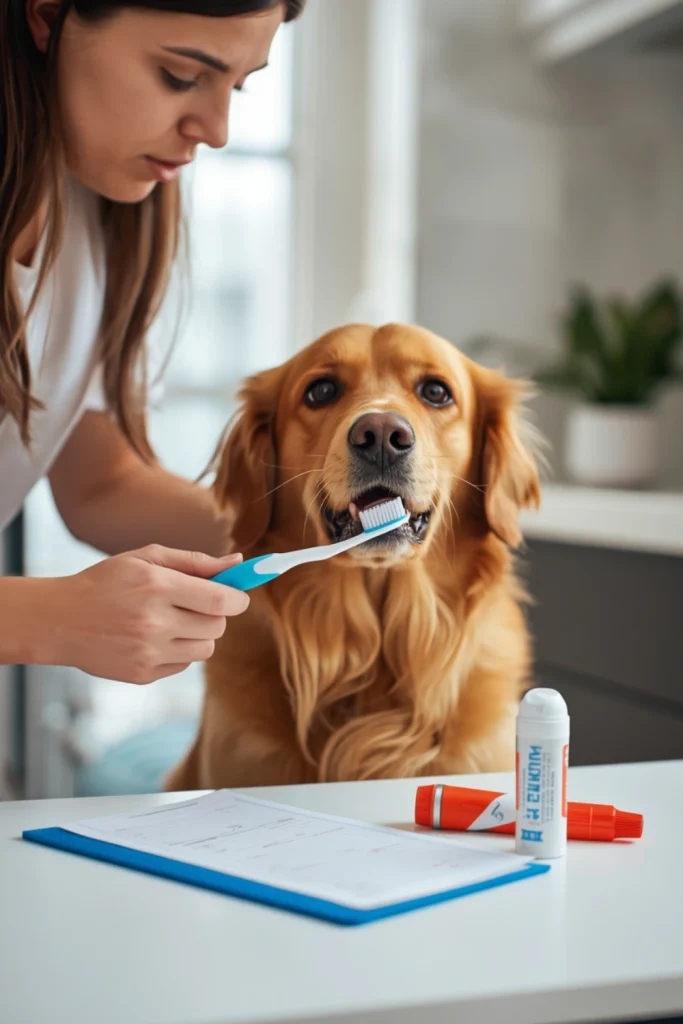
Consistency is one of the most important parts of dog dental care. Daily brushing is generally the goal because plaque can begin building up again after cleaning. Choose a time that fits naturally into your schedule, such as after an evening walk or before bedtime. Keeping the routine at a similar time each day helps your dog understand what to expect. Store the toothbrush and toothpaste in one convenient place so you can prepare quickly without searching for supplies.
If you are new to brushing, begin with short sessions and gradually work toward brushing all accessible tooth surfaces. Keep a simple record of your progress if that helps you stay consistent. Replace the toothbrush when it becomes worn and check the toothpaste label for storage instructions. Remember that home brushing does not replace veterinary dental examinations. Arrange regular checkups and seek professional advice if you notice persistent bad breath, bleeding gums, broken teeth, facial swelling, or changes in eating behavior.
Final Thoughts
Learning how to Brush Your Dog’s Teeth is one of the most useful habits you can add to your pet care routine. The process becomes easier when you choose the right toothbrush, use dog-specific toothpaste, introduce mouth handling slowly, and reward your dog for staying calm. You do not need to achieve a perfect brushing session on the first day. Start with a few teeth, remain patient, and gradually build a routine that works for your pet.
Remember that brushing at home is an important part of prevention, but it does not replace professional veterinary dental care. Watch for bad breath, bleeding gums, swelling, broken teeth, or changes in eating habits. If you notice any warning signs, seek veterinary advice rather than trying to solve the problem yourself. With gentle daily care and regular checkups, you can help support your dog’s oral health and keep those happy moments full of comfortable smiles.