
10 Dog Ear Grooming Tips for Beginners
Your dog’s ears deserve just as much attention as their coat, paws, and teeth. Regular ear grooming is an important part of keeping your furry companion clean, comfortable, and healthy. However, many new dog owners are unsure how to groom their dog’s ears properly, which tools to use, and how often ear care should be included in their grooming routine. Learning a few simple techniques can make this task easier and help you recognize potential ear problems early.
The good news is that dog ear grooming does not need to be complicated. With gentle handling, suitable grooming supplies, and a little patience, you can make ear care a comfortable experience for your pet. Whether you have a playful puppy, a fluffy adult dog, or a senior companion, these 10 Dog Ear Grooming Tips for Beginners will help you understand how to maintain clean ears, manage surrounding hair, and support your dog’s overall grooming needs.
1. Inspect Your Dog’s Ears Before Grooming
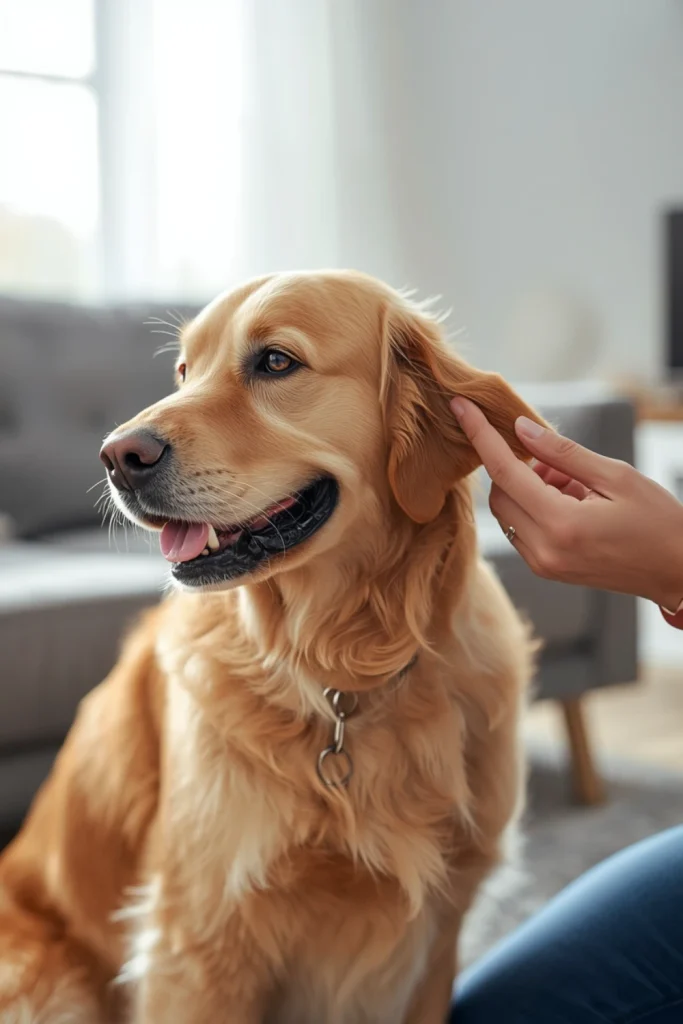
The first step in any successful ear grooming routine is checking your dog’s ears before using grooming products or tools. Gently lift the ear flap and examine the visible outer ear. Look for excessive wax, dirt, redness, swelling, unusual discharge, or unpleasant odors. Healthy ears generally have a natural appearance without significant irritation or excessive buildup. Understanding what your dog’s ears normally look like will help you recognize unusual changes more quickly.
Make ear inspections part of your regular grooming schedule, preferably once a week. However, checking the ears does not mean cleaning them every time. Some dogs naturally have clean ears and need very little maintenance, while others may require occasional cleaning. If you notice bleeding, pain, swelling, or unusual discharge, stop grooming and contact your veterinarian. A careful inspection helps you decide whether ordinary grooming is appropriate or whether professional attention is needed.
2. Gather the Right Dog Ear Grooming Supplies
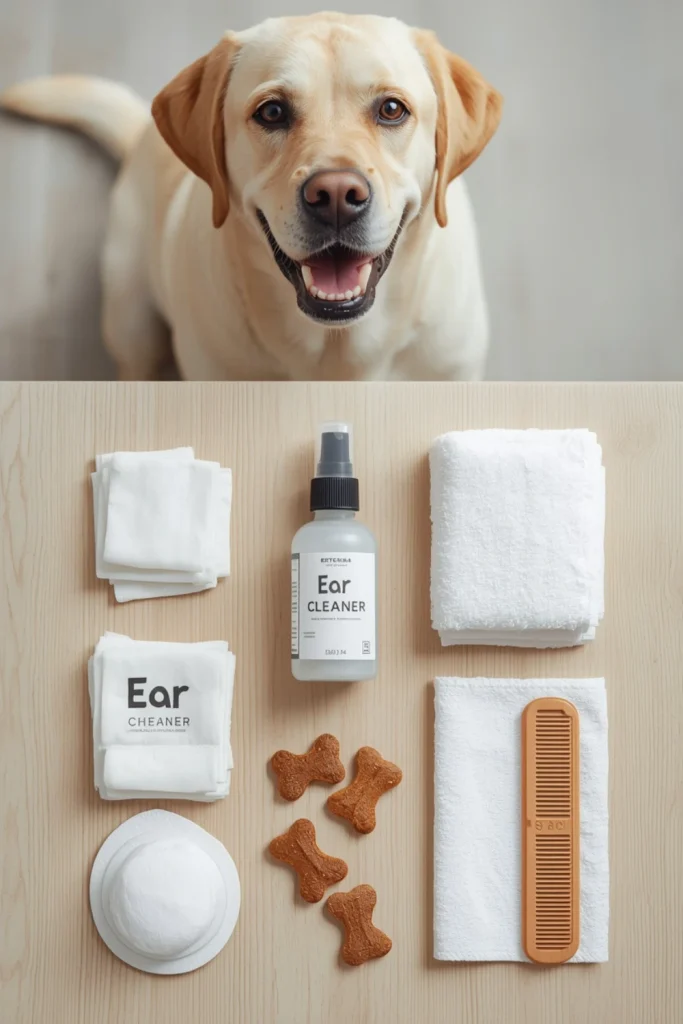
Preparing the correct supplies makes dog ear grooming easier and more organized. For basic ear care, you may need a veterinarian-approved dog ear cleaning solution, soft cotton balls, sterile gauze pads, a clean towel, and a few small training treats. If your dog’s breed has long hair around the ears, you may also need a suitable grooming brush or comb to maintain the surrounding coat. Keeping these supplies together in a small grooming basket can save time.
Always select products designed specifically for dogs and suitable for your pet’s individual needs. Avoid using human ear drops, alcohol, hydrogen peroxide, scented wipes, or homemade cleaning mixtures without veterinary approval. These products may irritate sensitive ear tissues or cause complications. You should also avoid sharp scissors and ordinary cotton swabs inside the ear canal. Having appropriate supplies ready before beginning helps create a safer and more comfortable grooming experience.
3. Brush the Hair Around Your Dog’s Ears
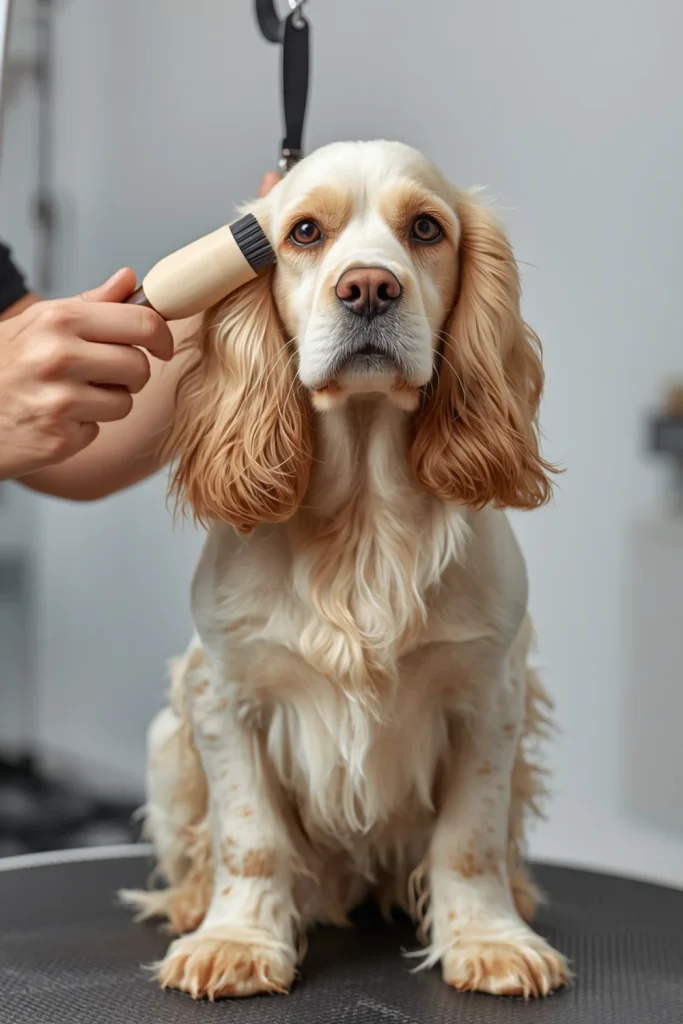
Dogs with long or thick coats may develop tangles around their ears. Breeds such as Cocker Spaniels, Shih Tzus, Poodles, and some Doodles can have hair that becomes tangled behind or underneath the ear flaps. Regular brushing helps remove loose hair, prevent uncomfortable mats, and keep the surrounding coat looking neat. Use a suitable soft brush or comb and work slowly through the hair without pulling the skin.
Begin brushing from the ends of the hair and gradually work toward the roots. If you encounter a small tangle, gently separate it with your fingers or use an appropriate grooming comb. Never pull hard because the skin around the ears can be sensitive. Large or tightly packed mats should be handled by an experienced groomer rather than removed aggressively at home. Keeping the surrounding hair manageable supports comfortable grooming and makes routine ear inspections easier.
4. Clean the Visible Outer Ear Gently
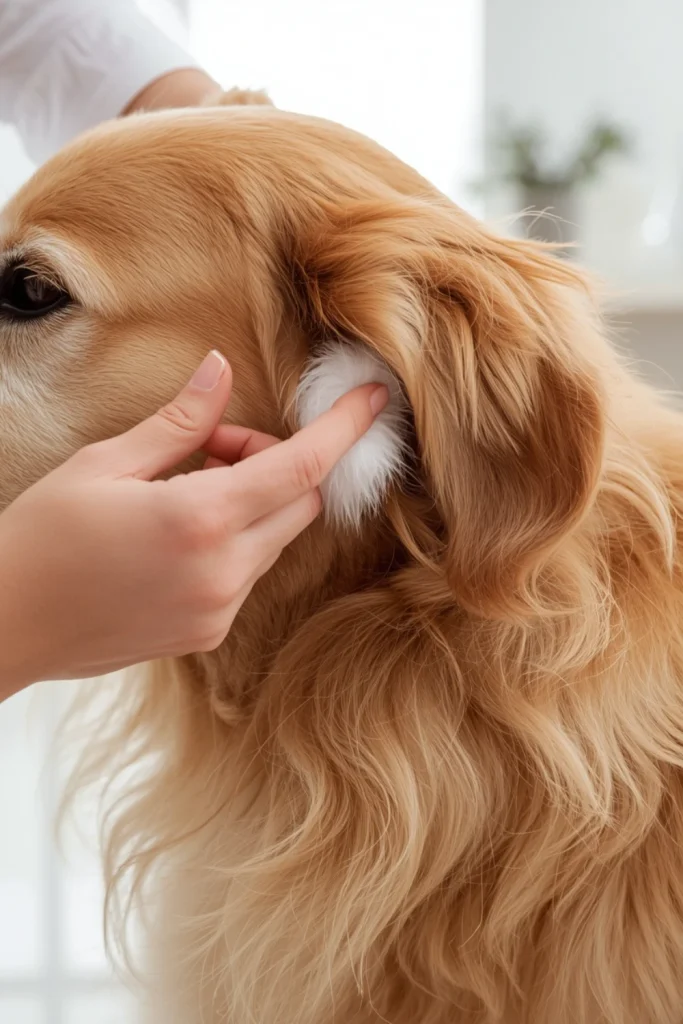
Cleaning the visible outer ear can help remove accumulated dirt and loosened wax when necessary. Start by choosing a dog-specific ear cleaner recommended by your veterinarian. Follow the product instructions and use a soft cotton ball or gauze pad to wipe the accessible outer ear and its natural folds. Avoid rubbing too hard, especially around areas where the skin looks delicate or sensitive. Gentle movements are usually enough to remove visible debris.
Never insert cotton balls, cotton swabs, fingers, or grooming tools deep into the ear canal. Doing so can push debris farther inside or cause injury. You also do not need to remove every trace of natural earwax because a small amount helps protect the ear. If you notice stubborn buildup that cannot be removed safely from the visible area, ask your veterinarian for guidance instead of trying to reach deeper into the ear.
5. Keep Long Ear Hair Neat and Manageable
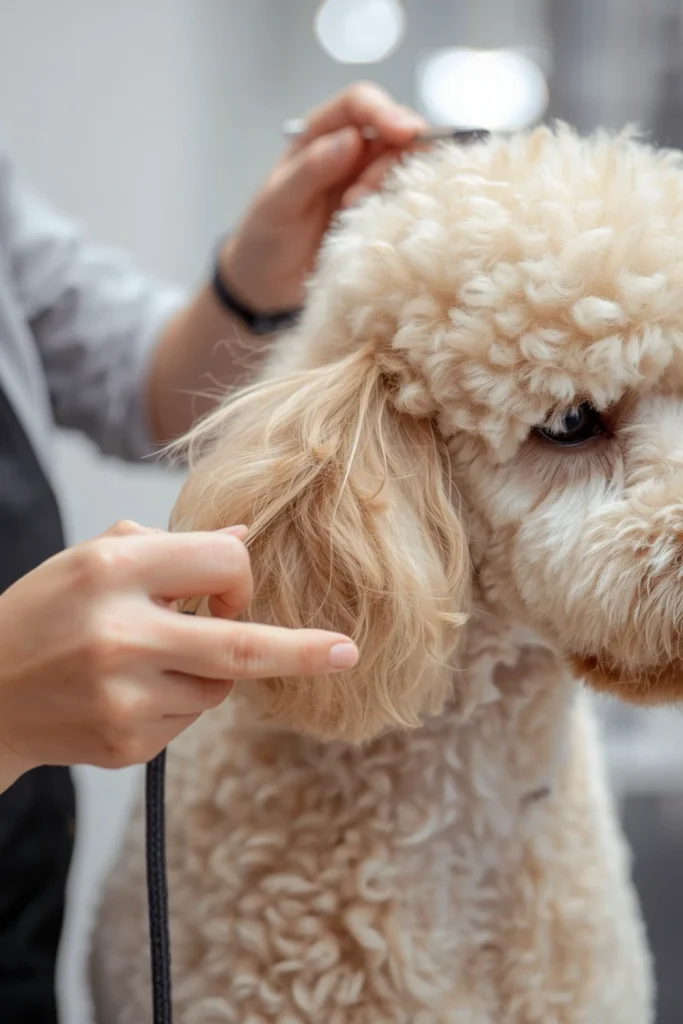
Some dog breeds naturally grow long hair around their ears, making regular coat maintenance an important part of grooming. Long hair can collect dirt, develop tangles, and become uncomfortable if it is neglected. Keeping the surrounding hair neat can make it easier to inspect the visible ear and maintain a clean appearance. However, not every dog needs ear hair trimmed, and removing hair from inside the ear canal is not automatically necessary.
If your dog’s ear hair becomes difficult to manage, consult a professional groomer about a suitable trimming style. Avoid using sharp scissors close to the ear opening or attempting complicated trimming techniques without experience. Unnecessary ear hair plucking can irritate the skin and may increase inflammation in some dogs. The safest approach is to maintain the external coat gently while leaving decisions about ear canal hair to veterinary or qualified grooming guidance.
6. Choose the Right Grooming Tools for Your Dog
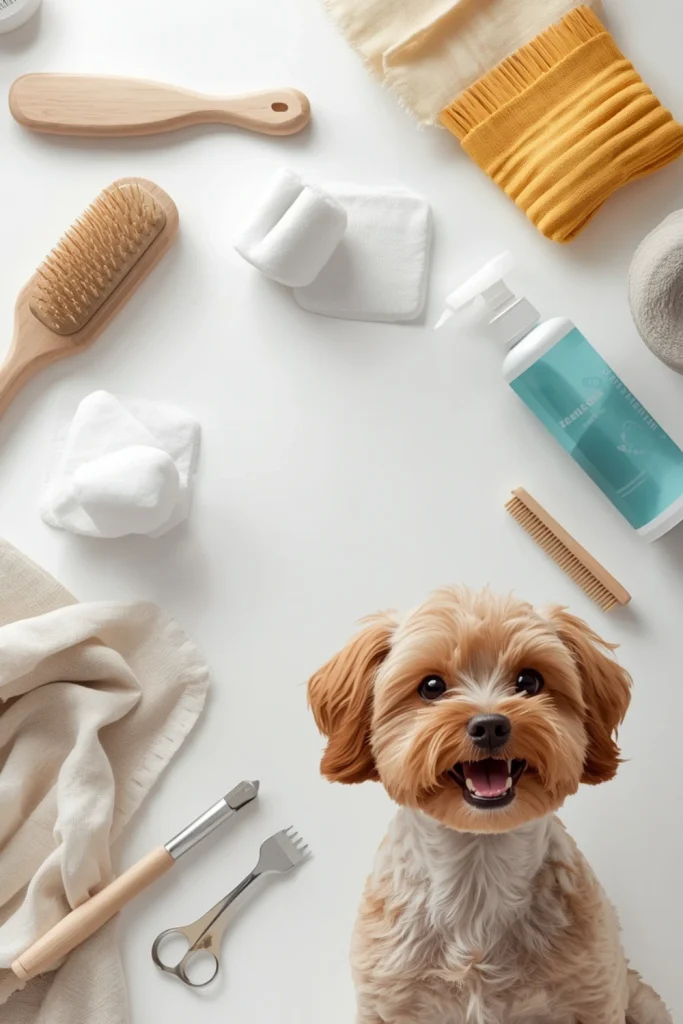
Using appropriate grooming tools makes ear care easier and reduces the risk of accidental irritation. A soft brush or wide-tooth comb can help manage hair around the ears, while clean cotton balls and gauze pads are useful for wiping visible dirt. If you have a long-haired dog, choose tools that suit the texture and thickness of their coat. A gentle grooming brush is often more comfortable than a stiff brush near sensitive areas.
Avoid using sharp household scissors, pointed tools, or metal objects near your dog’s ear canal. Never use grooming equipment to remove wax from inside the ear. If your dog has heavy tangles or difficult-to-manage hair around the ears, an experienced professional groomer can help. Good grooming tools should make the process gentle and controlled, not painful or stressful. Choosing the right equipment is an important part of responsible dog ear grooming.
7. Make Ear Grooming Comfortable for Your Dog
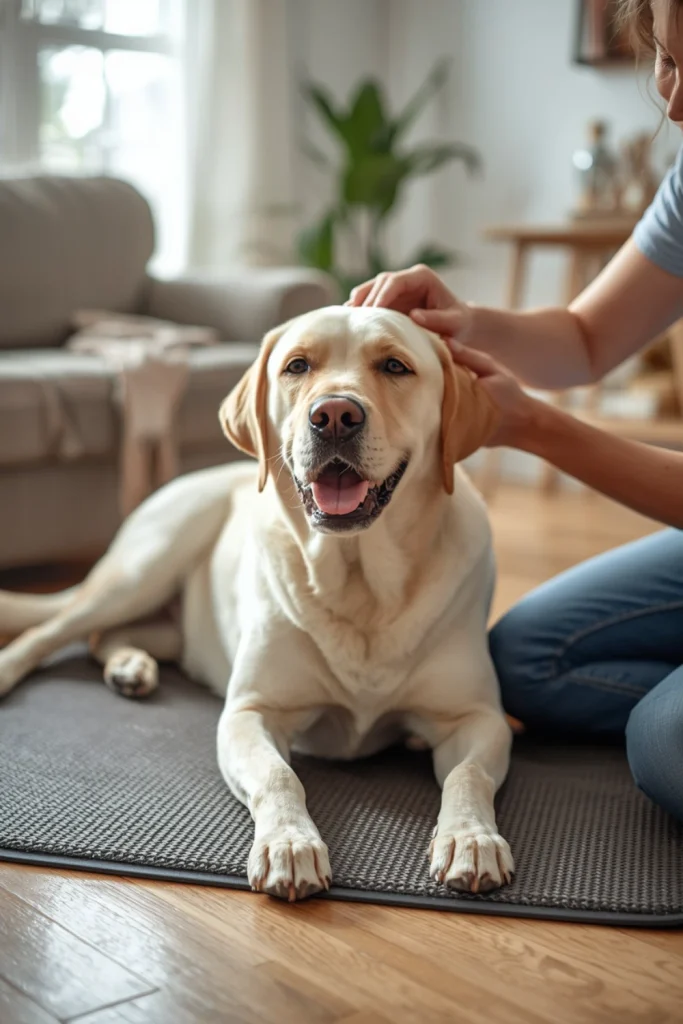
A comfortable dog is easier to groom, especially when working around sensitive areas such as the ears. Choose a quiet room where your dog feels safe and place a non-slip mat or familiar blanket on the floor. Allow your pet to settle before beginning. Speak gently, move slowly, and avoid sudden movements that might make your dog nervous. If your dog is unfamiliar with grooming, start with short sessions rather than trying to complete everything immediately.
Pay attention to your dog’s body language throughout the process. Pulling away, whining, growling, trembling, or repeatedly trying to escape may indicate fear or discomfort. Never force your dog to continue when they are distressed. Take a break and try again later if appropriate. If your dog reacts as though the ears are painful, stop and consult your veterinarian. A comfortable grooming environment helps build trust and encourages better cooperation over time.
8. Reward Your Dog During Grooming Sessions

Positive reinforcement can help your dog develop a better attitude toward grooming. Before beginning, offer a small treat and gently touch the outside of the ears. Reward your dog whenever they remain relaxed. If your pet is new to ear grooming, introduce each activity gradually. For example, one session can focus on gently touching the ears, while another can involve brushing the surrounding hair. This approach helps prevent grooming from becoming overwhelming.
Continue using praise and small rewards throughout the session. Avoid giving too many treats, and choose small pieces that fit into your dog’s normal diet. If your dog becomes uncomfortable, stop and give them time to relax. Never punish your pet for moving their head or pulling away. Patience and encouragement can help create positive associations with grooming, making future ear care sessions more enjoyable for both of you.
9. Keep Your Dog’s Ears Dry After Bathing
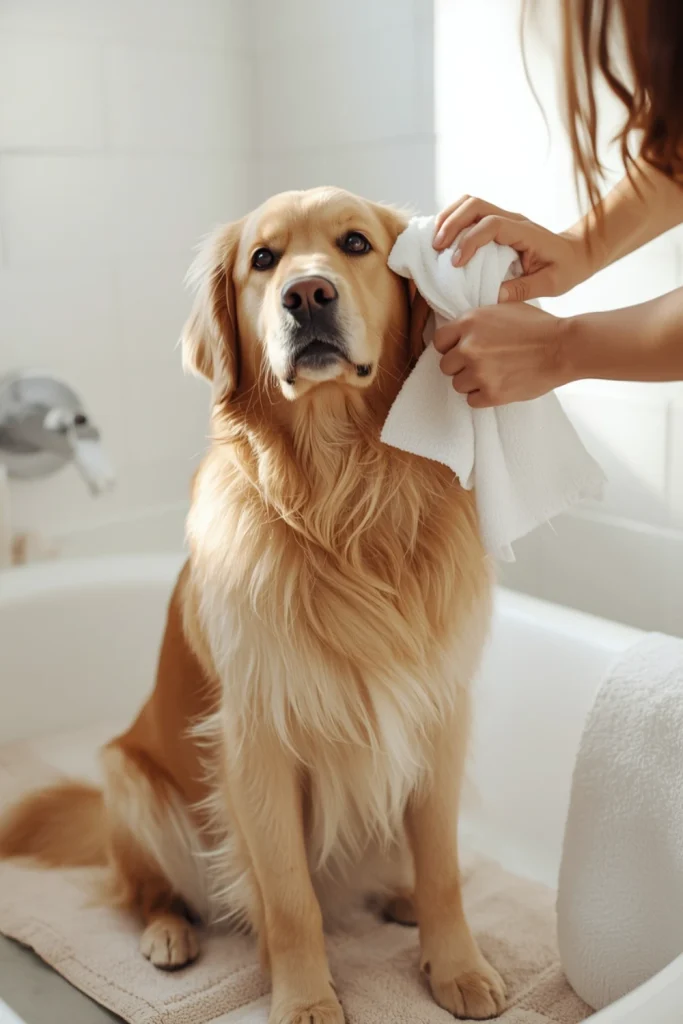
Bathing is an important part of dog grooming, but extra care should be taken around the ears. Water and shampoo should not be allowed to enter the ear canal because trapped moisture and irritation can contribute to ear problems. During bathing, avoid spraying water directly toward your dog’s ears. You can gently protect the outer ear area with your hand while washing the surrounding coat, taking care not to block or force anything into the ear.
After bathing, use a clean, soft towel to dry the visible outer ear and surrounding hair. Do not push cotton, towels, or other materials into the ear canal. Check for unusual moisture, redness, or discomfort after the bath. If your dog swims regularly or has a history of ear infections, ask your veterinarian whether additional drying care is appropriate. Keeping the external ear area clean and dry is a useful part of a complete grooming routine.
10. Schedule Regular Ear Grooming and Veterinary Checks
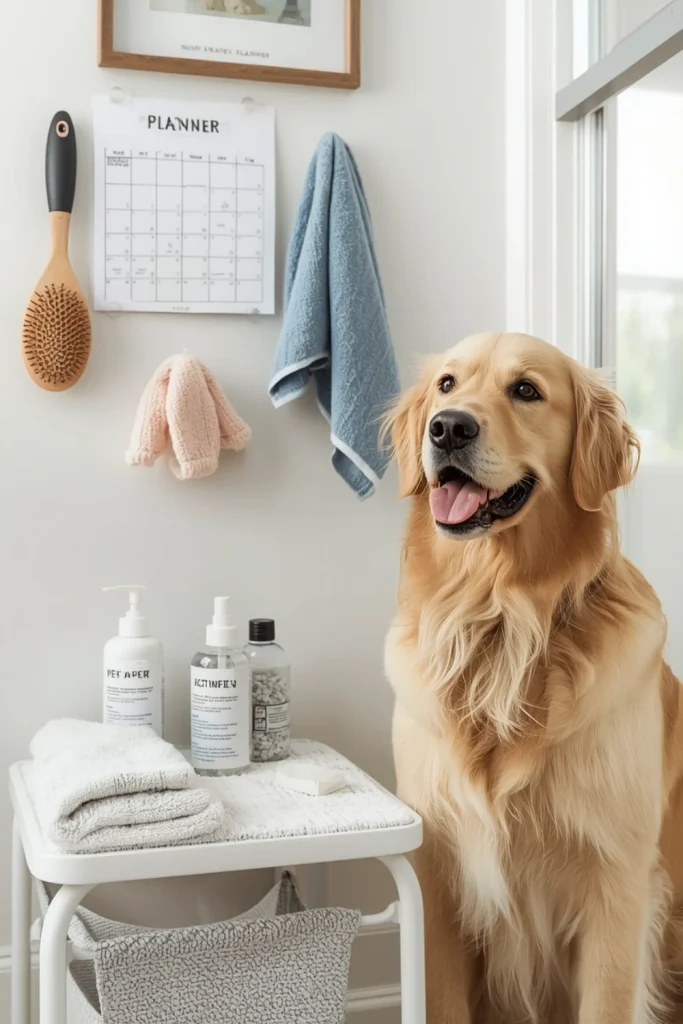
Creating a simple grooming schedule helps you remember to inspect your dog’s ears and maintain the surrounding coat. You can include ear inspections when brushing your dog’s fur, trimming their nails, or completing other regular grooming activities. For most dogs, checking the ears weekly is a helpful habit, but cleaning should only be performed when necessary. Dogs with long hair, floppy ears, or recurring ear problems may require more individualized care.
Professional grooming and veterinary examinations serve different purposes. A groomer can help maintain the hair around your dog’s ears, while a veterinarian can diagnose infections, inflammation, and other medical conditions. If you notice frequent scratching, unpleasant odors, unusual discharge, swelling, or repeated head shaking, arrange a veterinary examination. Regular inspections and professional advice can help you maintain a practical grooming routine that supports your dog’s long-term comfort.
Final Thoughts
Taking care of your dog’s ears is an important part of maintaining a healthy and comfortable grooming routine. By following these 10 dog ear grooming tips, you can learn how to inspect your dog’s ears, manage surrounding hair, choose suitable grooming supplies, and maintain the visible outer ear safely. Remember that every dog has different grooming requirements, so adjust your routine according to their breed, coat type, lifestyle, and individual health.
The most important thing is to make grooming gentle, safe, and enjoyable for your furry companion. Avoid excessive cleaning, unnecessary hair removal, and sharp tools near sensitive ear areas. Reward your dog for cooperating and seek professional advice whenever you notice unusual symptoms. With patience, regular inspections, and appropriate grooming techniques, you can help your dog stay clean, comfortable, and happy.