
The Daily Dog Teeth Cleaning Routine for Beginners
A healthy smile starts with simple daily habits. Just like humans, dogs need regular dental care to help prevent plaque buildup, unpleasant breath, gum problems, and painful teeth. Unfortunately, many owners do not think about their dog’s oral hygiene until they notice yellow teeth, bad breath, or difficulty chewing. By then, dental problems may already need professional attention. The good news is that a little daily care can make a meaningful difference.
Creating a Daily Dog Teeth Cleaning routine does not have to be complicated. You only need suitable dental products, gentle handling, patience, and consistency. Whether you have a playful puppy, an adult dog, or a senior companion, this beginner-friendly guide will show you how to build a comfortable routine at home and recognize when your dog needs professional dental care.
1. Choose a Consistent Time for Daily Dental Care
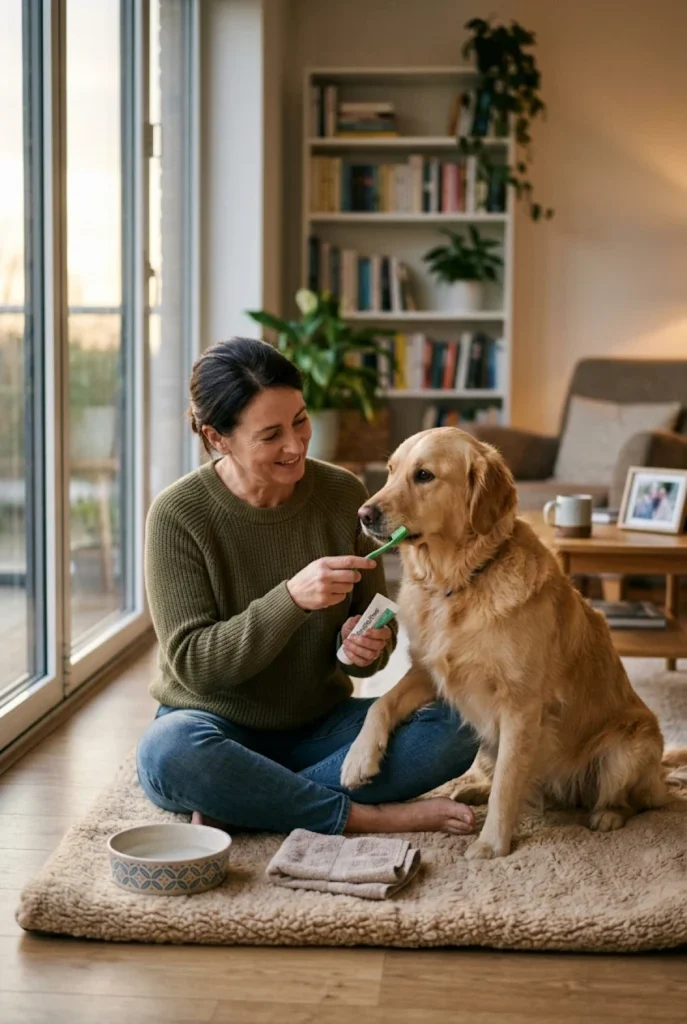
The first step is choosing a time that fits naturally into your dog’s daily schedule. Many owners find that brushing after an evening walk or before bedtime works well because the home is usually quieter. You can also choose a morning routine if your dog is more relaxed at that time. The important thing is to select a period when your pet is calm, comfortable, and not distracted by visitors, toys, or other activities.
Try to follow the same routine every day so your dog gradually learns what to expect. Keep the toothbrush and toothpaste in one convenient place, making preparation simple. Avoid brushing immediately after vigorous exercise or when your dog is overly excited. A predictable schedule helps dental care become an ordinary part of your dog’s day instead of an unfamiliar activity.
2. Prepare All Your Dog’s Dental Cleaning Supplies
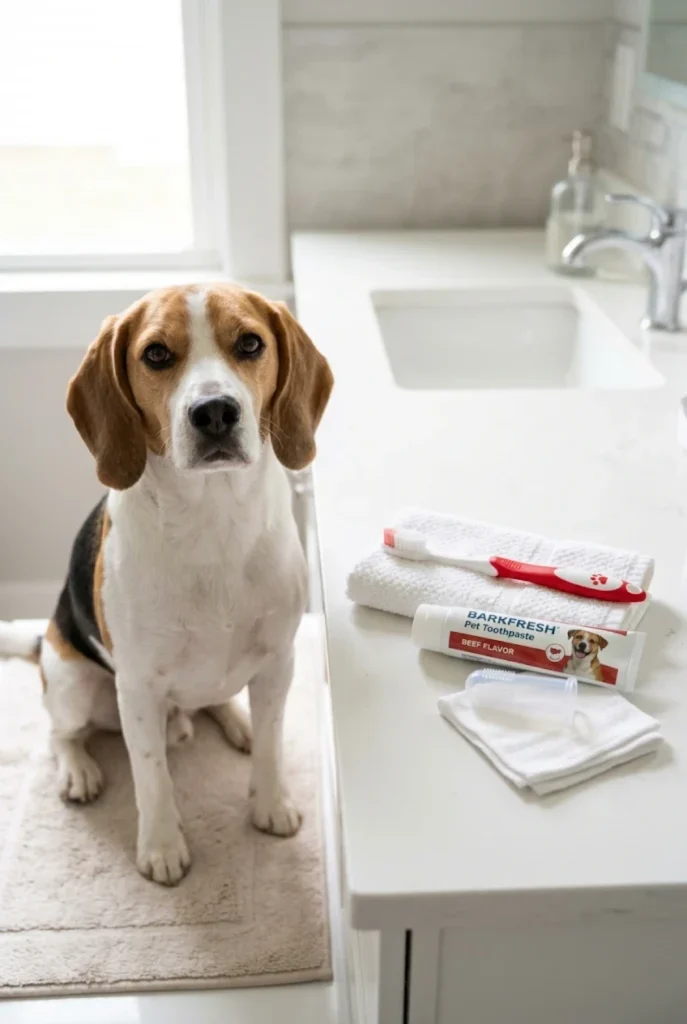
Preparing your supplies before starting makes the process easier and helps you avoid unnecessary interruptions. You will generally need a soft dog toothbrush, toothpaste formulated specifically for dogs, and a clean towel if needed. Some owners prefer a finger toothbrush when introducing dental care, although a regular dog toothbrush may provide better reach for the back teeth. Choose products that fit your dog’s mouth and are comfortable for you to handle.
Keep your dental supplies clean and store them according to the manufacturer’s instructions. Do not share toothbrushes between pets because this can transfer bacteria. Check the bristles regularly and replace the brush when it becomes worn or damaged. Having everything ready before your dog sits down can make the session shorter and calmer. If you are unsure which products are suitable, ask your veterinarian for recommendations based on your dog’s age and dental condition.
3. Select Toothpaste Made Specifically for Dogs
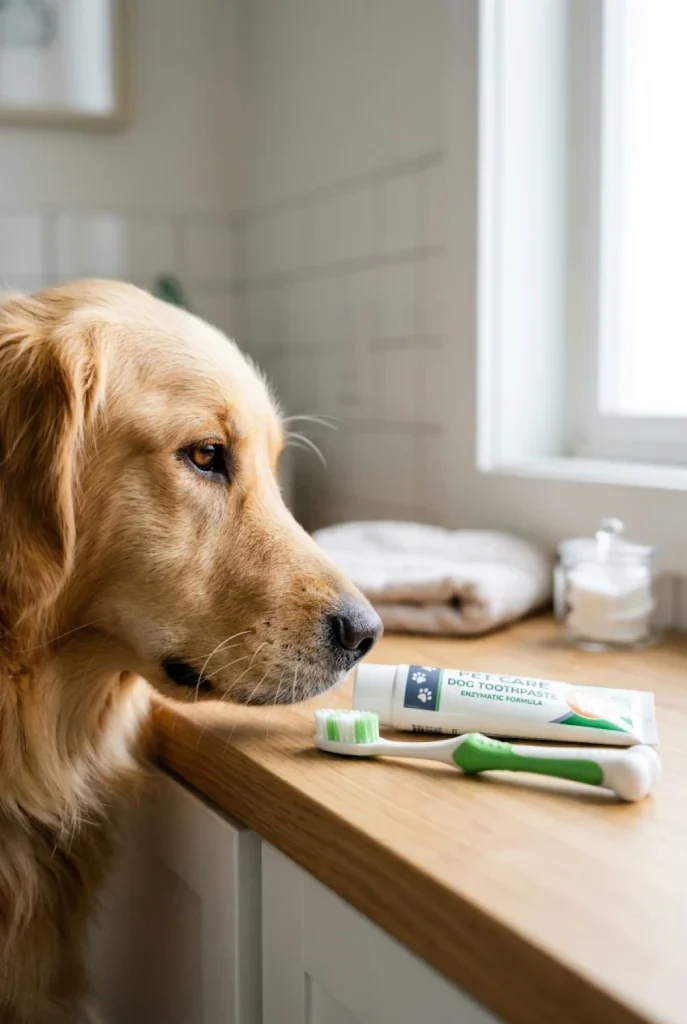
Choosing the correct toothpaste is essential for safe home dental care. Human toothpaste is not suitable for dogs because pets generally swallow toothpaste rather than spitting it out. Some human products contain ingredients that can be harmful when swallowed, including xylitol, an artificial sweetener that is toxic to dogs. Other ingredients, such as fluoride and foaming agents, are not intended for routine swallowing by pets. Always choose a product clearly formulated for dogs.
Dog toothpaste is available in several flavors, which may help make brushing more enjoyable. Allow your dog to sniff the tube and taste a tiny amount before using it with a toothbrush. Check the product label and follow the recommended instructions. If your dog has allergies, a sensitive mouth, or an existing medical condition, consult your veterinarian before choosing a toothpaste. Avoid homemade mixtures and household products unless your veterinarian specifically recommends them.
4. Help Your Dog Become Comfortable With Mouth Handling
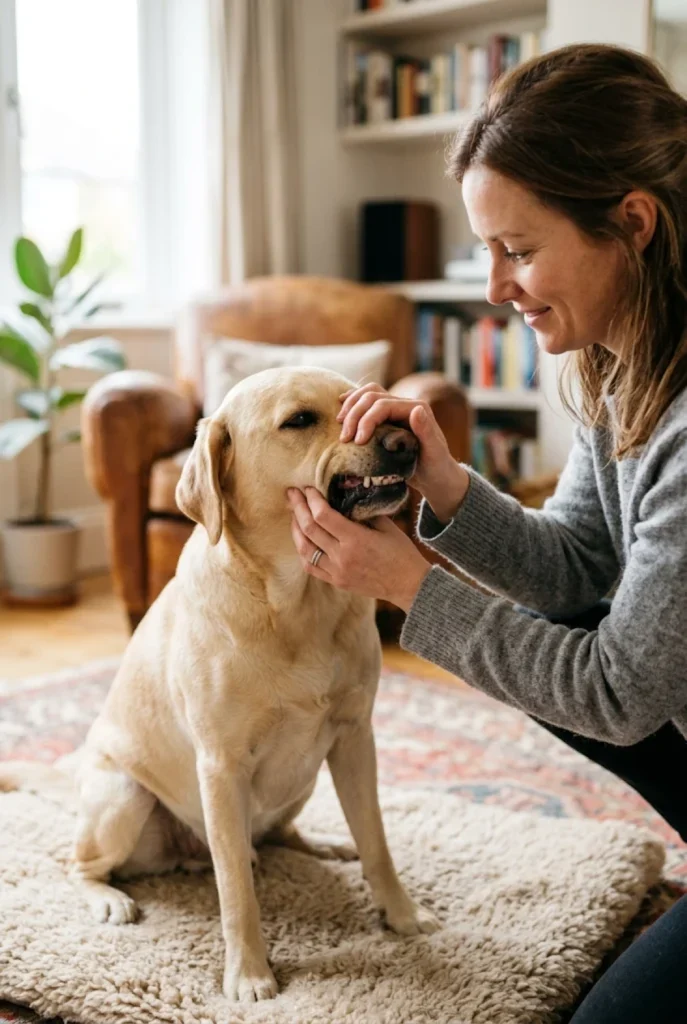
Before introducing a toothbrush, teach your dog that gentle mouth handling is safe. Many dogs are unfamiliar with having their lips lifted or their teeth touched. Begin by calmly touching the side of your dog’s face, cheeks, and chin. Keep your movements slow and offer praise when your pet remains relaxed. You can repeat this simple exercise for a few seconds each day until your dog becomes comfortable with your hands near the mouth.
Once your dog accepts facial handling, gently lift one lip to look at the visible teeth. Do not force the mouth open or hold your dog’s head tightly. Practice on both sides and stop before your pet becomes uncomfortable. If your dog pulls away, allow a break and try again later. Sudden resistance, crying, or signs of pain may indicate a dental problem, so arrange a veterinary examination if mouth handling appears painful.
5. Introduce the Toothbrush Slowly

A toothbrush may feel strange to a dog that has never experienced dental care. Instead of immediately placing it inside your pet’s mouth, allow your dog to investigate it first. Hold the toothbrush near your dog and let them sniff it. You can touch the outside of the cheek gently with the back of the brush before attempting to clean any teeth. Reward calm behavior so your pet begins to associate the toothbrush with a positive experience.
After your dog becomes comfortable seeing and smelling the brush, introduce gentle contact with the visible teeth. Start with one or two teeth and stop after a short attempt. Do not rush to complete a full brushing session. Some dogs accept a finger toothbrush more easily at first, while others prefer a small handled brush. Choose the option that allows you to work gently and safely without causing stress.
6. Start With a Small Amount of Dog Toothpaste
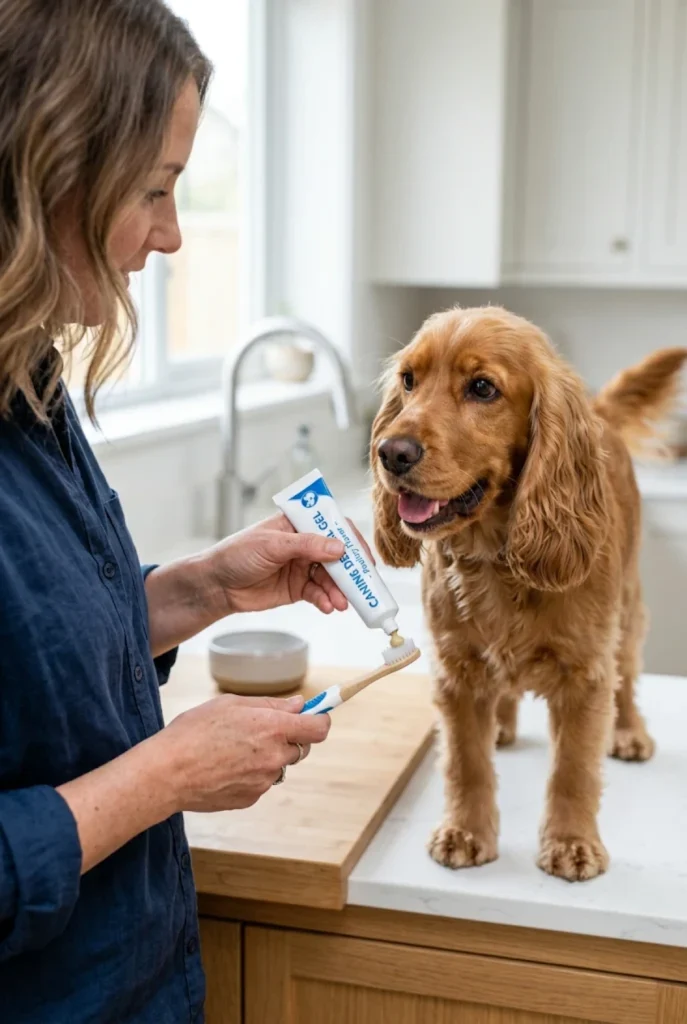
Once your dog is familiar with the toothbrush, introduce the toothpaste. Place a small amount of dog-specific toothpaste on your fingertip or directly on the toothbrush according to the product instructions. Let your dog smell and taste it before you begin brushing. This allows your pet to become familiar with the flavor and texture. Many dogs accept flavored pet toothpaste more easily than an unfamiliar toothbrush alone.
Avoid applying too much toothpaste or allowing your dog to chew on the tube. A small amount is usually enough for a brushing session, but always follow the product label. If your dog dislikes the flavor, you can ask your veterinarian about trying another dog-safe option. Never substitute human toothpaste, baking soda, or household cleaning products. The goal is to make dental care safe and pleasant while helping your dog gradually accept the complete routine.
7. Begin Brushing the Front Teeth Gently
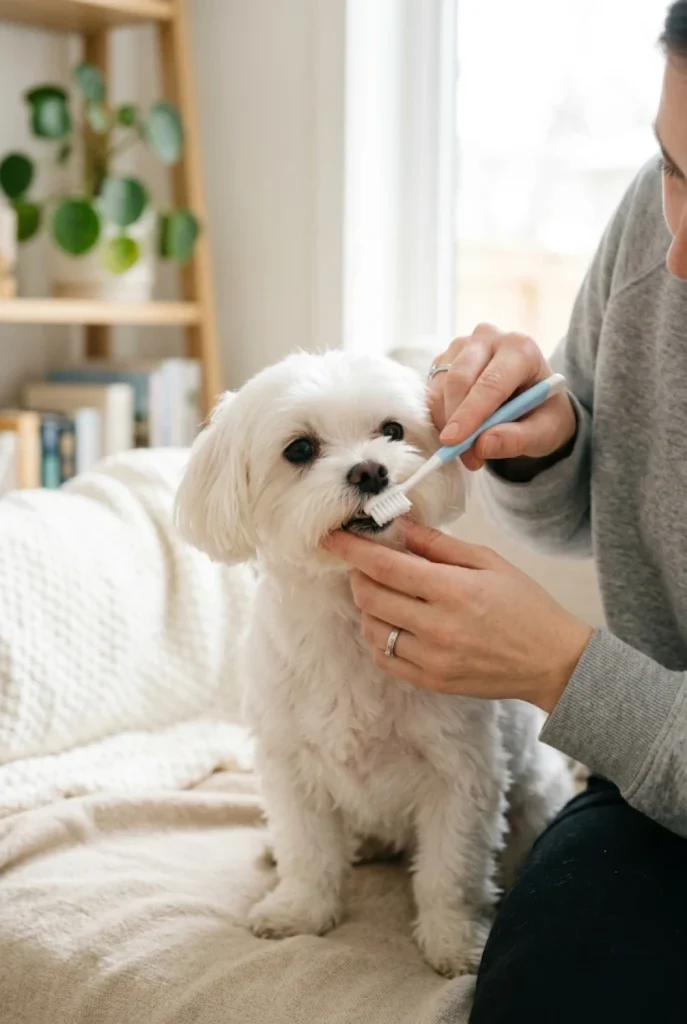
When your dog is ready, begin with the front teeth because they are usually easier to reach. Gently lift your dog’s lips and use the toothbrush to clean a few visible teeth with small, controlled movements. Keep the bristles soft and avoid applying strong pressure. The purpose is to remove plaque from the tooth surfaces without irritating the gums. Your first session may only last a few seconds, and that is perfectly fine for a beginner.
Watch your dog’s body language as you brush. A relaxed pet may remain still and accept gentle handling, while a worried dog may turn away, stiffen, or try to leave. Stop if your dog becomes uncomfortable. Do not force the toothbrush into the mouth or hold the jaws open. Gradually increase the number of teeth you clean as your pet becomes more confident. If you notice bleeding, swelling, or pain, stop and contact your veterinarian.
8. Clean the Outer Surfaces of the Side Teeth
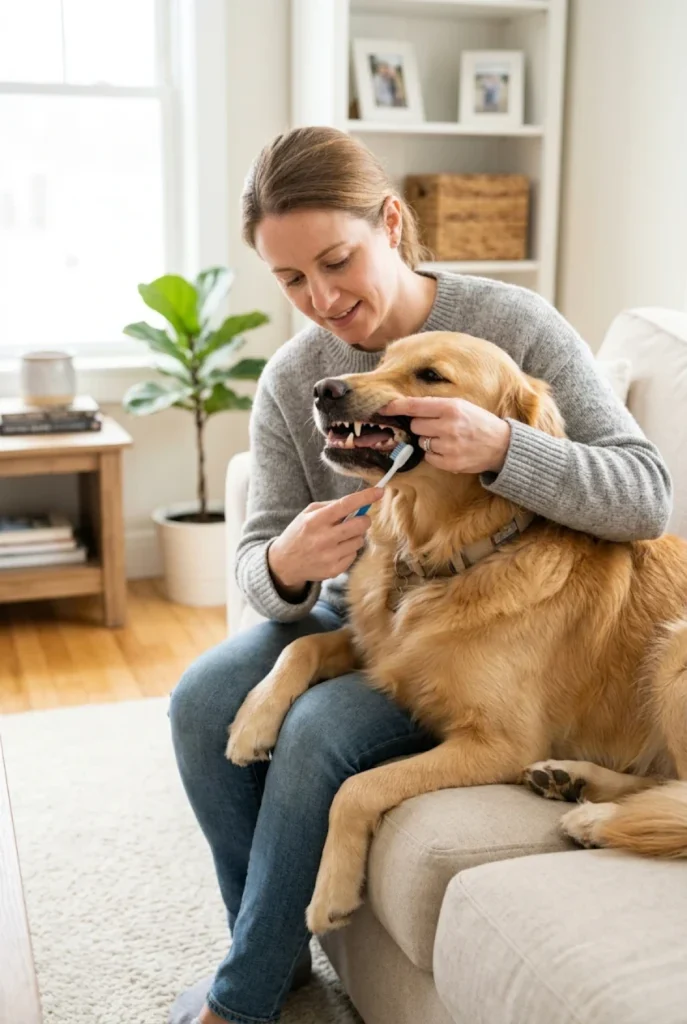
After your dog accepts brushing on the front teeth, gradually move toward the side teeth. The outer surfaces of the premolars and molars are important areas to clean because plaque can collect near the gumline. Gently lift your dog’s lip and brush the visible outside surfaces using small, soft strokes. You usually do not need to open your dog’s mouth widely to reach these areas. Work slowly and keep the toothbrush at a comfortable angle.
Brush one side at a time and allow short breaks if necessary. If your dog has a small mouth, choose a brush with a compact head that does not stretch the lips or cause discomfort. Avoid pushing the toothbrush deep toward the throat. Do not struggle to reach every tooth during the first few sessions. As your dog becomes familiar with the routine, you can gradually improve coverage and brushing time.
9. Pay Gentle Attention to the Gumline
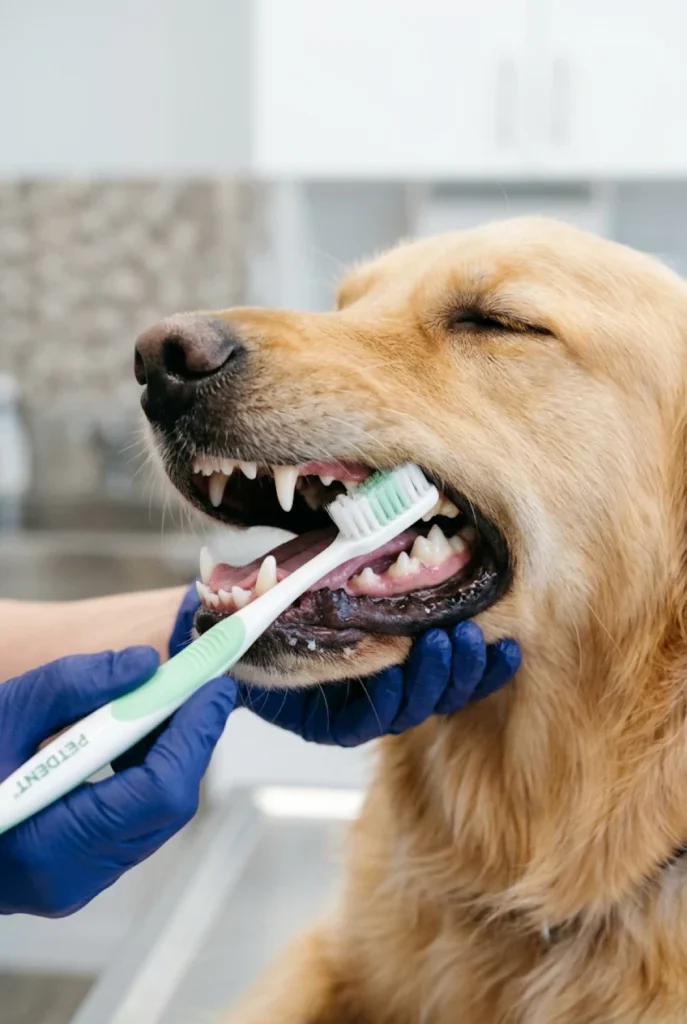
The gumline is an important area during toothbrushing because plaque commonly collects where the teeth meet the gums. Hold the toothbrush at a slight angle toward this area and use gentle, controlled strokes. The bristles should make light contact with the tooth surfaces and the edge of the gums. Avoid aggressive scrubbing or pressing the brush hard against the tissue. A soft approach helps protect sensitive gums and makes the experience more comfortable.
Take a moment to observe your dog’s gums during regular care. Healthy gums are generally pink, although normal pigmentation varies between dogs. Redness, swelling, bleeding, or an unusual appearance should not be ignored. If your dog has painful or inflamed gums, stop brushing the affected area and arrange a veterinary examination. Brushing helps manage plaque, but it is not a treatment for advanced gum disease. Your veterinarian can recommend the safest care plan for your pet.
10. Brush a Few Teeth at a Time if Necessary
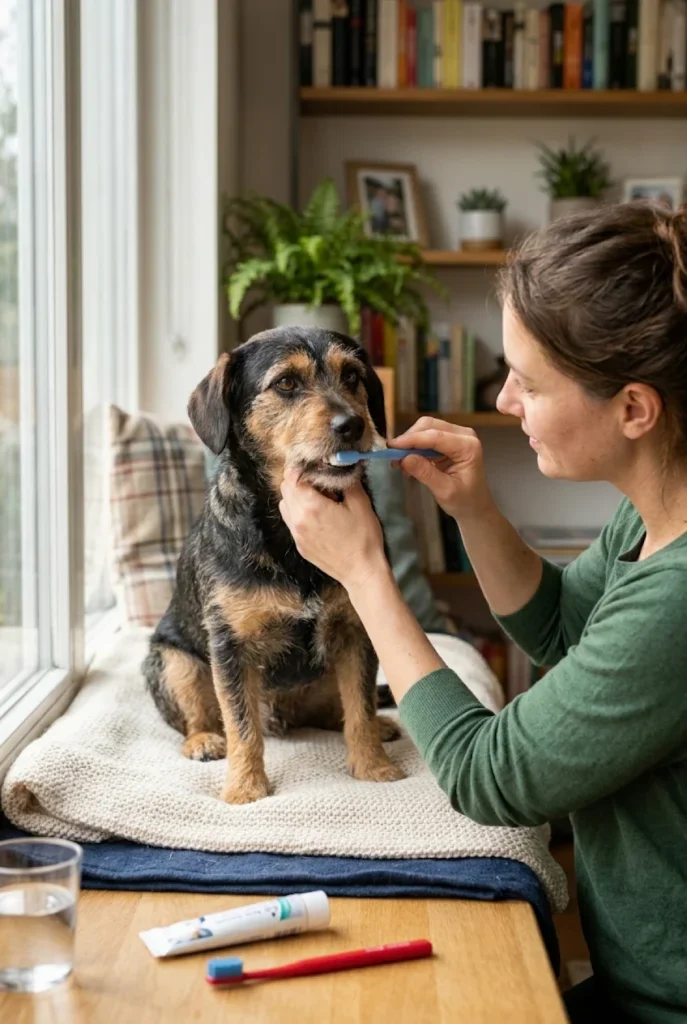
Some beginners expect to clean every tooth during the first session, but this can make the process stressful for an inexperienced dog. It is perfectly acceptable to brush a few teeth at a time while your pet learns. You might clean the front teeth during one short session and gradually add the side teeth as your dog becomes more comfortable. This approach allows you to build a positive routine without forcing your pet to tolerate too much handling.
Over time, aim to clean the accessible outer surfaces of all the teeth during a regular session. Daily brushing is generally recommended because plaque forms again after cleaning. However, comfort and safety remain important. If your dog becomes restless, take a break rather than holding them in place. If you cannot brush comfortably because your dog reacts with pain or fear, speak with your veterinarian about the best way to proceed.
11. Reward Your Dog After Each Successful Session
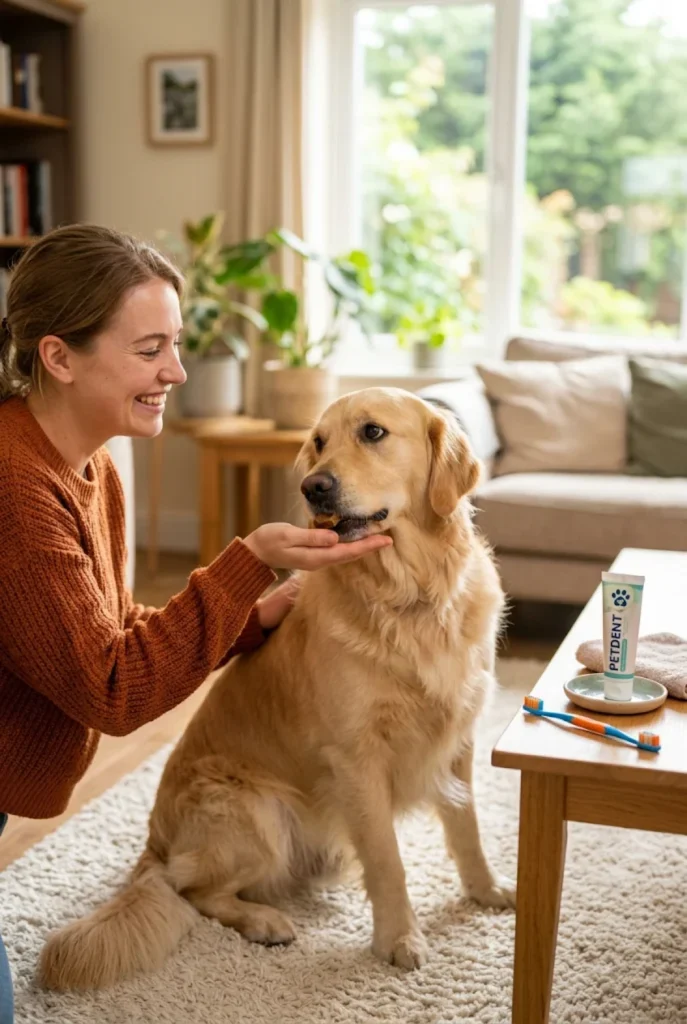
Positive reinforcement can help your dog learn to accept daily dental care. Offer calm praise while brushing and reward your pet after a successful attempt. A small dog-safe treat, affection, or a favorite gentle activity may help create a positive association. The reward should be appropriate for your dog’s diet and should not replace brushing. Keep your voice relaxed and avoid sudden movements that might make your dog nervous.
Some dogs need several days or even weeks to accept a complete brushing routine. Do not treat slow progress as failure. If your dog allows you to touch the muzzle or brush one tooth, that is a useful starting point. Gradually build on each successful experience. Avoid punishment or scolding when your pet moves away. A routine based on patience and trust is more likely to become a lasting part of everyday care.
12. Make Fresh Water Available After Cleaning
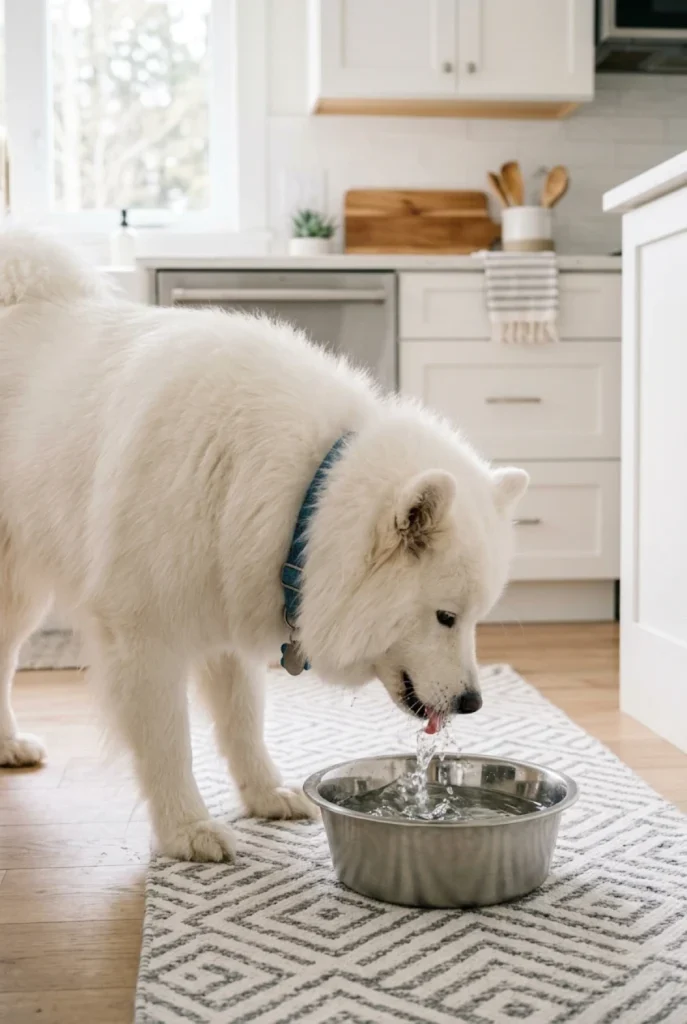
Clean drinking water should always be available to your dog, including after dental care. Fresh water supports normal hydration and helps maintain everyday mouth comfort. Keep a clean bowl in an accessible place and refill it regularly. Wash the bowl frequently because saliva, food particles, and dirt can collect on its surface. A stainless steel or other easy-to-clean bowl may be convenient for daily use.
Water is not a replacement for toothbrushing and cannot remove hardened tartar. However, good hydration is an important part of general pet care. If you use a dental water additive, choose a product specifically formulated for dogs and follow its directions. Ask your veterinarian before using one if your dog has a medical condition or takes medication. Monitor your dog’s drinking habits and stop an additive if it causes your pet to avoid drinking.
13. Check Your Dog’s Mouth for Changes
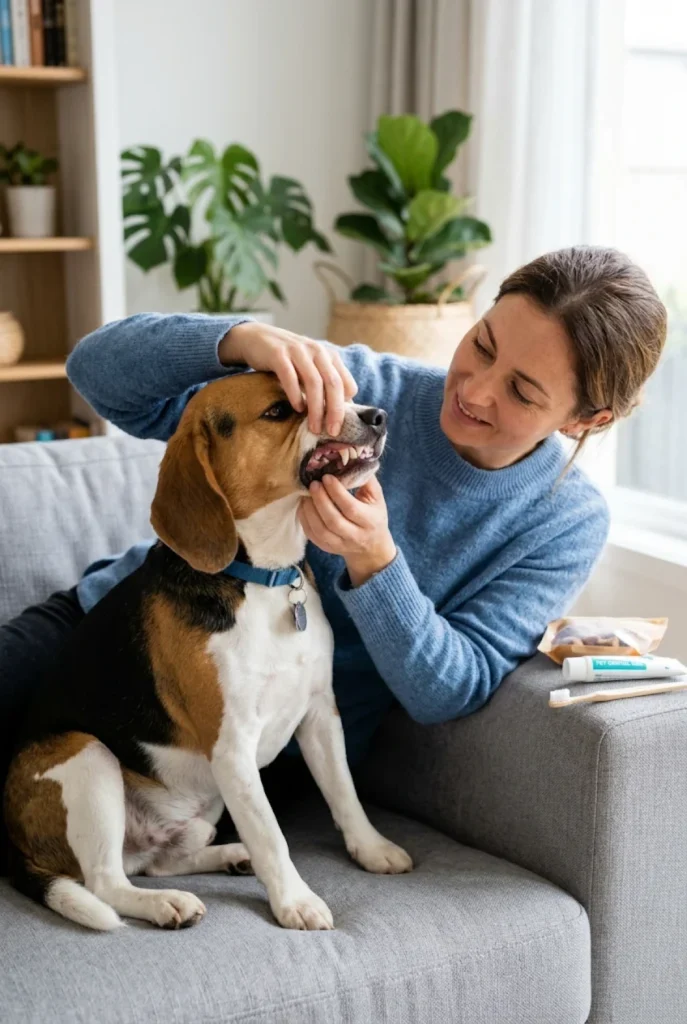
Daily dental care gives you a useful opportunity to become familiar with your dog’s mouth. As your dog becomes comfortable with gentle handling, occasionally lift the lips and observe the visible teeth and gums. Look for unusual redness, swelling, bleeding, broken teeth, heavy yellow or brown deposits, or changes in the appearance of the mouth. You do not need to force the jaws open or perform a detailed examination. A brief, gentle check is enough to notice many visible changes.
Pay attention to your dog’s behavior as well. Bad breath, drooling, pawing at the mouth, dropping food, chewing on one side, or avoiding hard food may indicate discomfort. Dogs can hide pain, so even small changes deserve attention. If you notice something unusual, contact your veterinarian rather than trying to remove tartar or treat the problem yourself. Regular observations help you recognize when ordinary home care is no longer enough.
14. Clean and Store Dental Supplies Properly
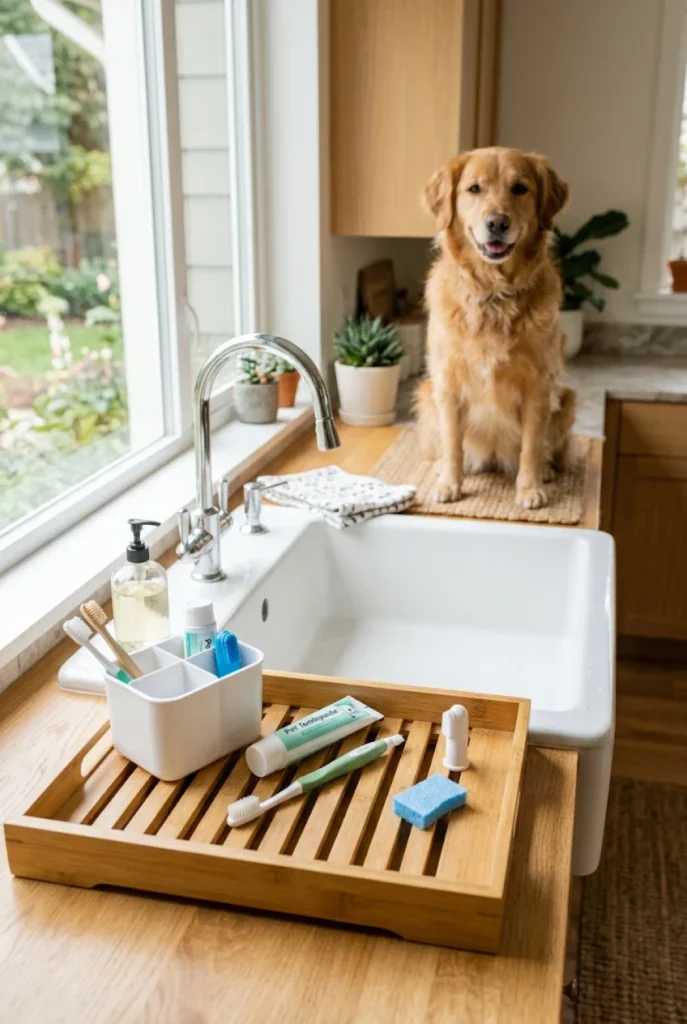
Keeping dental supplies clean is an easy habit that supports good hygiene. After brushing, rinse the toothbrush thoroughly with clean water to remove toothpaste and debris. Allow it to dry in an open, clean place rather than leaving it in a damp, enclosed container. Keep it separate from human toothbrushes and other pets’ brushes. If you use a finger toothbrush, clean it according to the manufacturer’s directions before storing it.
Check the toothbrush regularly for bent, frayed, or damaged bristles. Replace it when it becomes worn or according to the product instructions. A damaged brush may be less effective and could irritate the gums. Keep toothpaste capped and stored as directed on the packaging. Do not share dental products between dogs unless the manufacturer specifically permits it. A clean, organized dental kit makes it easier to maintain a consistent routine every day.
15. Combine Brushing With Other Safe Dental Habits
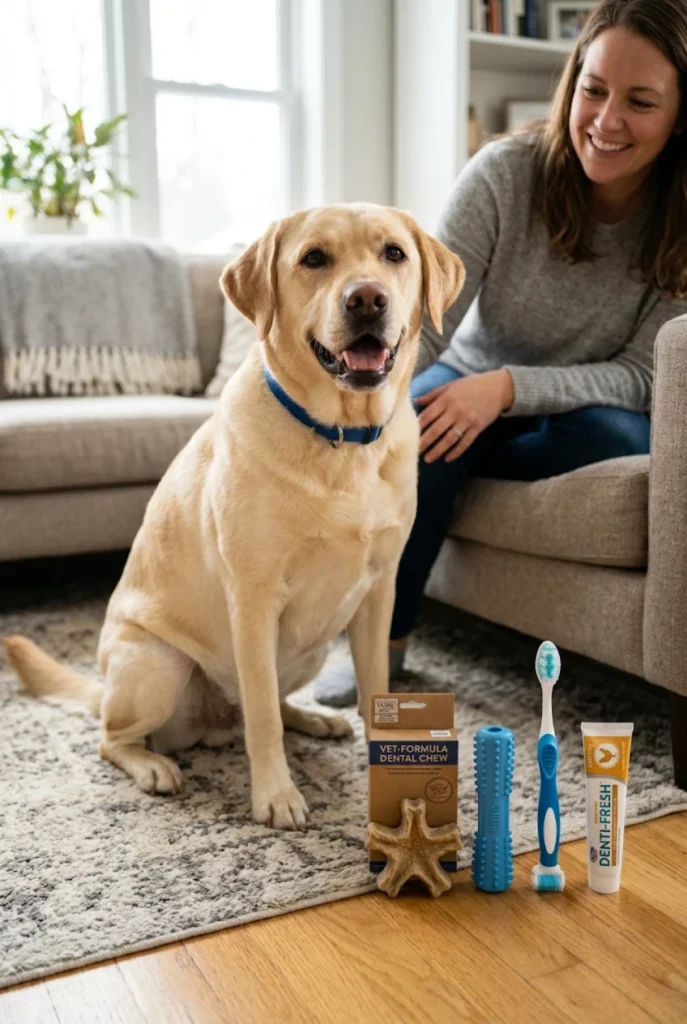
Toothbrushing should be the foundation of your dog’s home dental routine, but other suitable habits can provide additional support. Some veterinary dental chews and specially designed dental diets may help reduce plaque through their texture or chewing action. Choose products that are appropriate for your dog’s size, age, and chewing style. Look for credible veterinary dental product recommendations where available, and follow the manufacturer’s instructions carefully.
Safe chew toys can also provide enrichment and encourage natural chewing behavior. Avoid extremely hard items such as antlers, hard bones, stones, and other objects that may fracture teeth. Always supervise your dog while chewing and replace damaged toys. Dental chews, special diets, toys, and water additives should complement brushing rather than replace it. Your veterinarian can help you decide which additional products are appropriate for your dog’s individual needs.
Final Thoughts
Creating a Daily Dog Teeth Cleaning routine is one of the most useful habits you can add to your pet care schedule. Start with the right toothbrush and dog-specific toothpaste, introduce mouth handling gradually, and brush gently. Reward your dog for cooperation and keep early sessions short. With patience and consistency, dental care can become a comfortable part of everyday life.
Remember that home brushing and professional veterinary care work together. Daily brushing helps manage plaque, but it cannot remove all hardened tartar or treat existing dental disease. Watch for bad breath, swollen gums, bleeding, broken teeth, and changes in eating behavior. If you notice a problem, seek veterinary advice instead of trying household remedies. A simple daily routine, combined with regular checkups, can help support your dog’s healthy mouth and comfortable smile.