10 Tips for Your Puppy’s First Bath
Giving your puppy its first bath is a special milestone in your journey as a dog owner. Those tiny paws, fluffy fur, and adorable puppy eyes make bath time look exciting, but the experience can sometimes be confusing for a little dog. Some puppies enjoy playing with water, while others feel nervous when they hear running taps or step into a bathtub for the first time.
The secret to a successful first bath is patience, preparation, and gentle handling. You don’t need expensive equipment or professional grooming skills to make your puppy feel comfortable. With the right approach, you can turn bathing into a positive experience that your puppy learns to enjoy. These 10 Tips for Your Puppy’s First Bath will help you prepare your bathing area, choose suitable products, wash your puppy safely, and establish healthy bathing habits for the future.
1. Choose the Right Time for Your Puppy’s First Bath

Choosing the right time is one of the most important steps when preparing for your puppy’s first bath. Avoid bathing your puppy immediately after an exciting play session, a long walk, or a stressful experience. Instead, choose a quiet period when your puppy is relaxed, comfortable, and not overly tired. A calm puppy is more likely to explore the bathing area without becoming frightened. Make sure the room is warm and free from cold drafts because young puppies can lose body heat quickly.
It is also better to avoid bathing your puppy immediately after a large meal. Give your little companion enough time to digest its food and settle down before beginning. If your puppy seems frightened, sick, unusually tired, or uncomfortable, postpone the bath and try another time. Remember that the first bath does not need to happen on a specific day. Your puppy’s health and comfort should always come first.
2. Prepare Everything Before Bringing Your Puppy to the Bath

Preparation makes your puppy’s first bath much easier and safer. Before bringing your puppy into the bathroom, gather all the supplies you will need. These may include puppy-safe shampoo, a soft towel, a gentle washcloth, a suitable brush, and a non-slip bathing mat. Having everything nearby means you will not need to leave your puppy unattended while searching for supplies. Young puppies can become frightened or attempt to climb out of the bathtub when left alone.
Check that your bathing area is clean, comfortable, and free from sharp objects or slippery surfaces. Place a non-slip mat inside the tub or bathing basin to give your puppy a stable place to stand. Keep the water source within easy reach and prepare a warm, draft-free area for drying afterward. If you are bathing your puppy in a sink or small tub, ensure it is secure and appropriate for its size. Good preparation helps prevent unnecessary stress and allows you to focus entirely on your puppy.
3. Use a Gentle Shampoo Made Specifically for Puppies
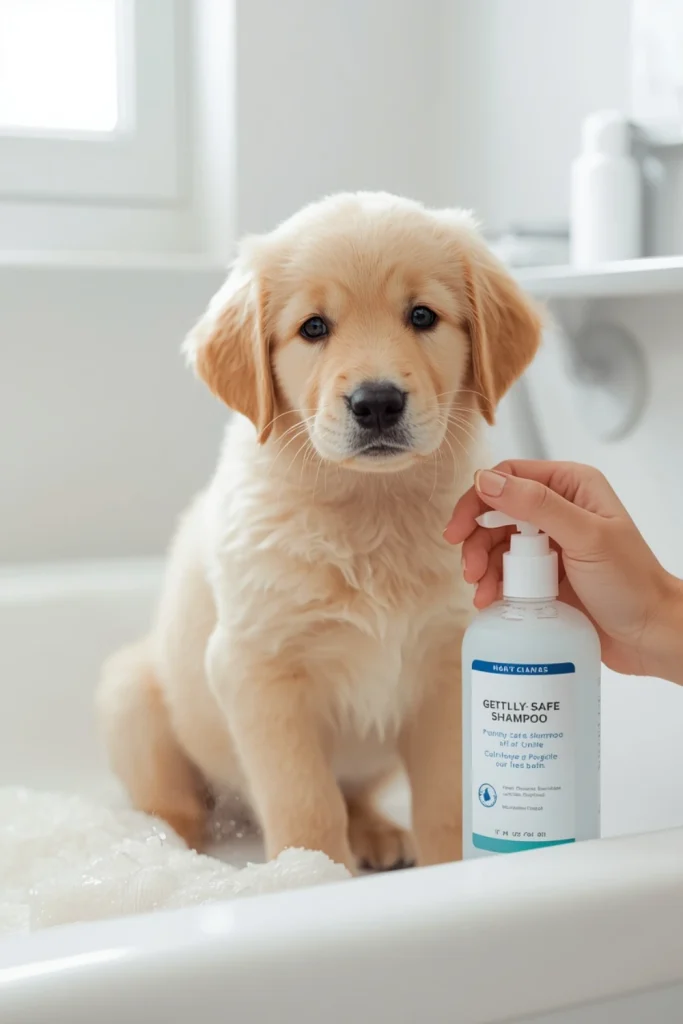
Choosing the right shampoo is essential for protecting your puppy’s delicate skin. Human shampoos, household soaps, and strongly scented cleaning products are not designed for dogs and may cause dryness or irritation. Instead, select a mild shampoo specifically formulated for puppies. Read the product label carefully and check its minimum recommended age. If your puppy has sensitive skin, allergies, excessive itching, or an existing skin condition, ask your veterinarian for a suitable product before bathing.
Use only a small amount of shampoo and follow the manufacturer’s instructions. Avoid products with unnecessary fragrances or harsh ingredients that may irritate your puppy. During bathing, keep shampoo away from the eyes, nose, mouth, and inside of the ears. Rinse the coat thoroughly to remove all residue because leftover shampoo can cause itching and discomfort. Remember that the best puppy shampoo is one that cleans gently and is appropriate for your puppy’s individual skin and coat needs.
4. Introduce Your Puppy to Water Slowly

Many puppies feel uncertain when they experience water for the first time. The sound of running taps, splashing water, and unfamiliar bathroom surroundings may make them nervous. Instead of immediately placing your puppy under running water, introduce the bathing environment gradually. Allow your puppy to explore the room, smell the bathtub, and become familiar with the surroundings. You can also place a small amount of lukewarm water in the tub and let your puppy investigate it at its own pace.
Once your puppy appears comfortable, gently wet its paws using your hand or a soft washcloth. Gradually introduce water to the body while watching its reactions. Avoid spraying water directly onto the face or using strong water pressure. If your puppy becomes frightened, stop and give it time to relax. Never force your puppy into the water. A slow introduction helps build trust and makes future bathing experiences more manageable.
5. Check the Water Temperature Before Bathing
Water temperature plays an important role in making your puppy’s first bath comfortable. Water that is too hot can irritate delicate skin, while cold water may make a young puppy uncomfortable and cause it to become chilled. Always check the water temperature with your hand before allowing your puppy to step into the bathing area. Lukewarm water is generally the best choice for a comfortable puppy bath. It should feel gently warm rather than hot.
Avoid filling the bathtub with deep water because puppies may become frightened or struggle to maintain their balance. A shallow amount of water is usually enough for washing the body. Keep the bathroom comfortably warm and avoid cold drafts during the bathing process. If your puppy begins shivering, stop the bath and dry it gently. Never assume that your puppy is comfortable simply because it is remaining still. Watch its body language and make adjustments whenever necessary.
6. Use a Non-Slip Mat to Keep Your Puppy Safe

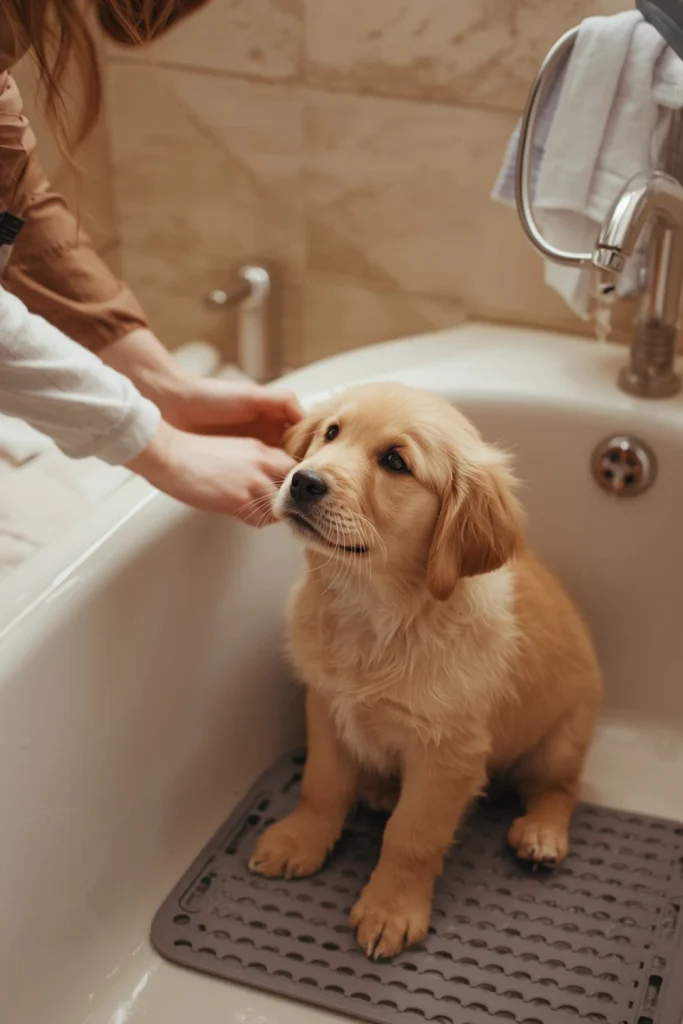
Slippery surfaces can make your puppy’s first bath frightening. Puppies are still developing coordination and may struggle to maintain their balance on smooth bathtub surfaces. If your puppy slips while bathing, it may become scared and develop a negative association with water. A non-slip rubber mat provides better stability and helps your puppy feel more secure. Place the mat firmly at the bottom of the bathtub or bathing basin before introducing your puppy.
Always supervise your puppy throughout the bath and keep one hand ready to provide gentle support when necessary. Never leave a puppy unattended in a bathtub, sink, or container filled with water, even for a few seconds. Avoid using raised surfaces unless they are specifically designed for safe pet grooming. If your puppy is particularly nervous, you can begin by letting it stand on the dry mat before introducing water. A secure bathing area helps reduce slipping and unnecessary stress.
7. Wash Your Puppy Gently From Neck to Tail

Once your puppy feels comfortable with water, begin washing its body gently. Start around the neck and shoulders, then move toward the back, sides, belly, legs, and tail. Use your hands or a soft washcloth to spread a small amount of puppy-safe shampoo through the coat. Gentle circular movements can help remove dirt without pulling the fur or irritating the skin. Avoid scrubbing aggressively, particularly around sensitive areas. Keep the bathing process calm and speak softly to reassure your puppy.
Be especially careful when washing the belly, armpits, paws, and areas where dirt may collect. These areas can be sensitive, so use gentle movements and avoid excessive rubbing. Never pour water directly over your puppy’s head or force it to remain in an uncomfortable position. Rinse each section carefully to remove shampoo residue. If your puppy becomes tired or frightened, pause and give it a chance to relax. A gentle washing technique helps make the first bath a more enjoyable experience.
8. Clean Your Puppy’s Face and Ears Carefully
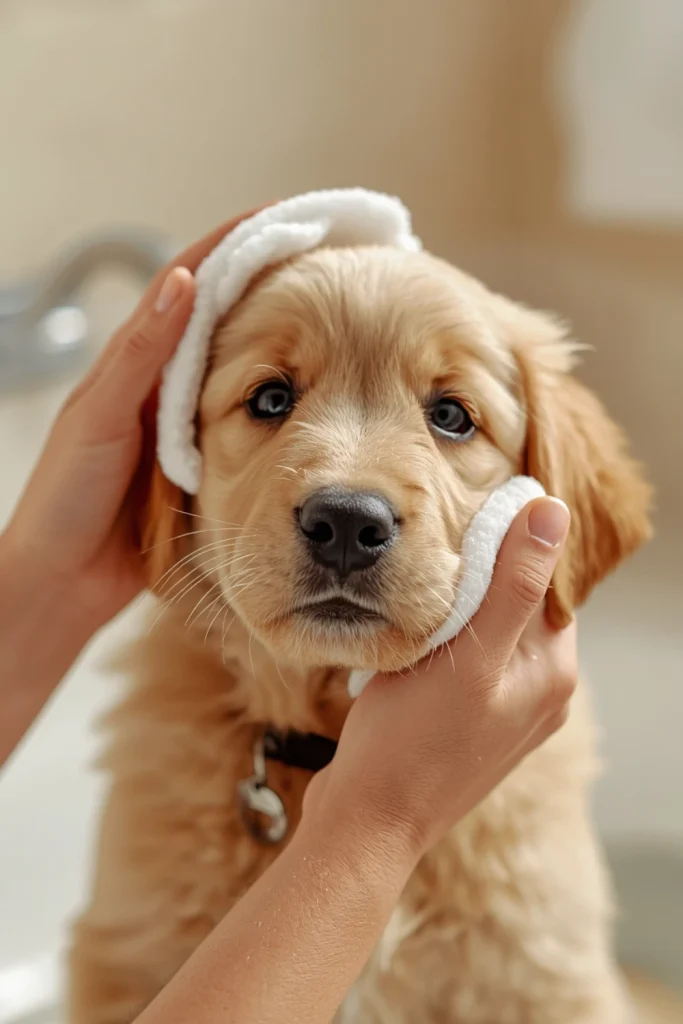
Your puppy’s face requires extra care during its first bath because the eyes, nose, and ears are sensitive. Instead of pouring water over the head, use a clean, soft, damp washcloth to remove visible dirt around the face. Gently wipe the areas around the eyes and mouth without rubbing directly against the eyeballs or getting shampoo into the nose. If your puppy has long facial hair, carefully remove any dirt collected around the mouth and chin. Keep the experience short and comfortable.
Avoid allowing water or shampoo to enter the ear canals. Moisture trapped inside the ears can contribute to irritation and may increase the risk of ear problems. For puppies with floppy ears, gently hold the ears away from the water while washing the body. After bathing, inspect the visible outer ears and dry any moisture around them with a soft towel. Do not insert cotton swabs or other objects into the ear canal. If you notice redness, unpleasant odors, or unusual discharge, consult your veterinarian.
9. Rinse Thoroughly and Dry Your Puppy With a Soft Towel
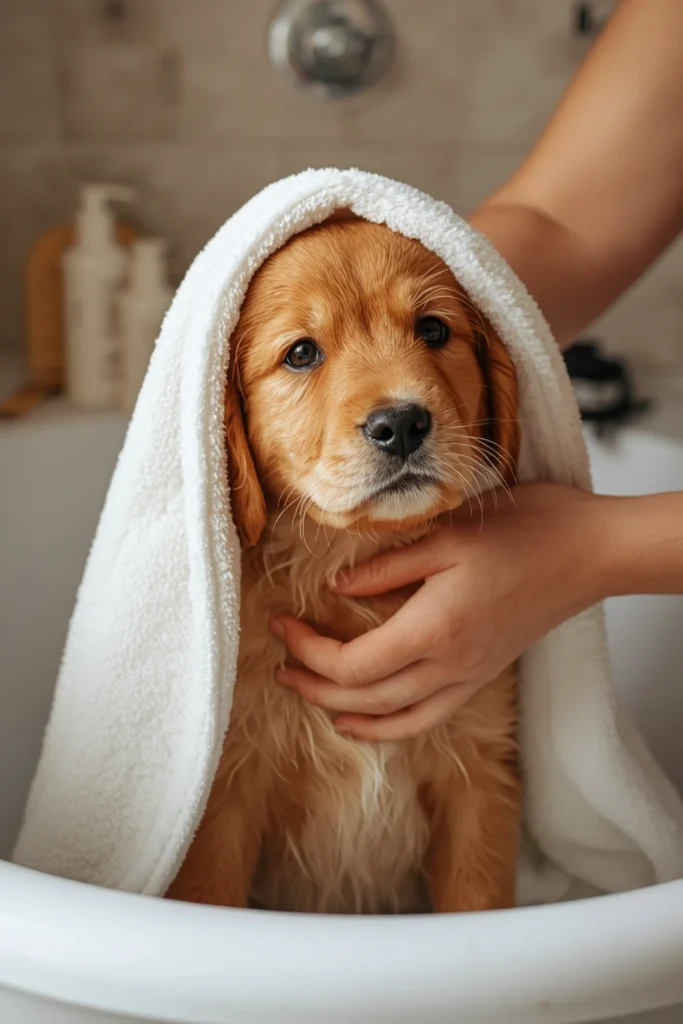
Rinsing is an important step that should never be rushed during your puppy’s first bath. Shampoo residue left behind can irritate delicate skin and cause itching after bathing. Use lukewarm water to rinse the coat carefully, starting around the neck and moving toward the tail. Check areas such as the belly, legs, and underarms because shampoo can collect in these places. Continue rinsing until the coat feels clean and no slippery product remains. Avoid directing strong water pressure toward your puppy’s face.
After rinsing, gently lift your puppy from the bathing area and wrap it in a clean, absorbent towel. Pat the coat rather than rubbing aggressively, as rough drying can create tangles and discomfort. Pay attention to the belly, paws, and spaces between the toes. If your puppy has a thick coat, it may need additional drying time. Keep your puppy in a warm, draft-free room until its coat is adequately dry. Young puppies should never be left wet and exposed to cold temperatures.
10. Reward Your Puppy and Make Bath Time a Positive Experience

One of the best ways to help your puppy enjoy future baths is to reward positive behavior. Puppies learn through repetition and positive experiences. During the first bath, offer gentle praise whenever your puppy remains calm, explores the bathing area, or allows you to wash its coat. You can also provide a few small, age-appropriate dog treats if your puppy is comfortable eating during grooming. Avoid giving too many treats, especially if your puppy has a sensitive stomach or dietary restrictions.
After the bath, allow your puppy to relax in a warm and familiar place. Give it affection, gentle playtime, or a favorite toy once it is completely comfortable and dry. Never punish your puppy for moving, whining, or showing fear during bathing. If the experience becomes overwhelming, end the session calmly and try again another day. Your puppy does not need to love water immediately. With patience and consistent positive reinforcement, bathing can gradually become a familiar and enjoyable part of its grooming routine.
Final Thoughts
Your puppy’s first bath is an important step in developing healthy grooming habits. Although the experience may seem challenging at first, the right preparation and gentle handling can make a big difference. Remember to choose a comfortable bathing time, prepare your supplies, use puppy-safe shampoo, check the water temperature, and introduce water slowly.
Most importantly, pay attention to your puppy’s reactions. Some puppies become comfortable with bathing quickly, while others need several short sessions before they feel confident. Never rush the process or force your puppy to continue when it becomes frightened.
By following these 10 Tips for Your Puppy’s First Bath, you can make bath time safer, more comfortable, and more enjoyable. With patience, consistency, and positive reinforcement, your little companion can gradually learn that bathing is simply another enjoyable part of growing up.