
12 Ways to Redirect Puppy Biting Clothes
Puppy biting clothes can turn a peaceful walk around the house into a frustrating experience. One moment, your puppy is happily following you, and the next, they are grabbing your trousers, chewing your sleeves, or tugging at your shirt. Although this behavior can be annoying, it is a common part of puppy development and can usually be improved with patience, consistency, and positive reinforcement.
Learning how to redirect puppy biting clothes helps you teach your young dog what is appropriate to chew and how to interact gently with people. Instead of shouting or pulling your clothes away, you can use simple training techniques that encourage better habits. With the right approach, you can protect your clothing, strengthen your bond with your puppy, and make everyday interactions much more enjoyable.
1. Redirect Your Puppy to an Appropriate Chew Toy
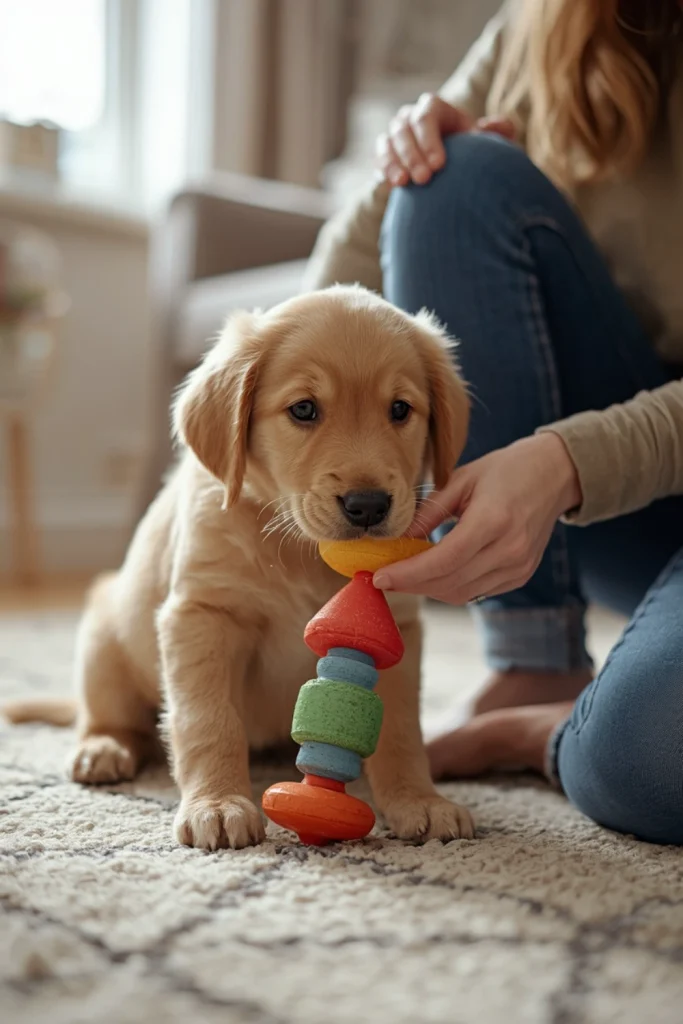
One of the most effective ways to redirect puppy biting clothes is to offer an appropriate chew toy as soon as your puppy starts grabbing your trousers, sleeves, or shirt. Keep a few safe puppy toys within easy reach so you can respond quickly. Choose toys that suit your puppy’s age, size, and chewing strength. When your puppy bites your clothing, calmly present the toy near the puppy’s mouth and encourage them to bite it instead. Avoid waving the toy too wildly, as this can increase excitement and make your puppy more likely to jump and grab your clothes again.
Whenever your puppy releases your clothing and begins chewing the toy, praise them warmly. You can also reward them with a small training treat if appropriate. This teaches your puppy that toys provide an enjoyable and acceptable outlet for chewing. Repeat the process consistently, especially during playtime and moments when your puppy becomes excited. Over time, your puppy can learn to seek out toys rather than clothing. Remember that redirection works best when you act early, before your puppy becomes too excited to respond.
2. Stop Moving When Your Puppy Bites Your Clothes
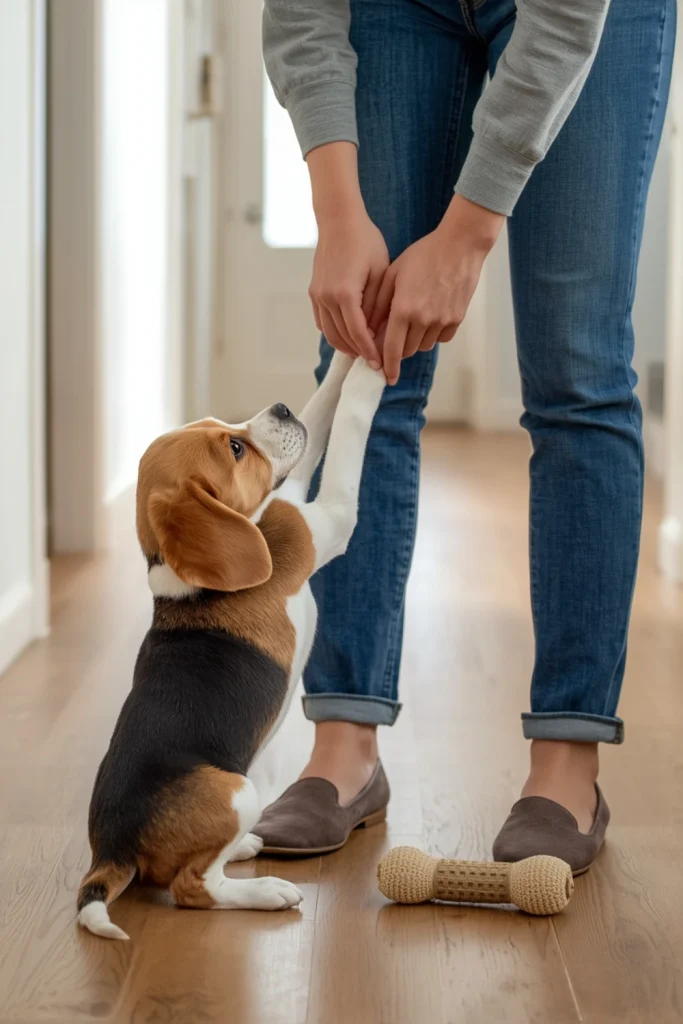
Movement can make clothing especially exciting for puppies. When you walk away, swing your arms, or quickly pull your trousers back, your puppy may interpret those movements as an invitation to chase and tug. To redirect puppy biting clothes, try becoming still when your puppy grabs your clothing. Stop walking, keep your hands relaxed, and avoid making sudden movements. This reduces the excitement associated with biting and prevents your puppy from turning your clothes into a moving target. Stay calm and give your puppy a brief opportunity to release the fabric on their own.
Once your puppy lets go, calmly redirect their attention to a toy or ask for an easy behavior, such as sitting. Reward the release and resume walking only when your puppy is calm enough to continue. If your puppy repeatedly bites your clothes, you may need to pause the interaction and create a little distance using a barrier. Avoid jerking your clothing away or dragging the puppy. With consistent practice, your puppy can begin learning that grabbing clothes makes the fun stop, while calm behavior allows interaction to continue.
3. Teach the Drop It Command
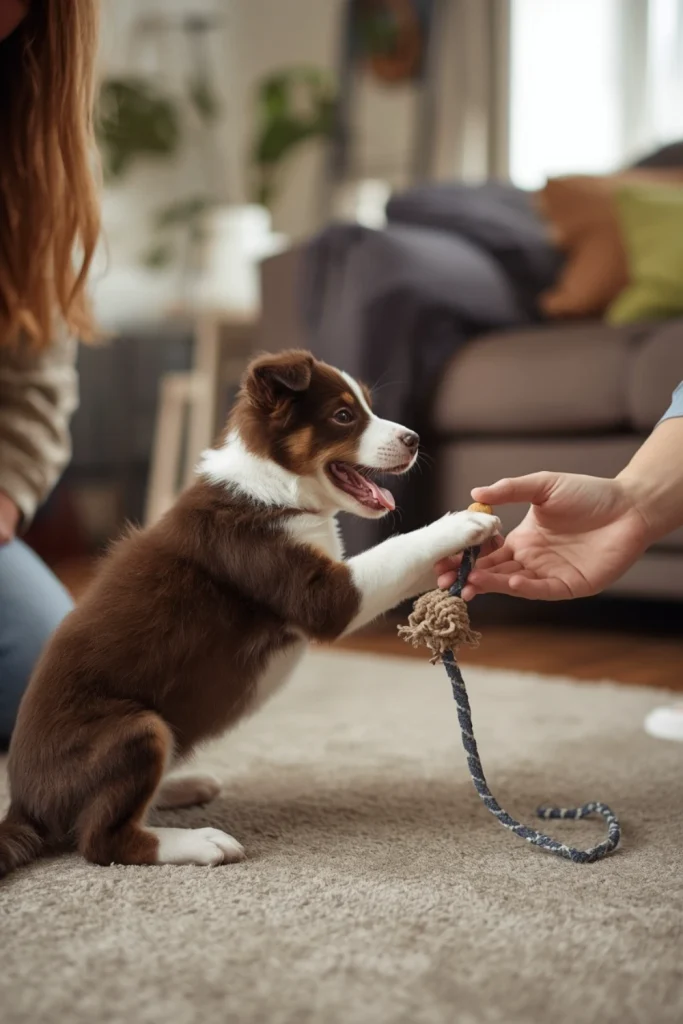
Teaching your puppy the “drop it” command gives you a useful way to interrupt clothing grabbing without turning the situation into a tug-of-war. Begin training in a quiet room when your puppy is relaxed. Offer a suitable toy and let your puppy hold it. Present a small treat near their nose and say “drop it” in a calm voice. When your puppy releases the toy, immediately reward them with the treat and, when appropriate, return the toy so they can continue playing. This helps your puppy understand that releasing an object does not always mean losing something enjoyable.
After your puppy understands the exercise with toys, practice the command during low-level clothing-grabbing situations, provided it is safe to do so. Keep your voice friendly and reward the moment your puppy releases the fabric. Do not repeatedly shout the command or force your puppy’s mouth open. If your puppy is too excited to respond, calmly stop the interaction and use a barrier or another safe management strategy. Short, successful training sessions help build the skill gradually and make the command more reliable in everyday situations.
4. Reward Your Puppy for Choosing Toys Independently
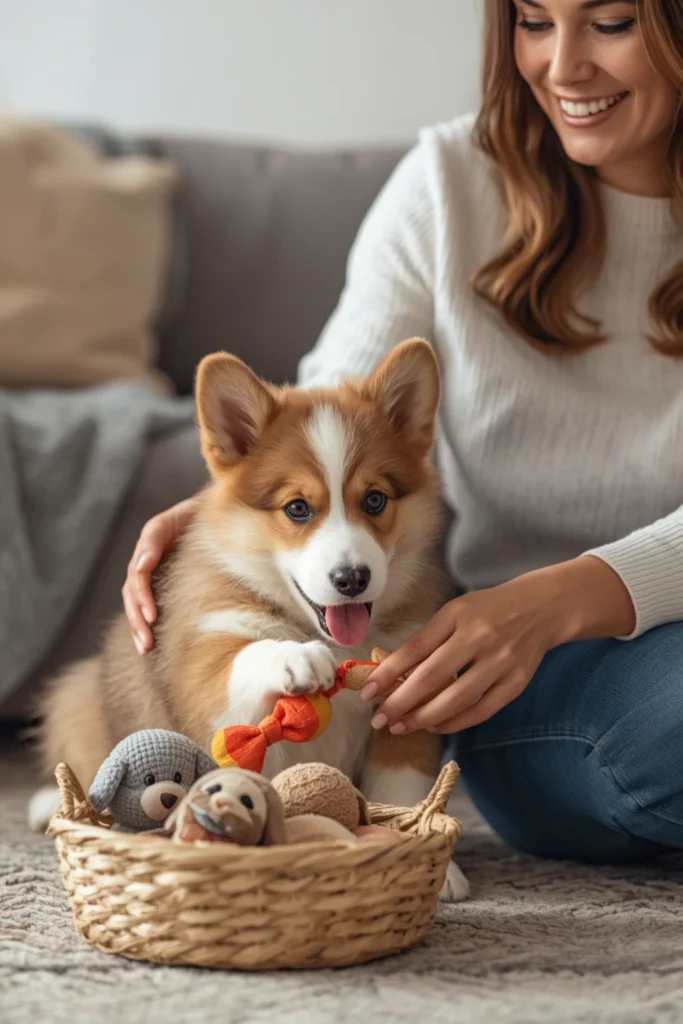
Redirection becomes even more effective when your puppy learns to choose appropriate toys without waiting for your help. Place several safe chew toys in the rooms where your puppy spends the most time. Whenever your puppy approaches a toy and begins chewing it independently, praise them quietly or offer a small reward. This reinforces the idea that toys are available for enjoyable chewing. If your puppy often bites clothes when you sit on the sofa or walk through a hallway, keep an appropriate toy nearby so a better choice is easy to make.
Try not to wait until your puppy starts biting your clothing before giving them something interesting to do. Rewarding good choices before a problem begins can prevent unwanted behavior from developing into a regular habit. Rotate toys occasionally to maintain interest, and choose different textures that are suitable for your puppy’s age and chewing style. Supervise new toys and remove anything damaged or small enough to swallow. With repetition, your puppy can develop a stronger preference for appropriate chewing, making daily life easier for everyone in the household.
5. Use Short, Positive Training Sessions
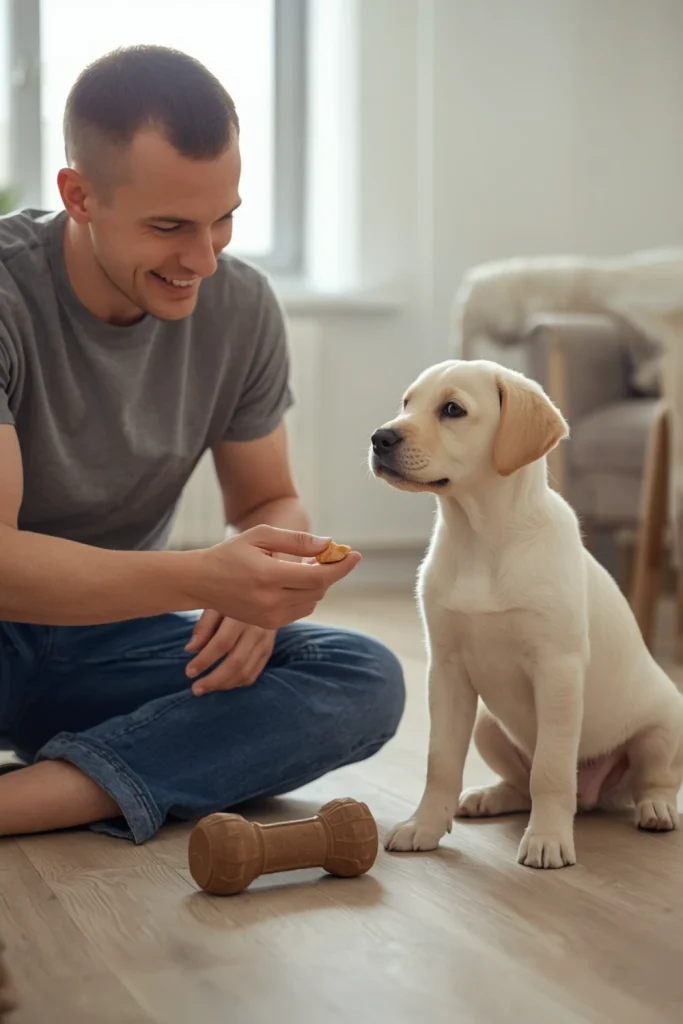
Puppies have limited attention spans, and long training sessions can leave them frustrated or overstimulated. Instead, practice clothing redirection for a few minutes at a time throughout the day. You might work on sitting calmly before greeting you, following a toy instead of your trousers, or releasing a toy on cue. Keep the exercises simple and finish while your puppy is still able to respond. Short sessions make it easier to reinforce good behavior without creating unnecessary pressure.
Positive reinforcement is particularly useful when teaching your puppy what to do instead of biting clothing. Praise, treats, toys, and opportunities to continue playing can all reward appropriate choices. Avoid punishment, frightening noises, or physical corrections, which can increase stress or make handling more difficult. If your puppy begins grabbing clothing repeatedly during training, take a break and give them an opportunity to settle. Consistent, enjoyable practice helps your puppy learn that gentle interactions and appropriate chewing are the behaviors that earn attention.
6. Teach Your Puppy to Sit Before Getting Attention
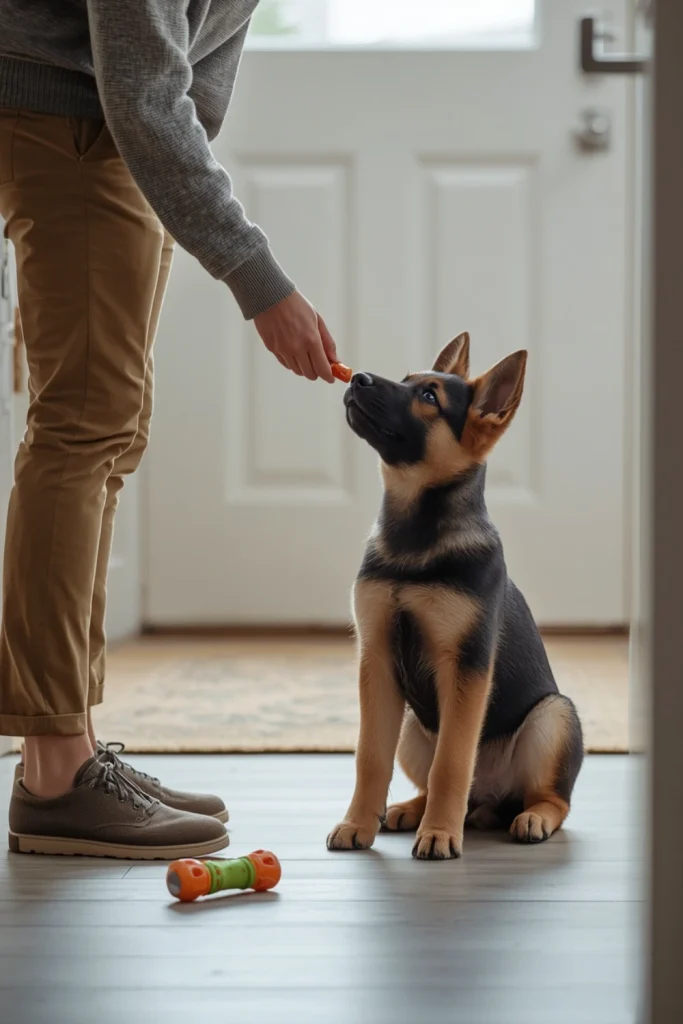
Some puppies bite clothing because they are excited to greet people or want immediate attention. Teaching a simple sit behavior provides a clear alternative. Begin when your puppy is calm enough to focus. Hold a small treat near their nose and slowly move it upward so the puppy naturally lowers their rear toward the floor. As soon as they sit, say “yes” or use a clicker if you have introduced one, then reward them. Practice until your puppy can sit with a simple verbal cue or hand signal.
Use this skill during situations that commonly trigger clothing biting, such as when you enter a room, prepare a meal, or get ready for a walk. If your puppy approaches without grabbing your clothes, ask for a sit and reward the calm greeting. If they begin biting, stop interacting and redirect them before trying again. Do not demand a sit when your puppy is extremely overstimulated; give them space to settle first. Gradually, your puppy can learn that sitting politely is a more effective way to get attention than jumping up and grabbing fabric.
7. Provide Enough Physical Exercise and Mental Stimulation
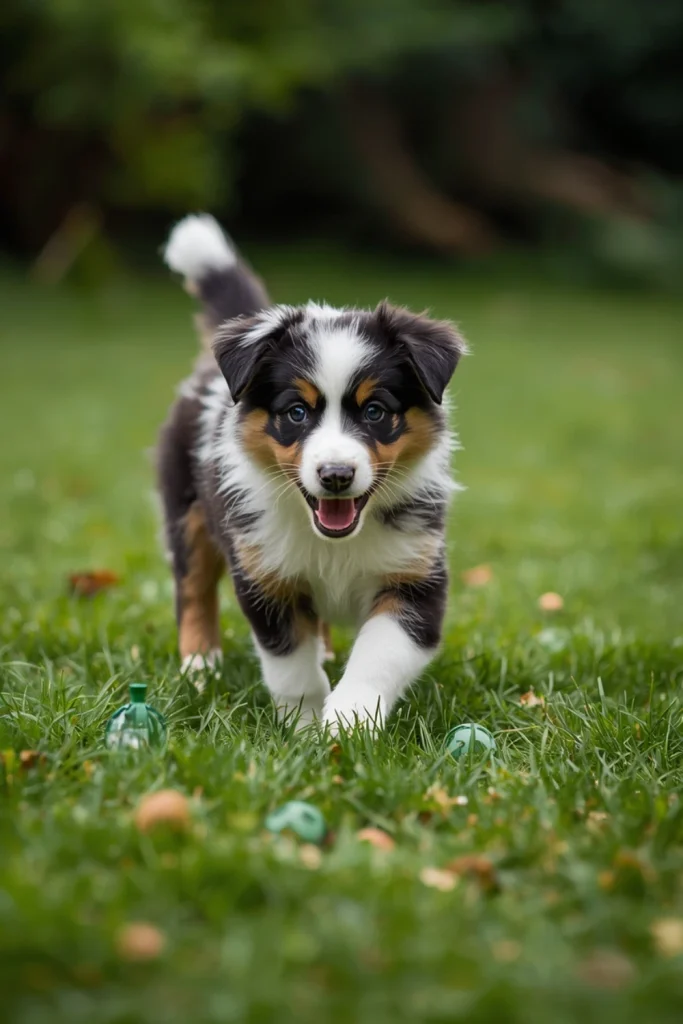
A puppy with excess energy may be more likely to chase moving feet, grab trousers, and tug on loose sleeves. Age-appropriate exercise and mental stimulation can help reduce these behaviors by giving your puppy appropriate ways to explore and use their energy. Depending on your puppy’s age, breed, and health, activities may include short exploratory walks, supervised sniffing, gentle play, or simple games around the home. Avoid forcing strenuous exercise, especially with very young puppies, and follow veterinary guidance about activity and outdoor exposure.
Mental enrichment is just as valuable as physical activity. Food puzzles designed for puppies, supervised scent games, and short reward-based training sessions can encourage concentration and reduce boredom. If your puppy starts biting clothes at predictable times, consider whether they need an appropriate activity or a quiet break. Exercise alone will not eliminate clothing biting, so continue teaching alternative behaviors and rewarding appropriate chewing. A balanced routine gives your puppy opportunities to play, explore, learn, and rest without relying on your clothing for entertainment.
8. Recognize When Your Puppy Needs a Nap

Overtired puppies can become surprisingly mouthy. After a busy period of play, visitors, or training, a puppy may start grabbing trouser legs, chewing sleeves, and ignoring familiar commands. Owners sometimes respond by increasing playtime, but an exhausted puppy may need rest rather than more stimulation. Watch for signs such as frantic movement, difficulty settling, repeated biting, and reduced responsiveness. When these behaviors appear, calmly guide your puppy toward a comfortable resting area rather than continuing an exciting game.
Create a quiet, comfortable space where your puppy can rest without constant interruptions. A properly introduced crate, puppy pen, or safe bed may help, provided your puppy is comfortable there and is never forced into confinement as punishment. Offer a suitable chew toy if it helps your puppy settle, and allow enough time for uninterrupted sleep. Puppies need substantial sleep, although exact requirements vary by age and individual. Learning to recognize tiredness can make it easier to redirect puppy biting clothes before excitement escalates into persistent grabbing.
9. Manage Clothing That Tempts Your Puppy to Bite
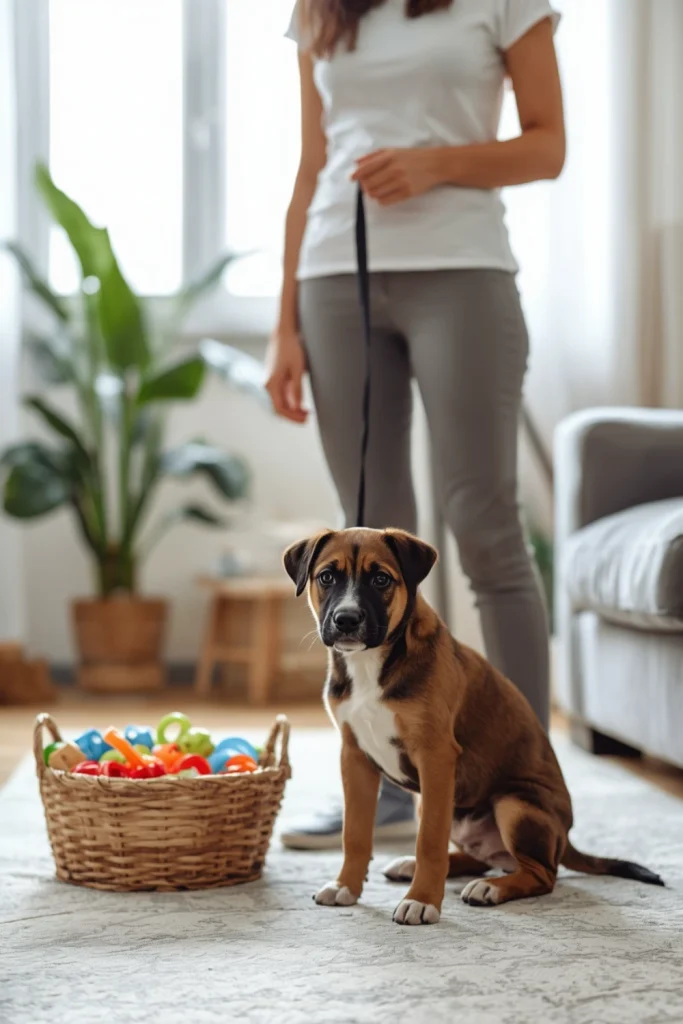
Loose sleeves, flowing trousers, dangling drawstrings, and long dressing-gown belts can attract a puppy’s attention. While training is important, managing the environment reduces opportunities for your puppy to practice the unwanted behavior. During the early stages of training, choose comfortable clothing that is less likely to swing or drag across the floor. Tuck away loose strings and avoid leaving tempting garments where your puppy can reach them. These small adjustments make it easier to redirect your puppy before grabbing becomes an exciting game.
Management does not mean your puppy must never encounter ordinary clothing. Instead, it helps you control difficult situations while you build better habits. Keep toys nearby, supervise interactions, and use baby gates or a puppy pen when you cannot give your puppy your full attention. If your puppy repeatedly targets a particular garment, consider what makes it interesting and provide a safe alternative. Avoid using damaged fabric or clothing with loose threads as toys, since swallowed material can cause serious digestive problems. Combine prevention with positive training so your puppy learns what is appropriate.
10. Use Brief, Calm Time-Outs From Play
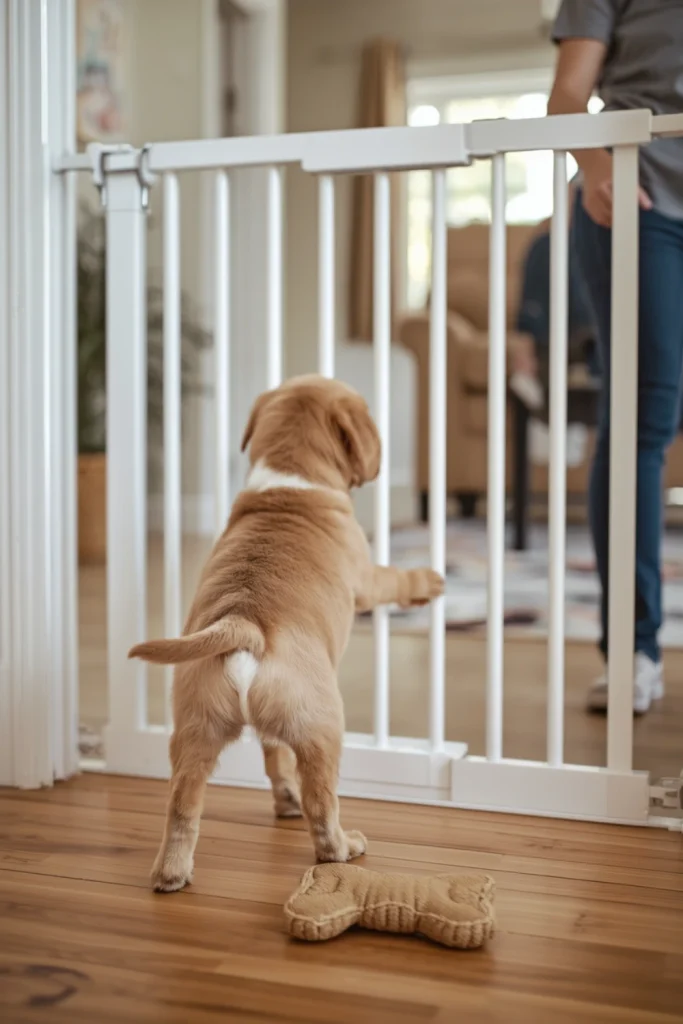
If your puppy continues biting clothing after you offer a toy, a brief withdrawal of attention can help communicate that biting ends the interaction. When safe, stop moving and calmly disengage. If the puppy releases your clothing, redirect them toward an appropriate toy. If biting continues, step behind a secure barrier or move out of reach for a short period. Keep the break brief and neutral rather than scolding, chasing, or physically wrestling with your puppy. The goal is to remove the exciting social interaction, not to frighten or isolate the puppy.
After a short pause, return and offer an opportunity to play appropriately. Reward gentle behavior and stop again if clothing grabbing resumes. Consistency matters: everyone in the household should respond in a similar way so the puppy receives a clear message. Avoid using the crate as punishment or grabbing the puppy roughly by the collar. If your puppy becomes more agitated when you disengage, increase distance safely and seek guidance from a qualified reward-based trainer if needed. Calm, predictable consequences can help your puppy learn better ways to interact with people.
11. Teach Gentle Play With Consistent Household Rules
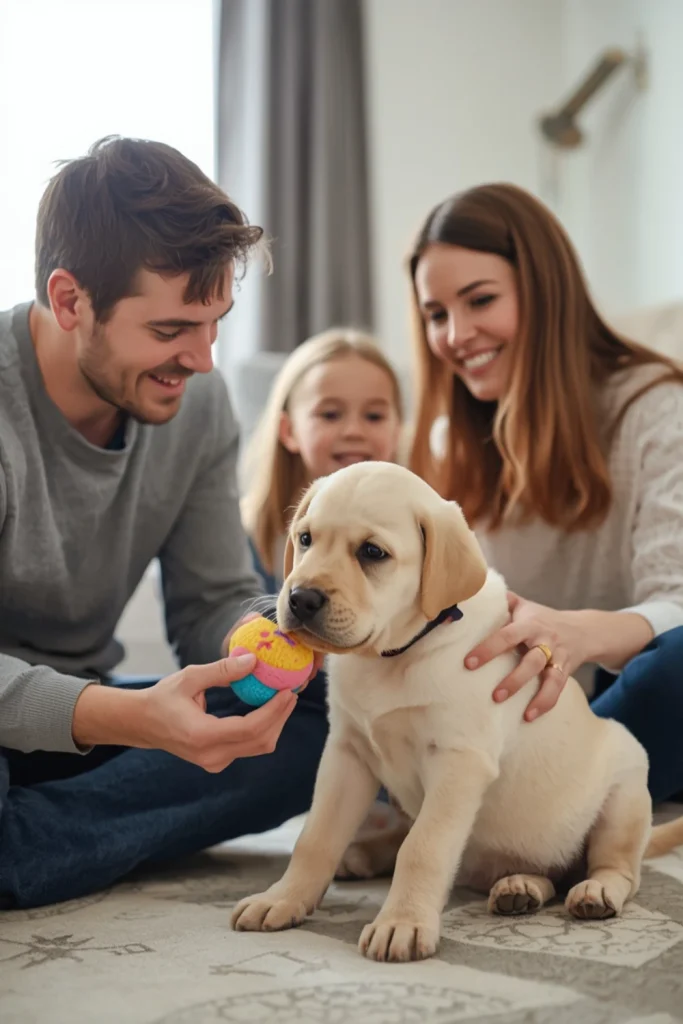
Puppies learn through repetition, so mixed messages can make clothing biting harder to change. If one family member allows a puppy to tug on sleeves while another discourages it, the puppy may struggle to understand the rule. Establish a simple household plan: clothing is never a toy, hands and feet are treated gently, and appropriate toys are used for games. Everyone should respond calmly when biting starts, redirect to an acceptable activity, and reward the puppy for making a better choice.
Children should be supervised closely around puppies and taught not to run away, squeal, or wave their arms when a puppy grabs clothing. These reactions can make the behavior more exciting. Adults should manage interactions and separate the puppy and child when either becomes overwhelmed. Choose games that encourage appropriate play, such as tossing a toy a short distance or practicing simple cues with rewards. Consistent boundaries help your puppy understand what is expected and make it easier to build safe, respectful relationships with every member of the family.
12. Stay Consistent and Track Your Puppy’s Progress
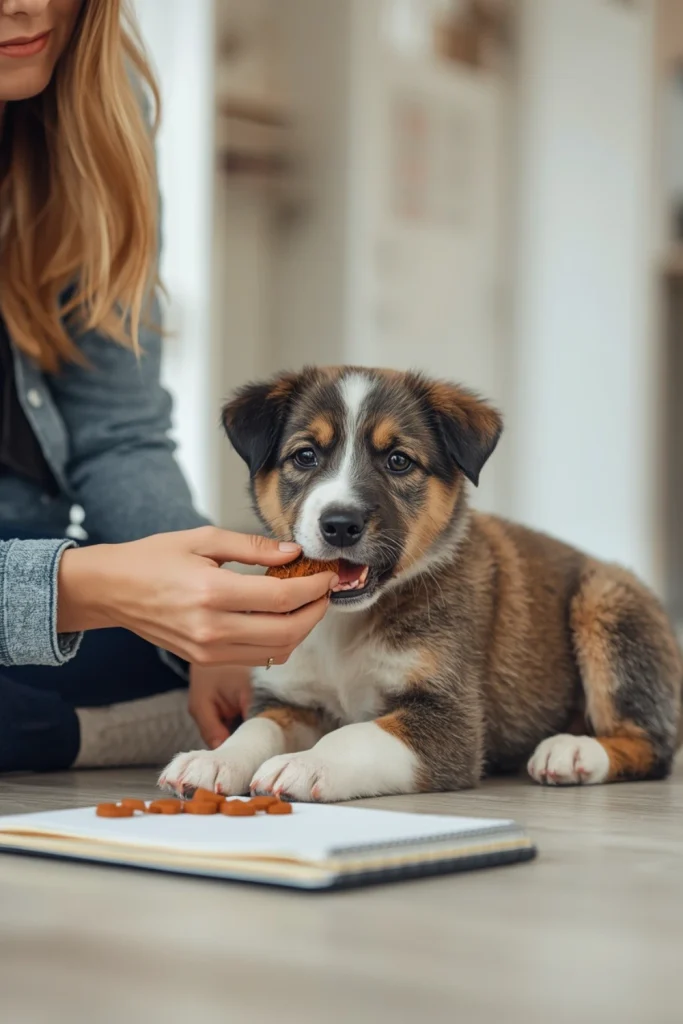
Changing a puppy’s behavior takes time, and progress may not happen in a straight line. Your puppy might choose a toy successfully several times and then grab your trousers during an especially exciting moment. Rather than assuming training has failed, look for patterns. Note when clothing biting happens, what occurs immediately beforehand, and which redirection technique works best. You may discover that your puppy is more likely to bite after long periods of activity, when visitors arrive, or when you walk quickly through a particular room.
Use these observations to adjust your routine and celebrate small improvements. Perhaps your puppy releases clothing more quickly, chooses a toy independently, or sits instead of jumping during greetings. Reward these moments consistently and gradually practice the same skills in different rooms and situations. If the biting becomes unusually intense, causes injuries, appears alongside signs of fear or distress, or does not improve despite consistent training, consult your veterinarian and consider working with a qualified, reward-based dog trainer. A patient, structured approach gives your puppy the best chance to develop safer habits.
Final Thoughts
Learning how to redirect puppy biting clothes is an important part of raising a well-mannered dog. By offering appropriate chew toys, rewarding calm behavior, teaching useful commands, providing enough rest, and managing exciting situations, you can help your puppy develop better habits without relying on punishment.
Consistency is the key to success. Every time you calmly redirect your puppy and reward an appropriate choice, you create another opportunity for learning. Be patient, celebrate small improvements, and remember that puppies need guidance as they grow. With a positive training routine and a little time, you can make clothing biting less frequent and enjoy a happier relationship with your puppy.