
10 Ways to Help Your Puppy Stop Peeing Indoors
Puppy accidents on the floor can be frustrating, especially when you feel like your puppy should already understand where to pee. The good news is that indoor accidents are a normal part of learning for many young dogs, and the right routine can make a big difference.
If you want to help your puppy stop peeing indoors, focus on consistency, supervision, timing, and positive reinforcement. Instead of punishing accidents, create more opportunities for your puppy to succeed in the right place. With patience and repetition, your puppy can gradually develop reliable bathroom habits.
1. Create a Consistent Potty Schedule
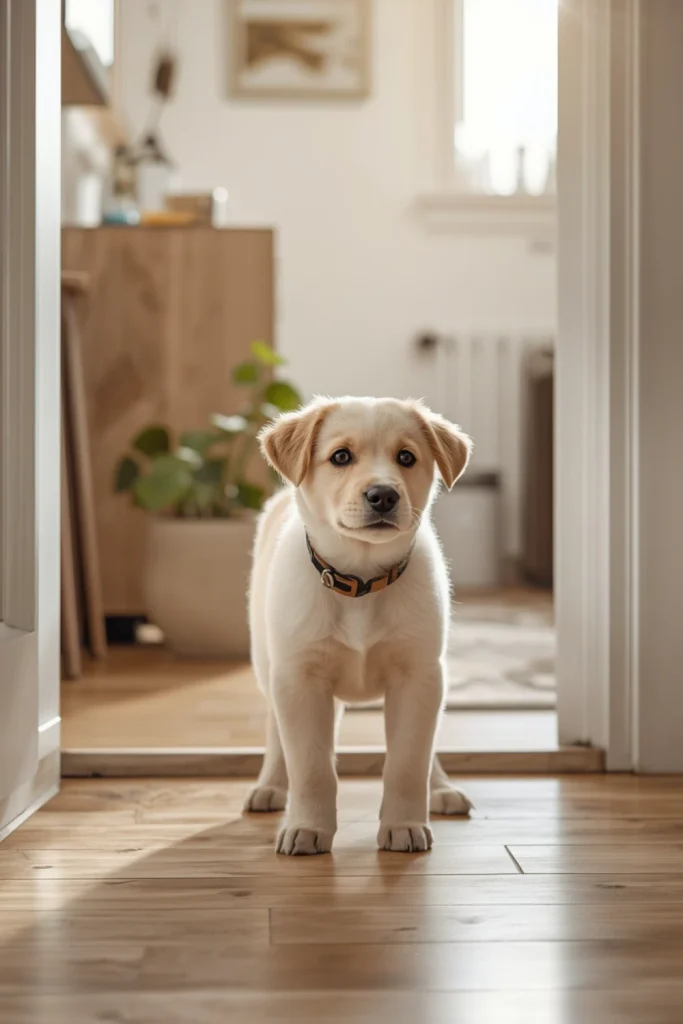
One of the most effective ways to help your puppy stop peeing indoors is to establish a consistent potty schedule. Puppies are still developing bladder control, so they need regular opportunities to eliminate in the correct location. Take your puppy to the designated potty area after waking up, eating, drinking, playing, and taking a nap. Regular timing helps your puppy understand what is expected.
Try to follow approximately the same routine every day. When potty trips happen predictably, you can begin to anticipate when your puppy needs to pee. This reduces the chances of waiting until an accident happens. As your puppy gets older and develops better control, you can gradually increase the time between bathroom breaks.
2. Take Your Puppy Outside at the Right Times
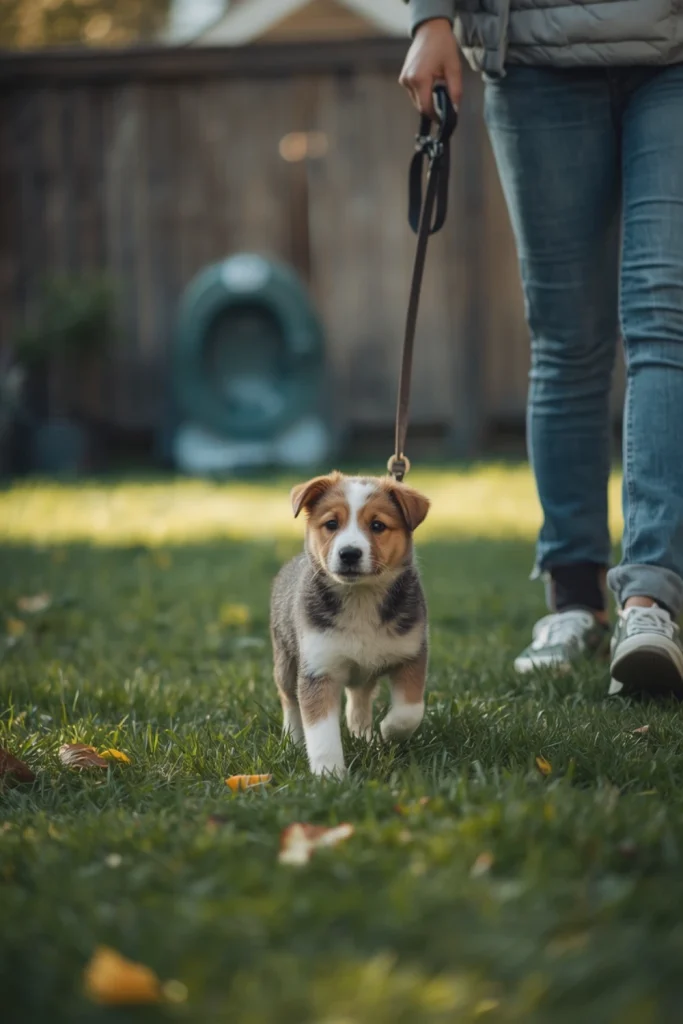
Timing is extremely important during puppy potty training. Many indoor accidents happen because a puppy is not taken outside soon enough. Puppies commonly need to pee shortly after waking up, eating a meal, drinking water, playing actively, or coming out of a crate.
Pay attention to these predictable moments and make them part of your routine. Taking your puppy outside before they become desperate gives them a better chance of succeeding. If your puppy regularly has an accident 15 minutes after coming inside, consider staying outside a little longer or taking another short potty trip soon afterward. Learning your puppy’s timing can make training much easier.
3. Watch for Your Puppy’s Potty Signals
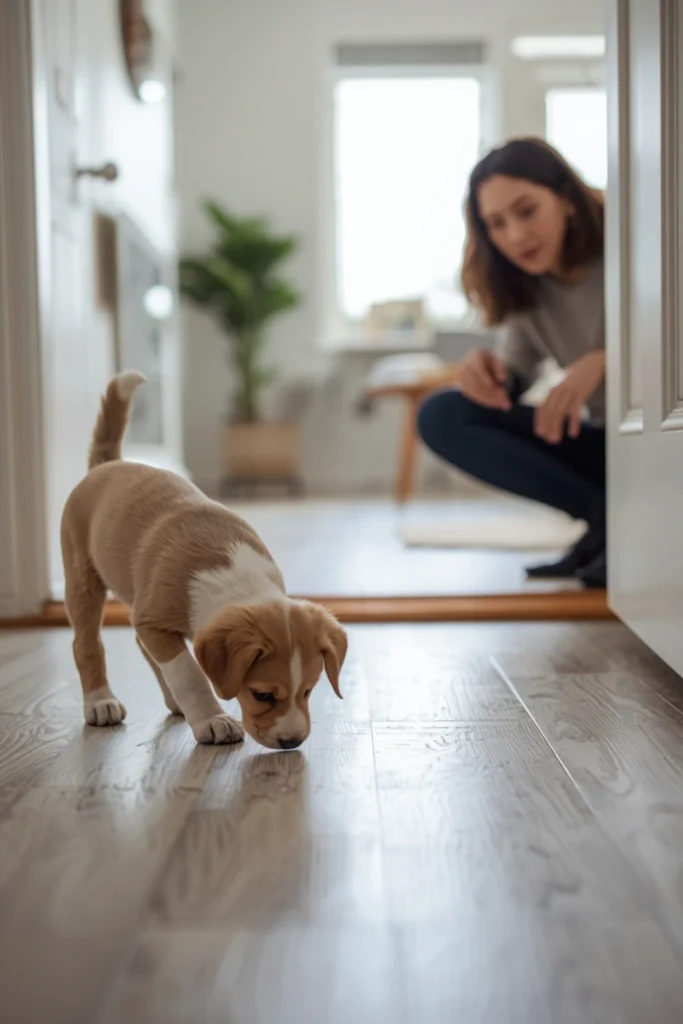
Learning to recognize your puppy’s potty signals can help prevent accidents before they happen. Some puppies sniff the floor, circle around, pace, whine, wander toward a door, suddenly stop playing, or become restless when they need to pee.
Every puppy may communicate differently, so observe their behavior carefully. When you notice a repeated signal, immediately take your puppy to the appropriate potty area. Over time, your puppy may learn to use a clearer signal, such as sitting by the door or making a specific sound. Responding quickly teaches your puppy that communicating the need to go leads to a potty opportunity.
4. Supervise Your Puppy Closely Indoors
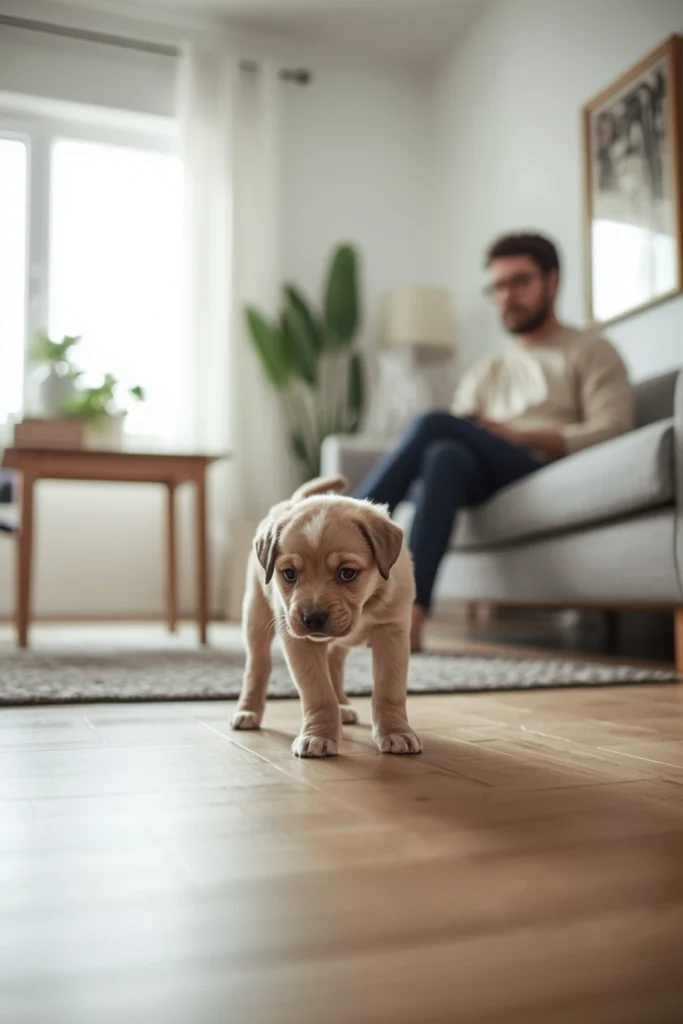
Supervision is one of the most important parts of preventing indoor urination. A puppy that is allowed to wander around the house without supervision may quietly find a corner and pee before you realize what is happening.
During the early stages of training, keep your puppy close enough to observe their behavior. You can use a puppy-safe room, baby gates, or keep the puppy in the same room with you. When you notice signs that they need to go, take them outside immediately. Close supervision also helps you learn your puppy’s patterns, making it easier to predict bathroom needs and prevent repeated accidents.
5. Limit Your Puppy’s Indoor Freedom
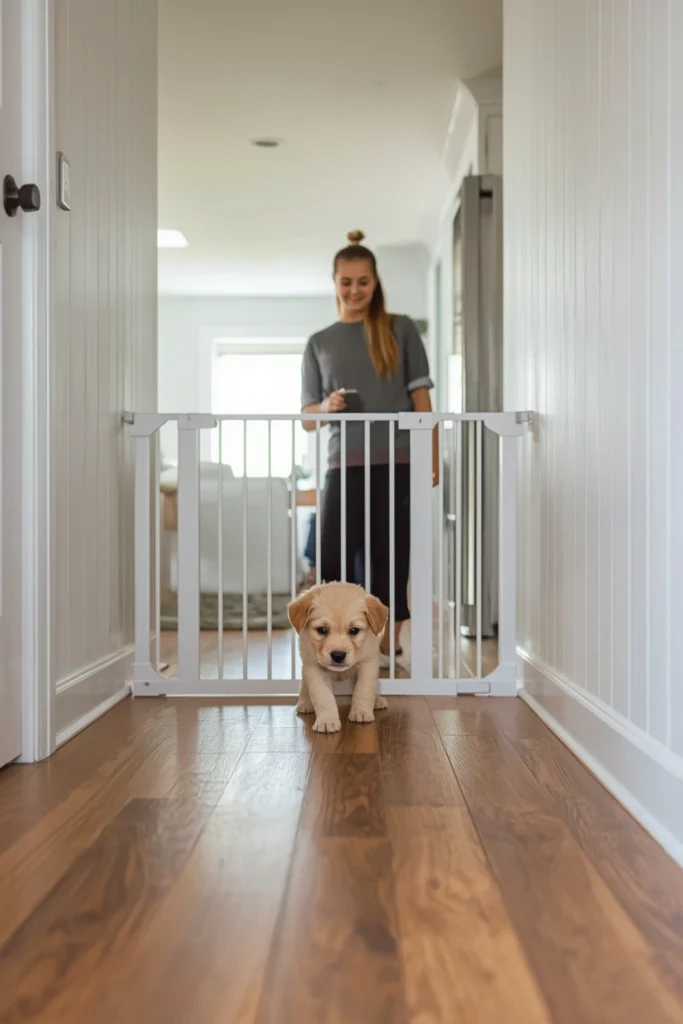
Giving a newly arrived puppy access to the entire house can make potty training more difficult. A large home provides many places where a puppy can have an accident, and hidden areas may allow repeated accidents to go unnoticed.
Start with a smaller, puppy-proofed space where you can easily supervise your puppy. As they become more reliable with potty training, gradually give them access to additional rooms. This creates a clear connection between good behavior and increased freedom. If accidents start happening again after expanding their space, temporarily reduce their access and return to closer supervision until their habits improve.
6. Reward Your Puppy Immediately After Peeing Outside
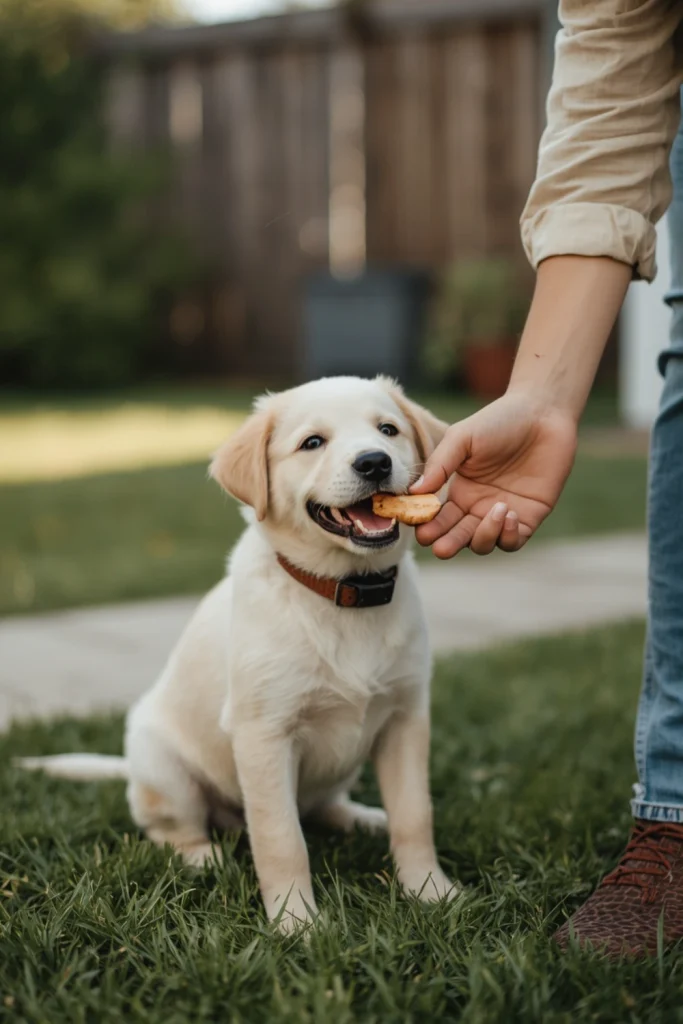
Positive reinforcement can make potty training more understandable for a puppy. When your puppy successfully pees in the correct location, provide praise immediately afterward. You can also use a small appropriate treat if it fits your puppy’s normal training routine.
The timing of the reward matters. Your puppy needs to connect the reward with the behavior that earned it. Waiting several minutes may make the connection less clear. Use a happy voice and consistent praise whenever your puppy successfully uses the correct potty area. Over time, repeated positive experiences can encourage your puppy to choose the desired behavior more consistently.
7. Clean Indoor Accidents Thoroughly
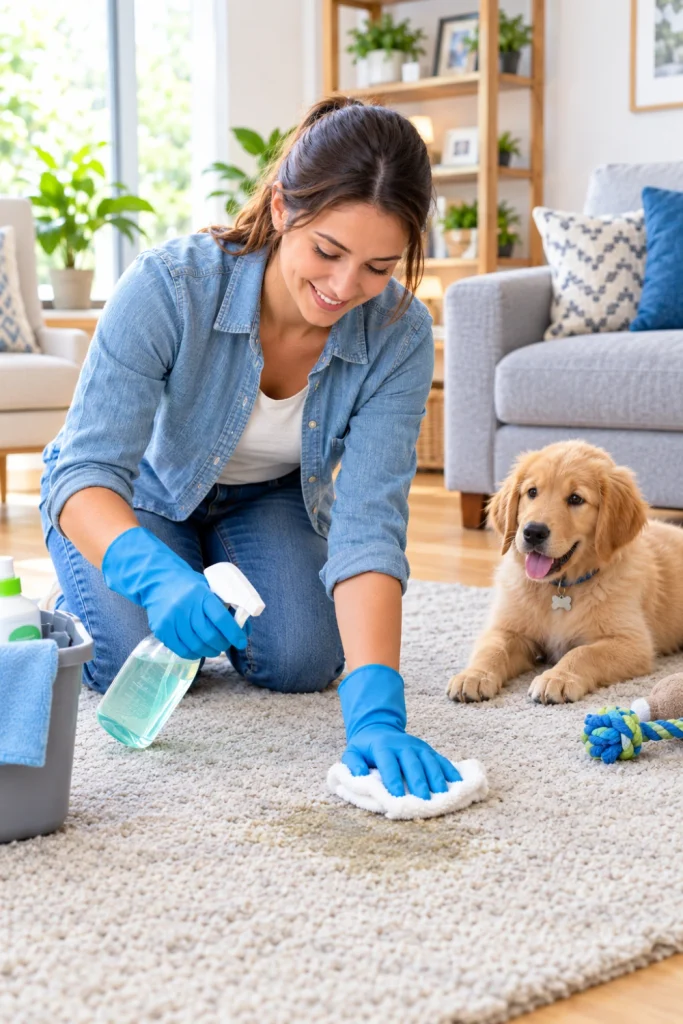
Cleaning an accident properly is essential if you want to help your puppy stop peeing indoors. Even when a floor looks clean, urine odor can remain and may encourage a puppy to return to the same location. Dogs have a much stronger sense of smell than humans, so a spot that seems odor-free to you may still be noticeable to your puppy.
Use an enzymatic pet-safe cleaner designed for urine stains and odors. Pay special attention to carpets, rugs, furniture, and other absorbent surfaces. If a particular area has become a repeated accident location, consider restricting your puppy’s access until it has been thoroughly cleaned. Removing lingering odors can make it easier to establish new bathroom habits.
8. Teach Your Puppy to Use the Same Potty Area
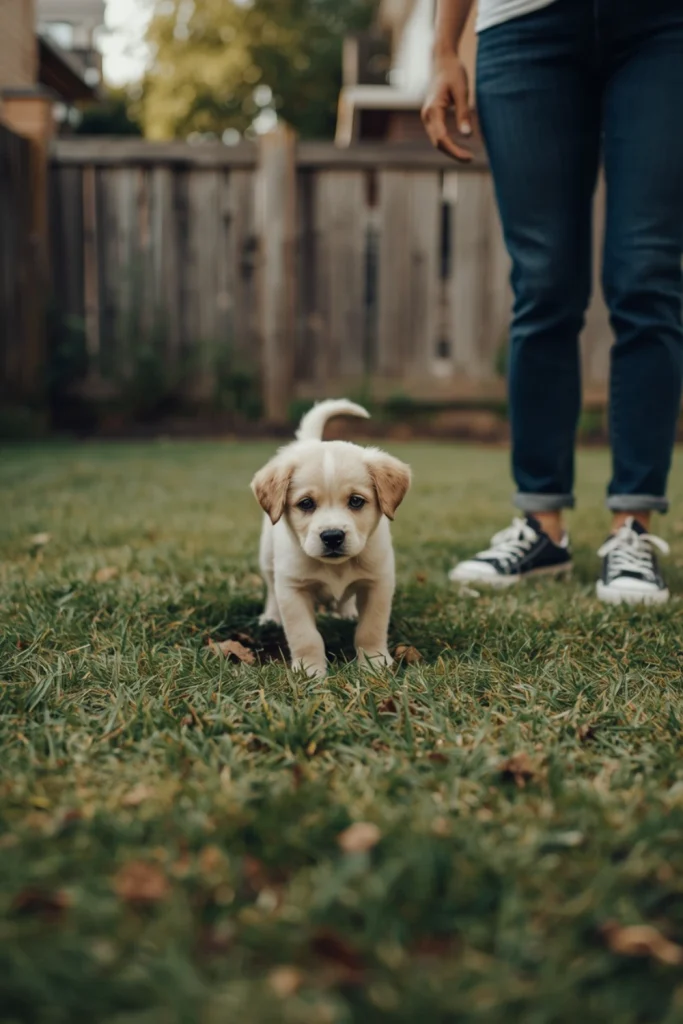
Taking your puppy to the same general potty location can make training easier because familiar surroundings provide consistency. Puppies can become accustomed to the sights, smells, and routine associated with a particular bathroom area.
Choose a safe and practical location and use it consistently during training. Give your puppy enough time to sniff and eliminate without immediately turning the trip into playtime. Once they finish, praise them and then allow some supervised fun. This routine teaches an important sequence: go to the potty area, eliminate, receive positive feedback, and then enjoy other activities.
9. Avoid Punishing Your Puppy for Accidents
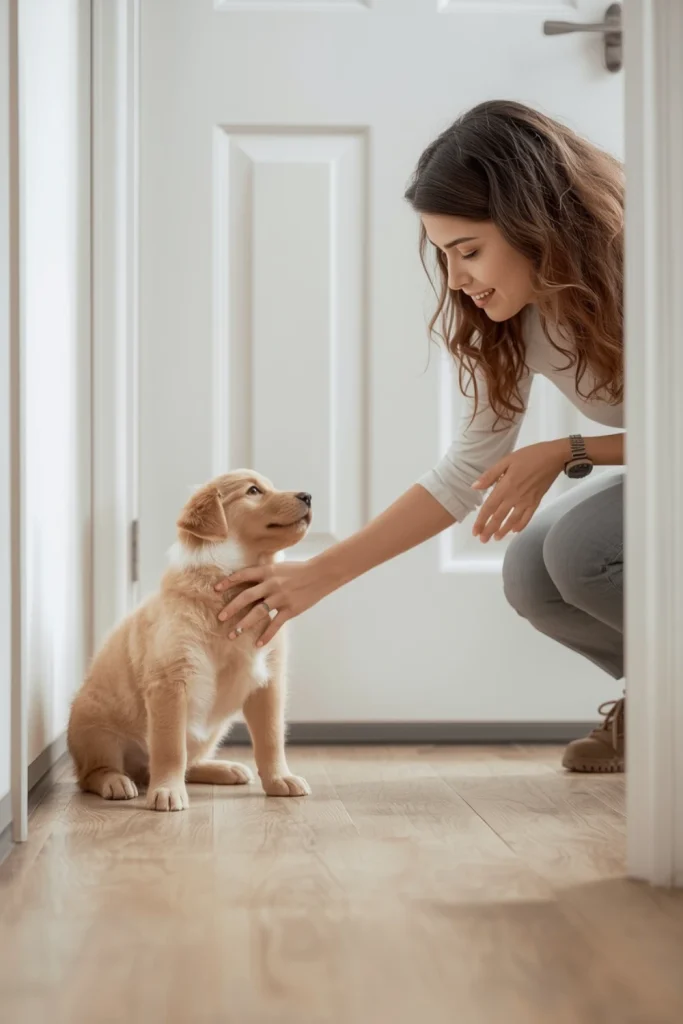
Punishing a puppy for peeing indoors can create fear and confusion rather than teaching the desired behavior. Yelling, hitting, or rubbing a puppy’s nose near an accident does not clearly explain where they should go instead.
When an accident happens, stay calm. If you catch your puppy beginning to pee, gently interrupt them and take them to the correct potty location. If they finish there, reward them. If you discover an accident after it has already happened, simply clean it thoroughly and think about what could be changed in your routine. Positive, consistent guidance gives your puppy a clearer path toward success.
10. Be Patient and Adjust the Routine as Your Puppy Grows
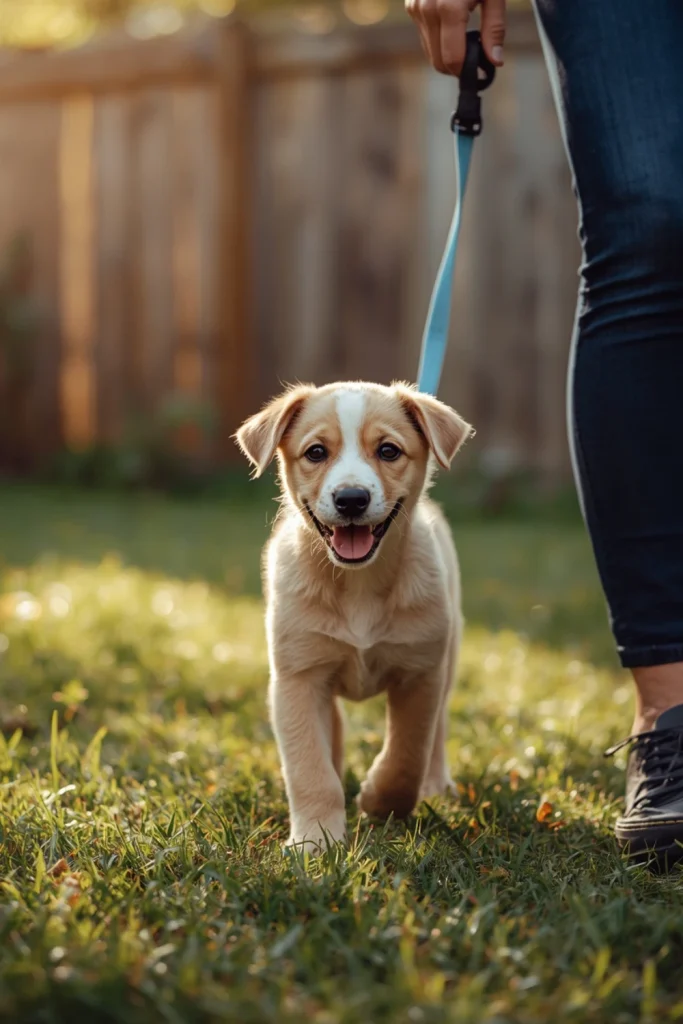
Potty training does not happen at exactly the same speed for every puppy. Age, bladder development, daily routine, environment, previous training, and individual temperament can all affect progress. Some puppies improve quickly, while others need additional time and repetition.
Keep track of when your puppy eats, drinks, sleeps, plays, and has accidents. This simple information can reveal patterns. If accidents happen at predictable times, adjust the potty schedule accordingly. As your puppy becomes more reliable, gradually extend the time between potty breaks and increase supervised freedom. Patience is essential because consistent habits are built through repeated successful experiences.
Final Thoughts
Learning how to help your puppy stop peeing indoors requires patience, consistency, and an understanding of your puppy’s developmental stage. Indoor accidents are often a normal part of the learning process rather than a sign that your puppy cannot be trained.
Focus on predictable potty breaks, close supervision, limited freedom, immediate rewards, and thorough accident cleanup. Avoid punishment and pay attention to the situations that lead to accidents. Every successful potty trip is another opportunity for your puppy to learn the right habit.
With time and consistent guidance, your puppy can become more reliable and confident with their bathroom routine. The goal is not perfection overnight but steady progress toward a clean, comfortable, and well-trained home.