10 Helpful Training Tips for Teething Puppies
Teething is a natural part of puppy development, but it can make life challenging for new dog owners. From chewing shoes and furniture to gently—or sometimes painfully—nipping fingers, puppies explore the world with their mouths. During this stage, your puppy needs patience, appropriate chew toys, and consistent training to develop healthy chewing habits.
The good news is that you can guide your puppy through teething without harsh corrections or frustration. By following these 10 helpful training tips for teething puppies, you can protect your belongings, reduce unwanted biting, and teach your furry companion what is appropriate to chew. With the right approach, teething can become an opportunity to build good behavior and strengthen your bond.
1. Provide Safe and Appropriate Chew Toys
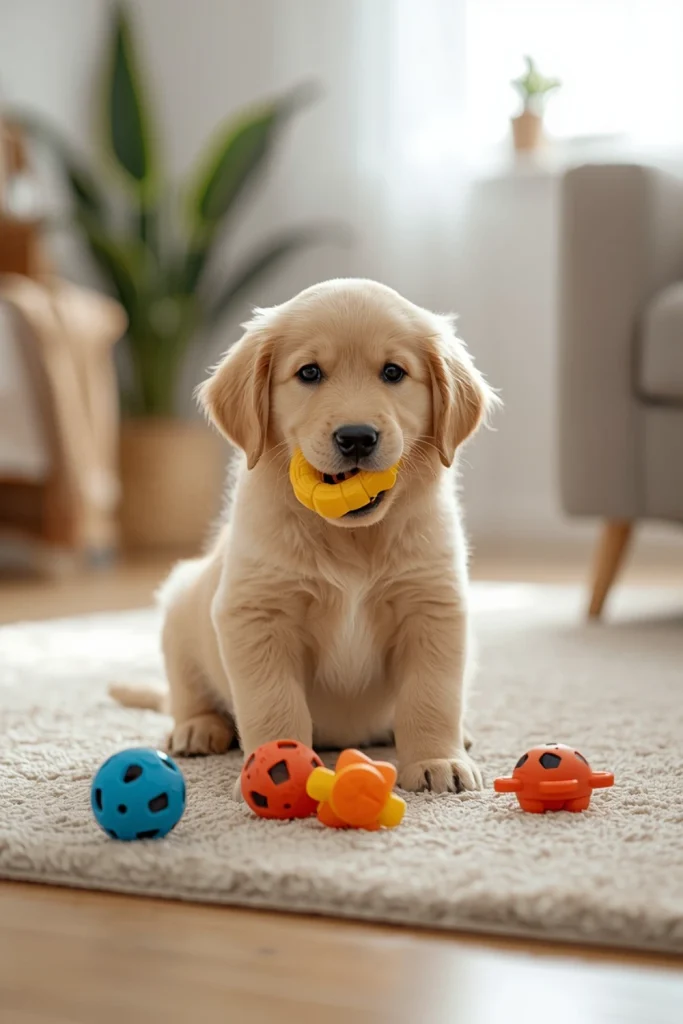
One of the most effective training tips for teething puppies is to provide a variety of safe chew toys. Puppies naturally seek objects to chew when their gums feel uncomfortable. If suitable toys are unavailable, they may turn to furniture legs, slippers, clothing, or other household items. Keeping appropriate chew toys within reach makes it easier to redirect this behavior before it becomes a habit.
Choose puppy-specific toys that match your dog’s size, chewing strength, and developmental stage. Soft rubber toys designed for puppies may provide a satisfying chewing experience without being excessively hard on developing teeth. Inspect toys regularly for cracks, loose pieces, or damage, and remove anything that could become a choking hazard. Always supervise your puppy with a new toy, especially when you are unsure how they will use it.
When your puppy starts chewing an inappropriate object, calmly offer an approved toy instead. Praise them when they begin chewing the correct item. This teaches your puppy that chewing is acceptable when directed toward suitable objects. Rather than repeatedly saying no, focus on rewarding the behavior you want to see.
2. Redirect Biting Toward Appropriate Objects
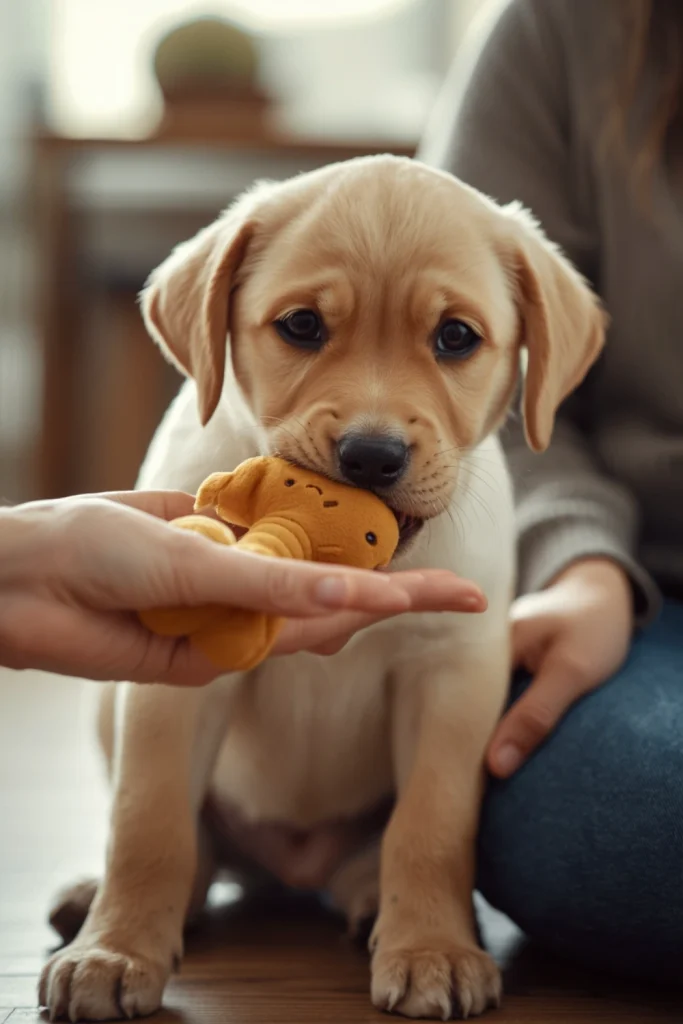
Puppies often bite hands, sleeves, and trouser legs because they are curious, playful, or experiencing teething discomfort. Although this behavior is common, allowing it to continue without guidance can make it harder to establish appropriate boundaries. Redirection teaches your puppy that human skin and clothing are not chew toys, while suitable objects are available for chewing and play.
Whenever your puppy begins mouthing your fingers or clothing, calmly offer a chew toy. Move the toy gently to attract their attention, then praise them when they engage with it. Avoid waving your hands rapidly or pulling clothing away in an exciting manner, as these movements can encourage chasing and more biting. If your puppy repeatedly returns to your hands, pause the interaction briefly and give them a chance to settle.
Everyone in the household should use the same approach. If one person encourages hand biting during play while another discourages it, your puppy may become confused. Consistent redirection helps establish clear expectations and makes learning more effective over time.
3. Reward Calm and Gentle Behavior
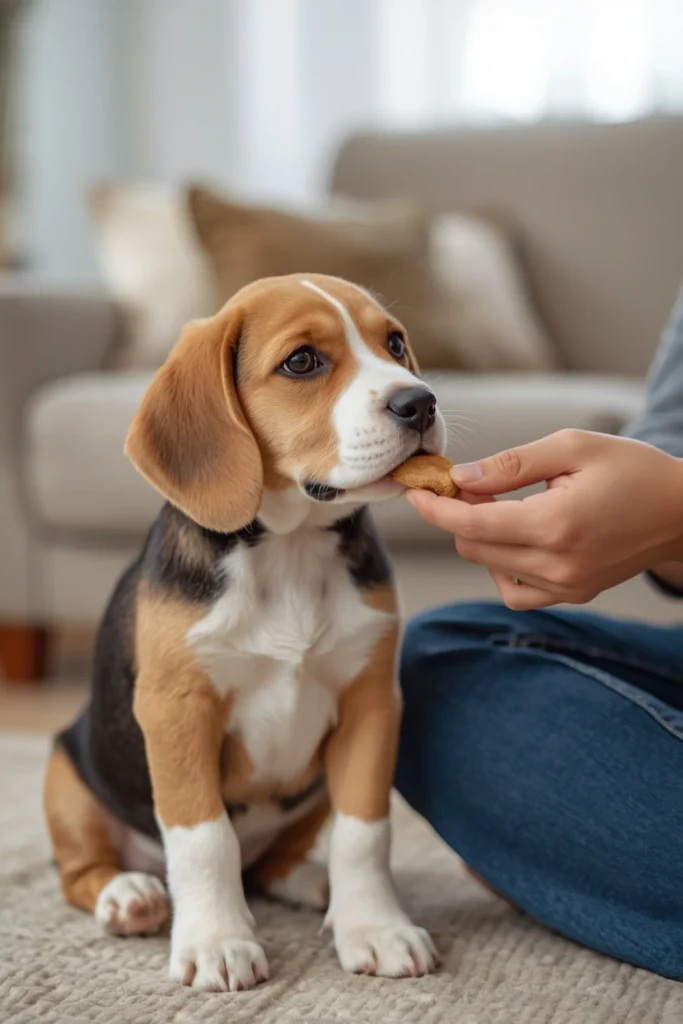
Positive reinforcement is an important part of training tips for teething puppies. Puppies learn through experience, and rewarding calm behavior helps them understand what earns attention and rewards. If your puppy sits quietly, gently takes a toy, or relaxes beside you without biting, offer calm praise or a small, puppy-appropriate treat. These rewards encourage your puppy to repeat desirable actions.
Try to reward good behavior before your puppy becomes overly excited. For example, if your puppy approaches you and keeps all four paws on the floor without nipping, praise them immediately. Keep your voice friendly but not overly energetic if excitement tends to trigger biting. Short, frequent training sessions are often more effective than long sessions that leave a young puppy tired or frustrated.
Avoid shouting, hitting, or physically punishing your puppy for teething behavior. Harsh corrections can create fear and may make handling more difficult. Instead, reward the behavior you want and calmly interrupt behavior that needs to stop. Over time, your puppy can learn that gentle interactions bring attention, play, and rewards.
4. Teach Your Puppy the “Leave It” Command

Teaching the “leave it” command can help prevent your teething puppy from chewing dangerous or inappropriate objects. Puppies are naturally curious and may investigate electrical cords, shoes, houseplants, children’s toys, or items left on the floor. A reliable leave-it cue gives you a useful way to redirect attention, although it should never replace supervision and puppy-proofing.
Begin training in a quiet area with a low-value object or treat safely placed out of reach. When your puppy notices it, say “leave it” once and reward them for turning their attention toward you. You can then gradually practise with different safe objects and in different rooms. Keep sessions short and make the exercise easy enough for your puppy to succeed.
Never use the command as an excuse to leave dangerous objects accessible. Keep toxic substances, medicines, small swallowable items, and electrical cords securely out of reach. If your puppy picks up something hazardous, prioritize safety and avoid chasing them, which may encourage them to run away or swallow the object. Teach “drop it” separately so your puppy can learn to release objects safely.
5. Use Frozen Puppy-Safe Chew Options

Cold chew options may help soothe a teething puppy’s uncomfortable gums. Some puppies enjoy chewing a damp washcloth that has been chilled or a suitable puppy teething toy cooled according to the manufacturer’s instructions. The cool surface can provide temporary relief while giving your puppy an appropriate outlet for chewing. Always supervise these activities to make sure your puppy does not tear off and swallow pieces.
Choose options specifically considered safe for your puppy’s age and chewing habits. Avoid anything that becomes rock-hard when frozen, because excessively hard objects may damage teeth. Ice cubes can also be too hard or create choking concerns for some puppies, so they are not an ideal choice for every dog. When in doubt, ask your veterinarian for recommendations suitable for your puppy.
Introduce a chilled toy during a calm moment rather than waiting until your puppy is already biting intensely. Praise them for chewing the appropriate item and remove it if it becomes damaged. Frozen or chilled toys should support your training routine, not replace it. Continue to teach redirection, gentle play, and calm behavior as your puppy grows.
6. Keep Training Sessions Short and Positive

Young puppies have limited attention spans and need plenty of sleep. Long or repetitive training sessions can cause frustration, especially when teething discomfort makes them restless. Short sessions lasting a few minutes allow your puppy to practise useful skills without becoming overwhelmed. You can repeat these sessions throughout the day when your puppy is alert, comfortable, and ready to learn.
Focus on one simple goal at a time. You might practise redirecting biting toward a chew toy in the morning, rewarding calm behavior after lunch, and teaching “leave it” later in the day. End each session with an easy success and praise. If your puppy begins yawning repeatedly, wandering away, becoming unusually mouthy, or struggling to focus, take a break rather than forcing them to continue.
Consistency matters more than the length of each session. A few minutes of positive practice every day can help establish better habits over time. Remember that puppies also need exercise appropriate to their age, opportunities to explore safely, social interaction, and plenty of rest. Training works best when these needs are balanced.
7. Stop Play Briefly When Biting Becomes Too Rough
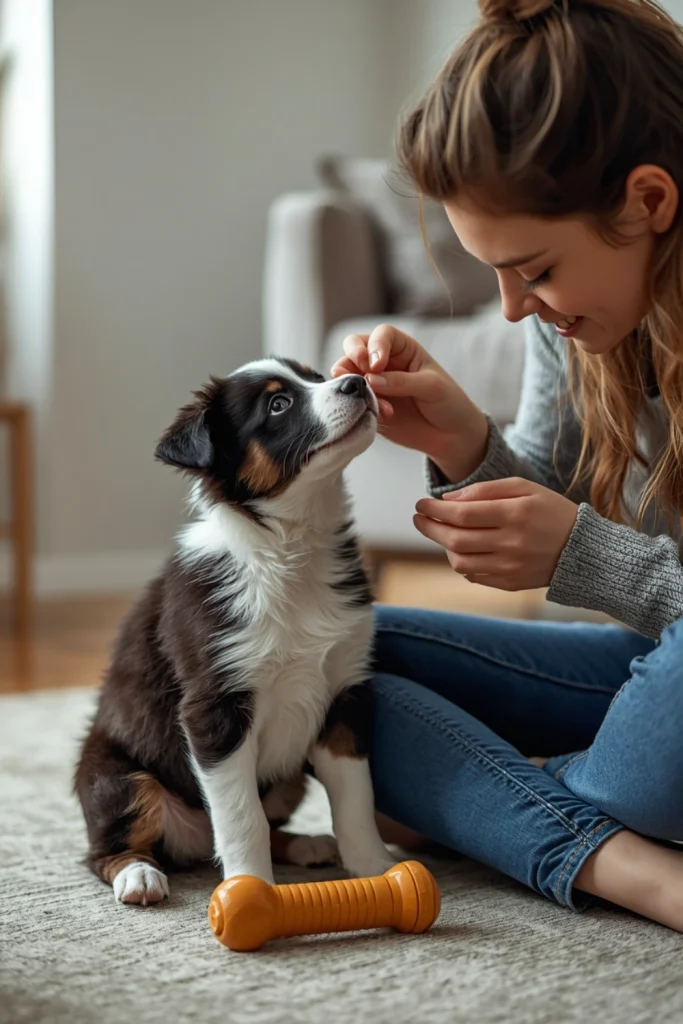
Puppies often use their mouths during play, but they need to learn that biting people ends the fun. If your puppy bites your hand too hard or repeatedly grabs your clothing, calmly pause the interaction. Stop moving your hands, avoid shouting, and briefly withdraw your attention. Once your puppy settles, offer an appropriate toy or restart the interaction gently.
The purpose of this short pause is to make the consequence clear without frightening your puppy. Avoid wrestling, pushing your puppy away roughly, or using your hands to hold their mouth shut. These reactions may increase excitement or create negative associations with handling. If your puppy becomes more excited when you move away, use a safe barrier or calmly step behind a gate for a brief reset.
Observe what happens before biting starts. Some puppies become mouthier when they are overtired, overstimulated, hungry, or in need of a toilet break. If biting repeatedly escalates, provide a quiet rest period and check whether your puppy’s basic needs have been met. With consistent responses, your puppy can gradually learn that gentle play continues while rough biting brings a pause.
8. Puppy-Proof Your Home to Prevent Chewing Problems
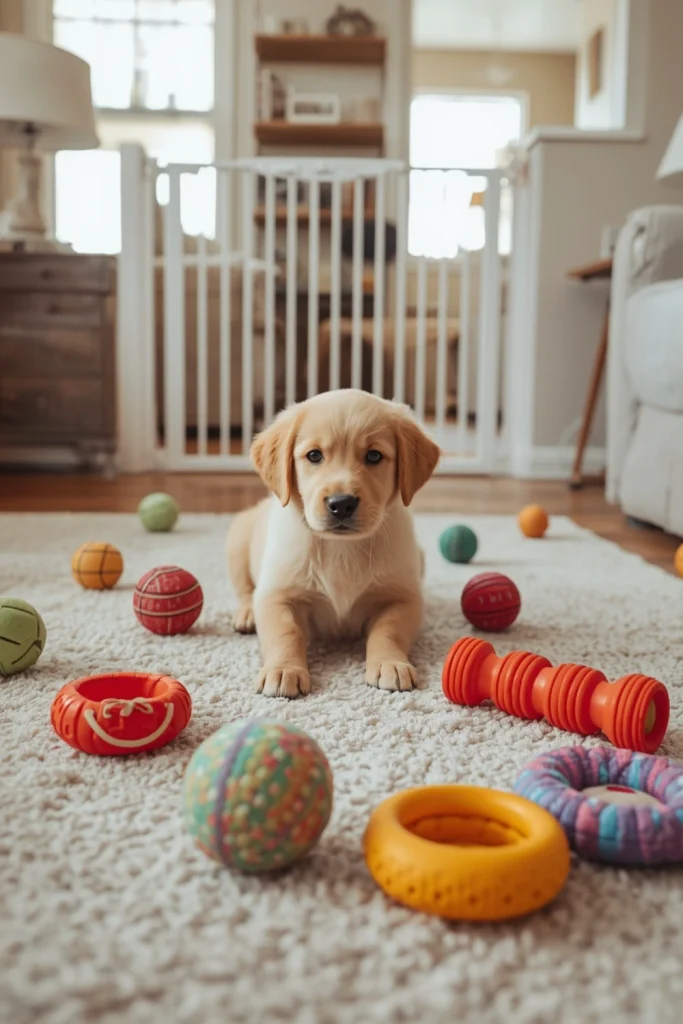
Training becomes easier when your home is arranged to prevent unwanted chewing. Puppies explore with their mouths, and everyday objects can be tempting when they are bored or unsupervised. Store shoes, laundry, remote controls, children’s toys, and other small items in closed cupboards or containers. Cover or secure electrical cords, keep rubbish bins inaccessible, and remove potentially toxic plants and household chemicals from your puppy’s reach.
Use baby gates, exercise pens, or a comfortable puppy-safe area when you cannot supervise closely. This gives your puppy room to play and rest while reducing opportunities to practise destructive chewing. Include suitable chew toys in the area, but avoid leaving your puppy alone with items that could break apart or cause choking. Make sure the space has access to fresh water and is appropriate for the length of time your puppy spends there.
Puppy-proofing does not replace training, but it prevents many mistakes while your puppy is learning. Every time your puppy chews an approved toy instead of a household object, they get another opportunity to develop a healthy habit. A safer environment also reduces the risk of accidental ingestion and other emergencies.
9. Recognize When Your Puppy Needs Rest

Excessive biting is not always a sign that your puppy needs more play or stricter training. Sometimes it means your puppy is tired and struggling to settle. Young puppies need substantial sleep throughout the day, and an overtired puppy may become hyperactive, grab clothing, nip at hands, or ignore familiar cues. Recognizing these signs can help you respond before the behavior becomes more intense.
Create a comfortable resting area where your puppy can relax without constant noise or interruption. After an appropriate period of play, training, or exploration, offer a toilet break and then guide your puppy toward a quiet place to rest. Provide a suitable chew toy if it helps them settle, and avoid repeatedly waking them for unnecessary interaction. A predictable routine can make it easier for your puppy to balance activity with rest.
Keep track of when biting tends to occur. If it regularly increases in the evening or after busy play sessions, adjust the schedule to include more downtime. Rest is an important part of healthy development and learning. A puppy that is comfortable and well-rested may find it easier to focus, respond to redirection, and practise gentle behavior.
10. Be Patient and Consistent Throughout Teething

Teething is a temporary developmental stage, but learning appropriate chewing behavior takes time. Your puppy may respond well to redirection one day and return to chewing shoes or mouthing hands the next. This does not necessarily mean training has failed. Puppies learn through repeated experiences, and their behavior may vary with excitement, tiredness, discomfort, and changes in their surroundings.
Use the same basic approach every day: prevent access to dangerous objects, offer suitable chew toys, reward calm behavior, and pause play when biting becomes too rough. Ask family members and visitors to follow the same rules. Avoid punishment, chasing, or encouraging your puppy to bite hands as a game. Keep your expectations realistic and celebrate small improvements, such as choosing a toy independently or settling more quickly after play.
Monitor your puppy’s mouth and overall comfort as adult teeth come in. Contact a veterinarian if your puppy appears to be in significant pain, refuses food, has persistent bleeding or swelling, or seems unusually distressed. Veterinary advice is also important if baby teeth appear to remain alongside adult teeth. Patience combined with consistent training can help your puppy develop safer chewing habits that continue beyond the teething stage.
Final Thoughts
Helping a puppy through teething requires patience, supervision, and consistent training. The most effective approach is not simply to stop chewing but to teach your puppy which objects are safe, how to interact gently with people, and when to settle down. Suitable chew toys, positive reinforcement, short training sessions, and a puppy-proof home can all make this stage easier.
Start with one or two training tips for teething puppies and practise them consistently every day. Celebrate small improvements, adjust your approach when your puppy becomes tired or overstimulated, and seek veterinary advice if you notice signs of significant discomfort. With time and gentle guidance, your puppy can develop healthy chewing habits and grow into a well-mannered companion.