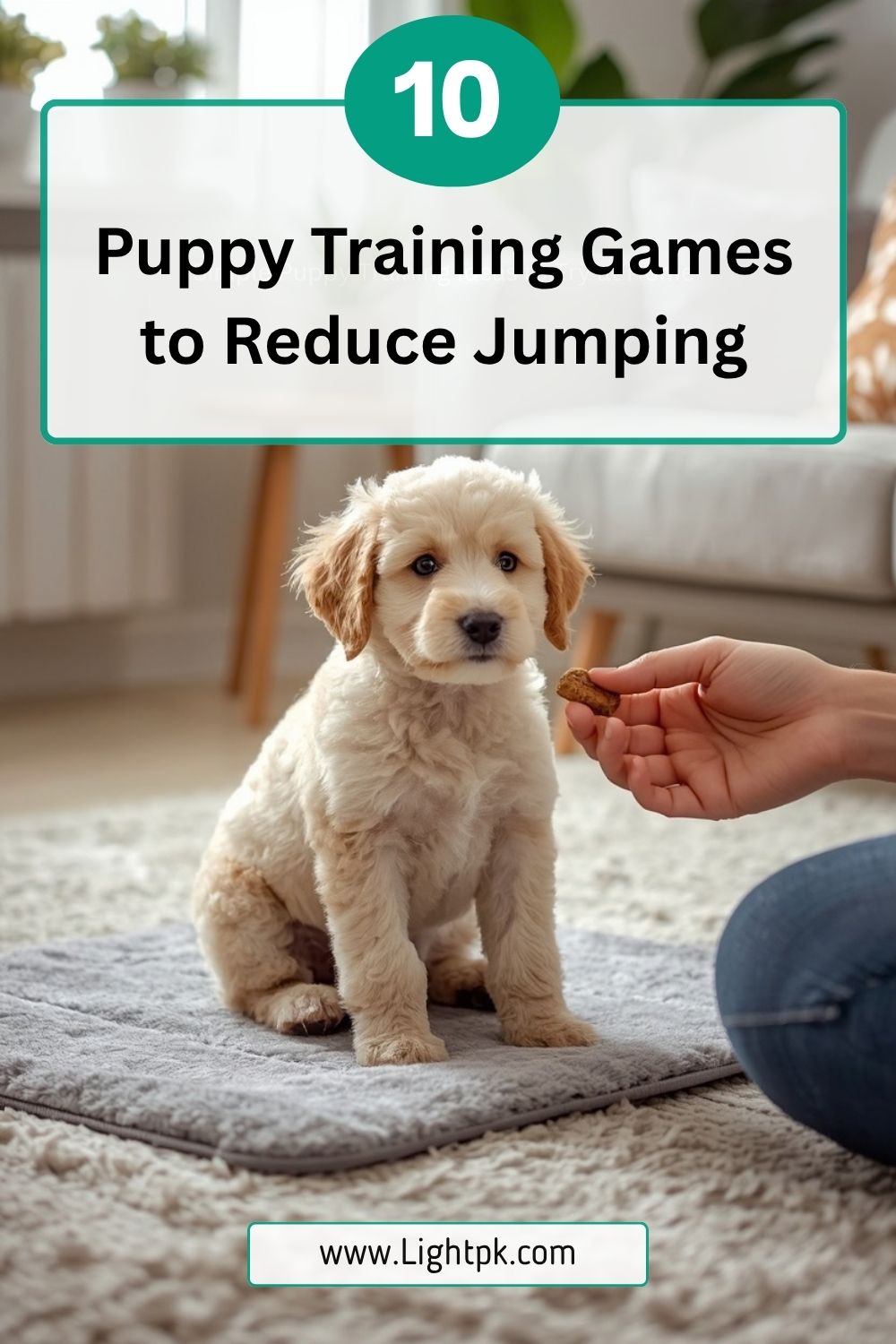
10 Puppy Training Games to Reduce Jumping
Puppies are full of energy, curiosity, and excitement. When they see their favorite person, a visitor, or another dog, they may jump up to say hello. While this behavior can look adorable when a puppy is small, it can become frustrating as your dog grows. The good news is that you can teach your puppy better greeting habits with simple, enjoyable training games.
Puppy training games to reduce jumping help your dog learn to stay calm, keep all four paws on the floor, and earn attention through polite behavior. Instead of using punishment, these games rely on positive reinforcement, consistency, and rewards to make learning fun. Whether you have a young puppy or an energetic adolescent dog, these ten games can help you build better manners at home and around visitors.
1. The Four Paws on the Floor Game
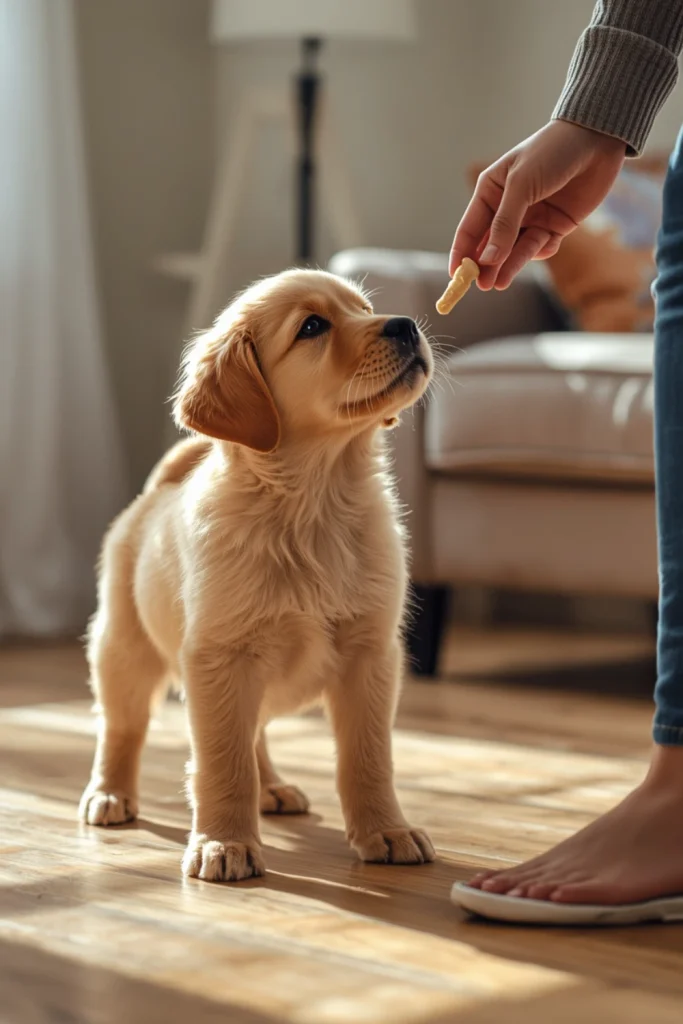
The four paws on the floor game teaches your puppy that keeping all four paws on the ground is the best way to receive attention. Start in a quiet room where your puppy feels comfortable and has few distractions. Stand near your puppy and wait for a moment when all four paws are touching the floor. Immediately offer a small treat and gentle praise. Repeat several times, rewarding your puppy whenever they remain grounded and relaxed.
If your puppy jumps, calmly turn slightly away and wait for their paws to return to the floor before rewarding again. Avoid pushing your puppy down or shouting, as these reactions may increase excitement. As your puppy improves, practice when you enter a room, approach the food bowl, or return home. This game builds the foundation for polite greetings and helps your puppy understand which behavior earns attention.
2. The Sit for Greetings Game
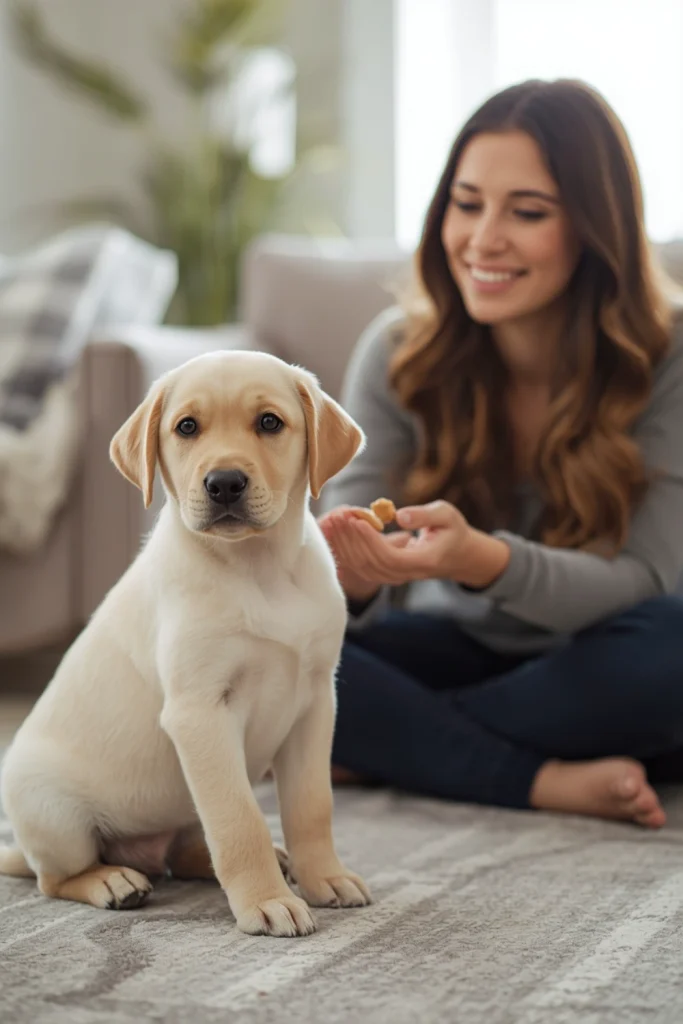
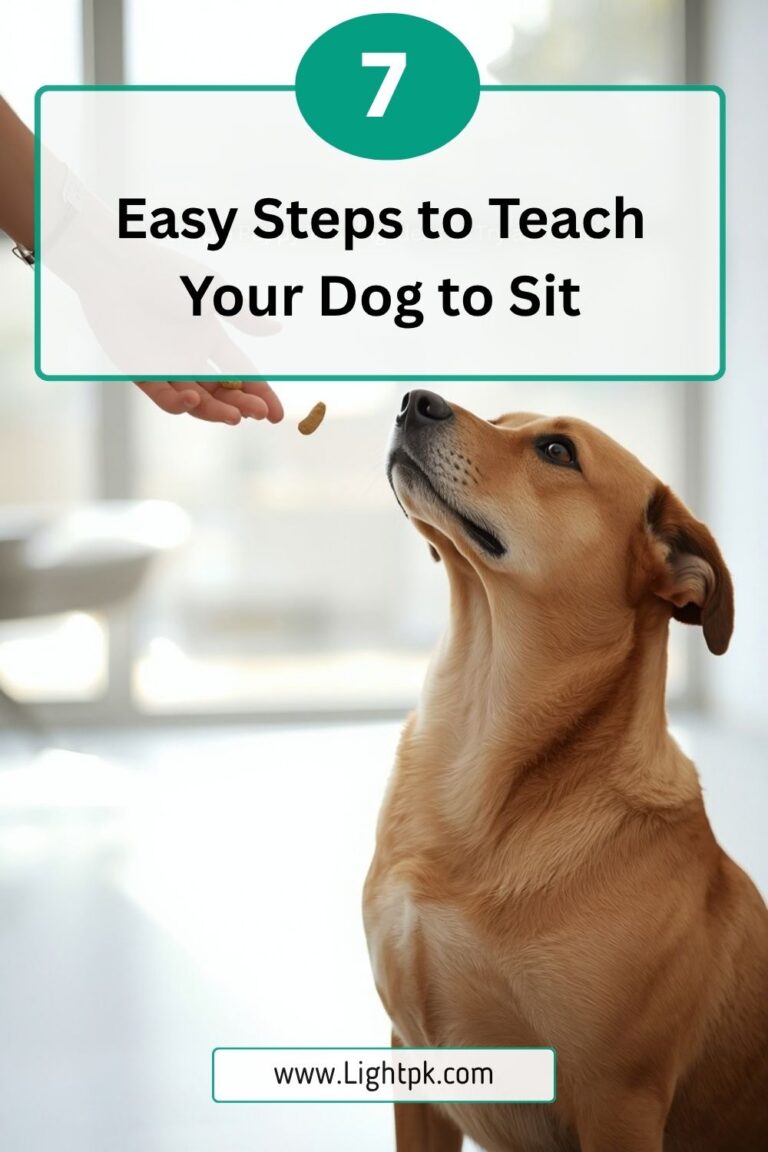
Teaching your puppy to sit before receiving attention gives them a clear alternative to jumping. Begin by holding a treat near your puppy’s nose and slowly moving it upward and slightly backward. As your puppy follows the treat, their bottom will often lower naturally. The moment they sit, say “yes” or use a clicker and offer the reward. Practice until your puppy can sit reliably when you give the verbal cue.
Once your puppy understands the sit command, use it during greetings. Ask your puppy to sit before you pet them or invite a family member to approach. If your puppy stands up and jumps, pause the greeting and try again when they are ready. Reward a successful sit with attention, praise, or a treat. Over time, your puppy learns that sitting makes greetings happen, while jumping does not produce the attention they want. Keep each practice session short and positive.
3. The Find the Treat Game
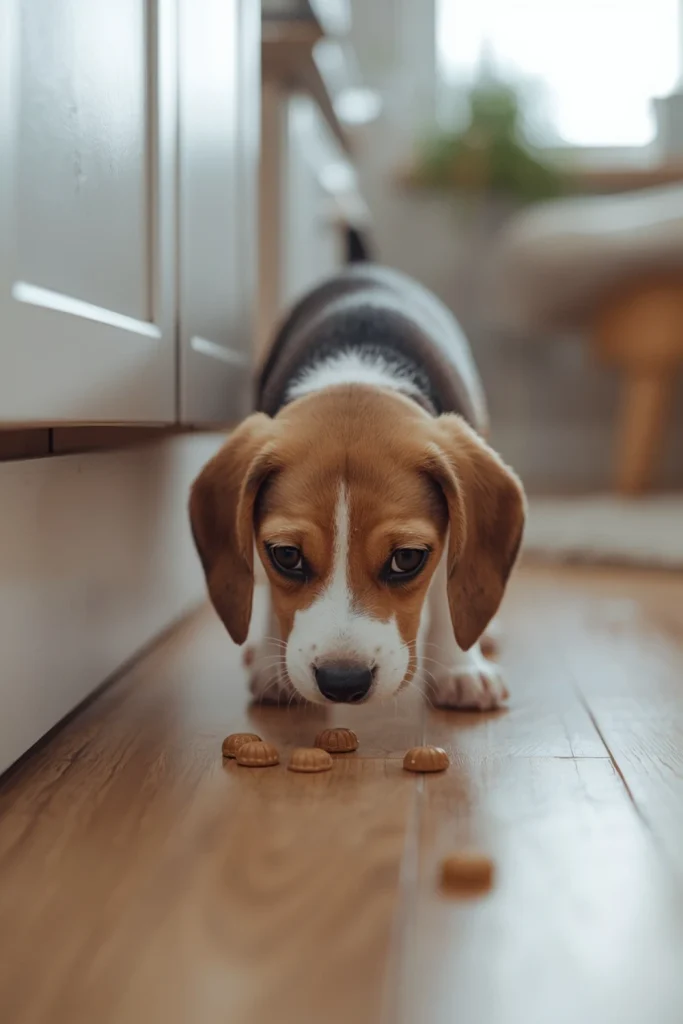
The find the treat game encourages your puppy to use their nose instead of bouncing around when excitement builds. Sniffing is a natural dog behavior that provides mental stimulation and encourages focused exploration. Start by placing a few small treats in easy-to-find locations around a safe room while your puppy watches. Say “find it” and encourage your puppy to search. Praise them gently as they discover each treat, allowing them to explore at their own pace.
This game is especially useful before visitors arrive or when your puppy becomes overly excited. A short sniffing session can give your puppy a constructive activity before greeting someone. As your puppy improves, hide treats in slightly more challenging but accessible places. Always supervise the activity and avoid hiding food near unsafe objects. Remember that sniffing games support relaxation but do not replace teaching polite greetings directly. Combine this activity with rewarding four paws on the floor for better results.
4. The Follow Me Game
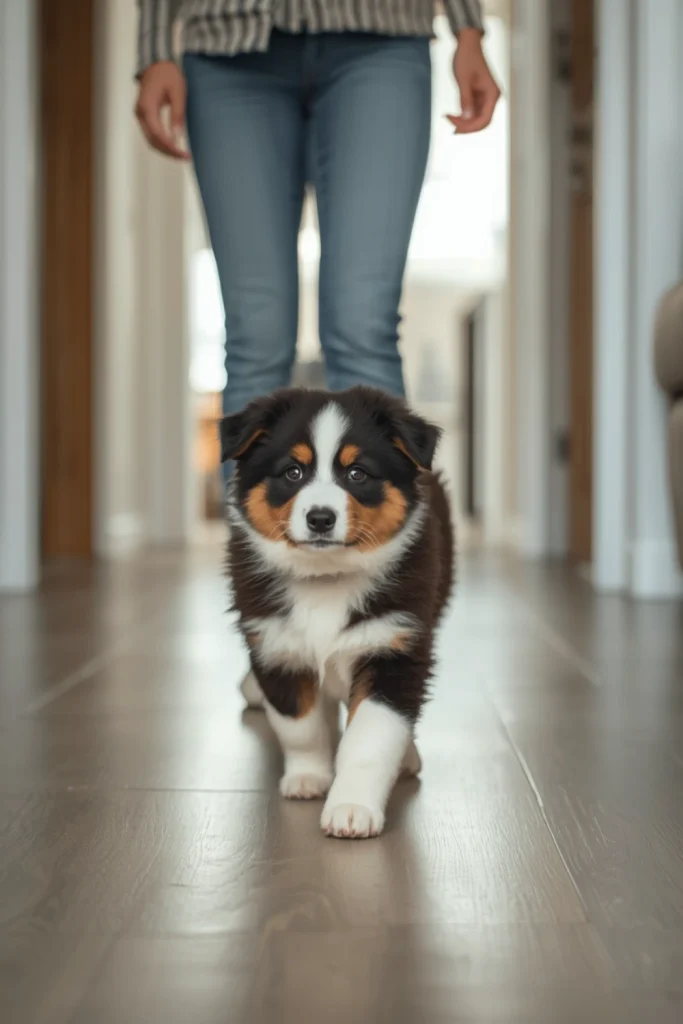
The follow me game teaches your puppy to pay attention to your movement instead of rushing toward people. Begin in a quiet room with a few small treats in your pocket. Take two or three steps away from your puppy and encourage them to follow you. When your puppy moves toward you without jumping, mark the behavior with “yes” and reward them near your leg. Change directions occasionally to make the game interesting, keeping your movements gentle and predictable.
When your puppy follows you reliably indoors, practice in different areas of the home and in a quiet outdoor space with a secure leash. Use the game before greetings to help your puppy focus on you rather than rushing toward an approaching person. Reward your puppy for walking beside you and maintaining four paws on the floor. If distractions become too difficult, move farther away and make the exercise easier. Consistent practice helps build attention, self-control, and better responses around exciting situations.
5. The Hand Target Game
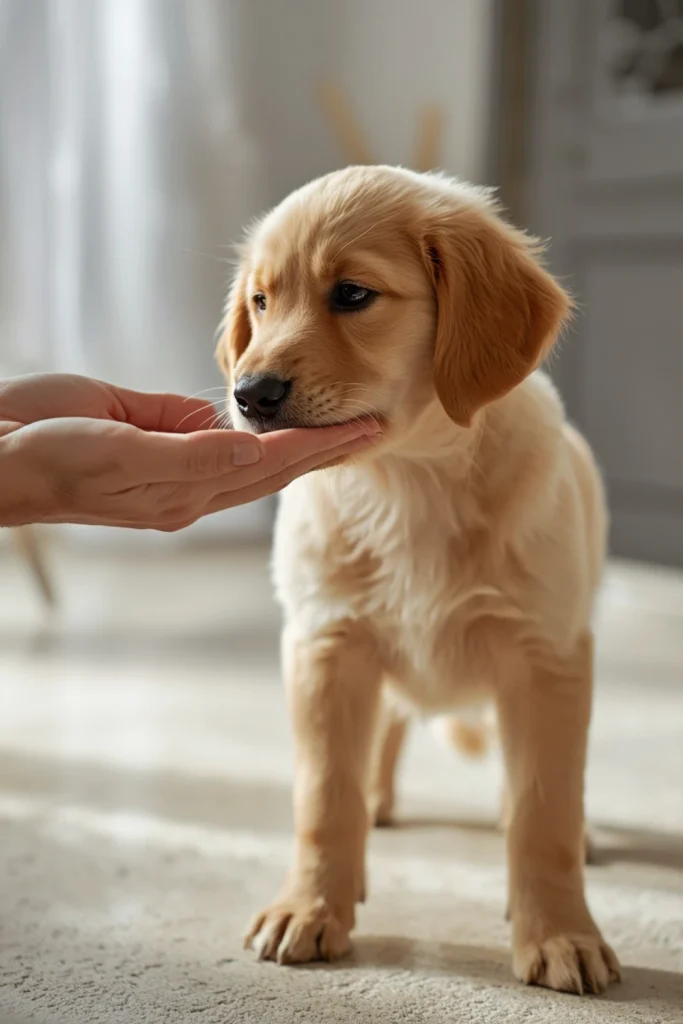
The hand target game teaches your puppy to touch your open palm with their nose. This simple behavior gives your puppy a useful task to perform when they are excited. Hold your hand a few inches from your puppy’s nose. When they naturally sniff or touch your palm, say “yes” and give them a treat. Repeat until your puppy begins moving toward your hand intentionally. You can then introduce a cue such as “touch” and gradually practice from different positions.
Once your puppy understands the game, use it to redirect attention during greetings. Before a visitor approaches, offer your hand target cue and reward your puppy for touching your palm while staying grounded. Gradually practice with familiar people who can follow your instructions. If your puppy becomes too excited to respond, increase the distance from the visitor and try again in an easier setting. Keep your hand low enough that your puppy does not need to jump to reach it. The aim is to reward calm movement and focus.
6. The Go to Your Mat Game
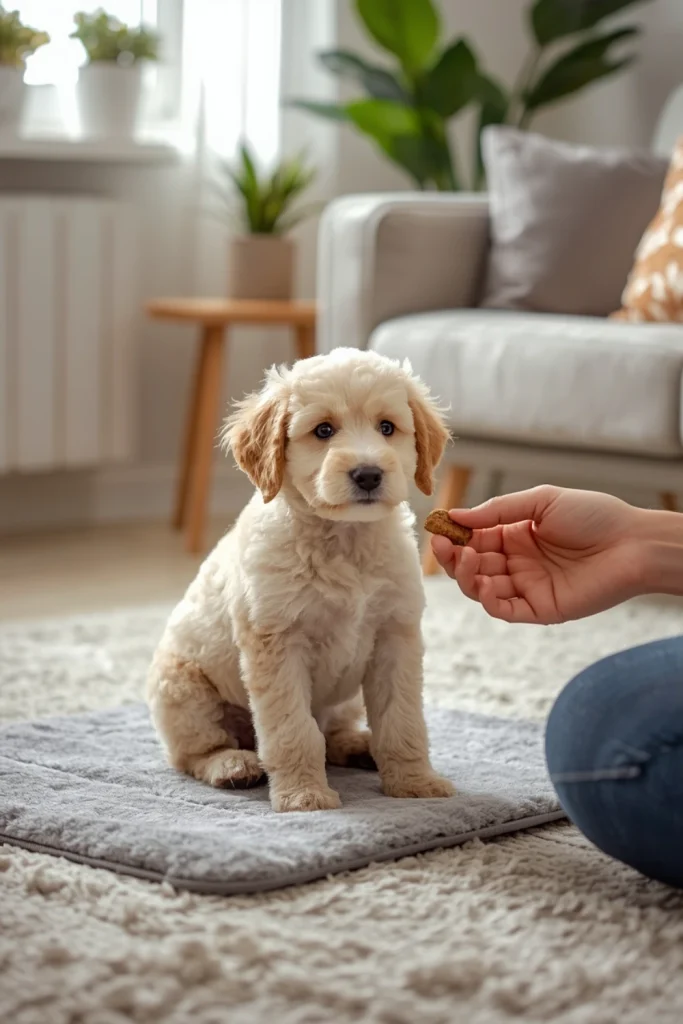
The go to your mat game teaches your puppy to settle in a designated spot rather than jumping on guests. Choose a comfortable mat or dog bed and place it in a quiet area. Toss a treat onto the mat and let your puppy walk over to collect it. When your puppy returns to the mat, reward them again. Gradually reward standing, sitting, and lying down on the mat. Add a cue such as “mat” once your puppy begins going there consistently.
After your puppy understands the exercise, practice while a family member walks into the room or sits nearby. Reward your puppy for staying on the mat and remaining relaxed. Start with small distractions and increase difficulty slowly. Do not expect a young puppy to remain in place for a long time without practice. If your puppy leaves the mat, calmly encourage them to return and make the exercise easier if necessary. With consistency, this game can help when visitors arrive, during family meals, or whenever your puppy needs an alternative to jumping.
7. The Wait for the Door Game
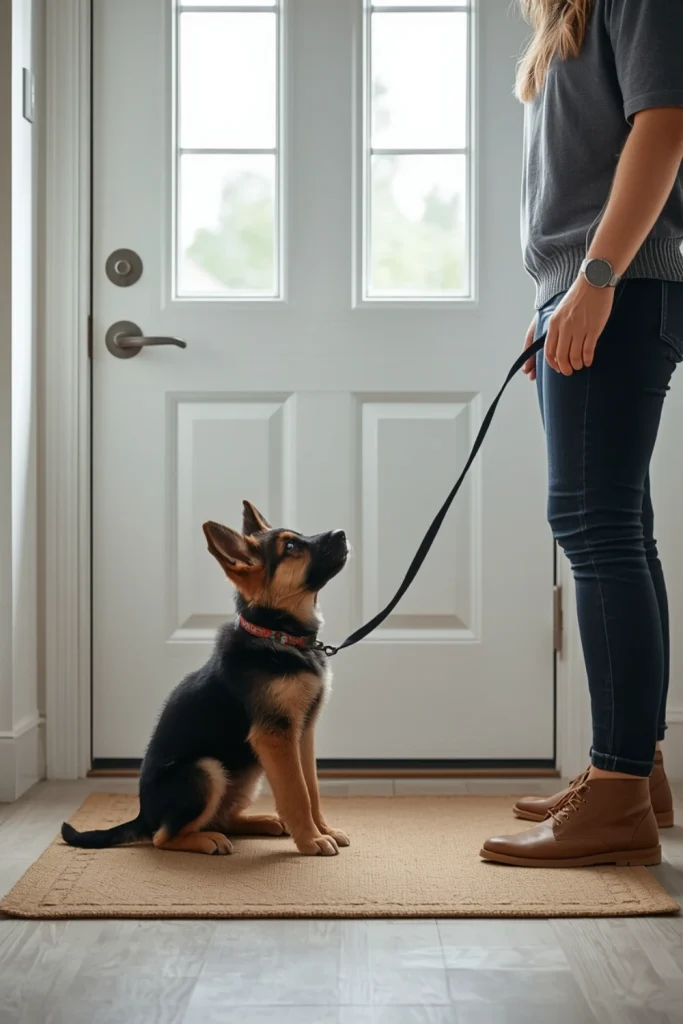
Doors often trigger excitement because puppies associate them with visitors, walks, and new experiences. The wait for the door game helps your puppy practice self-control before something exciting happens. Begin with your puppy on a leash in a quiet hallway. Ask for a sit or reward your puppy for standing calmly. Reach toward the door handle, then reward your puppy for remaining grounded. If your puppy rushes forward or becomes too excited, pause and make the exercise easier by moving away from the door.
Gradually progress to turning the handle, opening the door slightly, and closing it again while rewarding calm behavior. Have a family member stand outside once your puppy is ready. Keep your puppy at a safe distance and use a secure leash or barrier to prevent rushing through the doorway. The goal is to build calm responses in small steps rather than expecting perfect behavior immediately. With regular practice, your puppy can learn that waiting politely makes the door open and that calm behavior is part of welcoming visitors.
8. The Calm Visitor Greeting Game
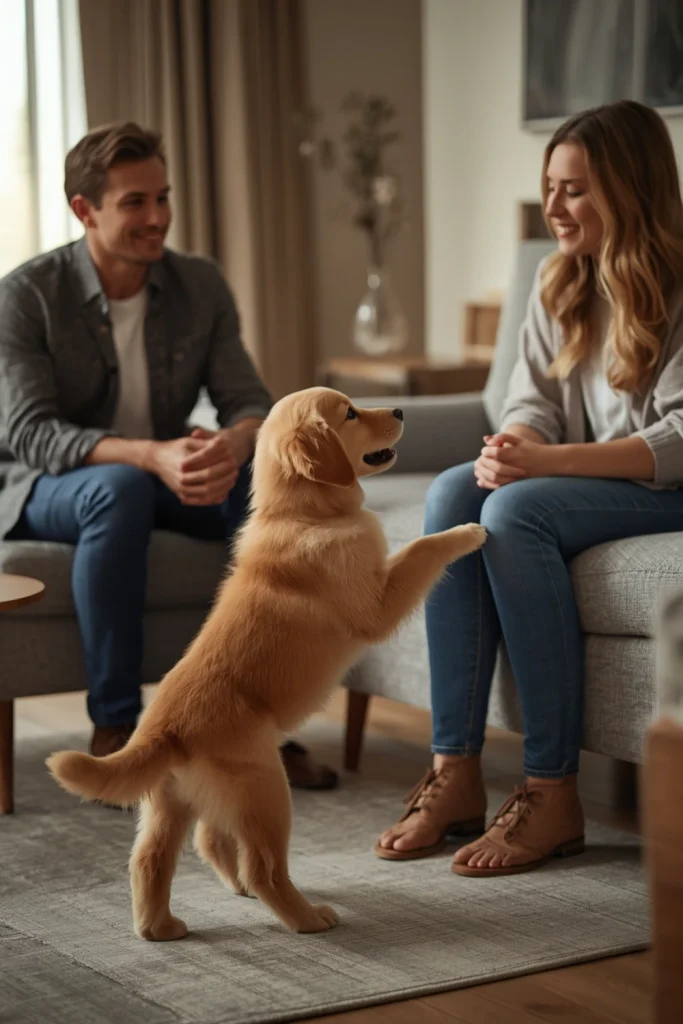
The calm visitor greeting game helps your puppy practice polite behavior with real people. Ask a trusted friend or family member to help, explaining that they should avoid petting the puppy when it jumps. Keep your puppy on a leash with enough room to stand comfortably. Have the visitor approach slowly, stopping at a distance where your puppy can remain calm. Reward your puppy for keeping all four paws on the floor. If your puppy stays grounded, the visitor can offer gentle attention or toss a treat onto the floor.
If your puppy jumps, the visitor should pause, turn slightly away, or step back without shouting or pushing the puppy. Wait for calm behavior before trying again. Keep greetings short and end the session before your puppy becomes overwhelmed. Repeat with different familiar people as your puppy improves. Never force your puppy to greet someone, especially if they appear nervous or uncomfortable. If your puppy struggles to remain calm, increase the distance and reward small improvements before trying closer greetings again.
9. The Toy Instead of Jumping Game
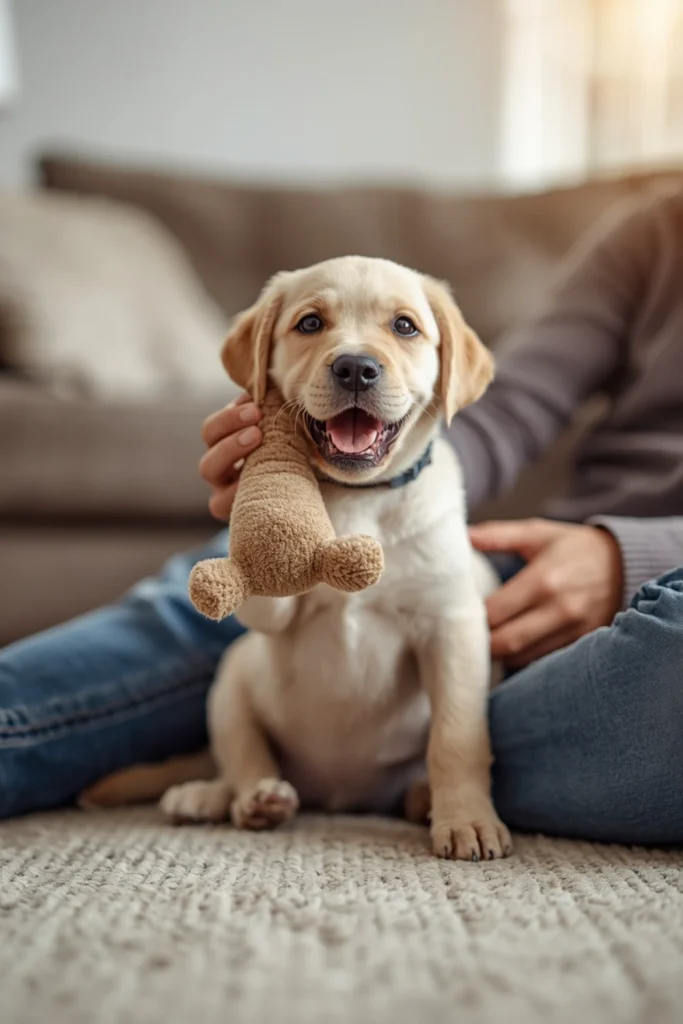
Some puppies jump because they have excess energy and want to play. The toy instead of jumping game gives them an appropriate way to express excitement. Choose a soft, puppy-safe toy and encourage your puppy to pick it up. When your puppy holds the toy with all four paws on the floor, reward them with praise or a short game of gentle tug. Keep the toy low rather than waving it overhead, as high movements may encourage your puppy to leap. Choose a toy suitable for your puppy’s size and supervise play.
Practice when your puppy is naturally playful, such as before a short play session or when a family member returns home. Encourage your puppy to retrieve the toy or bring it to you instead of jumping on your legs. Reward appropriate play and pause if your puppy begins grabbing clothing or jumping repeatedly. You can also keep a toy near the entrance for planned greetings, provided your puppy remains supervised. This game works best when combined with calm greeting training, because your long-term goal is to teach your puppy when and how to play politely.
10. The Calmness Reward Game
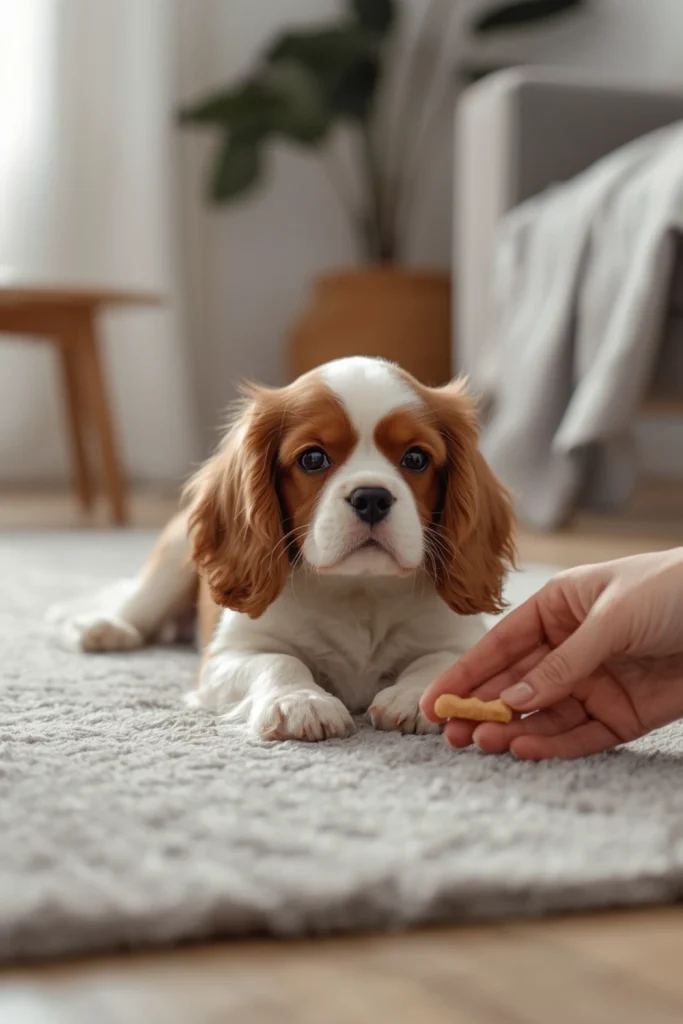
The calmness reward game teaches your puppy that relaxing can be rewarding even when nothing exciting is happening. Sit nearby while your puppy explores a safe room. Whenever your puppy naturally lies down, sits quietly, or stands with a relaxed body, gently place a treat on the floor near them. Avoid using a loud voice or making sudden movements that might interrupt the calm moment. At first, reward brief periods of relaxation and gradually wait a little longer between treats as your puppy learns to settle independently.
Practice this game after a walk, a sniffing activity, or a short training session when your puppy is ready to relax. You can also use it while family members move around the room at a comfortable distance. Reward your puppy for remaining calm instead of demanding attention by jumping. Be patient because young puppies have limited impulse control and need plenty of sleep. If your puppy gets up, do not scold them; simply wait for another calm moment. Over time, these small rewards help make relaxed behavior a regular part of your puppy’s daily routine.
Final Thoughts
Teaching your puppy not to jump does not have to involve stressful training sessions or harsh corrections. The right puppy training games to reduce jumping can make learning enjoyable while helping your dog develop better manners around family members and visitors.
Start with the four paws on the floor game, practice sitting before greetings, and gradually introduce activities such as hand targeting, mat training, and calm visitor greetings. Reward the behavior you want to see, manage situations where jumping is likely, and remain patient as your puppy learns. With daily practice and consistent guidance, you can help your puppy become a calmer, more confident, and more polite companion.