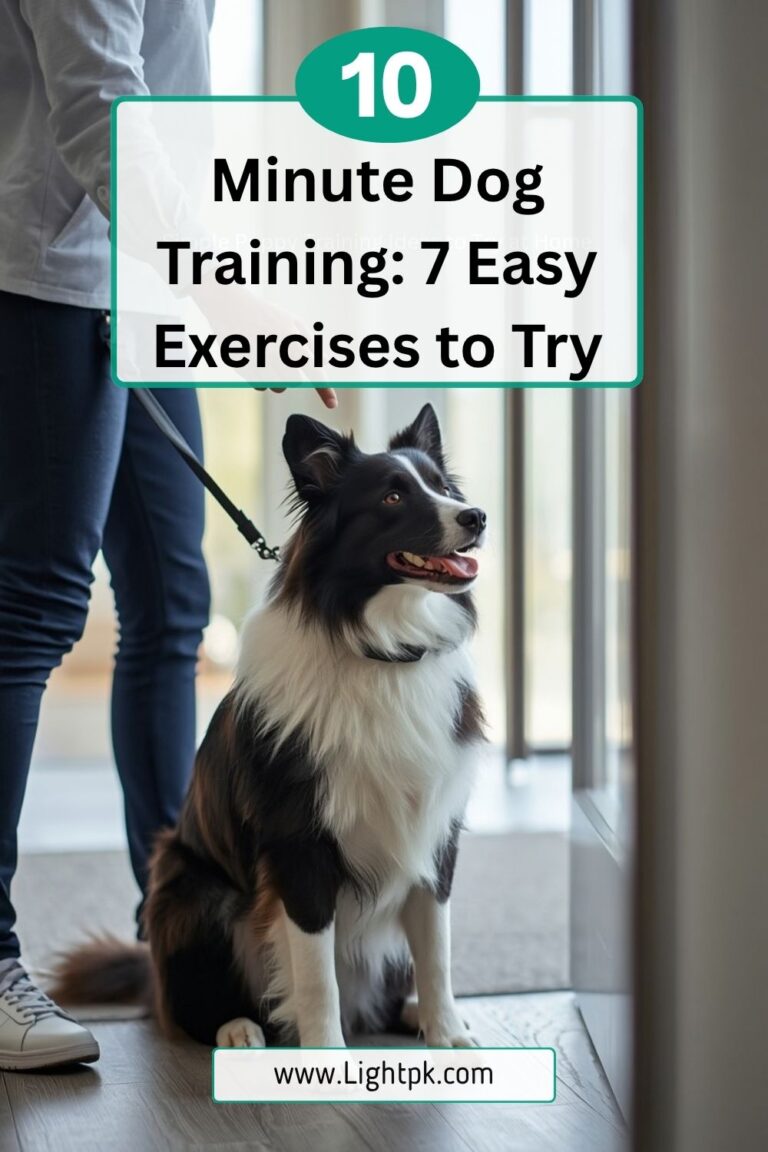

10 Puppy Recall Exercises You Can Practice at Home
A puppy that happily runs back to you when called is easier to guide, safer to manage, and more confident in everyday situations. Recall training is not about forcing your puppy to obey. It is about teaching them that coming to you is always a positive and rewarding experience.
The best time to build a strong recall is through simple, enjoyable practice. You do not need a large yard or expensive equipment to begin. These Puppy Recall Exercises can be practiced at home using treats, toys, praise, movement, and plenty of patience. Start with easy games and gradually make the exercises more challenging as your puppy improves.
1. Start With Name Recognition
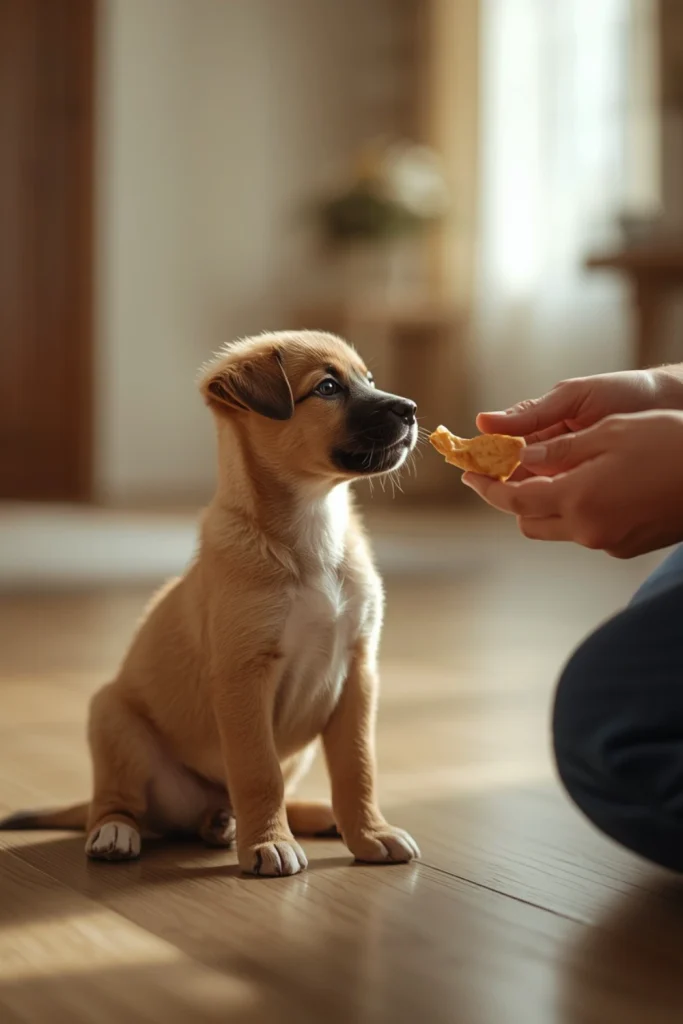
Before teaching your puppy a formal recall cue, make sure they understand that their name means something important. Choose a quiet room with minimal distractions. Say your puppy’s name in a cheerful voice and wait for them to look at you. The moment they make eye contact, offer praise and a small treat. Repeat this several times throughout the day.
Keep the exercise short and positive. Your puppy does not need to stare at you for a long time. The goal is simply to teach them that hearing their name is a reason to pay attention. Once your puppy consistently looks toward you when you say their name, you can begin connecting their name with a recall word such as “come.”
2. Practice Short-Distance Recall
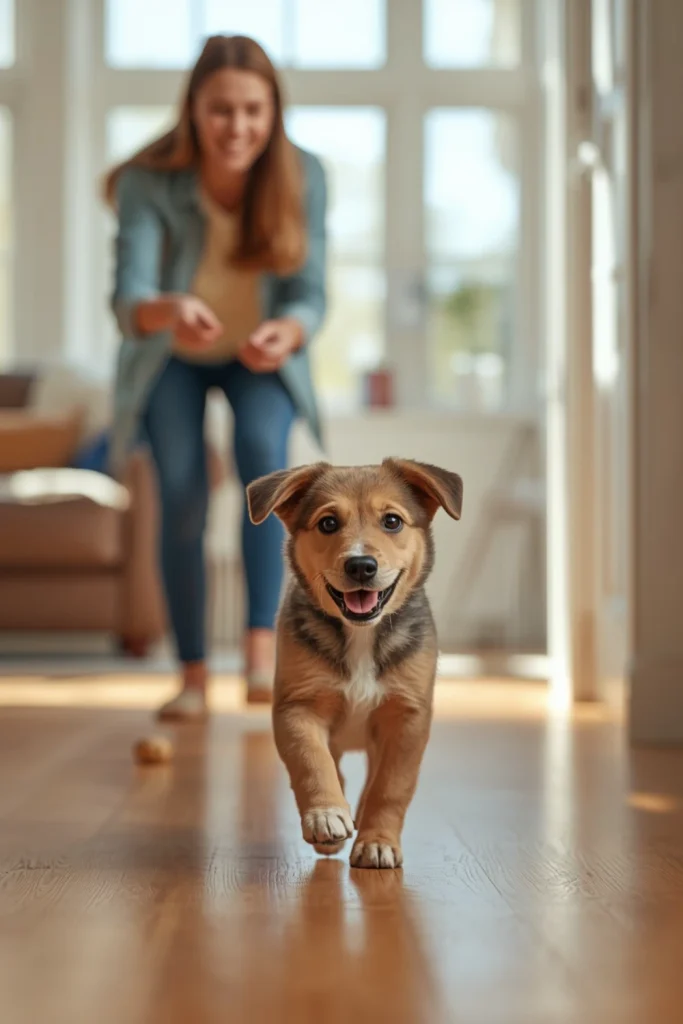
Short-distance recall is one of the easiest Puppy Recall Exercises for beginners. Start only a few feet away from your puppy. Say their name followed by your chosen recall cue in an enthusiastic voice. Open your arms, crouch down, or gently move backward to encourage the puppy to come toward you.
When your puppy reaches you, reward them immediately. Use a small treat, praise, gentle affection, or a favorite toy. Repeat the exercise several times but stop before your puppy becomes tired or distracted. The purpose is to create a strong connection between the recall cue and reaching you. Keep the distance short until your puppy responds consistently.
3. Use the Follow-Me Game
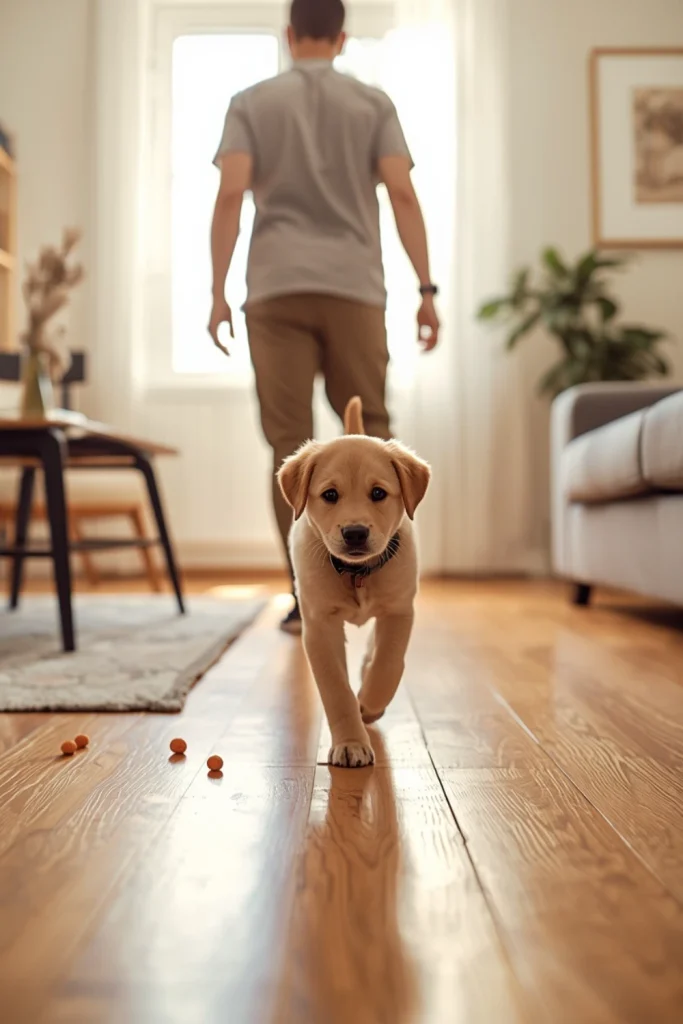
The follow-me game is a natural way to encourage your puppy to pay attention to your movement. In a safe room, walk slowly away from your puppy. When they follow you, praise them and reward them. You can change direction occasionally so your puppy learns to keep an eye on where you are going.
Once your puppy enjoys following you, add the recall cue. Move a short distance away, say their name and “come,” and then move backward. When your puppy follows and reaches you, reward them. This game helps your puppy learn that moving toward you is fun and that paying attention to you can lead to positive experiences.
4. Play Indoor Hide-and-Seek
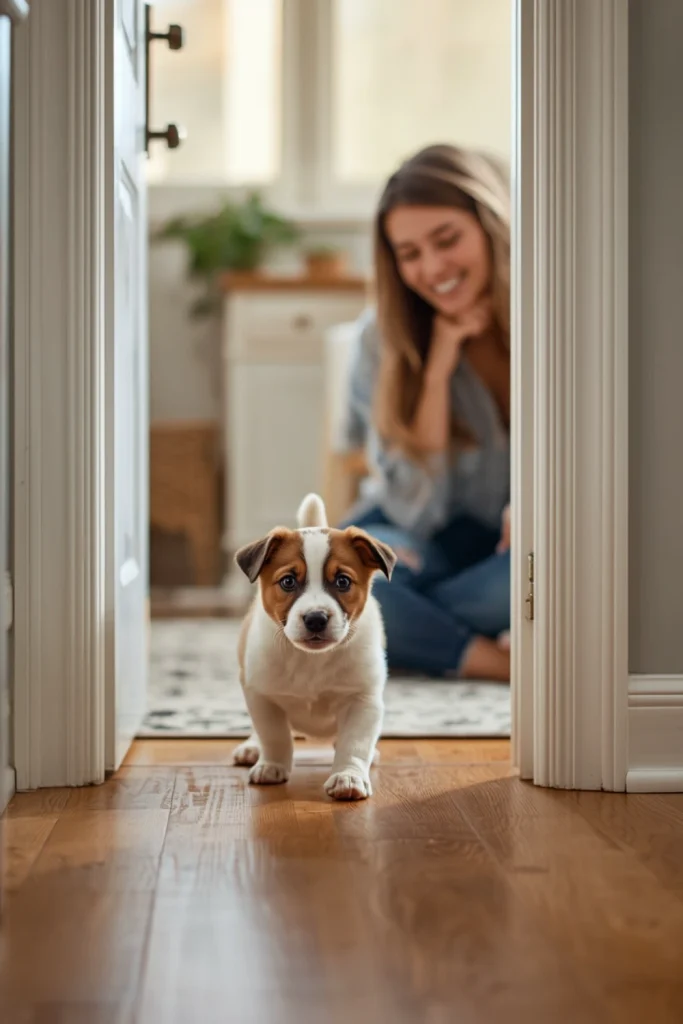
Indoor hide-and-seek is a fun way to strengthen your puppy’s recall without needing outdoor space. Ask a family member to keep your puppy in one room while you hide just around a doorway or behind a piece of furniture. Call your puppy using their name and recall cue. When they find you, celebrate and provide a reward.
Begin with very easy hiding places. Your puppy should be able to locate you without becoming frustrated. As they understand the game, you can choose slightly more difficult locations. This exercise teaches your puppy that finding you is rewarding and encourages them to listen for your voice when you are out of sight.
5. Try the Two-Person Recall Exercise
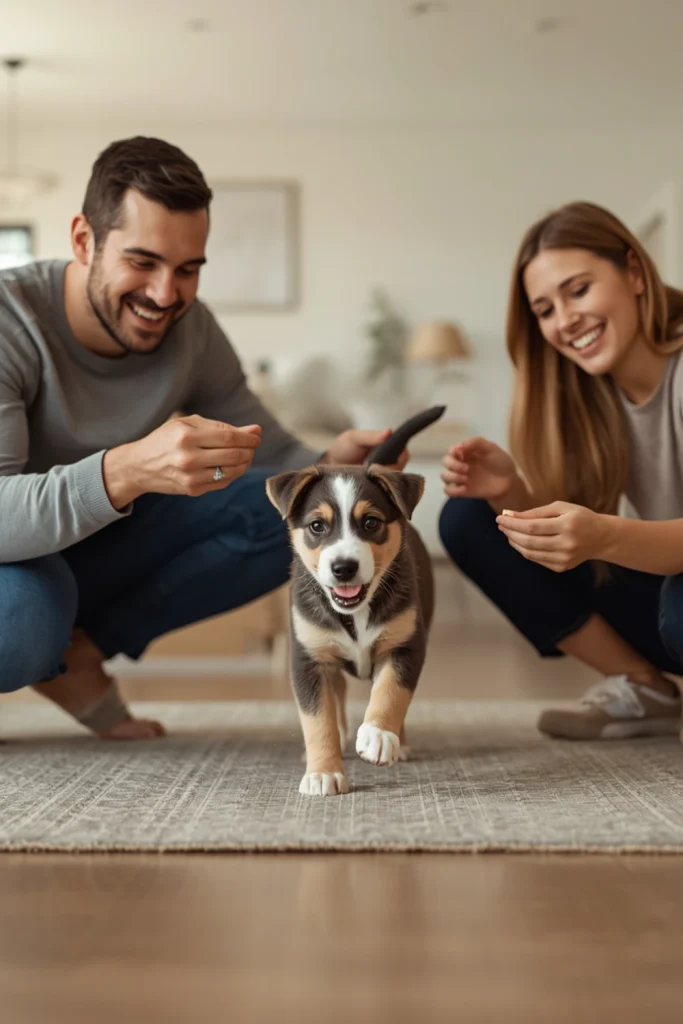
If another family member is available, the two-person recall exercise can provide lots of practice. Have both people sit or stand a short distance apart. One person gently holds the puppy’s attention while the other calls the puppy. When the puppy arrives, reward them immediately. Then switch roles and repeat the exercise.
Start with only a few feet between people. As your puppy becomes more confident, gradually increase the distance. Make sure both people use the same recall word and reward successful responses. This exercise teaches your puppy that responding to a recall cue is valuable regardless of which familiar person calls them.
6. Use a Favorite Toy
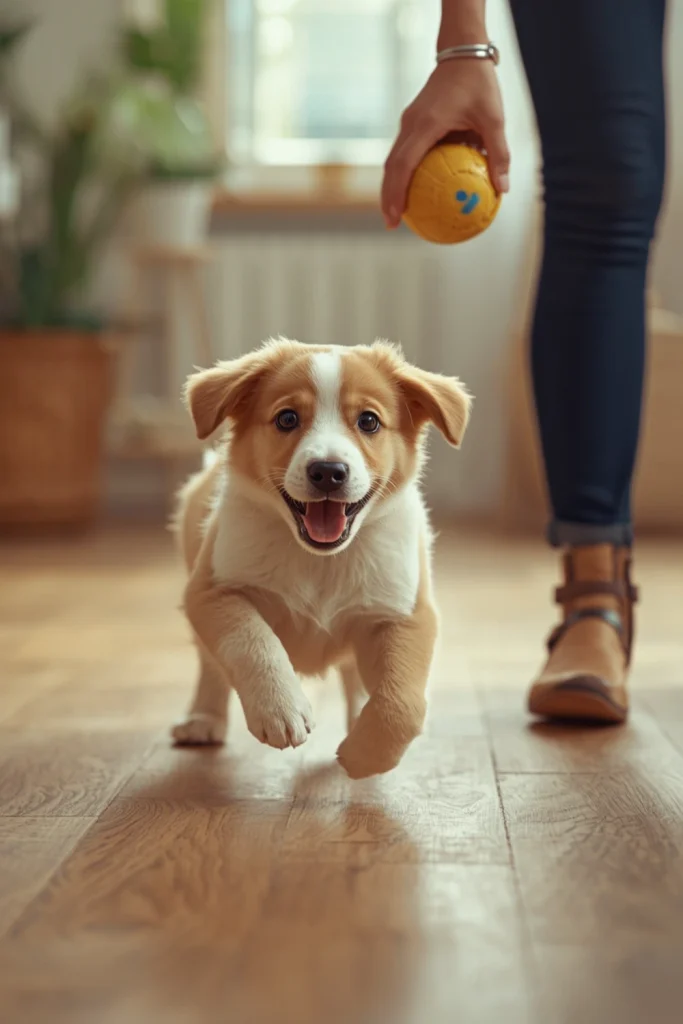
Not every puppy is equally motivated by food. Some puppies become much more excited about a favorite toy. If your puppy loves a soft toy, small ball, tug toy, or another safe toy, use it as a reward during recall practice.
Show the toy briefly, move away, and call your puppy. When they come toward you, reward them with a short play session. Keep the game exciting but controlled. Over time, your puppy learns that responding to the recall cue can lead to something they genuinely enjoy. This can be especially useful when food rewards are not enough to maintain attention.
7. Make Recall a Treat-Toss Game
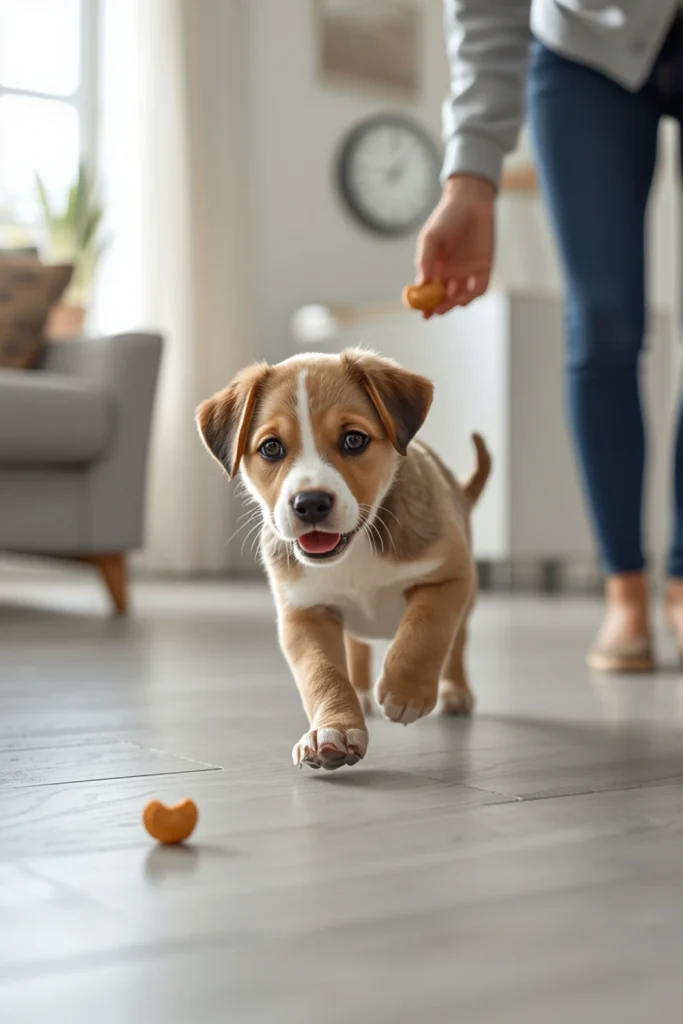
Treat tossing can turn recall practice into an active game. Begin by tossing a small treat a short distance away from your puppy. Let them find it, then call them back using their recall cue. When they return, give another reward. This creates a simple pattern of moving away and then returning to you.
Keep the distance short at first. As your puppy becomes more confident, gradually increase the distance. Use very small treats to avoid overfeeding during training. The exercise helps your puppy learn that exploring away from you does not mean they should stay away. Instead, they learn that returning to you can lead to another reward.
8. Practice Recall Between Rooms
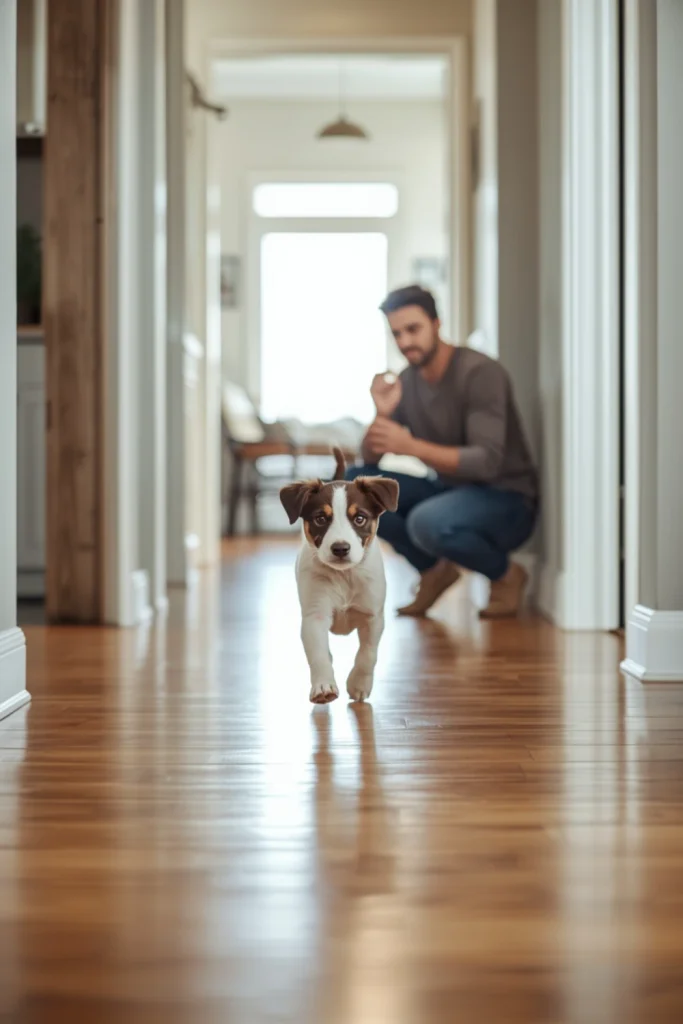
Your home provides many opportunities for everyday recall practice. Stand in one room while your puppy is safely nearby in another room. Call their name followed by the recall cue. When they come to you, reward them immediately. Begin with rooms that are close together and gradually increase the distance.
This exercise helps your puppy learn that your recall command matters even when they cannot see you clearly. You can practice from the hallway, bedroom, kitchen, or another safe area. Keep doors and surroundings safe and make sure your puppy cannot access stairs or other hazards while practicing.
9. Practice Recall With Mild Distractions
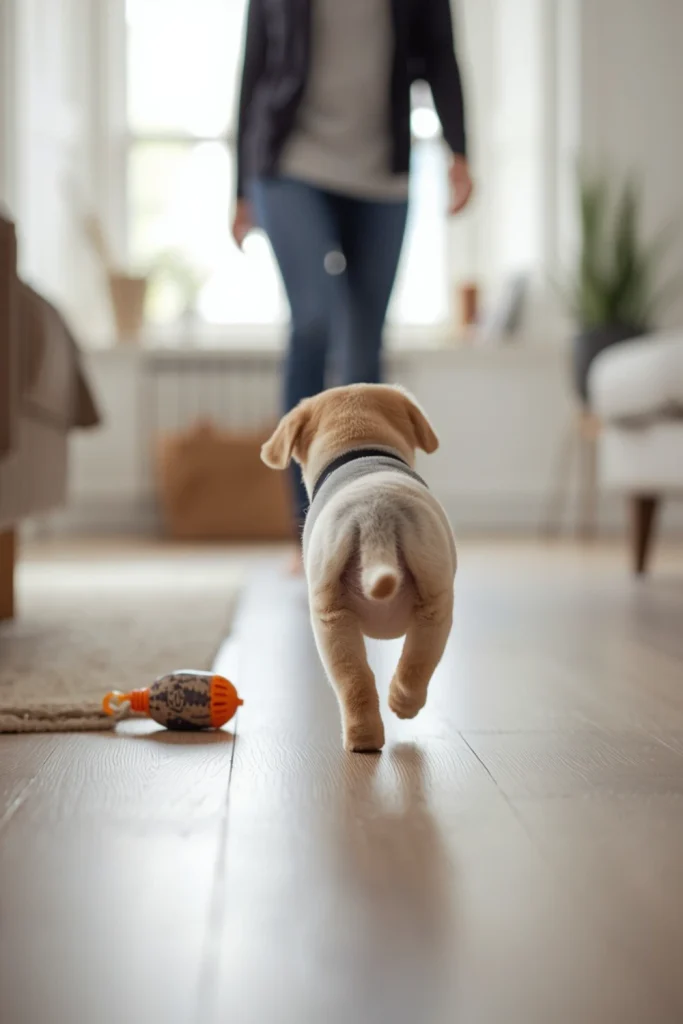
As your puppy improves, introduce small distractions inside the home. Place a favorite toy nearby, have another family member walk through the room, or allow gentle household activity to continue while you practice. Call your puppy when they are mildly distracted and reward them when they choose to come to you.
Do not make the exercise too difficult too quickly. If your puppy repeatedly ignores you, reduce the distraction and move closer. Your goal is to create successful repetitions. Gradually increasing distractions teaches your puppy that the recall cue still matters even when interesting things are happening nearby.
10. Build a Daily Recall Routine
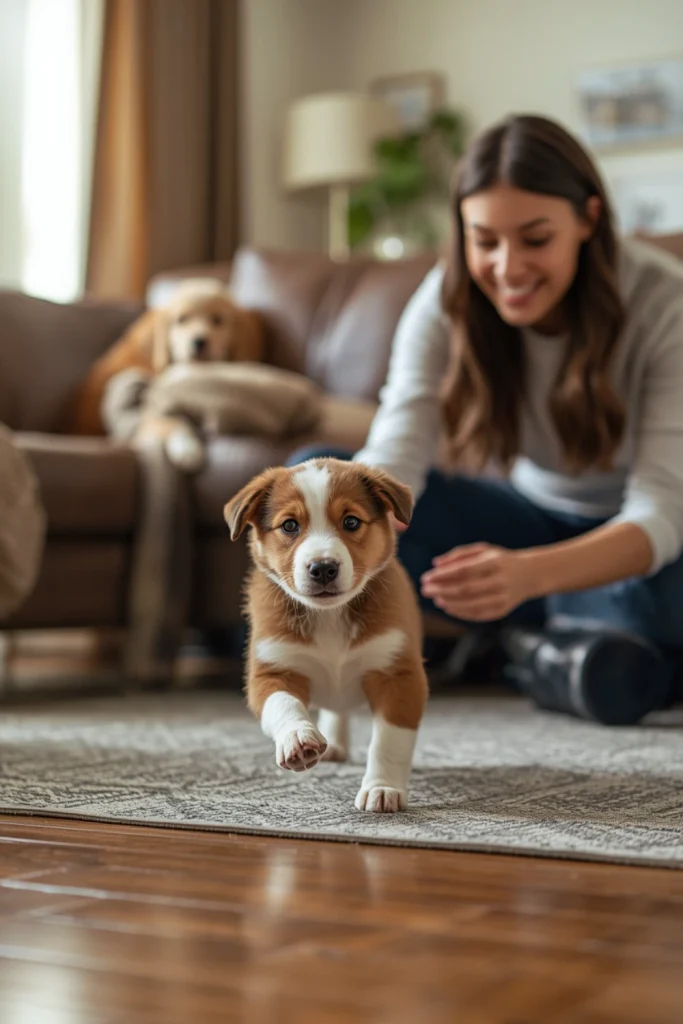
The final exercise is to make recall practice part of your puppy’s daily routine. You do not need a long formal training session. Instead, look for small opportunities throughout the day. Call your puppy from a short distance, reward them, and then return to normal activities. Several successful repetitions can build a strong foundation.
As your puppy grows more reliable, gradually increase distance, duration, and distractions. Continue using rewards and praise so your puppy remains motivated. Remember that puppies have short attention spans, so keep sessions brief and end on a positive note. Consistent daily practice can make recall a natural response rather than something your puppy only performs during training sessions.
Final Thoughts
Teaching a puppy to come when called is one of the most useful training projects you can begin at home. You do not need complicated equipment or hours of practice. Simple games involving treats, toys, movement, family members, and short distances can create a strong foundation for reliable recall.
These Puppy Recall Exercises are designed to make learning enjoyable while helping your puppy develop focus and trust. Keep sessions short, reward successful responses, avoid punishment, and gradually increase the difficulty. With patience and consistent practice, your puppy can learn that coming back to you is always a rewarding experience.