
7 Easy Steps to Teach Your Dog the Down Command
Teaching your dog the down command is a simple but valuable part of basic obedience training. A reliable “down” can help your dog settle calmly at home, behave more politely around visitors, and develop better focus during everyday activities.
The good news is that you do not need advanced training experience to get started. With short sessions, clear communication, appropriate rewards, and plenty of patience, most dogs can learn the basic behavior gradually. These Easy Steps to Teach Your Dog the down command will help you build the skill from the beginning and turn training into a positive experience.
1. Choose a Quiet Training Area
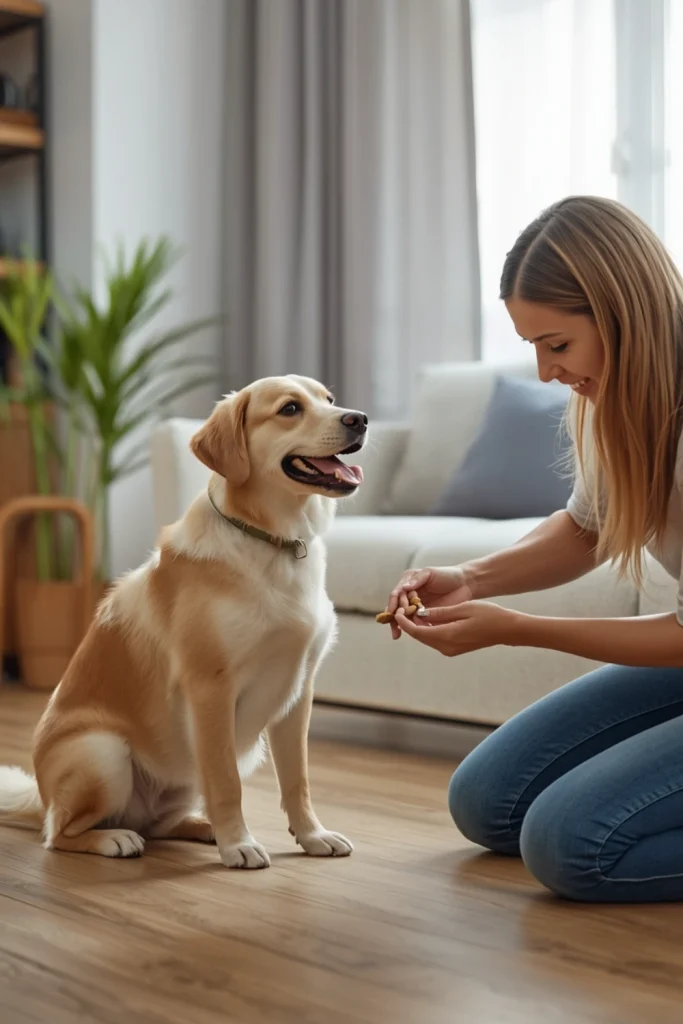
Begin by choosing a quiet and comfortable location where your dog can focus on you. A living room, bedroom, or calm section of your home can work well. Remove unnecessary distractions such as noisy toys, loud music, or other activities that might pull your dog’s attention away from the lesson. A comfortable surface is also important because some dogs are reluctant to lie down on slippery or uncomfortable flooring.
Keep a few small training treats nearby and make sure your dog is relaxed before beginning. Start when your dog is reasonably attentive rather than extremely excited or tired. Short sessions of around five to ten minutes are usually easier for dogs to handle. Ending the session while your dog is still interested can help keep future training positive.
2. Start With the Sit Position
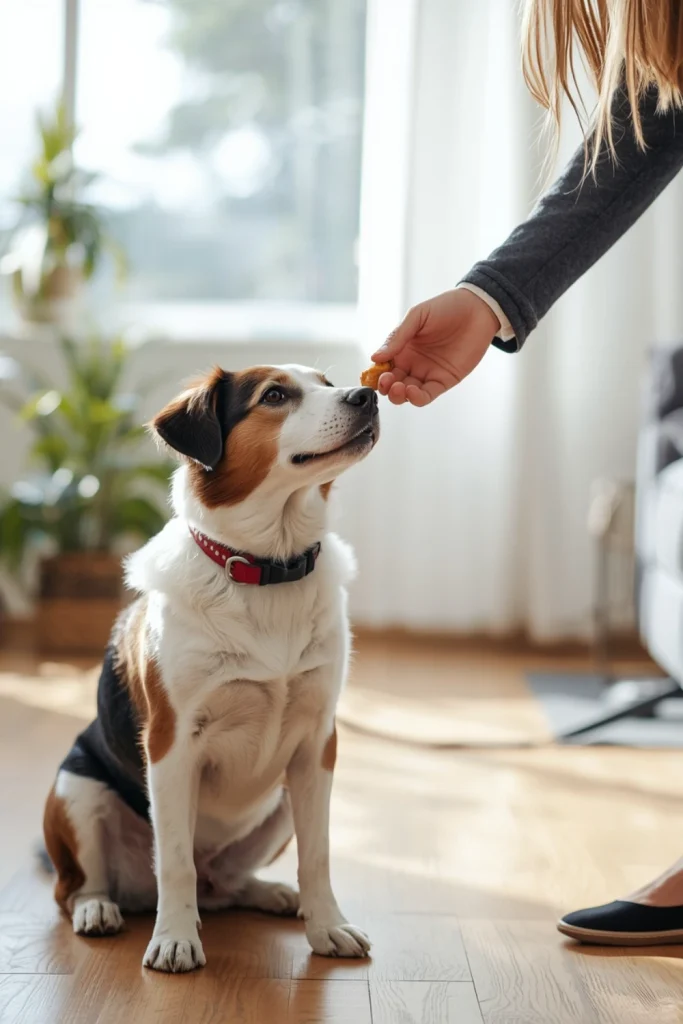
The sit position is a useful starting point for teaching down because it gives your dog a clear and controlled posture. Ask your dog to sit and reward them when they respond correctly. Make sure they are comfortable and paying attention before moving on to the next part of the exercise.
Once your dog is sitting, hold a small treat close to their nose. Slowly move the treat downward toward the floor and then slightly forward. Many dogs will naturally follow the treat with their nose and begin lowering their body. Avoid pushing your dog’s shoulders or physically forcing them down. The goal is for your dog to discover the correct position voluntarily.
3. Guide Your Dog Into the Down Position
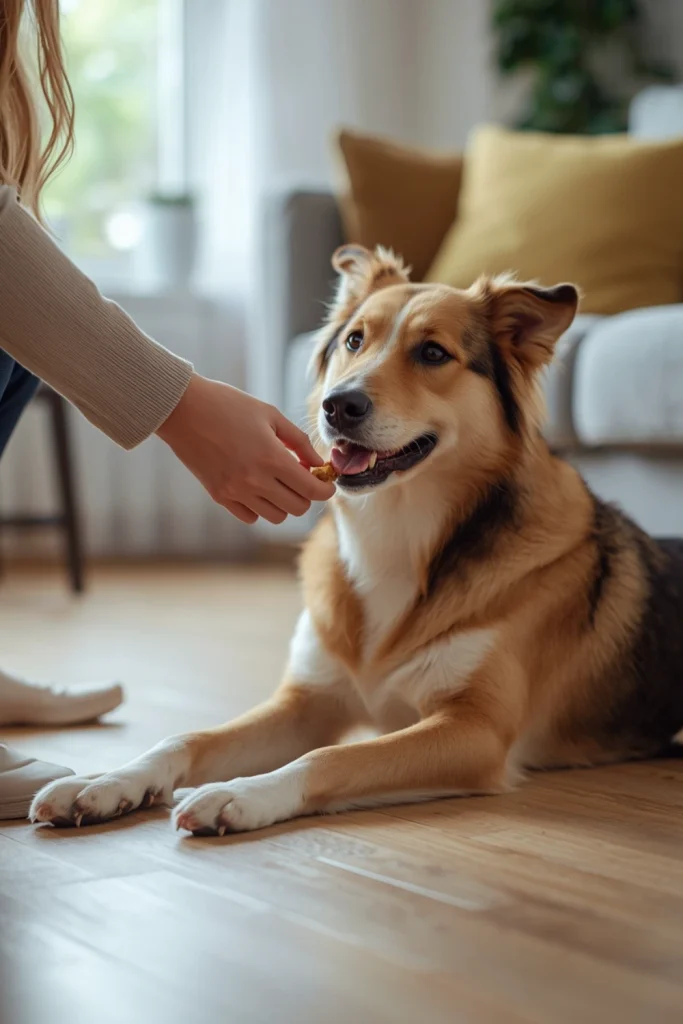
Once your dog is sitting, slowly guide the treat toward the floor. Keep the movement smooth and close to your dog’s body. As your dog follows the treat downward, gradually move it forward so their front legs extend and their chest moves toward the floor. The exact movement may vary depending on your dog’s size, body shape, and flexibility.
The instant your dog reaches the down position, reward them. Timing is important because your dog needs to understand which behavior earned the treat. If your dog only lowers their head or bends their front legs without lying down, do not become frustrated. Reset the exercise and try again with a slower hand movement.
4. Add the “Down” Verbal Cue
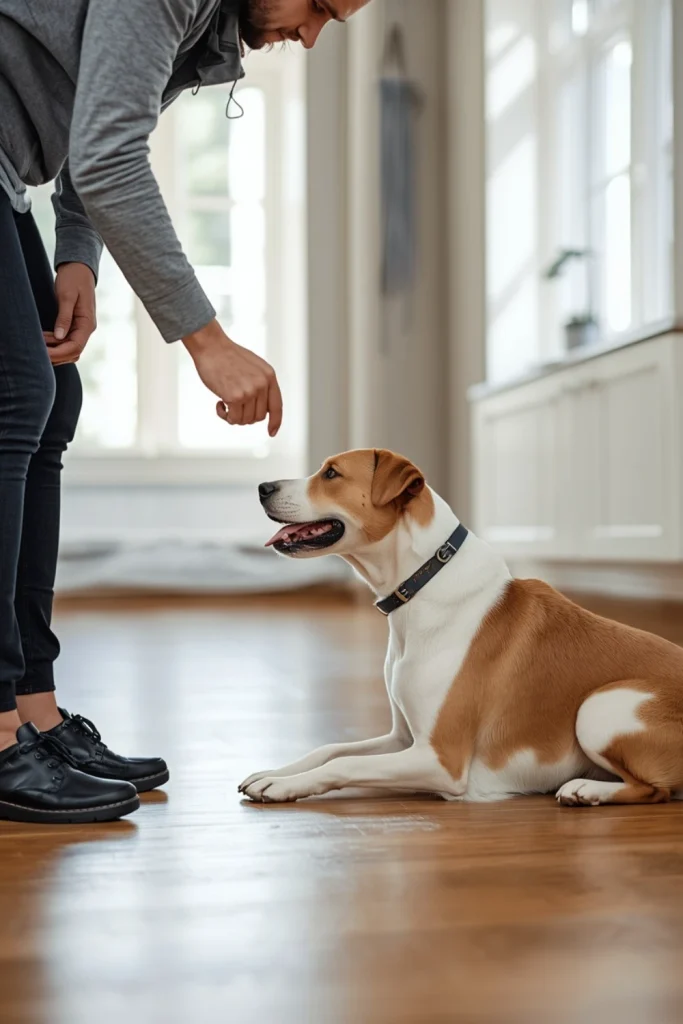
Once your dog begins following the hand motion reliably, introduce the verbal command. Say “down” clearly just before guiding your dog toward the floor. Use the same word every time and keep your tone calm and consistent. Avoid adding several different words because this can make the lesson confusing.
Practice the verbal cue together with the hand signal for several repetitions. When your dog reaches the down position, immediately praise and reward them. With repetition, your dog will begin connecting the word “down” with the physical movement. Eventually, you can gradually reduce the size of the hand gesture and rely more on the verbal cue.
5. Reward the Down Position
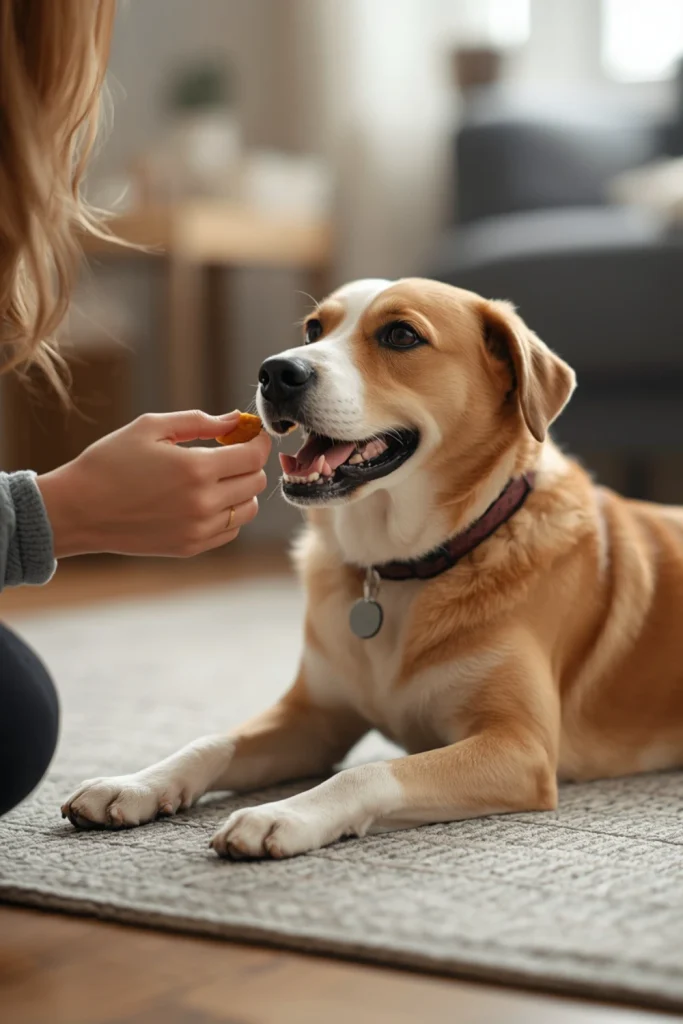
Rewarding your dog at the correct moment is one of the most important parts of learning. As soon as your dog lies down, provide a small treat and praise them calmly. You want your dog to understand that placing their body on the floor when asked leads to something positive.
Once your dog understands the basic movement, begin rewarding slightly better responses. For example, you might wait for your dog to remain in the down position for one or two seconds before delivering the treat. Gradually increase the duration, but do not make the exercise difficult too quickly. Your dog should experience many successful repetitions during each training session.
6. Practice the Down Command With Distractions
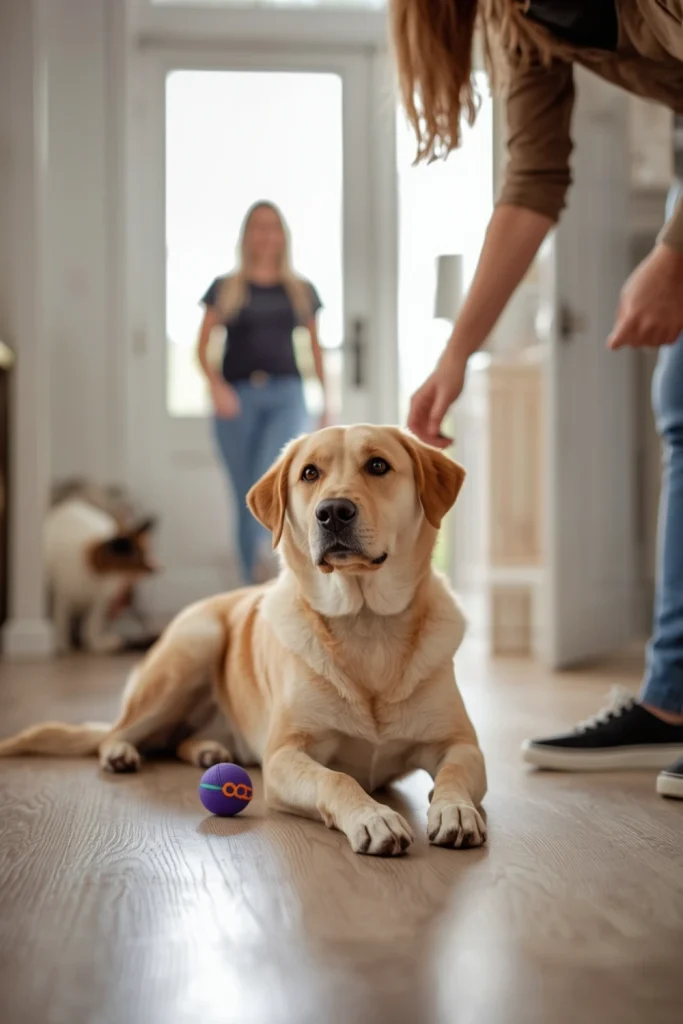
After your dog understands the down command in a quiet environment, begin introducing mild distractions. You could have another family member walk across the room, place a toy nearby, or practice while normal household activity is happening. Start with distractions that your dog can handle successfully.
If your dog immediately gets up or ignores the command, reduce the difficulty. Move closer, remove the distraction, or return to a simpler version of the exercise. Gradual progress is much more effective than expecting your dog to perform perfectly around exciting distractions. Over time, your dog can learn that the down command remains important even when interesting things are happening.
7. Practice in Different Situations
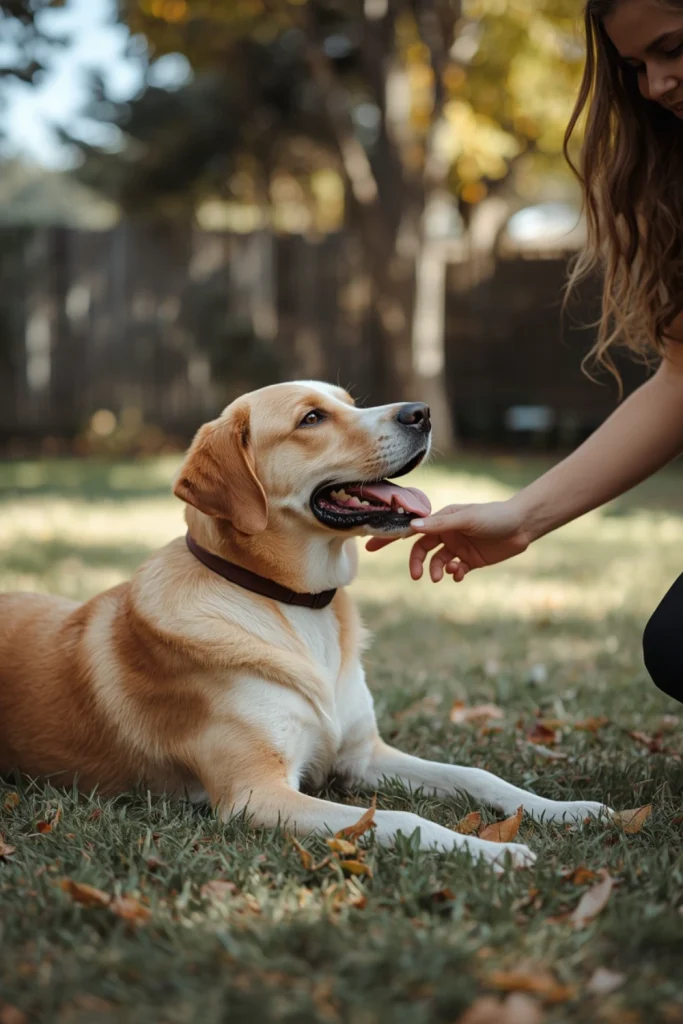
The final step is to make the down command useful in everyday situations. Practice in different rooms of your home, in the backyard, or in another safe environment when your dog is ready. Keep the first sessions in each new location easy because a dog may understand a command indoors but struggle when the surroundings change.
You can eventually use the down command during quiet family gatherings, while preparing your dog’s food, or when you want them to settle beside you. Continue rewarding good responses, especially when you introduce a new location or distraction. Regular refreshers can help maintain the behavior and make the command more dependable.
Final Thoughts
Teaching the down command is an excellent way to build your dog’s basic obedience skills while encouraging calm behavior and better communication. By starting in a quiet environment, using a reward to guide the movement, adding a clear verbal cue, and gradually introducing distractions, you can make the learning process simple and enjoyable.
These Easy Steps to Teach Your Dog the down command provide a practical foundation for continued training. Remember to be patient and avoid forcing your dog into position. Reward successful behavior, keep sessions short, and increase difficulty gradually. With consistent practice, your dog can learn to respond confidently to the down command in many everyday situations.