12 Dog Care Tips for Owners Who Work Full-Time
Working full-time does not mean you cannot give your dog a happy, healthy, and loving life. Many dog owners balance busy work schedules with walks, feeding, training, and quality time with their pets. The key is to create a realistic routine that meets your dog’s needs while fitting comfortably into your daily life. With thoughtful planning, the right supplies, and consistent habits, you can help your dog feel safe and cared for even when you are away from home.
If you often worry about leaving your dog alone while you work, you are not alone. Dogs need more than food and shelter; they also need exercise, mental stimulation, companionship, toilet breaks, and regular health care. Fortunately, small changes to your morning routine, workday arrangements, and evening schedule can make a meaningful difference. These 12 Dog Care Tips for full-time workers will help you manage your responsibilities, reduce boredom, and build a stronger bond with your furry companion.
1. Create a Consistent Daily Routine
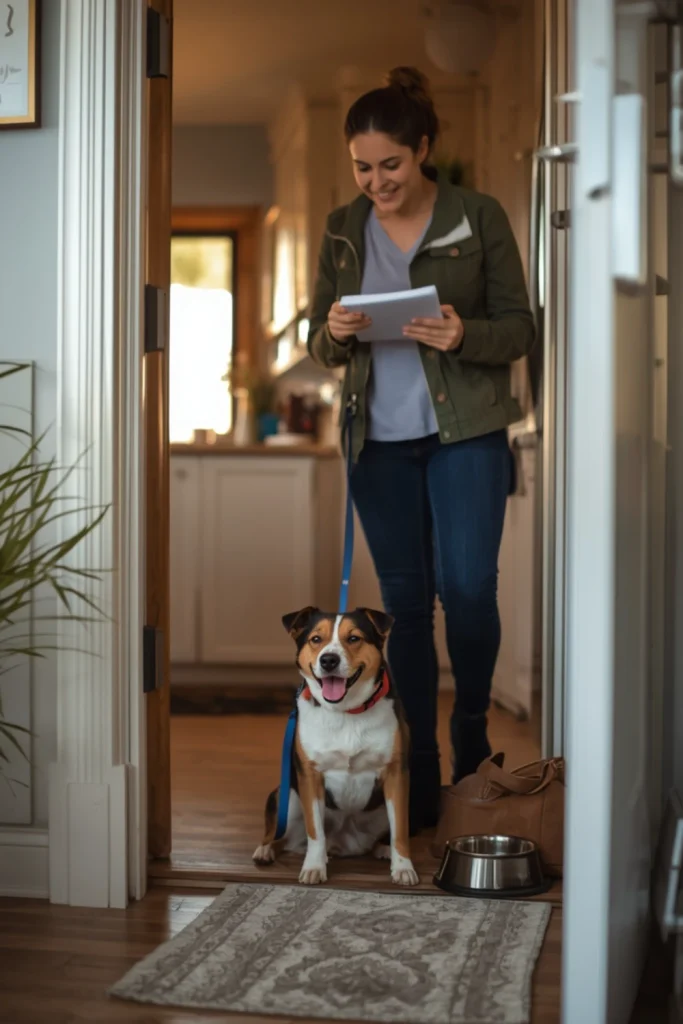
A predictable daily routine is one of the most helpful ways to care for a dog while working full-time. Dogs often feel more comfortable when meals, walks, toilet breaks, and bedtime happen at roughly consistent times. Before leaving for work, set aside time for a toilet break, breakfast, and a suitable walk or play session. When you return home, offer another opportunity to go outside, followed by attention, exercise, and dinner according to your dog’s feeding schedule. A routine helps you remember important responsibilities even when your workdays become busy.
Your schedule should match your dog’s age, health, energy level, and individual needs. Puppies generally need more frequent toilet breaks, meals, supervision, and social interaction than healthy adult dogs. Senior dogs or those with medical conditions may also require extra care during the day. Keep a simple checklist on your phone or near your door to track feeding, medication when prescribed, and walks. Try to maintain a similar routine on weekends, while allowing flexibility for family activities. Consistency should make life easier for both of you, not become a rigid schedule that ignores your dog’s needs.
2. Give Your Dog Exercise Before Leaving for Work
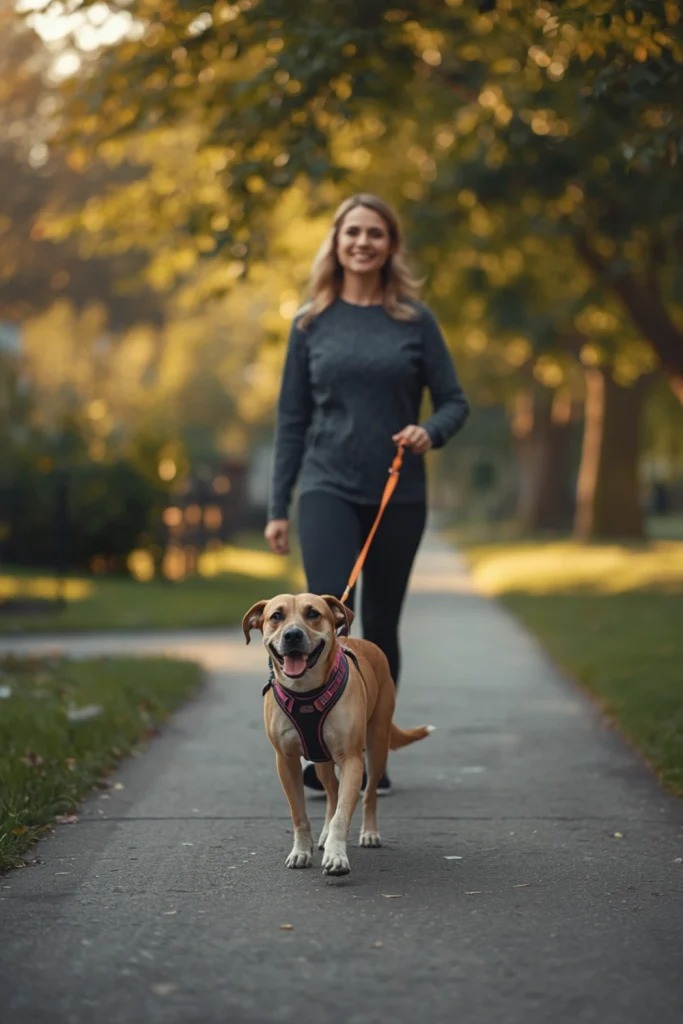
A suitable morning walk or exercise session can help your dog start the day with a positive experience. Depending on your dog’s health and energy level, this might include a brisk walk, gentle sniffing time, a short game of fetch, or a few minutes of training. Exercise gives dogs an opportunity to explore their environment, use their muscles, and respond to natural instincts. A calm, enriching morning activity may also make it easier for some dogs to settle down for rest after their owner leaves.
Avoid assuming every dog needs the same amount or intensity of exercise. A young, active dog may enjoy a longer walk, while a small, elderly, or medically vulnerable dog may need shorter, gentler activity. Ask your veterinarian if you are unsure what is appropriate. Allow time for your dog to sniff during walks rather than rushing through the entire outing. After exercise, provide fresh water and time to cool down before leaving. If your schedule is tight, even a short walk combined with a few minutes of interactive play can be more beneficial than skipping activity entirely.
3. Make Sure Your Dog Has a Toilet Break During the Day
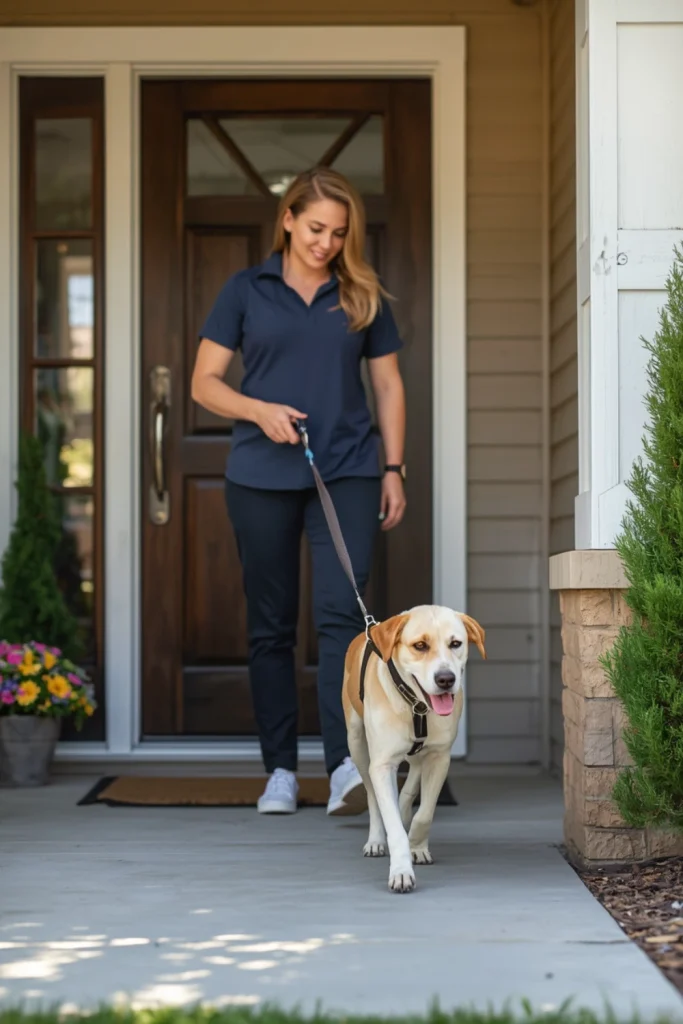
Planning toilet breaks is essential when you work full-time. Dogs cannot always wait comfortably for an entire workday, and their needs vary according to age, health, size, hydration, and routine. Puppies usually need much more frequent opportunities to relieve themselves than adult dogs. Some senior dogs or dogs with urinary or digestive conditions also need more frequent breaks. Before leaving, take your dog to an appropriate toilet area and allow enough time for them to finish without rushing. Reward outdoor toileting if you are still teaching the habit.
If your work schedule keeps you away for long periods, arrange a reliable midday solution whenever your dog needs it. Depending on your circumstances, a trusted family member, neighbor, professional dog walker, or pet sitter may be able to visit. Some households use a designated indoor toilet area for specific situations, but this should be introduced thoughtfully and may not suit every dog. Never punish accidents that occur while you are away. Clean the area with an appropriate pet enzymatic cleaner and review the schedule. If a previously house-trained dog begins having repeated accidents, consult a veterinarian to rule out a medical cause.
4. Prepare a Safe and Comfortable Space at Home
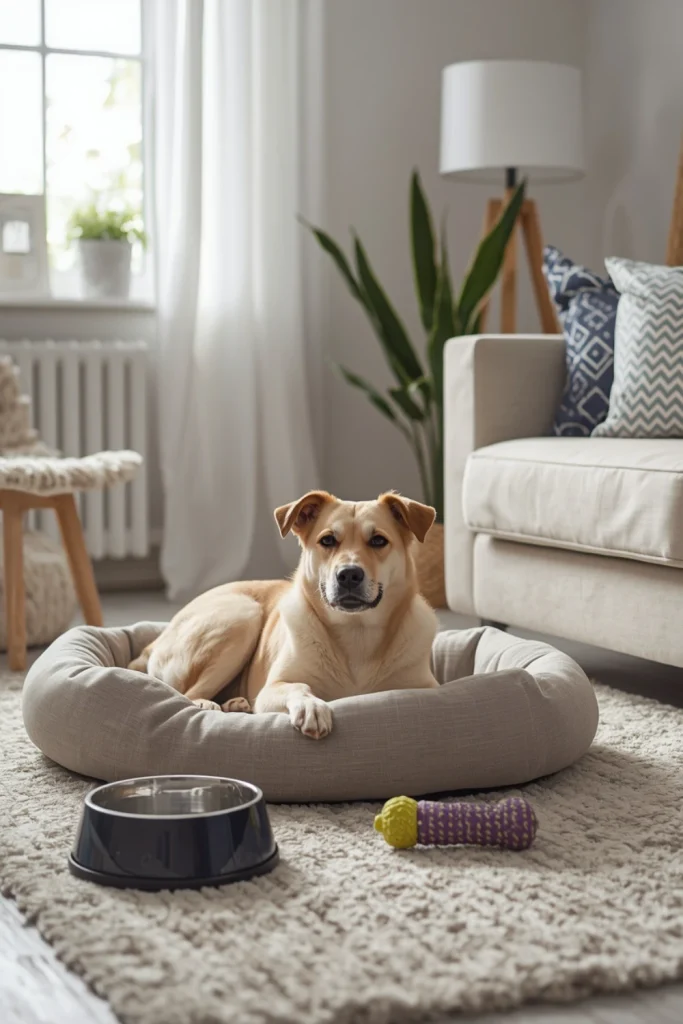
Before leaving your dog alone, make sure the environment is comfortable, secure, and appropriate for the amount of time you will be away. Provide access to fresh water, a suitable resting area, and safe toys that match your dog’s chewing habits. Remove electrical cords, medications, cleaning products, toxic foods, small swallowable objects, and other hazards from areas your dog can reach. Check that windows, doors, balconies, and fences are secure. If your dog has a habit of chewing furniture or exploring cupboards, use a dog-proofed room or suitable exercise pen rather than giving unrestricted access to the entire home.
A crate may be useful for some dogs when it has been introduced gradually and positively, but it should never be used to confine a dog for an excessive period. Dogs need space to stretch, change positions, drink water, and relieve themselves at suitable intervals. Some dogs feel more comfortable resting in a familiar room, while others benefit from a properly prepared pen. Observe your dog’s behavior when you return home and look for signs of stress, damage, or attempts to escape. If you are uncertain about the safest arrangement, ask a qualified trainer or veterinarian for guidance tailored to your dog.
5. Use Interactive Toys to Prevent Boredom
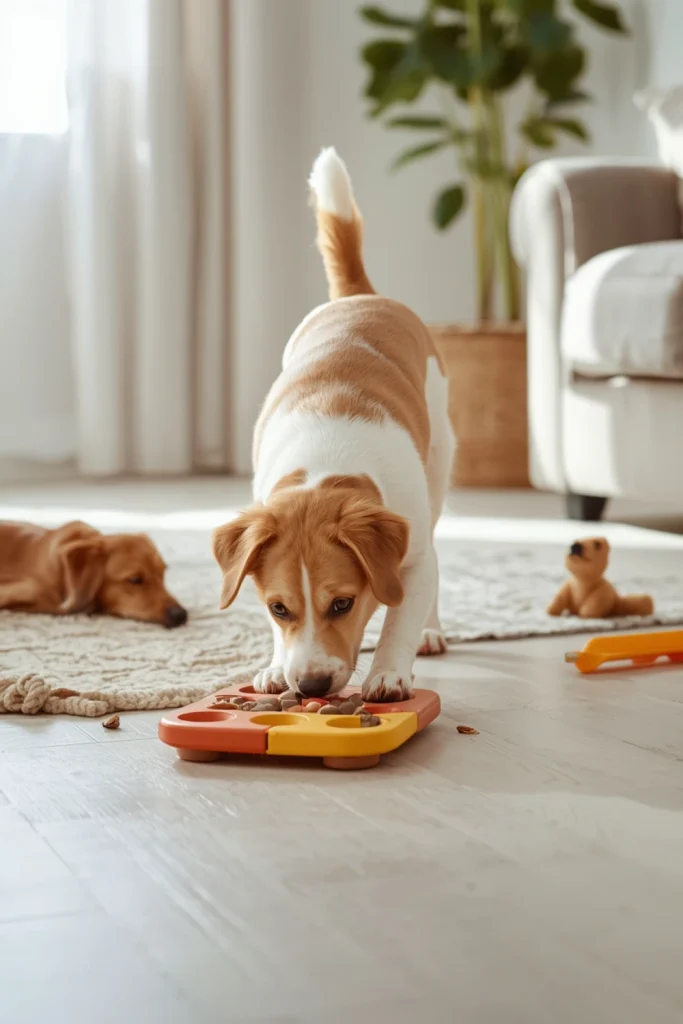
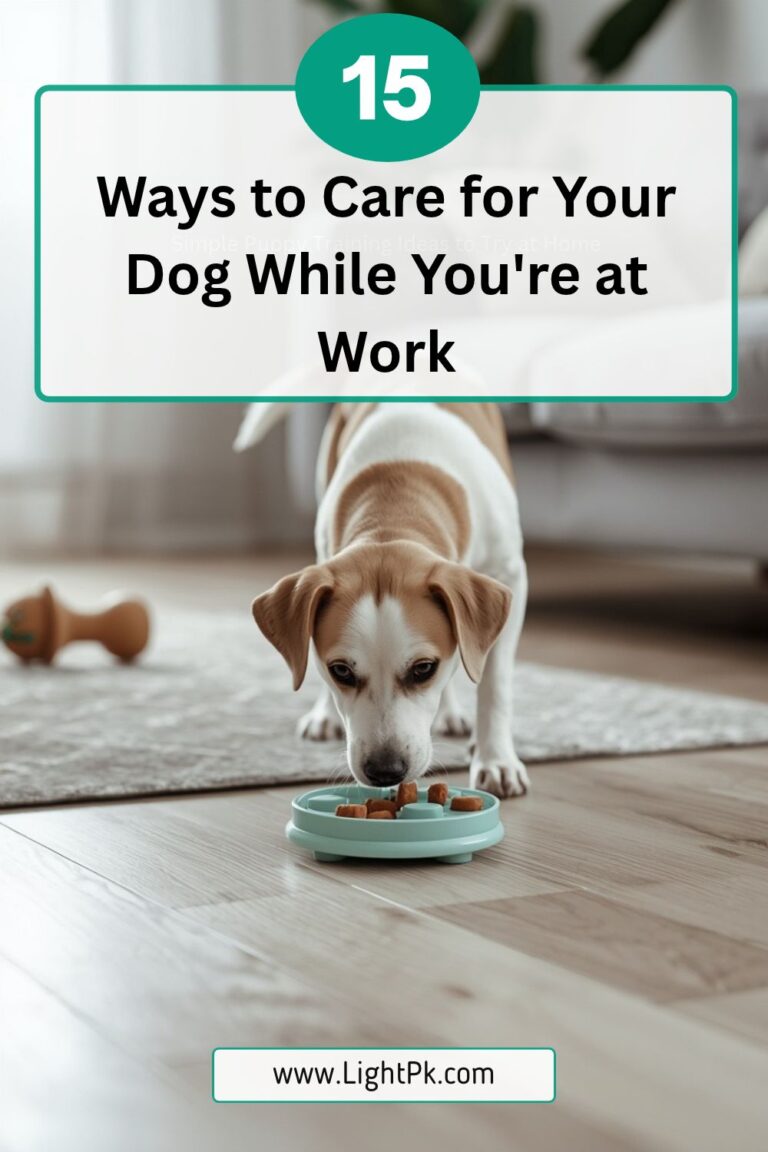
Dogs need mental stimulation as well as physical exercise. When you are away at work, suitable enrichment toys can give your dog something safe and interesting to do during quiet periods. Options include sturdy food-dispensing toys, snuffle mats, beginner puzzle feeders, and durable chew toys designed for your dog’s size and chewing strength. You can sometimes use part of your dog’s regular food allowance in an enrichment toy, helping provide an activity without adding too many extra calories. Rotate a few appropriate options to maintain interest instead of leaving every toy out all the time.
Safety should always come first when selecting toys for unsupervised use. No toy is completely indestructible, and some dogs quickly break apart items that other dogs use safely. Observe your dog’s behavior with a toy before leaving it available, and remove anything that develops cracks, loose parts, or pieces small enough to swallow. Avoid toys that create a choking risk or cause frustration. Food puzzles should be suitable for your dog’s experience level and cleaned according to the manufacturer’s instructions. Remember that toys are helpful enrichment, not a substitute for necessary toilet breaks, human interaction, exercise, and social contact.
6. Arrange Help When You Cannot Come Home
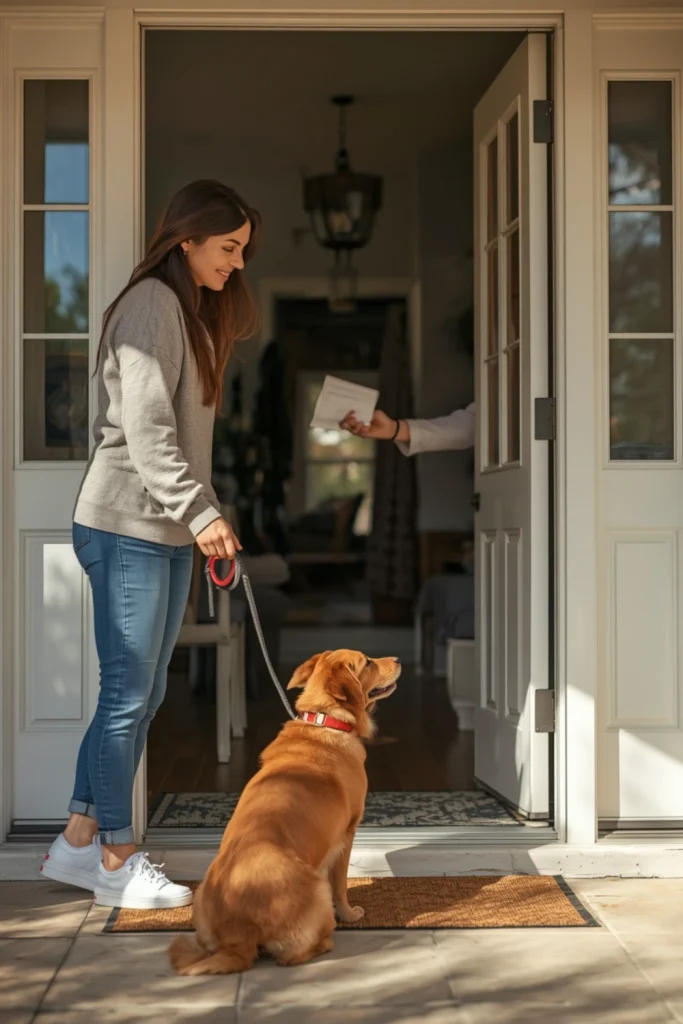
If your workday involves a long commute or extended hours, arranging support can make a major difference to your dog’s well-being. A trusted family member, friend, neighbor, professional dog walker, or pet sitter may be able to provide a midday toilet break, a short walk, fresh water, and companionship. This support can be especially important for puppies, senior dogs, dogs with medical needs, or pets who become distressed when alone. Choose a person who understands your dog’s routine and can follow your instructions consistently.
Before hiring a dog walker or sitter, ask about their experience, availability, emergency procedures, and approach to handling dogs. Arrange a meeting so your dog can become familiar with the person while you are present. Share your veterinarian’s contact details, feeding instructions, medication directions if applicable, and information about behavior triggers. If using a professional service, check references and clarify how visits are scheduled and confirmed. You may not need daily assistance if your dog is comfortable with a shorter absence, but having a backup plan is useful when meetings run late, travel delays happen, or unexpected work responsibilities arise.
7. Keep Feeding Times Consistent and Appropriate
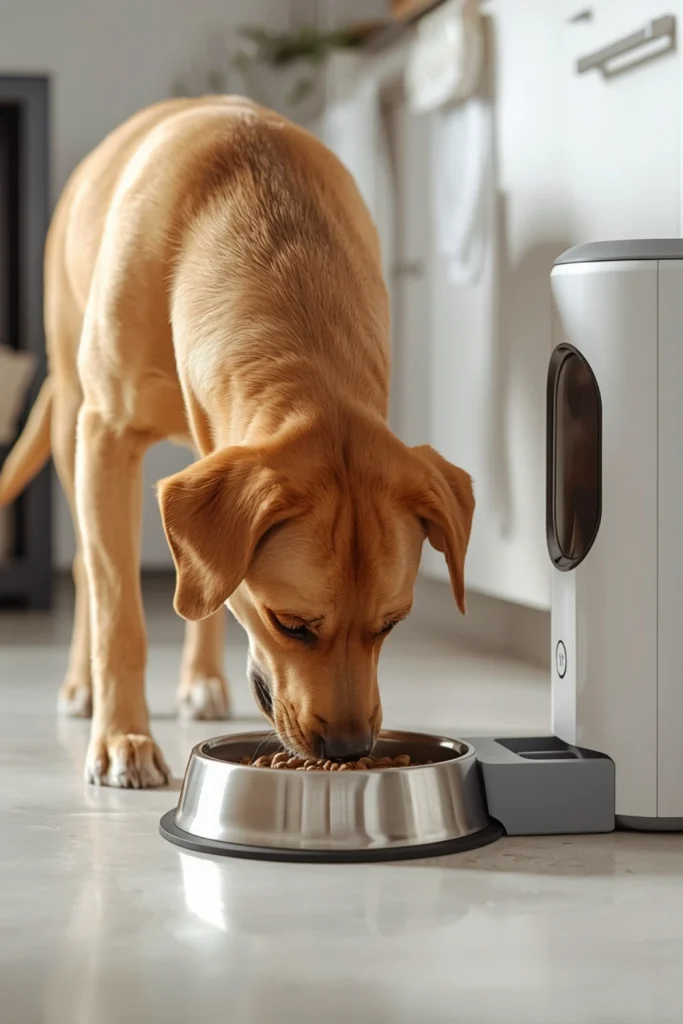
Feeding your dog at suitable times helps maintain a stable routine and makes it easier to monitor appetite. Choose a complete and balanced dog food appropriate for your dog’s age, size, activity level, and health needs. Many adult dogs do well with meals on a regular schedule, but the ideal feeding plan depends on the individual dog. Puppies may require more frequent meals, while dogs with certain health conditions may need a specific diet or feeding timetable recommended by a veterinarian. Measure portions rather than estimating them, because frequent overfeeding can lead to unhealthy weight gain.
If you are away during normal feeding hours, consider practical options such as preparing measured meals in advance or using a suitable automatic feeder when appropriate. Test any feeder while you are home to make sure it works correctly and cannot be damaged or tipped over by your dog. Automatic devices do not replace fresh water, supervision, or a person checking on a dog who needs help. Avoid leaving perishable food out for long periods unless the product and feeding setup are specifically designed for that use. Monitor your dog’s body condition and appetite, and ask your veterinarian before making major dietary changes.
8. Build Short Training Sessions Into Your Day
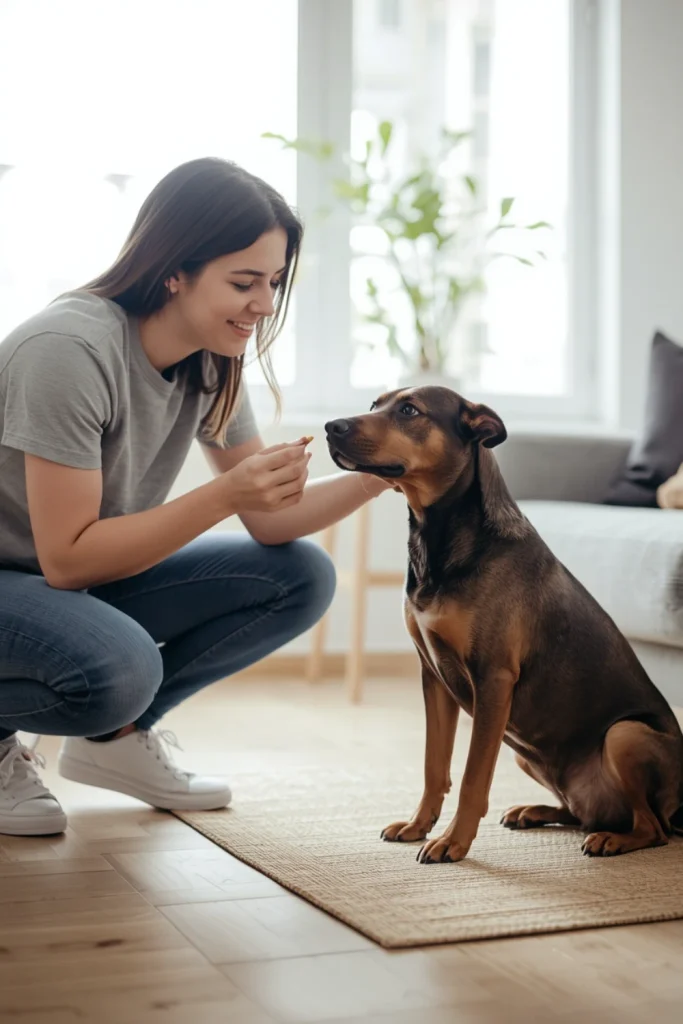
Training does not have to take hours. Short, consistent sessions can help full-time workers teach useful skills while strengthening their relationship with their dogs. Practice simple behaviors such as responding to their name, coming when called, settling on a mat, walking calmly on a leash, and waiting before going through a doorway. Reward-based training helps your dog understand which behaviors earn positive outcomes. You can practice for a few minutes before work, during a break when you are home, or in the evening after a walk.
Keep sessions short enough that your dog remains interested and avoid trying to teach too many new skills at once. Use small rewards and clear cues, and finish with an activity your dog already understands. If you have a puppy, focus on gentle socialization, toilet training, and basic routines suited to its age. Avoid using punishment or intimidation, which can create fear and damage trust. If your dog shows serious fear, reactivity, or aggression, seek support from a qualified reward-based trainer or veterinary behavior professional. A few minutes of thoughtful practice each day can build valuable habits over time.
9. Give Your Dog Quality Time After Work
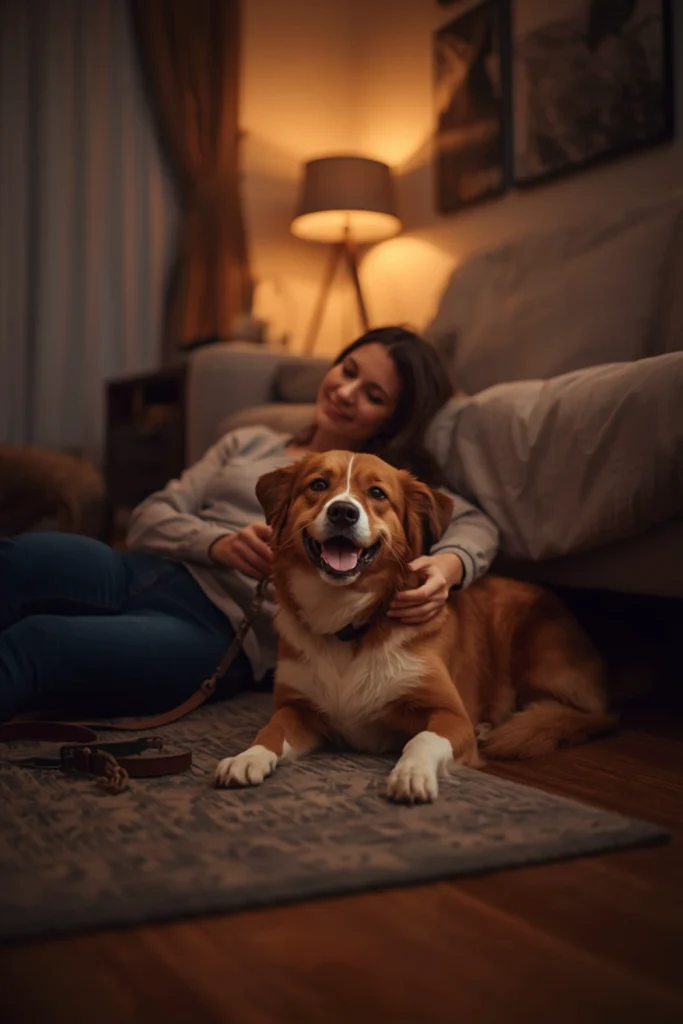
After a long workday, it can be tempting to relax immediately, but your dog may be waiting for interaction, exercise, and companionship. Set aside dedicated time when you return home to greet your dog calmly, provide a toilet break, and offer an activity suited to its needs. This could be a walk, a game of fetch in a safe area, scent-search activities, gentle grooming, or a few minutes of training. Regular positive interaction helps strengthen your bond and gives your dog opportunities to express natural behaviors.
Quality time does not need to involve expensive outings or constant excitement. Many dogs enjoy simply spending time near their people while the household settles down. You can include your dog in suitable daily activities, such as relaxing in the same room, practicing calm behavior while you prepare dinner, or enjoying a short evening walk. Pay attention to your dog’s signals: some pets want active play, while others need quiet companionship after a busy day. Try to put away distractions for part of this time, including your phone or work messages. Consistent attention helps your dog feel included in family life.
10. Monitor Your Dog’s Health and Grooming
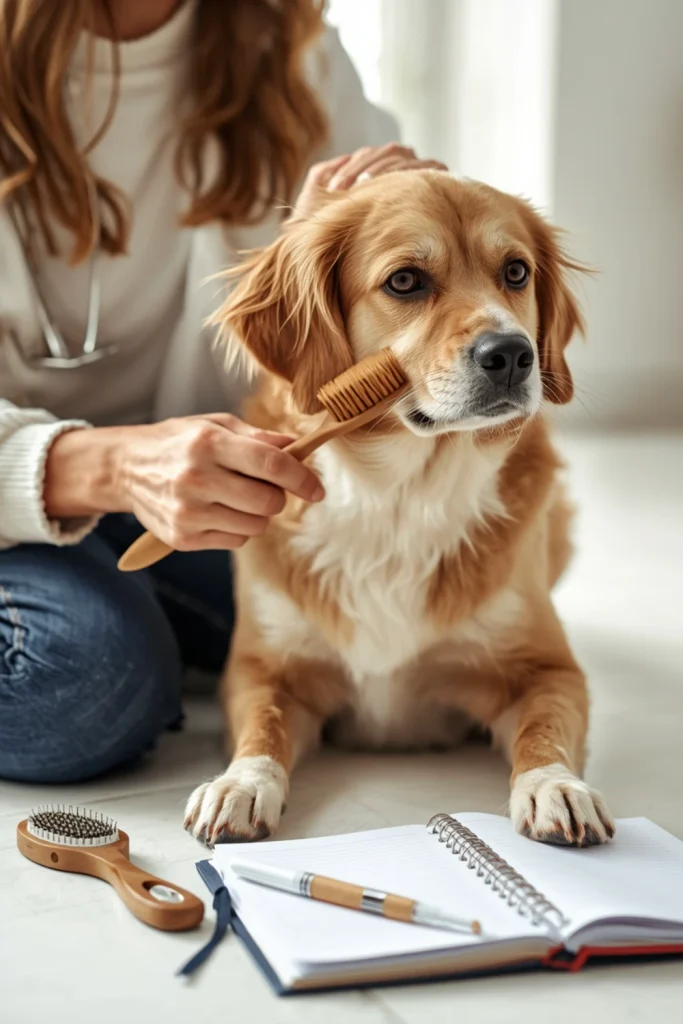
A busy work schedule can make small health changes easy to miss, so build quick checks into your daily routine. Notice whether your dog is eating and drinking normally, moving comfortably, behaving as usual, and producing normal stools. Regular brushing can help keep the coat in good condition and allow you to spot unusual lumps, skin irritation, fleas, ticks, or injuries. Check paws and nails as needed, and maintain dental care with a dog-safe toothbrush and toothpaste. The appropriate grooming frequency depends on your dog’s coat type, age, and health.
Make veterinary appointments for routine examinations, vaccinations, dental assessments, and parasite prevention according to professional advice. Keep important records in one place and set reminders for appointments or prescribed medications. If you notice persistent vomiting, diarrhea, changes in urination, unexplained weight loss, unusual tiredness, or ongoing itching, contact your veterinarian. Seek urgent veterinary help for severe symptoms such as difficulty breathing, collapse, uncontrolled bleeding, or suspected poisoning. Avoid diagnosing problems or giving human medicines without veterinary guidance. Preventive care may take planning, but it can help you identify concerns earlier and support your dog’s long-term health.
11. Consider Dog Daycare When It Suits Your Dog
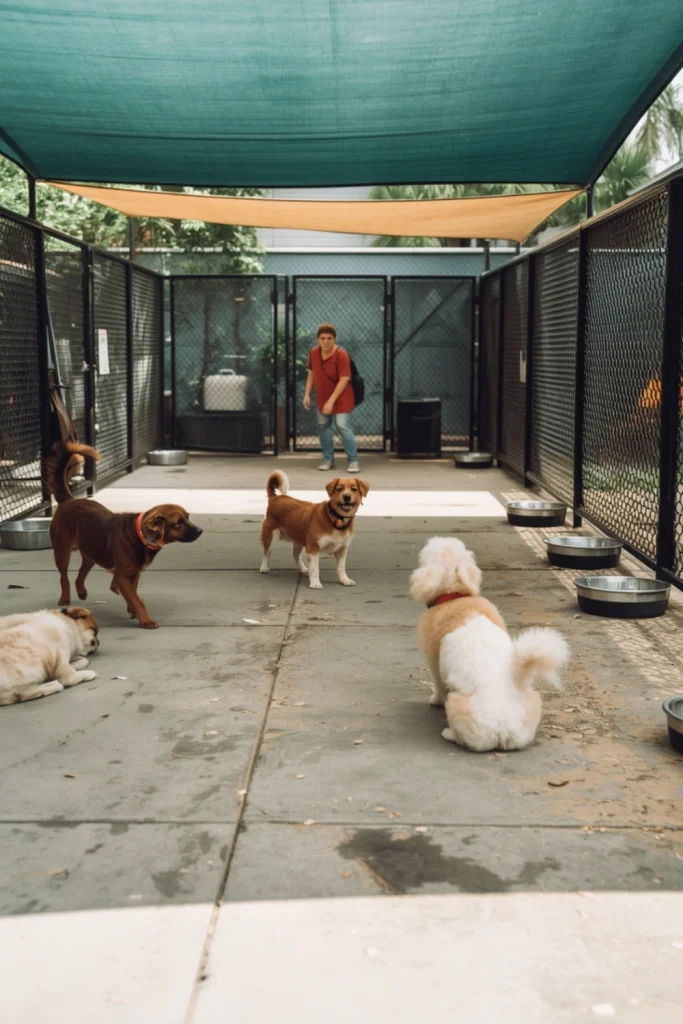
Dog daycare can be an option for some full-time workers who want their dogs to receive supervised activity and social interaction during the day. A good facility should have appropriate staffing, safe spaces, clear health requirements, and a thoughtful process for introducing new dogs. Daycare may suit sociable dogs who enjoy group environments, but it is not the right choice for every pet. Some dogs find busy groups stressful, prefer human company, or do better with a quiet home environment and a private dog walker.
Visit a facility before enrolling your dog and ask about supervision, rest periods, group sizes, vaccination policies, cleaning practices, and emergency procedures. Find out how staff handle conflicts and whether dogs are matched by size, temperament, and play style. If possible, begin with a short trial and monitor your dog’s behavior afterward. Signs such as repeated exhaustion, reluctance to enter, or increased anxiety may suggest that the arrangement needs adjustment. Daycare should never be treated as a substitute for individual attention, training, or a suitable home routine. Consider your dog’s preferences rather than assuming every dog wants to play with other dogs all day.
12. Help Your Dog Learn to Be Comfortable Alone
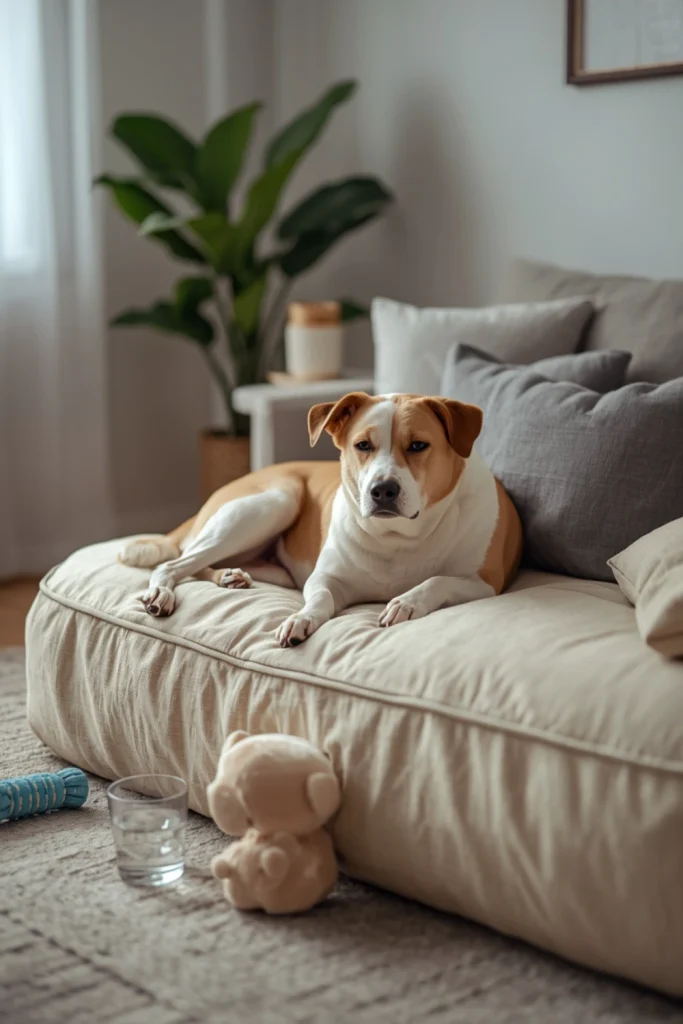
Learning to spend time alone calmly is an important skill for many dogs whose owners work full-time. Begin by creating positive experiences when you are home. Encourage your dog to relax on a comfortable bed while you move around the room, then practice stepping into another room for a short period and returning calmly. Gradually increase the time only when your dog remains comfortable. Food puzzles or familiar resting areas may help some dogs settle, but the goal is to build confidence rather than distract a frightened dog from severe distress.
Avoid suddenly leaving a dog alone for longer than it can manage, especially if it is a newly adopted dog or puppy. Signs of separation-related distress can include persistent barking, destructive attempts to escape, drooling, pacing, or toileting despite being house-trained. A camera may help you understand what happens after you leave, although it does not replace direct care. If your dog panics or cannot settle, speak with your veterinarian or a qualified professional experienced in separation-related problems. A gradual behavior plan may be needed, and some dogs require additional support. Never punish damage or accidents that occur while you are away.
Final Thoughts
Working full-time and being a caring dog owner can go together when you plan around your dog’s needs. The most useful Dog Care Tips for busy owners include establishing a predictable routine, providing appropriate exercise, arranging toilet breaks, preparing a safe home environment, and offering mental stimulation. Help from a trusted dog walker, pet sitter, or suitable daycare facility may also make the workday easier when your dog needs more support than you can provide alone.
Remember that every dog is different. Your pet’s age, health, energy level, and comfort with being alone should guide your decisions. Make time for affection, training, grooming, and veterinary care, and watch for changes that suggest your current routine needs adjustment. You do not have to create a perfect schedule overnight. Start with a few practical changes, build consistency, and make sure your dog receives the exercise, companionship, and care needed to thrive.