
15 Ways to Care for Your Dog While You’re at Work
Leaving your dog at home while you go to work can be challenging, especially when you want your furry companion to feel safe, comfortable, and loved. Dogs depend on their owners for food, exercise, companionship, mental stimulation, and regular toilet breaks. Fortunately, working outside the home does not mean you cannot be a responsible dog owner. With a little preparation and a consistent routine, you can make your dog’s day more comfortable even when you are busy earning a living.
The secret is to plan your dog’s day around their individual needs instead of simply leaving food and toys before walking out the door. A safe home environment, suitable activities, reliable help, and quality time after work can make a meaningful difference. Whether you have a playful puppy, an energetic adult dog, or a relaxed senior companion, these 15 practical ways to Care for Your Dog While you’re at work will help you create a healthier and happier daily routine.
1. Establish a Consistent Morning Routine
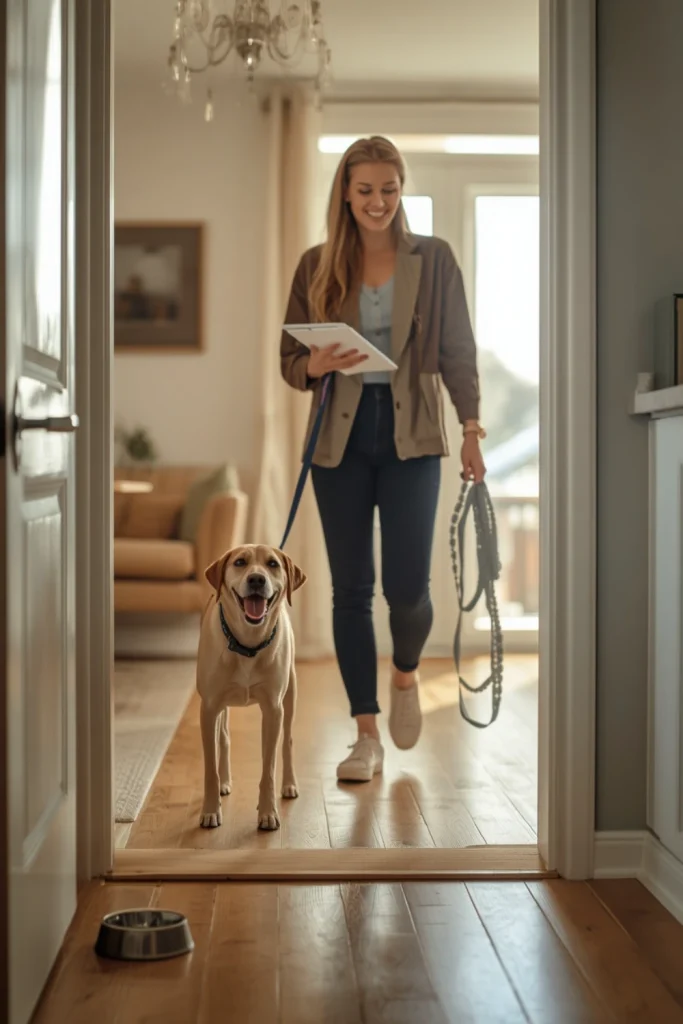
A predictable morning routine helps your dog understand what to expect before you leave home. Start with a toilet break, followed by breakfast according to your dog’s feeding schedule. If your dog is healthy enough, include a suitable walk, gentle play session, or short training activity before work. This gives your pet an opportunity to stretch, explore, and interact with you before spending time alone. Keeping these activities in a similar order each morning can also make your own departure less rushed and stressful.
Your routine should reflect your dog’s age, health, energy level, and ability to remain alone. Puppies often need more frequent toilet breaks and supervision, while senior dogs may require slower walks or extra assistance. Prepare essentials such as your dog’s leash, food, and walking supplies the night before to save time. Avoid making mornings so busy that your dog misses an important toilet break or feels hurried during meals. A simple, realistic schedule is more useful than a complicated one that becomes difficult to maintain on workdays.
2. Give Your Dog Exercise Before You Leave
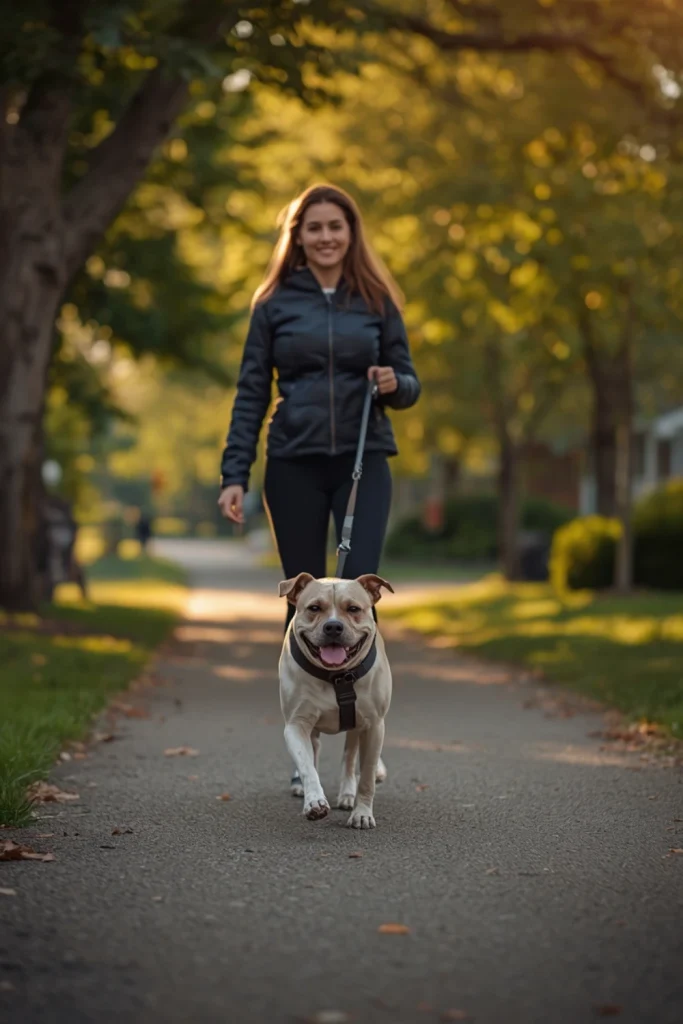
Appropriate exercise before work can help your dog begin the day with a positive experience. Depending on your dog’s needs, a morning walk may provide physical activity, outdoor exploration, and opportunities to sniff interesting scents. You can also add a few minutes of fetch in a safe area, gentle tug with suitable rules, or basic obedience practice. These activities help your dog use energy and spend meaningful time with you before your workday begins.
Every dog has different exercise requirements, so avoid assuming that a long or intense workout is necessary for all pets. Young, active dogs may enjoy more movement, while puppies, senior dogs, and dogs with medical conditions may need shorter, gentler activities. Ask your veterinarian for advice if you are unsure about appropriate exercise. Allow your dog time to drink water and cool down after activity before you leave. If your mornings are particularly busy, combine a short walk with a few minutes of sniffing or training instead of skipping exercise altogether.
3. Arrange a Midday Dog Walker or Pet Sitter
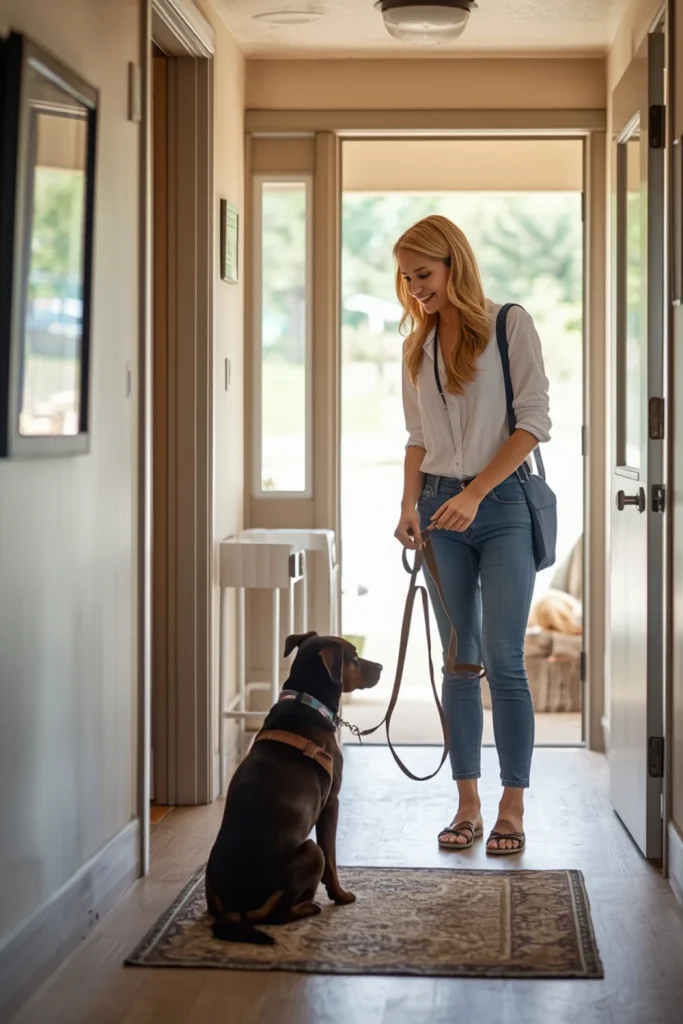
If you will be away for much of the day, arranging a midday visit can help meet your dog’s needs. A dog walker or pet sitter may provide a toilet break, fresh water, a short walk, playtime, or companionship. This support can be particularly valuable for puppies, senior dogs, pets with medical needs, and dogs that struggle with long periods alone. Even a brief visit can help break up the day and give your dog an opportunity to move around and interact with someone.
Choose a caregiver carefully and explain your dog’s routine, behavior, feeding requirements, and any health concerns. Arrange an introduction while you are home so you can observe how the person interacts with your pet. Provide emergency contact details, your veterinarian’s information, and clear instructions about access to your home. If hiring a professional, ask about experience, references, scheduling, and emergency procedures. Keep a backup option available in case your regular walker becomes unavailable. The right arrangement depends on your budget, work hours, and the level of care your individual dog requires.
4. Create a Safe and Comfortable Home Environment
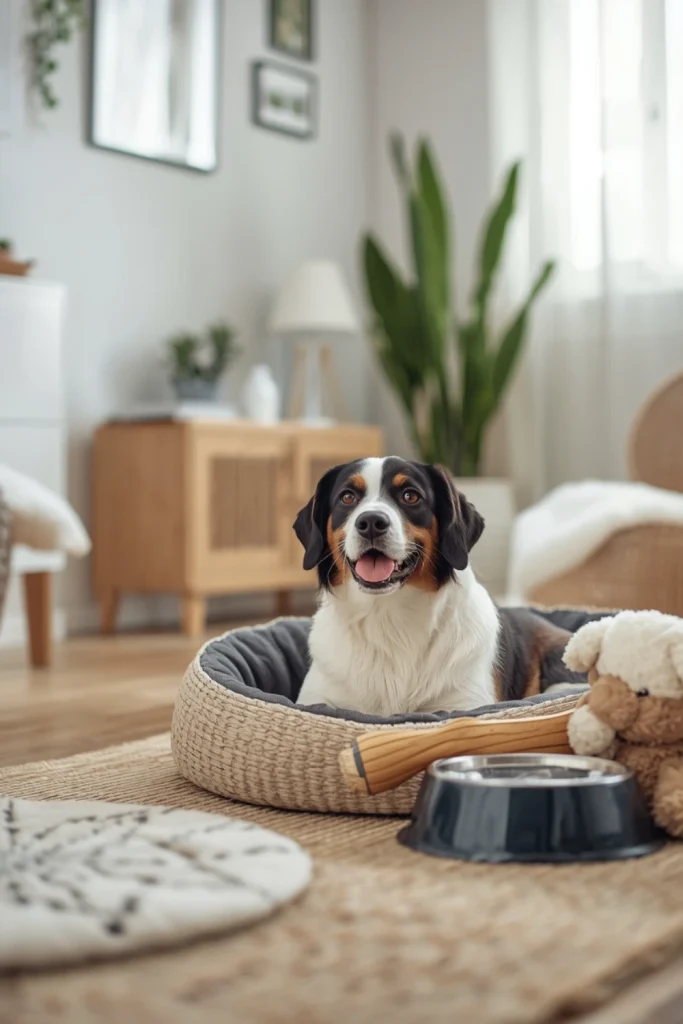
Before leaving for work, prepare an area where your dog can rest without encountering unnecessary hazards. Provide fresh drinking water, a comfortable bed, and access to a temperature-appropriate, well-ventilated space. Remove cleaning products, medicines, toxic foods, electrical cords, small objects, and anything your dog might chew or swallow. Secure doors, windows, balconies, and gates. If your dog is likely to explore cupboards or damage furniture, a dog-proofed room or suitable exercise pen may be safer than unrestricted access to the entire home.
Consider your dog’s personality when choosing the space. Some dogs relax best in a familiar living room, while others benefit from a quiet corner away from household activity. A crate may be appropriate for a dog that has been introduced to it gradually and positively, but it should not be used for excessive confinement. Your dog must have suitable opportunities to move, drink, and relieve themselves. Observe your pet’s behavior after you return home and make adjustments if you notice signs of distress, repeated escape attempts, or unsafe chewing. A comfortable environment should support your dog’s welfare rather than simply make it easier to leave.
5. Provide Safe Interactive Toys and Puzzle Feeders
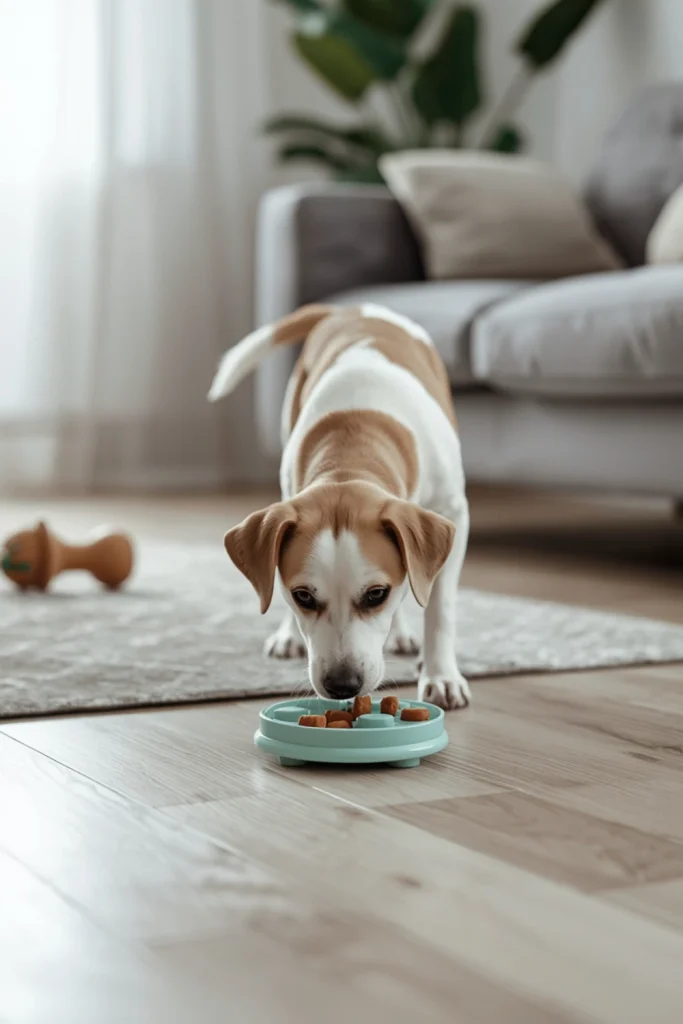
Mental stimulation is an important part of a dog’s daily routine. When you are away, suitable enrichment toys can give your dog an opportunity to investigate, sniff, and work for small food rewards. Food-dispensing toys, snuffle mats, and beginner puzzle feeders may help make quiet periods more interesting. You can sometimes use part of your dog’s usual food allowance rather than adding extra treats, which helps manage daily calorie intake. Choose toys according to your dog’s size, experience, and chewing habits.
Safety is essential when leaving toys available without direct supervision. Some dogs carefully use toys, while others quickly destroy them and may swallow pieces. Introduce a new toy while you are home, observe how your dog handles it, and remove it if it cracks, breaks, or becomes small enough to swallow. Avoid toys with loose parts or designs that could trap a jaw or paw. Rotate a few suitable items to maintain interest, and clean them according to the manufacturer’s instructions. Toys can support enrichment, but they do not replace toilet breaks, exercise, companionship, or veterinary care.
6. Make Fresh Water Available Throughout the Day
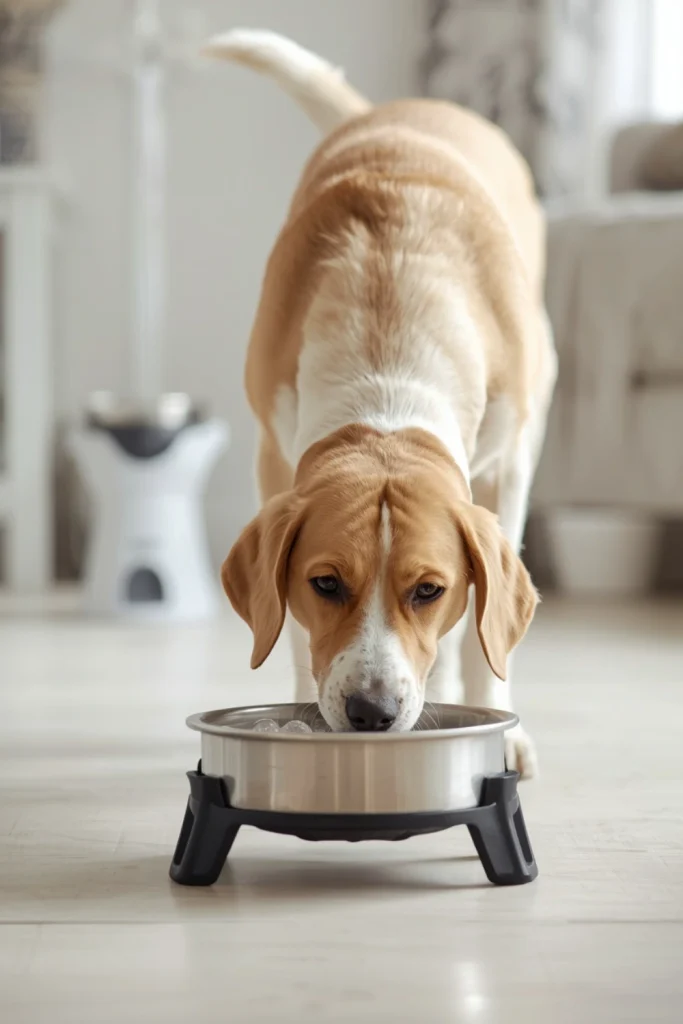
Access to clean drinking water is essential for your dog’s health, particularly when you are away from home for several hours. Before leaving, wash and refill your dog’s water bowl and place it somewhere easy to reach. Choose a stable bowl that is difficult to tip over, especially if your dog is energetic or likes to move objects around. In some households, providing more than one water station can reduce the chance that a spilled bowl leaves the dog without water.
Check that the water area is away from electrical equipment and that the bowl is not likely to be blocked by a closed door. An automatic water dispenser or pet fountain may be helpful for certain households, but test it while you are home and clean it regularly according to the manufacturer’s instructions. Do not assume that an automatic device will work perfectly without monitoring. Water needs can change with temperature, activity, diet, and health. If your dog suddenly drinks much more or much less than usual, contact your veterinarian rather than assuming it is caused by your schedule.
7. Use a Pet Camera to Check on Your Dog
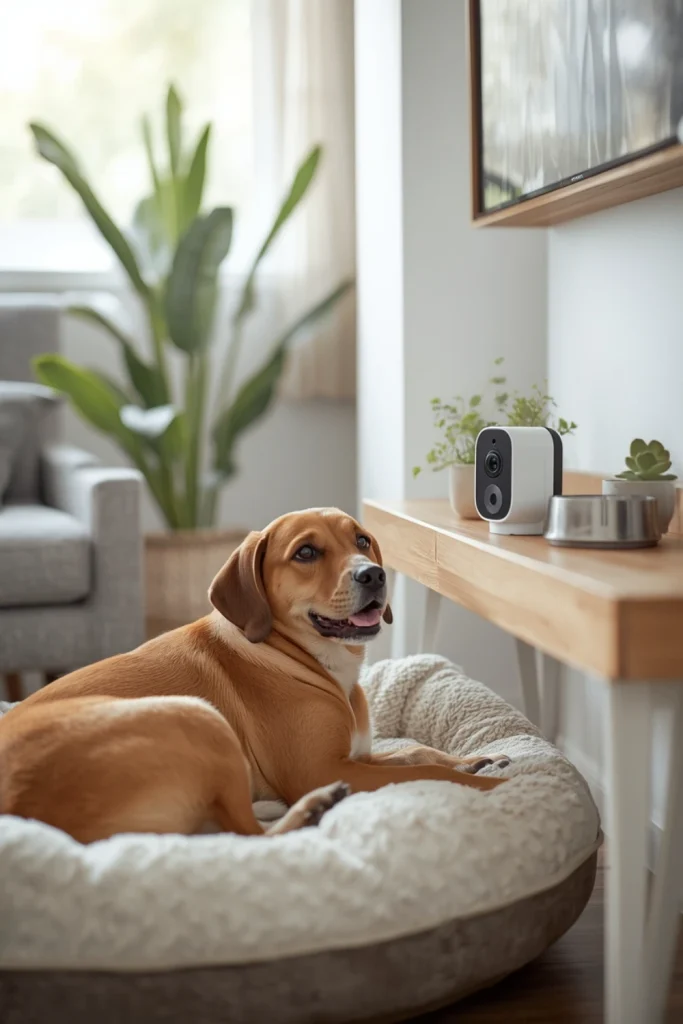
A pet camera can help you understand how your dog behaves after you leave home. Depending on the model, it may allow you to view live video, hear sounds, or receive motion notifications through a connected device. Checking in occasionally can show whether your dog spends most of the day resting, becomes restless, or repeatedly approaches the door. This information can help you decide whether to adjust your dog’s environment, arrange additional visits, or seek professional advice about behavior concerns.
Choose a camera that suits your budget and place it where it provides a useful view without creating a hazard. Secure cords and mounts so your dog cannot chew or pull them down. Some dogs respond well to a camera, while others may become more excited or confused by sounds from a speaker. Test two-way audio while you are home before using it during a real absence. Remember that a camera cannot provide a toilet break, comfort a frightened dog physically, or replace human supervision. Use it as a monitoring tool rather than a substitute for a suitable care plan.
8. Consider Dog Daycare When It Suits Your Pet
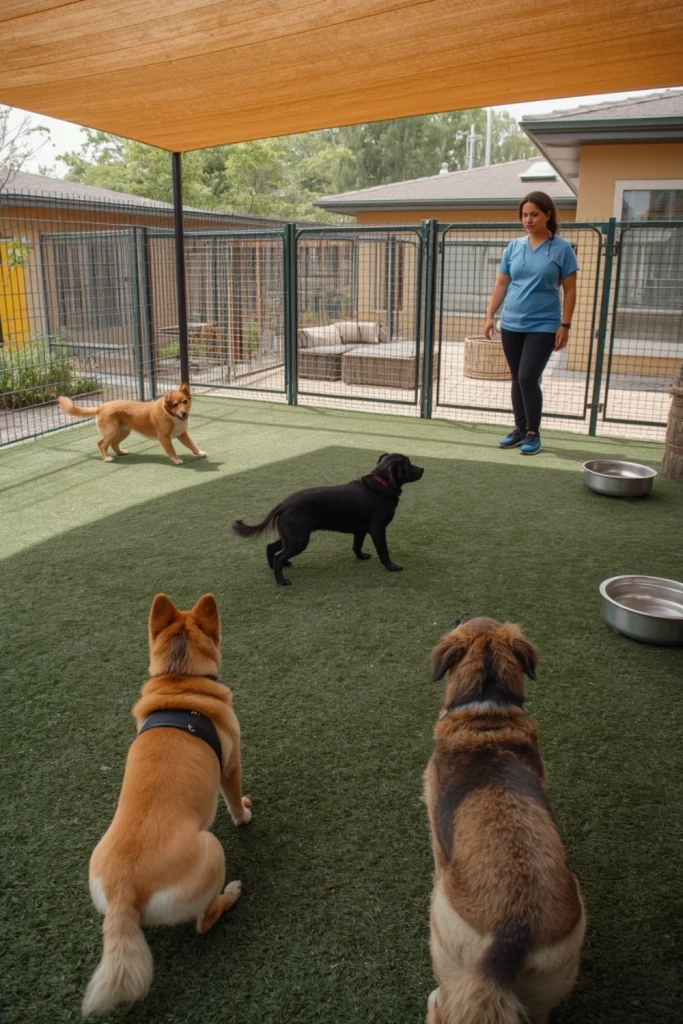
Dog daycare may be useful for some owners who work full-time and have dogs that enjoy supervised activity and social interaction. A suitable facility can provide play opportunities, rest periods, and professional supervision during the workday. It may be particularly helpful when a dog needs more interaction than the household can provide alone. However, daycare is not automatically the best choice for every dog. Some pets prefer quiet surroundings, are uncomfortable in groups, or benefit more from individual walks and one-to-one care.
Visit the facility before enrolling your dog and ask about staff training, group sizes, vaccination requirements, cleaning practices, rest areas, and emergency procedures. Find out how dogs are introduced and whether they are grouped according to size, temperament, and play style. Start with a short trial if available, then observe your dog’s behavior at home afterward. Persistent reluctance, unusual exhaustion, or increased anxiety may indicate that the arrangement needs to change. Daycare should complement a balanced routine, not replace personal attention, training, or appropriate rest. Choose it based on your dog’s comfort and needs rather than convenience alone.
9. Keep Feeding Times and Portions Consistent
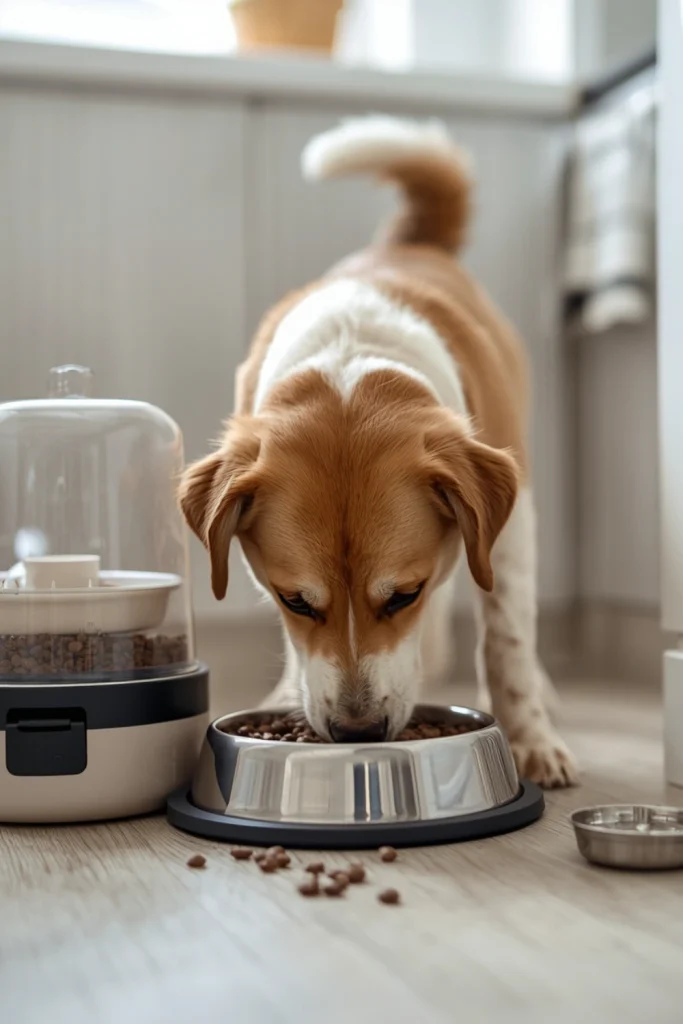
A reliable feeding schedule helps make daily dog care easier to manage. Select a complete and balanced food that suits your dog’s age, size, activity level, and health needs. Measure portions rather than guessing, because regularly serving too much food can contribute to weight gain. Puppies may need more frequent meals than adult dogs, and dogs with certain medical conditions may need a special diet or feeding timetable. Follow your veterinarian’s recommendations if your pet has dietary restrictions, food sensitivities, or weight-management needs.
If you cannot return home during a normal meal time, plan ahead. You might prepare measured portions in advance or use an appropriate automatic feeder if it suits your dog’s needs. Test the feeder before relying on it, and keep it clean according to the manufacturer’s instructions. Automatic feeders do not replace access to water, toilet breaks, or checks on your dog’s well-being. Avoid leaving wet or perishable food unrefrigerated for extended periods. Keep a record of feeding times if a caregiver helps during the day, and monitor your dog’s appetite and body condition to make sure the routine continues to work.
10. Help Your Dog Learn to Stay Alone Gradually
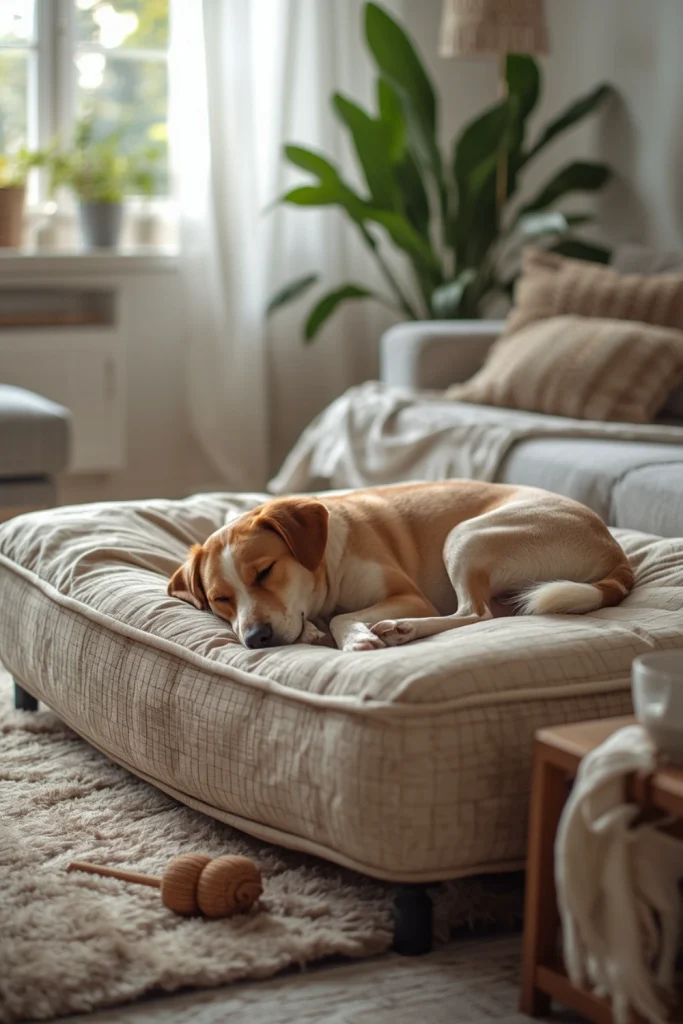
Some dogs are comfortable spending time alone, while others become anxious when their owners leave. Helping your dog learn that short absences are safe can be an important part of preparing for a workday. Begin by encouraging your dog to relax on a bed while you move around the room. Practice stepping into another room for a brief period, then return calmly. Gradually increase the duration only when your dog remains comfortable. Reward relaxed behavior and avoid turning departures or arrivals into highly emotional events.
Do not suddenly leave a dog alone for longer than it can manage, especially if it is newly adopted, very young, or already showing distress. Signs of separation-related problems can include persistent barking, pacing, drooling, destructive escape attempts, or toileting accidents. A camera may help you observe behavior, but severe distress requires more than monitoring. Contact your veterinarian or a qualified professional experienced in separation-related problems if your dog struggles to settle. Some dogs need a gradual behavior plan and additional support. Never punish damage or accidents that occur while you are away, as punishment after the event does not teach the dog how to feel safe alone.
11. Arrange a Toilet Break That Matches Your Dog’s Needs
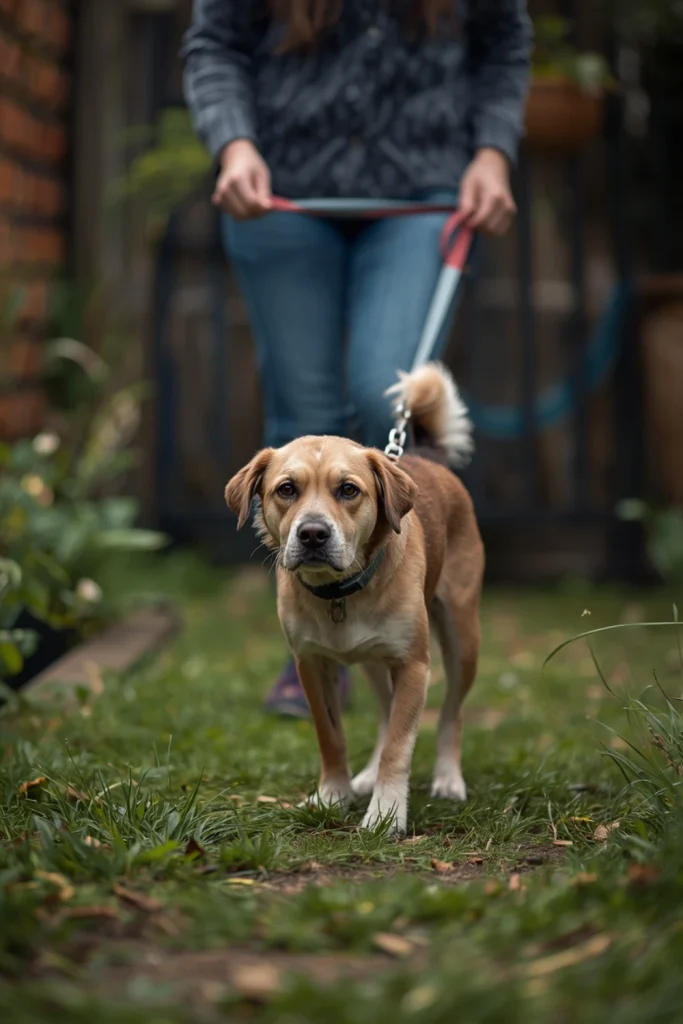
Dogs need regular opportunities to relieve themselves, and the right schedule depends on their age, health, routine, and individual bladder control. A healthy adult dog may manage longer intervals than a young puppy, but that does not mean every adult dog can comfortably wait through an entire workday and commute. Puppies, senior dogs, and pets with urinary or digestive problems often need more frequent breaks. Before leaving home, allow enough time for your dog to toilet without rushing.
If you will be away for an extended period, arrange help when necessary. A dog walker, trusted neighbor, pet sitter, or family member may be able to take your dog outside. In some circumstances, an indoor toilet area may be part of a management plan, but it will not suit every dog or household. Clean accidents with an appropriate enzymatic cleaner and review whether your dog is getting enough opportunities to go outside. Repeated accidents in a previously house-trained dog may signal a medical issue, so consult your veterinarian if the pattern changes suddenly or persists.
12. Leave Comforting Items and Familiar Scents
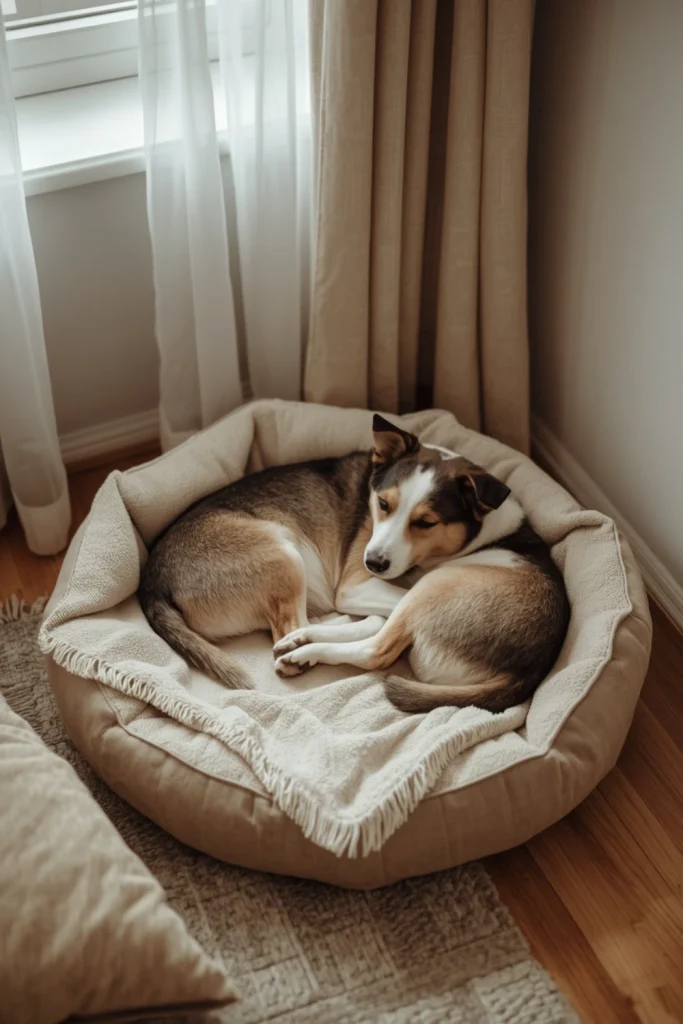
A familiar environment can help some dogs feel more comfortable while their owners are away. A favorite washable blanket, familiar bed, or safe resting area may provide a sense of continuity, particularly when a dog is adjusting to a new household or routine. Keep the resting space in an area where your dog usually feels secure, and avoid making major environmental changes immediately before leaving for a long workday. Some dogs also settle more easily when the household follows predictable departure routines.
Choose comfort items carefully. If your dog tears fabric, swallows stuffing, or chews objects when alone, do not leave blankets or soft toys that could become dangerous. Instead, select items you have observed your dog using safely. Some dogs may find quiet background sound helpful, while others prefer a peaceful room. Test any changes while you are home and observe your dog’s response. Avoid assuming that every dog needs music, a television, or a particular scent. The goal is to provide a safe, familiar setting that suits your pet’s preferences, not to add unnecessary stimulation or potential hazards.
13. Keep Your Dog’s Grooming and Health Care on Schedule
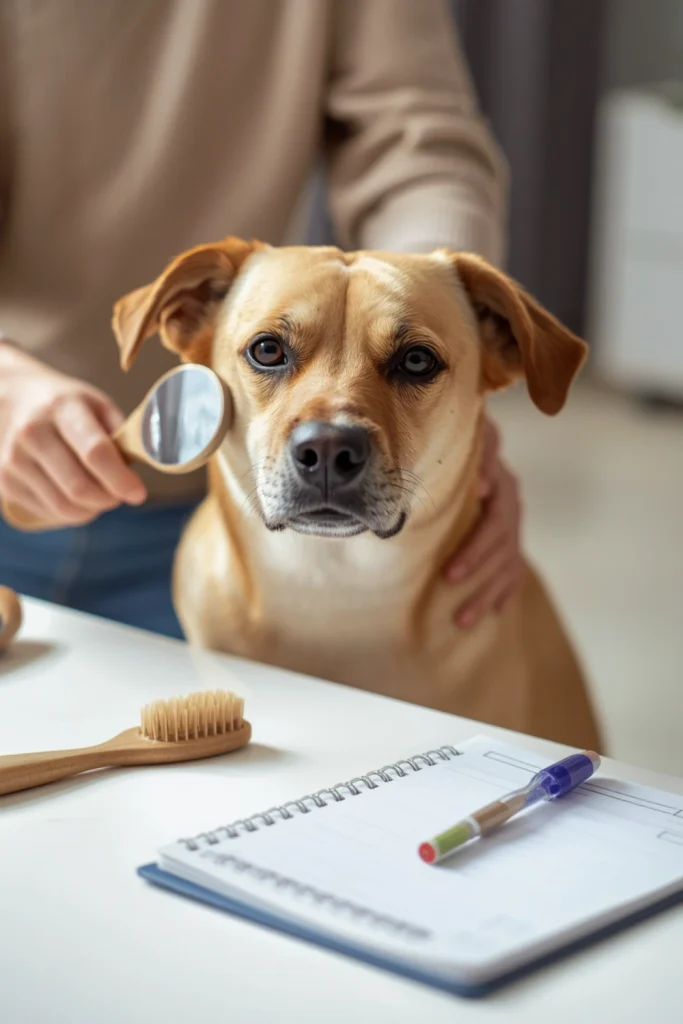
Working full-time can make it easy to postpone grooming or forget routine health appointments. Build small checks into your week so you can notice changes in your dog’s coat, skin, paws, nails, ears, appetite, and behavior. Brush your dog as often as its coat requires, and maintain dental care with a dog-specific toothbrush and toothpaste. Nail care should also be regular, although the ideal interval depends on how quickly your dog’s nails grow and how much they wear down naturally.
Arrange veterinary examinations, vaccinations, dental assessments, and parasite prevention according to professional guidance. Keep records and use reminders on your phone or calendar so appointments do not get overlooked. If a caregiver visits during the day, share any relevant instructions and emergency contact information. Contact your veterinarian if you notice persistent itching, changes in appetite, repeated vomiting or diarrhea, difficulty moving, or unusual tiredness. Seek urgent care for serious symptoms such as difficulty breathing, collapse, uncontrolled bleeding, or suspected poisoning. Good health care is part of your dog’s daily welfare, not a task to postpone until a problem becomes severe.
14. Spend Quality Time With Your Dog After Work
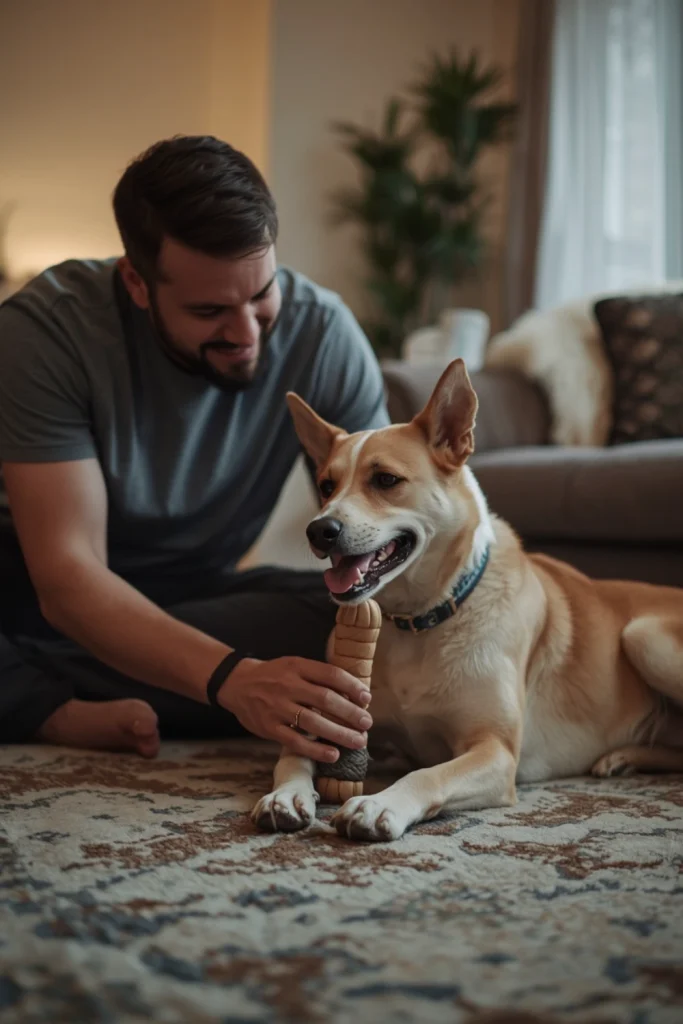
Your dog’s needs do not end when you return home. After a full day apart, make time for a toilet break, suitable exercise, and positive interaction. Depending on your dog’s personality, this may include a walk, sniffing games, fetch in a safe area, gentle grooming, or a short training session. Quality time helps strengthen your bond and provides an opportunity to notice whether your dog seems relaxed, energetic, worried, or unusually tired. It also gives your dog a predictable part of the day to look forward to.
You do not need to fill every evening with intense activity. Many dogs enjoy calm companionship while their owners prepare dinner, read, or relax in the same room. Others need more movement or mental stimulation to remain content. Pay attention to your dog’s signals and balance activity with rest. Put away distractions for at least part of your shared time so your dog receives genuine attention. If you are exhausted after work, choose manageable activities rather than skipping interaction altogether. A short walk and a few minutes of focused play can still become valuable parts of a consistent evening routine.
15. Watch for Signs of Boredom, Stress, or Separation Anxiety
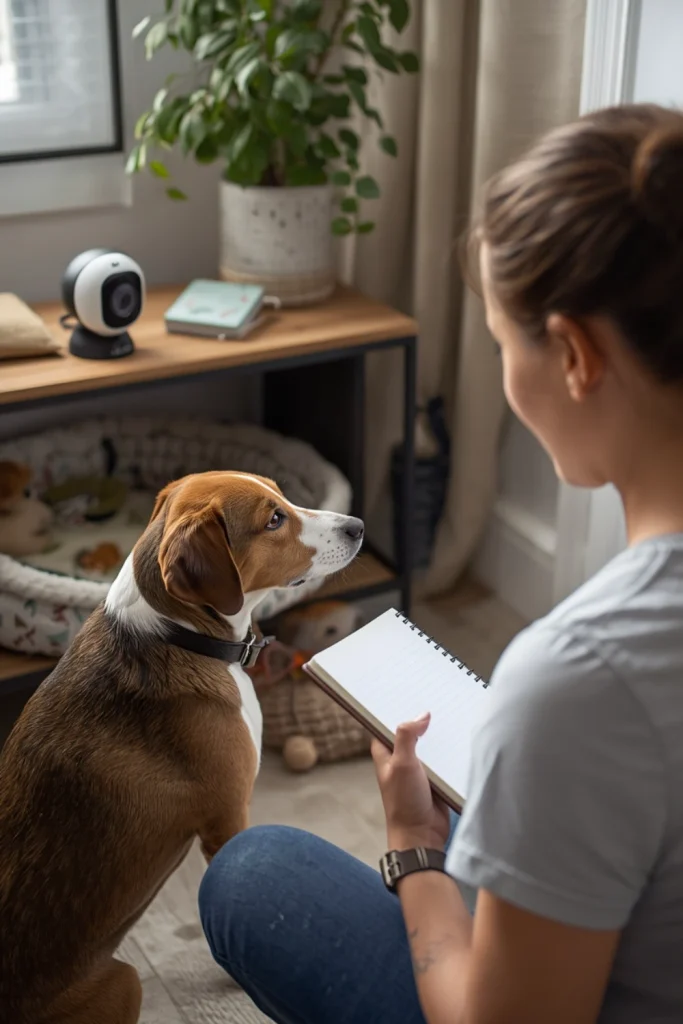
Observing your dog’s behavior is one of the most useful ways to understand whether your current workday arrangement is suitable. Some dogs rest comfortably for much of the day, while others become restless, bark repeatedly, chew household objects, or attempt to escape. Toileting accidents, excessive licking, drooling, pacing, or persistent vocalization may also indicate that something needs attention. These behaviors can have different causes, including boredom, insufficient exercise, fear, medical problems, or separation-related distress.
If you notice a pattern, avoid assuming your dog is being naughty or deliberately seeking attention. Consider whether your pet has suitable toilet breaks, exercise, enrichment, and opportunities for companionship. A pet camera or notes from a dog walker may help you identify when the behavior begins. If the problem continues, consult your veterinarian to rule out medical causes and ask about a qualified behavior professional when appropriate. Severe distress may require a carefully structured plan rather than simply providing more toys. Never punish your dog for behavior that occurred while you were away. Focus on identifying the cause and making changes that improve your dog’s comfort and safety.
Final Thoughts
Learning how to Care for Your Dog While you’re at work starts with understanding your dog’s individual needs and planning for them consistently. A predictable morning routine, suitable exercise, safe toys, fresh water, toilet breaks, and reliable help can make the day more comfortable. Depending on your circumstances, a pet sitter, dog walker, or suitable daycare facility may provide valuable support when you cannot be home.
Remember that no toy, camera, or automatic feeder can replace the care your dog needs from people. Make time for companionship after work, keep up with grooming and veterinary care, and pay attention to changes in your dog’s behavior. If your dog struggles with being alone, seek professional guidance instead of assuming the problem will disappear. With realistic planning and a routine that fits your pet, you can balance work responsibilities with a happy, healthy relationship with your dog.