10 Tips for Crate Training an Adult Dog
Crate training is not only for puppies. An adult dog can also learn to enjoy a crate and see it as a safe, comfortable place to rest. Whether your dog is newly adopted, has never used a crate before, or simply needs better indoor routines, the right approach can make the process much easier.
Crate Training an Adult Dog may take patience, but adult dogs can learn new habits when training is consistent, gentle, and positive. With the right crate, gradual practice, rewards, and a calm routine, you can help your dog become comfortable with crate time without creating unnecessary stress.
1. Choose the Right Crate for Your Adult Dog
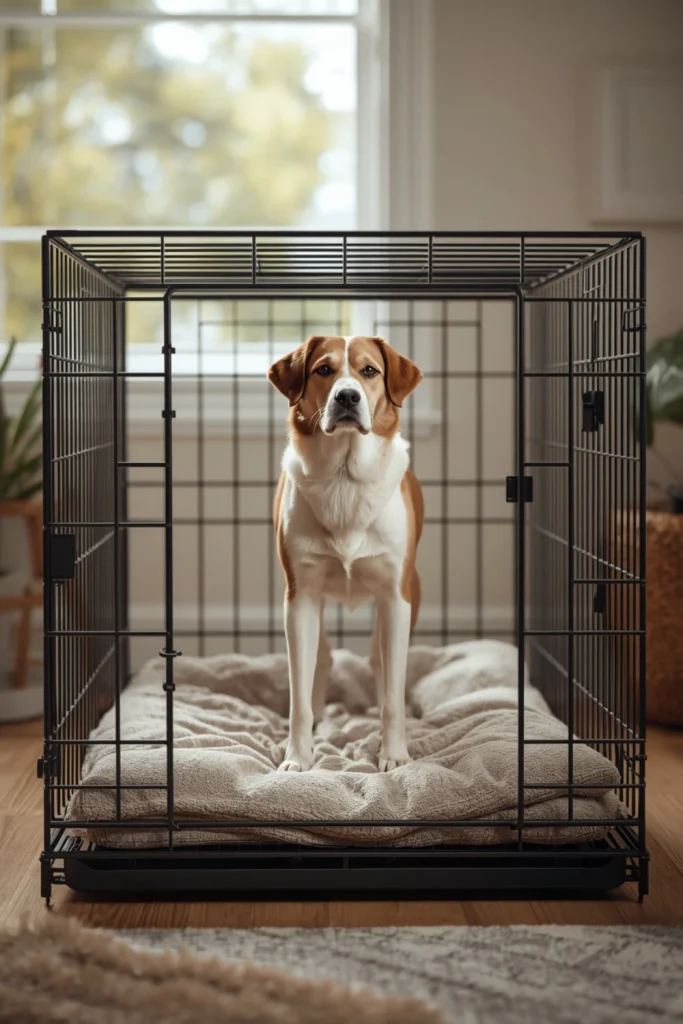
The first step in Crate Training an Adult Dog is choosing a crate that fits your dog’s size, personality, and needs. Your dog should have enough room to stand up, turn around comfortably, lie down, and stretch without feeling cramped. At the same time, the crate should not be excessively large because too much unused space may make it less effective for some dogs. Measure your dog before buying a crate and consider both height and length when selecting the appropriate size.
The type of crate can also affect your dog’s comfort. Wire crates provide ventilation and visibility, while plastic crates can feel more enclosed and secure. Some dogs prefer a covered or quieter environment, while others become more comfortable when they can see their surroundings. Choose a sturdy crate with secure doors and good ventilation. Adding a washable mat or comfortable bedding can make the space more inviting, provided your dog does not chew or destroy it.
2. Introduce the Crate Slowly
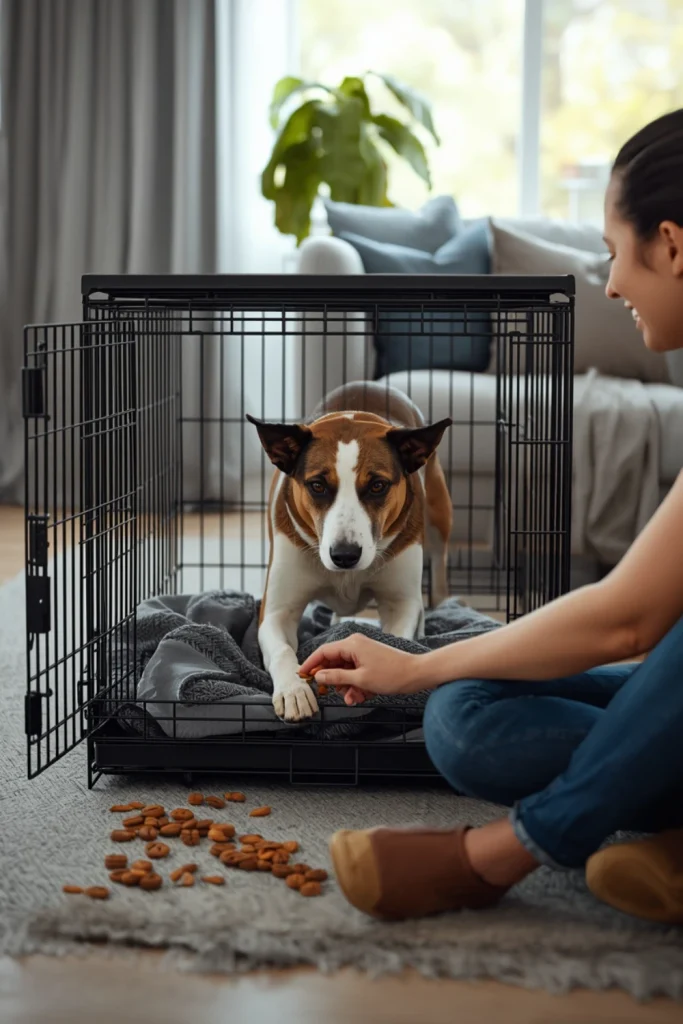
An adult dog that has never used a crate may initially feel uncertain about entering one. Instead of pushing, pulling, or forcing your dog inside, leave the crate door open and allow your dog to investigate it naturally. Place the crate in a comfortable area of your home where your dog spends time. Let your dog sniff around the crate and become familiar with its appearance, sounds, and smell.
You can make the introduction more positive by placing treats, toys, or a favorite blanket near the entrance. Once your dog becomes comfortable approaching the crate, place rewards just inside the doorway. Gradually move them farther toward the back as your dog becomes more confident. The goal is to teach your dog that entering the crate is a choice associated with good experiences. Moving too quickly can create fear, so allow your dog’s comfort level to guide the process.
3. Make the Crate a Positive and Comfortable Place
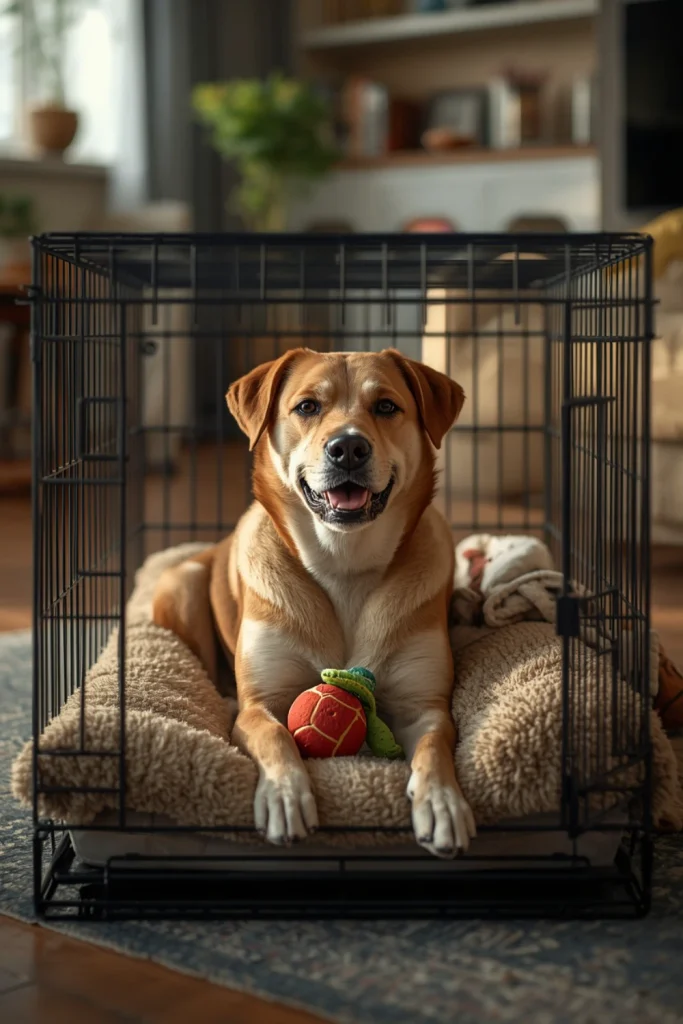
A crate should never feel like a punishment area. During Crate Training an Adult Dog, focus on creating positive associations so your dog learns that the crate is a safe place to relax. You can place comfortable bedding inside, provide an appropriate chew or safe toy, and keep the surrounding area calm. If your dog already has a favorite blanket or toy, adding it to the crate may help make the space feel familiar.
Pay attention to what makes your individual dog comfortable. Some dogs like a quiet corner, while others prefer staying close to their family. You may need to experiment with the crate’s location before finding the best spot. Avoid placing the crate in an area with constant noise, heavy foot traffic, or uncomfortable temperatures. A peaceful environment can help your adult dog relax and gradually develop a positive relationship with the crate.
4. Use Treats and Positive Reinforcement
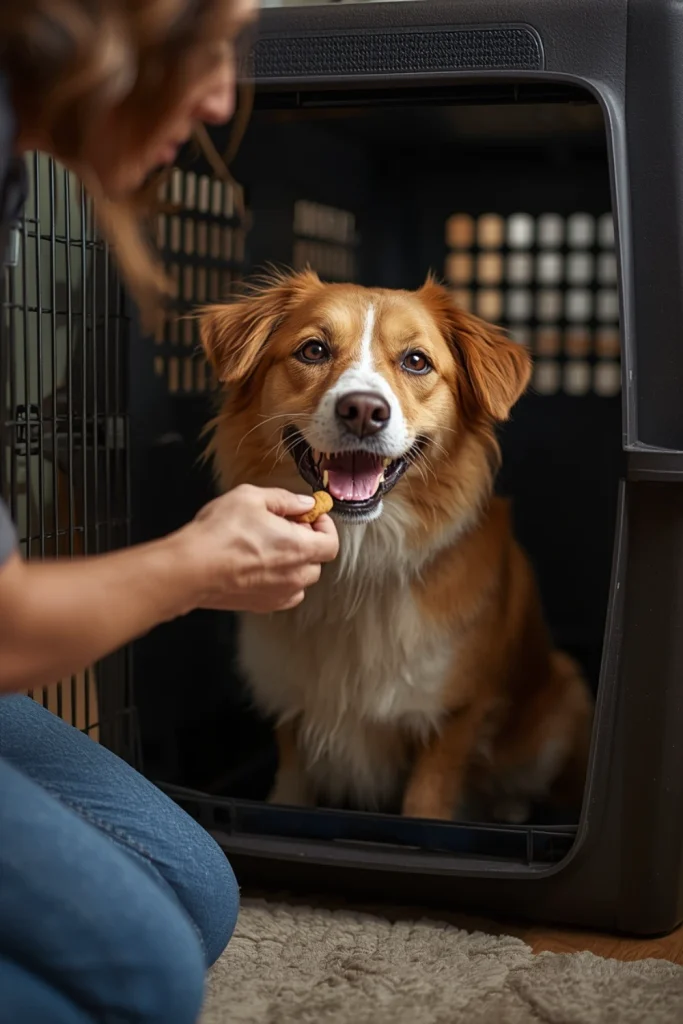
Positive reinforcement is one of the most useful techniques when Crate Training an Adult Dog. Whenever your dog voluntarily approaches the crate, enters it, or calmly stays inside, reward the behavior with praise, treats, or another reward your dog enjoys. This helps your dog understand which behaviors you want to encourage. Keep training sessions short and positive rather than expecting your dog to remain inside for a long period immediately.
You can also create simple games around the crate. Toss a small treat near the entrance and praise your dog for approaching it. Later, toss one just inside and reward your dog for entering. As your dog becomes more comfortable, gradually increase the distance. Avoid using rewards to trick a fearful dog into entering and then suddenly shutting the door. The goal is to build trust so your dog willingly enters the crate because it expects something positive to happen.
5. Feed Meals Near or Inside the Crate
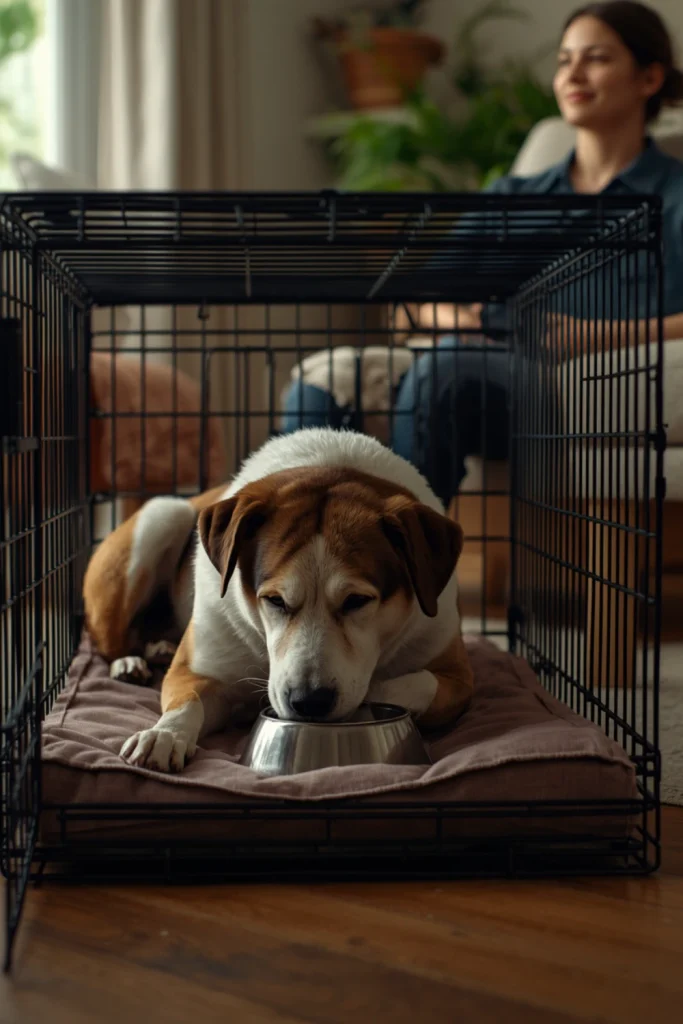
Food can be a powerful way to create positive associations with crate time. If your adult dog is nervous about entering the crate, begin by placing the food bowl near the entrance. Once your dog is comfortable eating there, gradually move the bowl farther inside. Eventually, your dog may become comfortable eating an entire meal inside the crate. Always allow the process to happen at a pace your dog can handle.
For dogs that are already comfortable entering the crate, you can feed meals inside with the door open initially. Over time, you can briefly close the door while your dog eats and then open it after the meal. Keep these sessions short in the beginning. If your dog stops eating, becomes distressed, or tries to escape, the progression may be too fast. Slow down and return to the previous comfortable step before trying again.
6. Practice Closing the Door for Short Periods
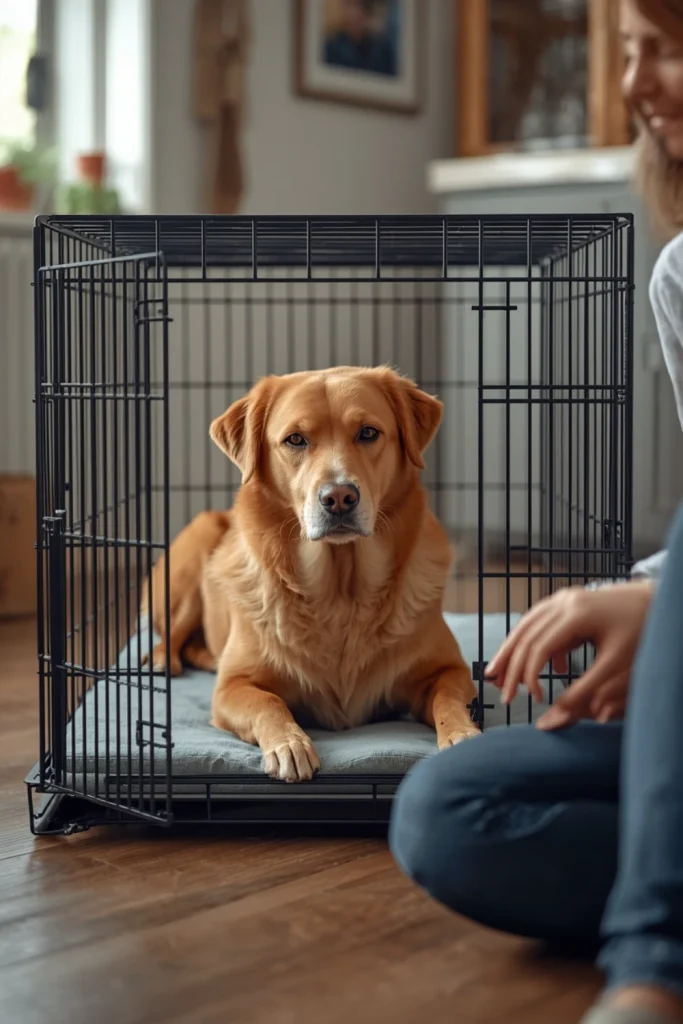
Once your adult dog willingly enters the crate and remains relaxed, you can begin practicing with the door closed. Start with only a few seconds. Close the door, remain nearby, and reward calm behavior. Then open the door before your dog becomes anxious. Repeat this several times and gradually increase the duration. Short successful sessions are much more valuable than one long session that causes fear or frustration.
As your dog improves, you can introduce small distractions. Sit nearby while your dog rests inside, then stand up, take a few steps away, and return. Later, briefly leave the room and come back. The important part is increasing distance and duration gradually. If your dog starts barking, panting heavily, scratching excessively, or showing signs of distress, reduce the difficulty. Successful crate training should build confidence rather than test your dog’s limits.
7. Establish a Consistent Crate Training Routine
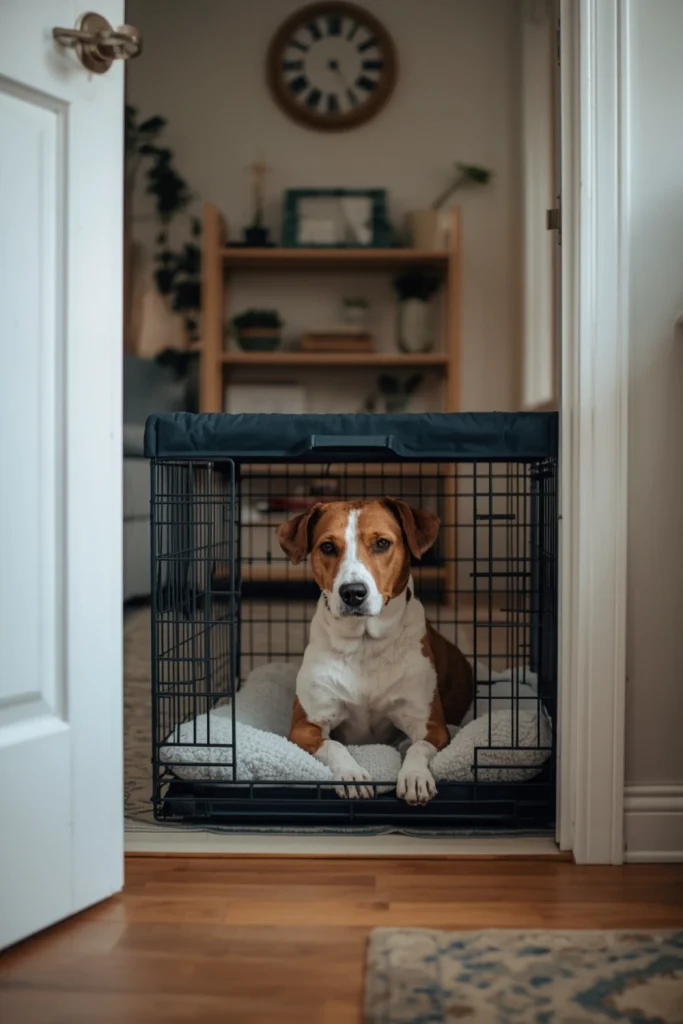
Adult dogs often respond well to predictable routines. Try to practice crate training at similar times each day so your dog begins to understand what to expect. For example, you might practice after a walk, after a meal, or during a quiet period in the afternoon. A predictable routine can make crate time feel like a normal part of the day rather than an unexpected event.
Consistency is especially important when increasing the amount of time your dog spends in the crate. Avoid making huge changes from one day to another. If your dog can comfortably stay in the crate for 15 minutes, increasing the duration gradually is usually easier than suddenly expecting an hour. Combine crate time with exercise, bathroom breaks, rest, and family interaction to create a balanced daily schedule.
8. Exercise Your Dog Before Longer Crate Sessions
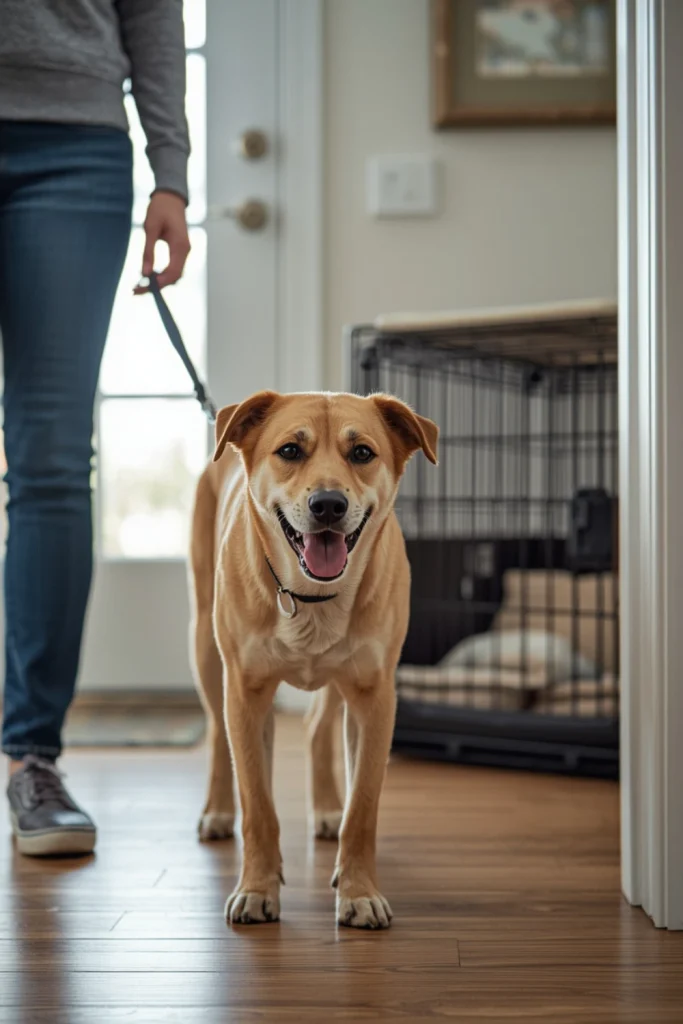
An adult dog with excess energy may struggle to settle in a crate. Before a longer crate session, provide appropriate physical activity and mental stimulation. A walk, play session, training practice, or scent game can help your dog become more relaxed. Exercise should be appropriate for your dog’s age, health, breed, and individual fitness level rather than simply trying to exhaust the dog.
Mental stimulation can be equally useful. Short obedience sessions, food puzzles, scent games, and safe interactive activities can give your dog something constructive to focus on. After activity, allow your dog time to calm down before entering the crate. The goal is not to force an exhausted dog into confinement but to create a natural transition from activity to rest.
9. Teach Your Dog to Stay Calm When You Leave
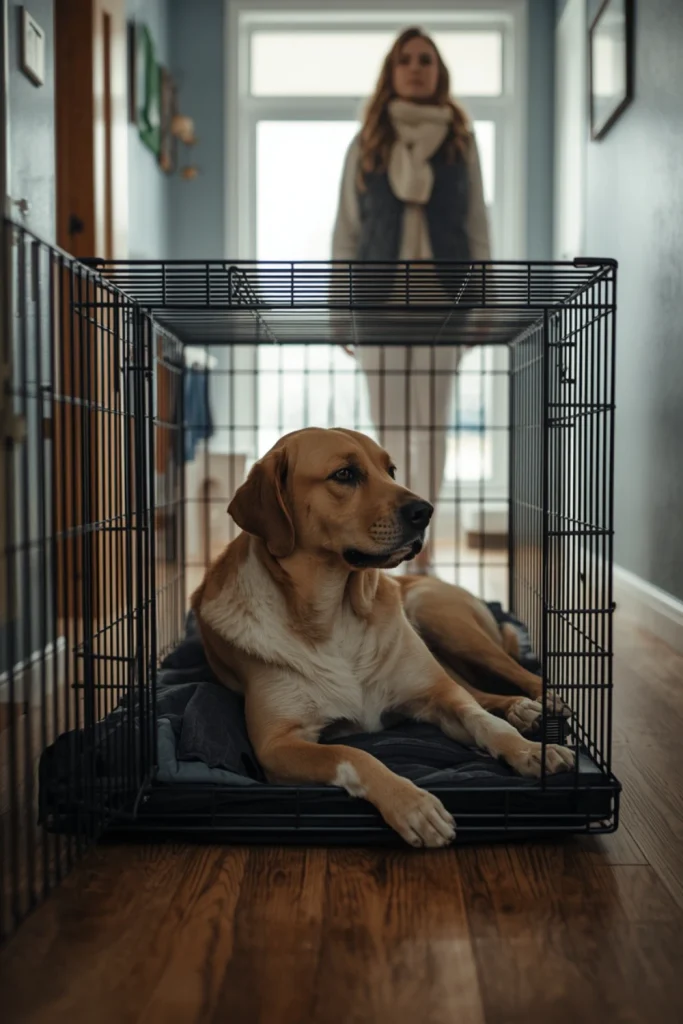
Some adult dogs are comfortable in the crate when their owner is nearby but become anxious as soon as the owner leaves. If this happens, practice very short departures. Put your dog in the crate with a safe activity, step away for a few seconds, and return calmly. Gradually increase the time you spend out of sight. Keep departures and returns low-key so they do not become emotionally overwhelming events.
It is important to distinguish normal adjustment from serious separation-related distress. Excessive panic, destructive attempts to escape, heavy drooling, persistent vocalization, or injuries can indicate that your dog needs more specialized help. Do not simply increase crate duration when your dog is experiencing significant distress. If anxiety is severe, consider working with a qualified veterinarian or certified behavior professional who can help create an appropriate training plan.
10. Be Patient and Never Use the Crate as Punishment
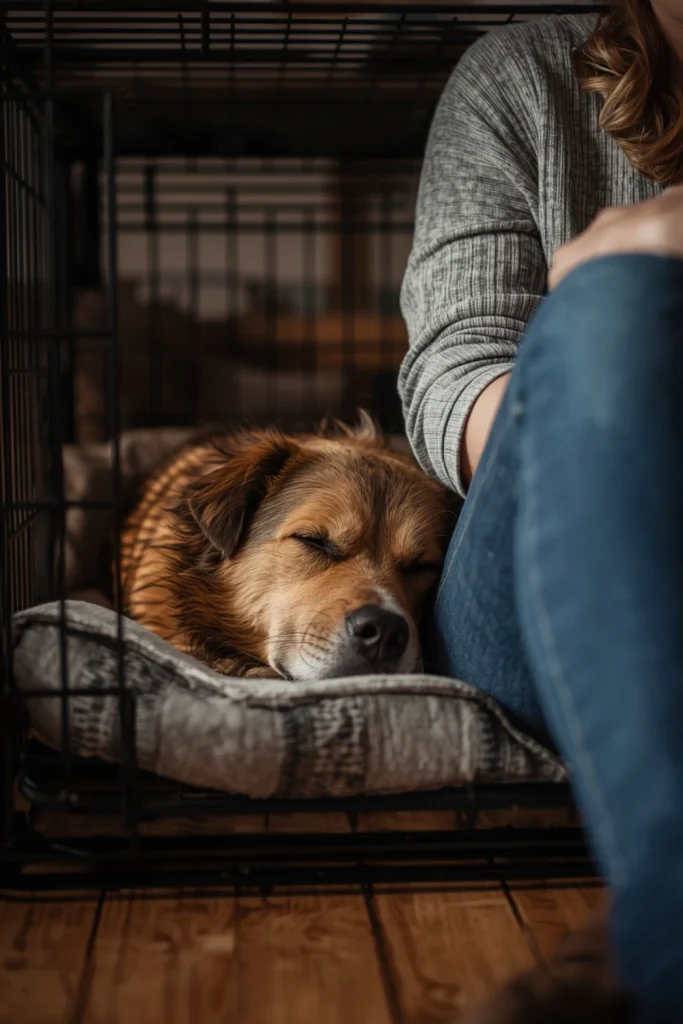
Patience is one of the most important parts of Crate Training an Adult Dog. An adult dog may already have years of habits and experiences that affect how it responds to confinement. A rescue or adopted dog may have an unknown history, while another dog may simply have never been introduced to a crate. Give your dog time to learn without expecting instant results. Celebrate small improvements, such as voluntarily entering the crate or relaxing inside for a few minutes.
Never use the crate as a punishment for accidents, barking, chewing, or other unwanted behavior. If your dog learns that the crate predicts punishment, it can become difficult to build trust. Instead, use the crate as a safe resting space associated with calmness, rewards, sleep, and positive experiences. With consistency and gentle training, many adult dogs can learn that their crate is a comfortable place where they can relax.
Final Thoughts
Crate Training an Adult Dog is absolutely possible with patience, consistency, and positive reinforcement. Your dog does not need to learn everything in one day. Start by creating a comfortable environment, introduce the crate gradually, reward voluntary behavior, and increase crate time in small steps.
The most important goal is not simply getting your dog to stay inside a crate. It is helping your dog feel safe and relaxed while using it. Avoid punishment and rushing, pay attention to your dog’s body language, and adjust the training whenever necessary. With time and a thoughtful approach, your adult dog can learn that the crate is a comfortable place to rest.