
12 Indoor Dog Training Games for Rainy Days
Indoor dog training games are playful learning activities that you can practice with your dog inside your home. They combine basic training, mental stimulation, problem-solving, and positive interaction. Instead of relying only on outdoor walks or physical exercise, these activities encourage your dog to think, listen, follow instructions, and explore safely.
Most indoor games require only simple household items, such as treats, toys, towels, cardboard boxes, cups, or a comfortable mat. You do not need expensive equipment or professional training experience to get started. With patience and consistency, even a few minutes of indoor practice can make your dog’s daily routine more interesting.
1. Hide and Seek Indoor Game
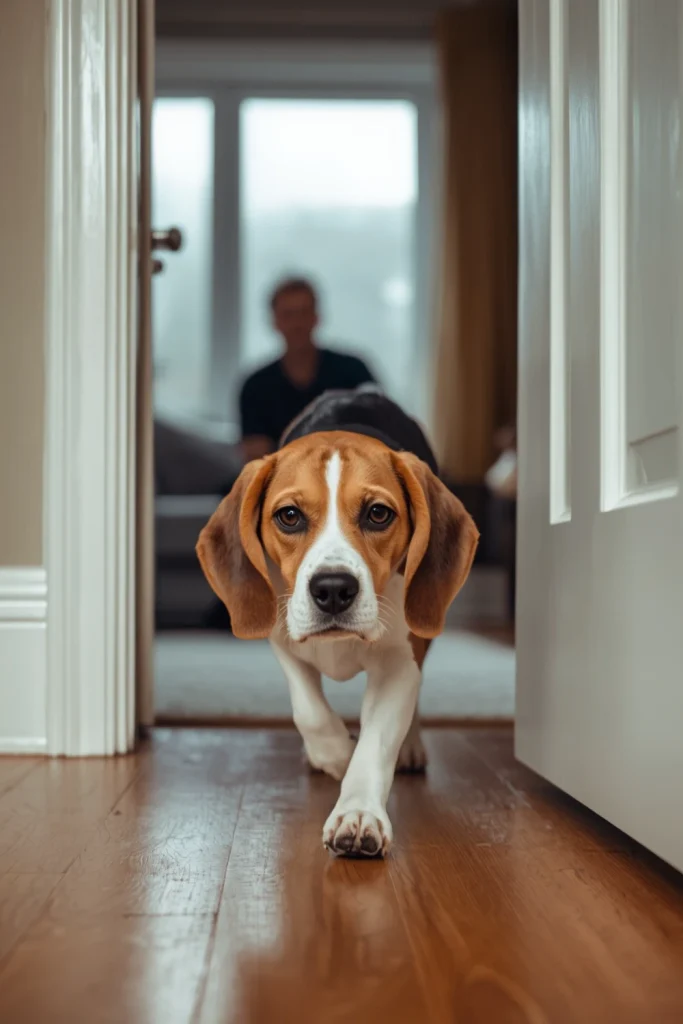
Hide and seek is one of the easiest Indoor Dog Training Games to try when the weather keeps you inside. Begin by asking your dog to wait in a familiar room while you hide behind a doorway, sofa, or another safe location. Call your dog’s name and use a familiar cue such as “come.” Encourage your dog to search for you, and reward it with praise and a small treat when it finds you.
Start with hiding places that are easy to discover. As your dog becomes familiar with the game, you can choose slightly more challenging locations. This activity can make recall practice exciting while encouraging your dog to listen for your voice. Keep the game friendly and avoid hiding in places where your dog could become trapped or confused.
2. Find the Hidden Treat Game
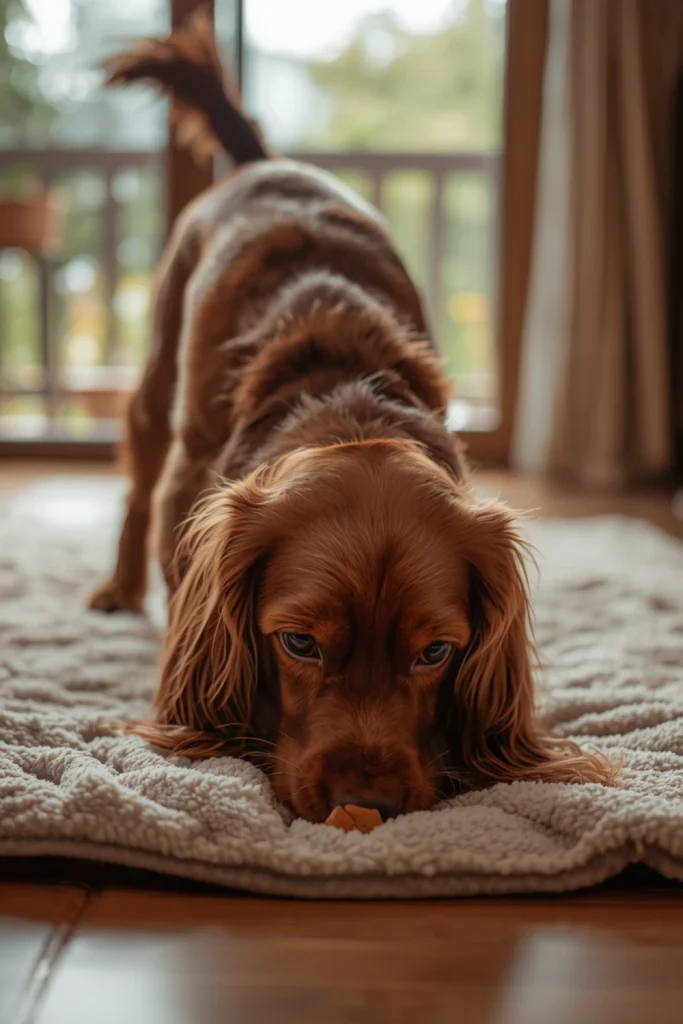
The hidden-treat game is a simple way to use your dog’s natural sense of smell. Begin by showing your dog a small treat and placing it in an easy-to-find location, such as beside a chair or under the edge of a towel. Give your dog a cue such as “find it” and allow it to search. When your dog discovers the treat, offer praise and let it enjoy the reward.
As your dog understands the activity, try hiding treats in a few different safe locations around the room. You can gradually make the search more challenging without making it frustrating. Always supervise your dog and avoid placing food near electrical items, cleaning products, or objects that could be swallowed. This game provides an enjoyable indoor activity that encourages sniffing and concentration.
3. Indoor Obstacle Course Game
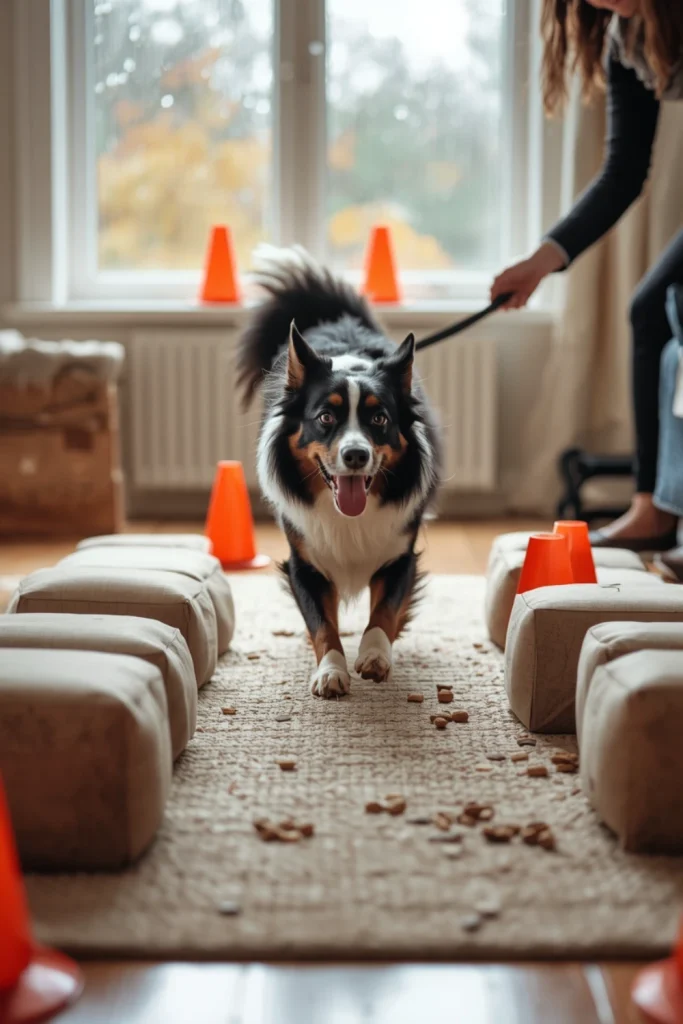
An indoor obstacle course can turn an ordinary room into an exciting training area. Use safe household objects such as cushions, low boxes, soft tunnels, and cones to create a simple route. Encourage your dog to walk around the objects, move between cushions, or step over low obstacles. Reward calm and confident movements with praise or treats.
Keep the course simple, especially if your dog has never tried this activity before. Make sure the floor is not slippery and that every object is stable. Avoid high jumps, sharp corners, and narrow spaces that could cause injury. Allow your dog to explore at its own pace. This game can encourage body awareness, confidence, and cooperation while providing a little indoor movement.
4. The Cup and Treat Puzzle Game
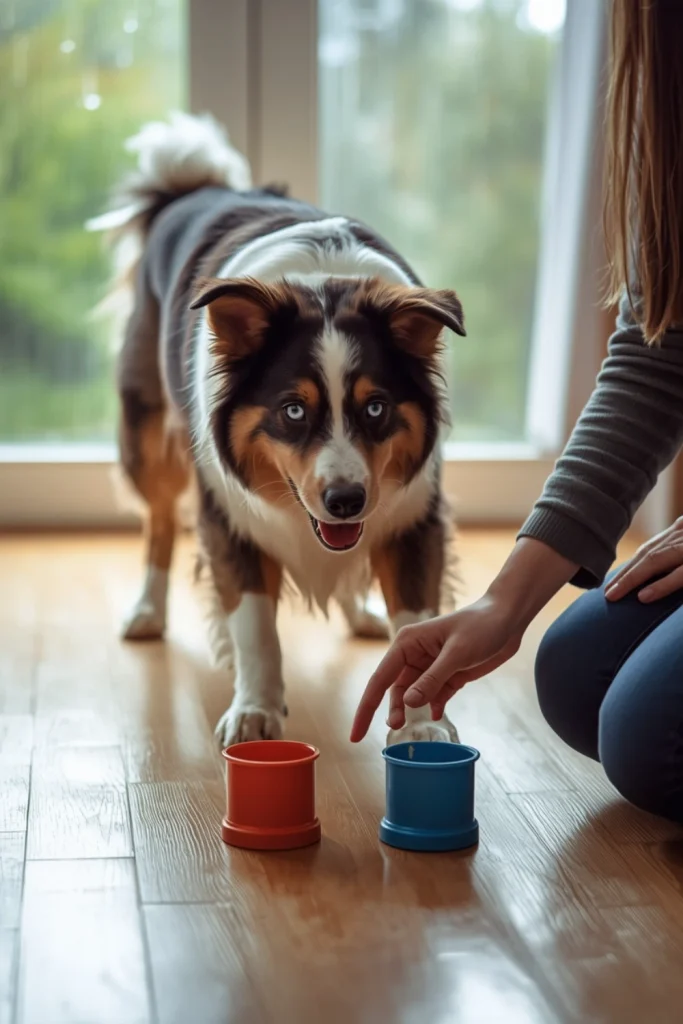
The cup game is an easy activity that encourages your dog to observe, sniff, and make choices. Take two lightweight, dog-safe cups and place them upside down on the floor. Let your dog watch while you hide a small treat underneath one cup. Encourage your dog to investigate and discover which cup contains the reward. Praise your dog when it finds the correct one.
When your dog understands the activity, you can introduce a third cup or move the cups slightly farther apart. Keep the cups stable and supervise the game so your dog does not chew or swallow them. Do not make the puzzle too difficult at first. The goal is to provide a rewarding thinking activity that can be enjoyed inside your home.
5. Toy Cleanup Training Game
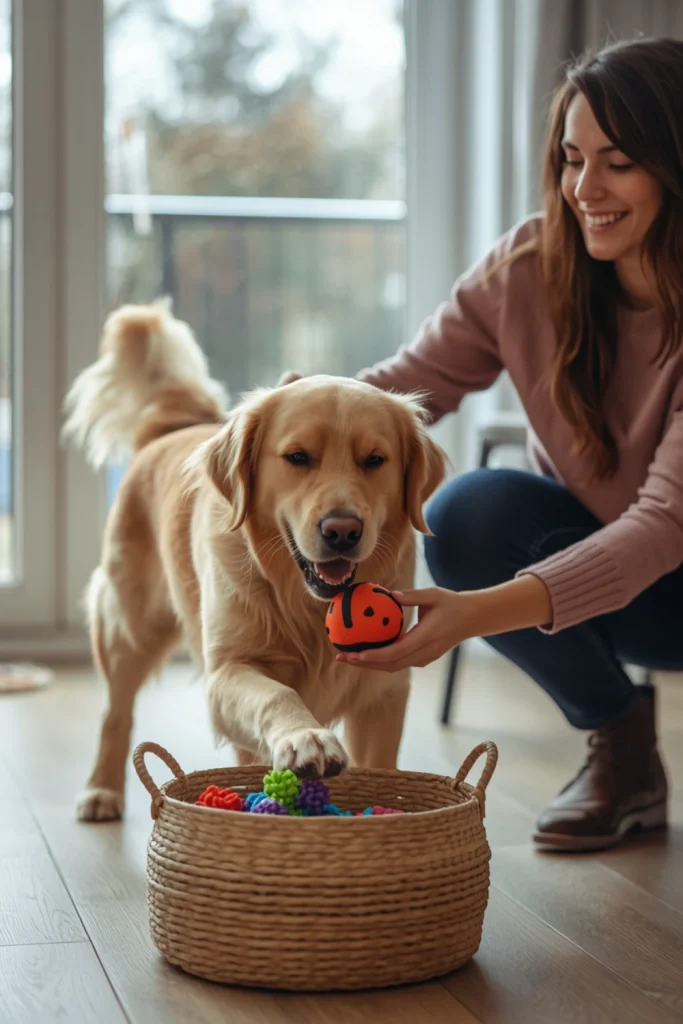
Rainy days are a perfect opportunity to teach your dog a useful household skill: putting toys into a basket. Start with one familiar toy and encourage your dog to pick it up. Reward your dog for holding the toy and moving toward a nearby basket. At first, even bringing the toy close to the basket can be treated as progress.
Once your dog understands the activity, gradually encourage it to drop the toy inside the basket. Use a consistent cue such as “clean up” and reward each successful attempt. Keep the basket low and stable so your dog can reach it comfortably. This game combines simple training with an everyday task and gives your dog a fun reason to interact with its toys.
6. Follow Me Around the House Game
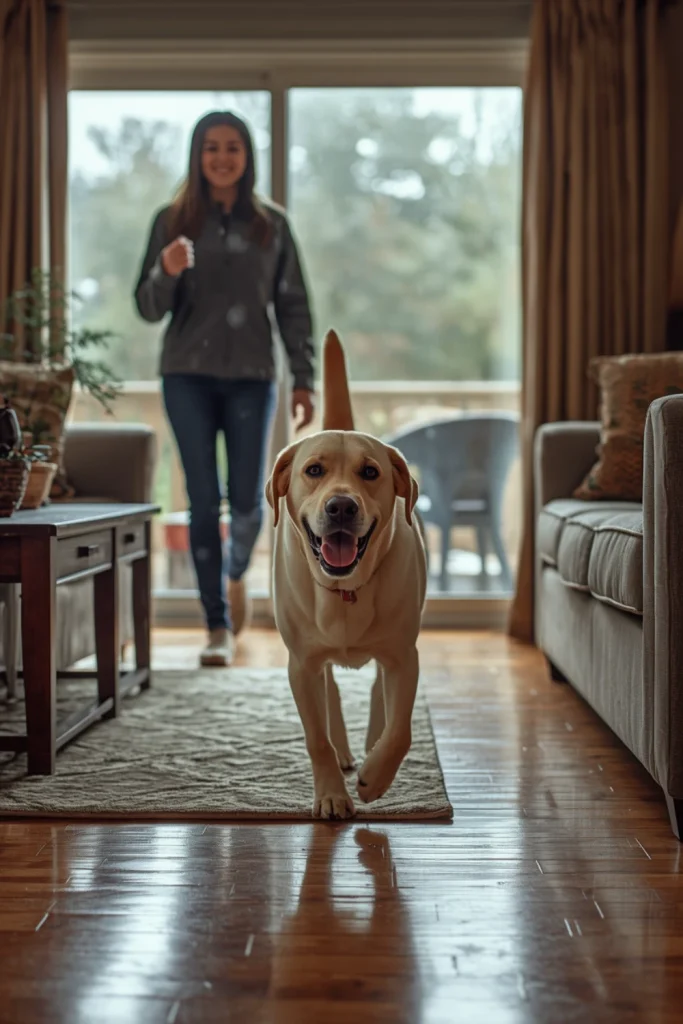
The follow-me game helps your dog practice attention and learn to respond to your movements. Begin in a quiet room and walk slowly in one direction while encouraging your dog to follow. Change direction, pause, or walk around a piece of furniture. Whenever your dog stays close and pays attention, reward it with praise or a small treat.
As your dog becomes more comfortable, you can add gentle changes in speed and direction. Keep the activity controlled and avoid running on slippery floors. This game can support communication and attention while introducing useful movement skills. It is also a simple way to spend a few active minutes together when outdoor walks are not practical.
7. Hand Target Training Game
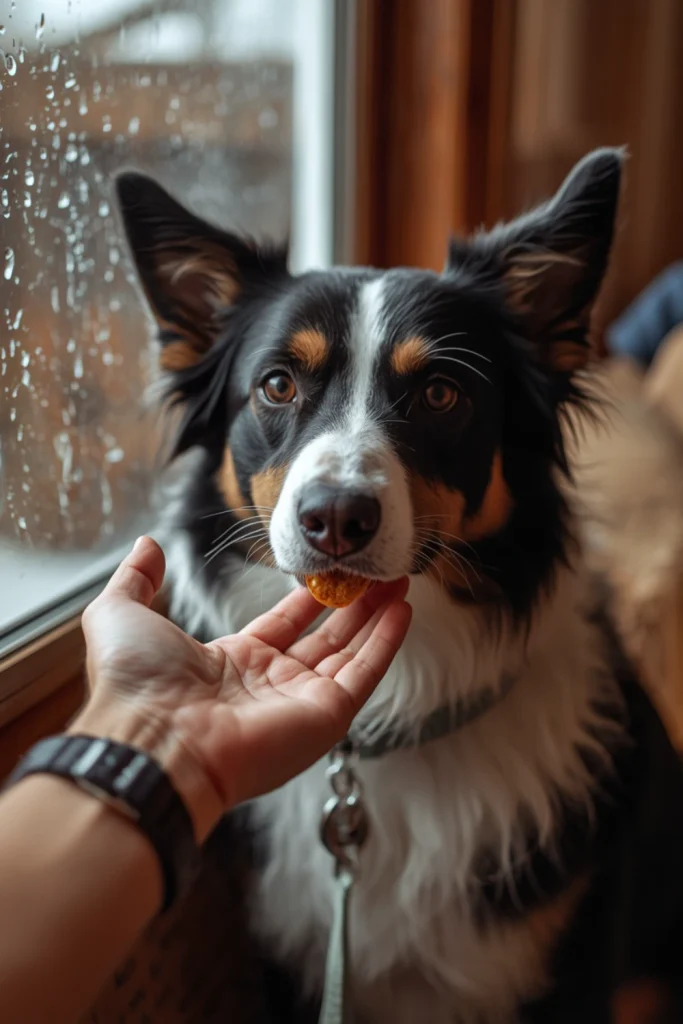
Hand targeting is a useful beginner exercise that teaches your dog to touch your open palm with its nose. Hold your hand a short distance from your dog’s face and wait for it to investigate. When your dog touches your palm, immediately reward the behavior with a small treat or praise. Introduce a cue such as “touch” once your dog starts understanding the activity.
After a few successful attempts, move your hand slightly to the left, right, or farther away. Encourage your dog to follow the target without forcing movement. This game can help improve attention and communication. It can also become a useful foundation for other training exercises, including guiding your dog toward a mat or through a safe indoor obstacle.
8. Indoor Name Recognition Game
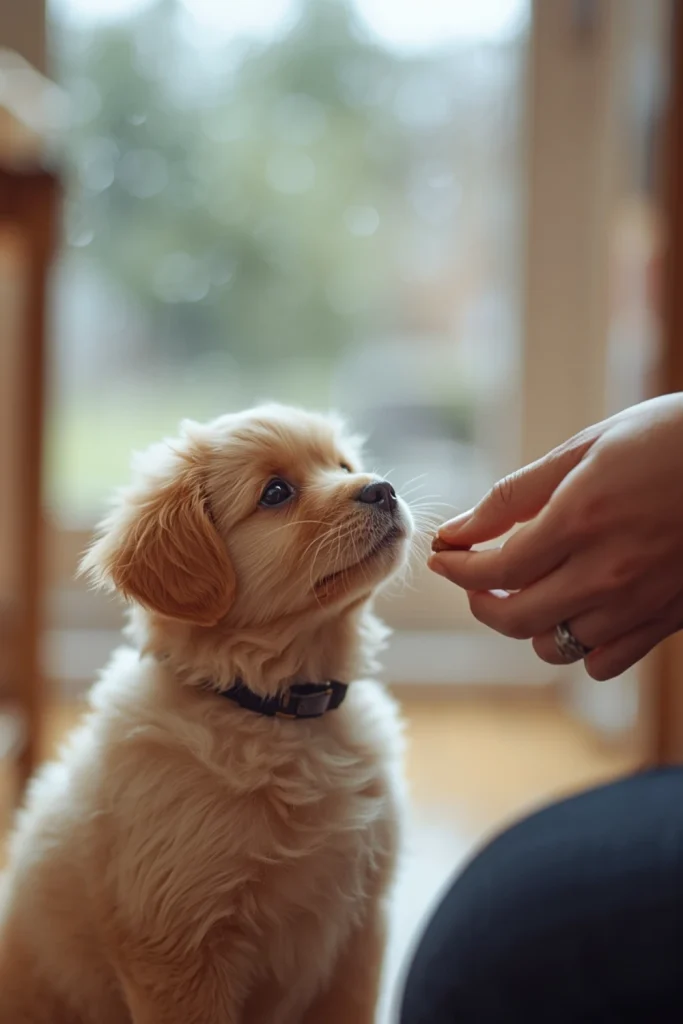
A rainy afternoon is a good time to practice your dog’s response to its name. Sit in a quiet room and say your dog’s name once in a friendly voice. When your dog looks toward you, reward the response immediately with praise, attention, or a small treat. Repeat the exercise several times while keeping the atmosphere relaxed and enjoyable.
When your dog responds consistently, practice from different parts of the room or in another quiet area of the home. Avoid repeating the name continuously if your dog does not respond. Instead, make the activity easier and reward successful attention. Name recognition is a simple foundation for many other training skills because it encourages your dog to check in with you.
9. Which Hand Has the Treat Game
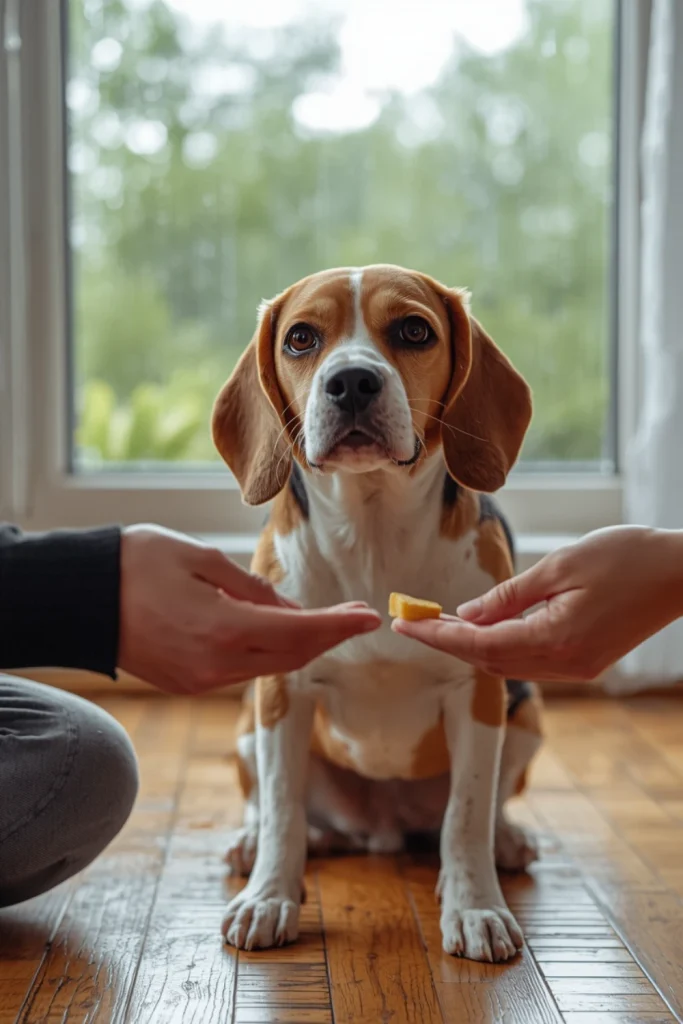
This simple game encourages your dog to use its nose and make a choice. Place a small treat in one hand while keeping the other hand empty. Close both hands and present them at a comfortable distance from your dog. Allow your dog to sniff and investigate. When it selects the hand containing the treat, open your hand and reward the correct choice.
Begin slowly so your dog can understand what is happening. Avoid teasing your dog or allowing it to bite your hands. If your dog becomes overly excited, pause and make the next attempt easier. You can gradually practice with different hand positions. This activity is simple to set up and can provide a few enjoyable minutes of mental stimulation indoors.
10. Indoor Trick Training Challenge
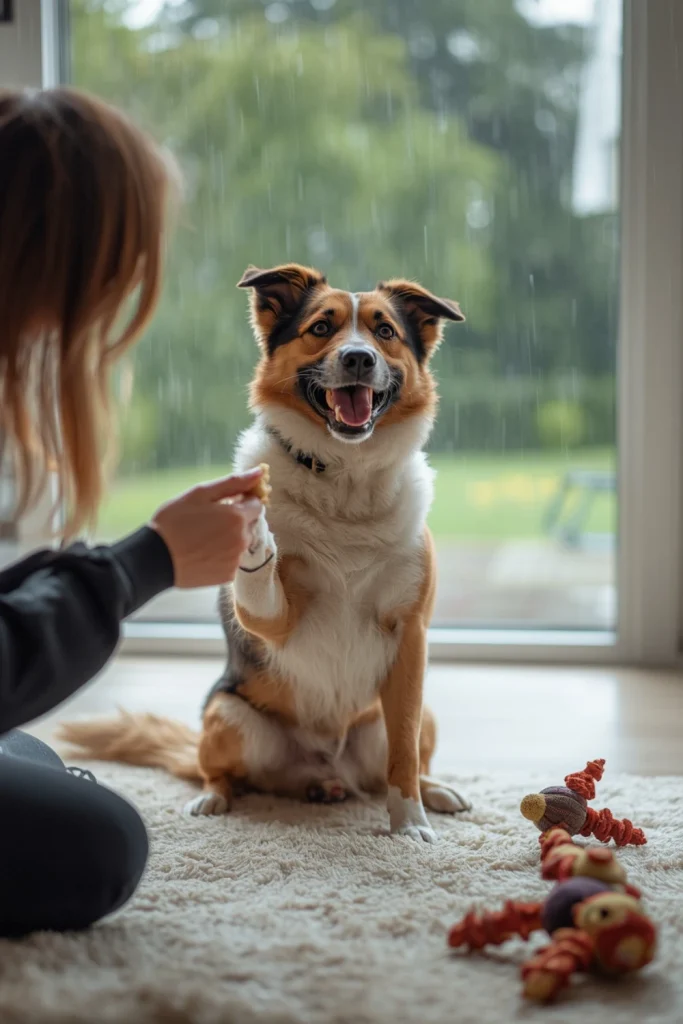
Learning a new trick is a great way to keep your dog engaged when outdoor activities are limited. Choose a simple behavior such as giving a paw, spinning, touching a target, sitting politely, or lying down on a mat. Break the trick into small steps and reward your dog as it makes progress. Keep your voice encouraging and use the same cue each time.
You do not need to teach a complete trick in one session. Practice for a few minutes, take a break, and return to it later. Some dogs learn quickly, while others need more repetition. Choose movements that are suitable for your dog’s age and physical abilities. Trick training can encourage focus, cooperation, and positive interaction during a rainy day at home.
11. Find Your Favorite Toy Game
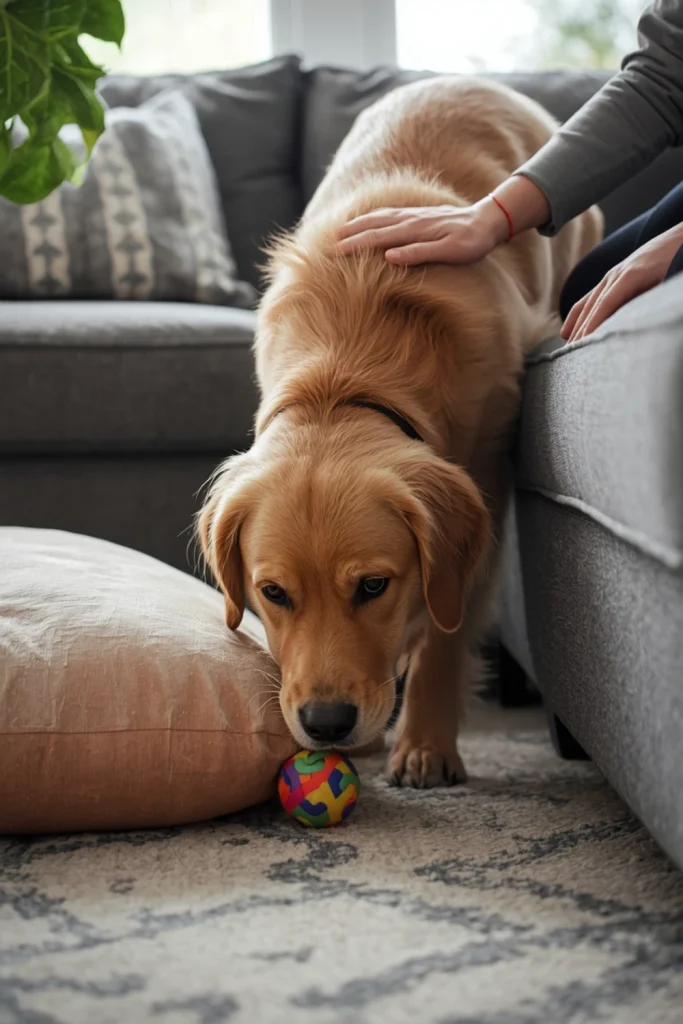
Many dogs enjoy searching for their favorite toys, making this activity an easy indoor game. Begin by showing your dog a familiar toy, such as a soft ball or rope toy. Place it a short distance away in an obvious location and use a cue such as “find your toy.” Reward your dog when it discovers and brings the toy back to you.
As your dog becomes familiar with the game, hide the toy behind a cushion or beside a piece of furniture. Keep hiding spots safe and accessible. You can also use different toys to help your dog learn their names over time. This activity provides a combination of movement, attention, and problem-solving without requiring a large indoor space.
12. Relax on Your Mat Game
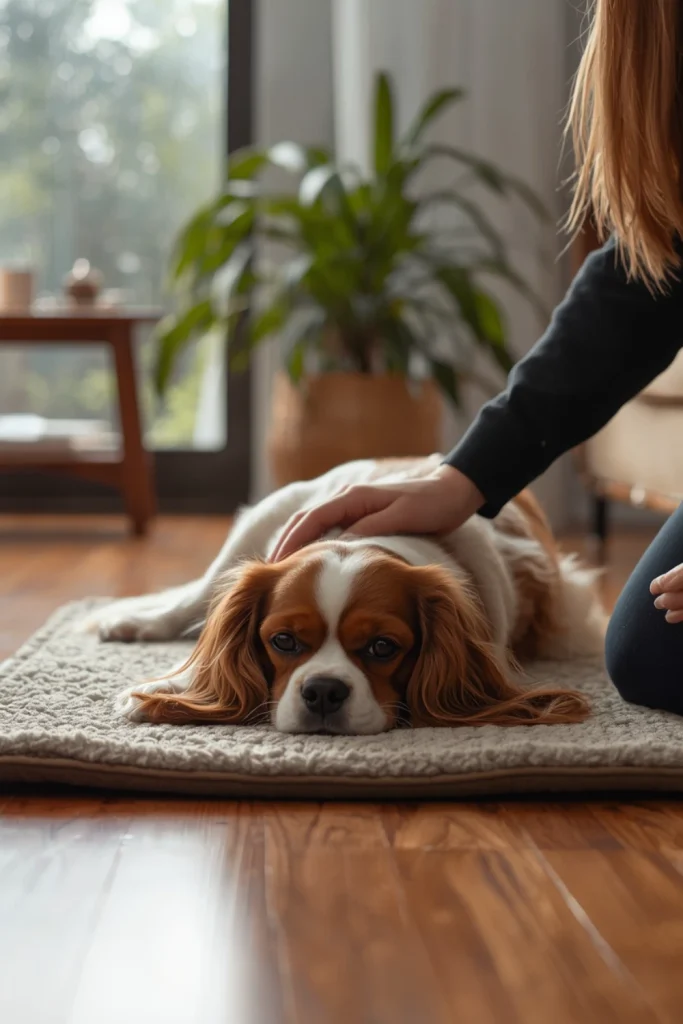
Not every indoor training game needs to involve movement. Teaching your dog to settle on a comfortable mat can be a useful way to practice calm behavior. Place a familiar mat on the floor and reward your dog for approaching it. When your dog steps onto the mat, offer a treat. Gradually reward sitting or lying down calmly on the mat.
As your dog becomes comfortable, introduce a cue such as “place” or “settle.” Keep rewards gentle and avoid making the exercise overly exciting. The goal is to help your dog understand that the mat is a comfortable place to relax. This game can be especially helpful during rainy days when the household is busy and your dog needs a quiet activity.
Final Thoughts
Rainy weather does not have to interrupt your dog’s learning and entertainment. With these 12 Indoor Dog Training Games, you can create enjoyable activities inside your home using simple toys, treats, and household items. Games such as hide and seek, hidden-treat searches, obstacle courses, cup puzzles, hand targeting, and trick challenges offer different ways to keep your dog engaged.
The key is to make every activity safe, positive, and suitable for your dog’s age and abilities. Start with easy games, reward progress, and gradually introduce new challenges. Remember that indoor games are a helpful addition to your dog’s routine, not a complete replacement for appropriate outdoor exercise and bathroom breaks.
Whether you have a puppy, adult dog, or senior companion, a little indoor play and training can make a rainy day more enjoyable. Choose your dog’s favorite games, spend quality time together, and turn those quiet afternoons into opportunities for learning and bonding.