
12 Easy Steps to Help Your Puppy Love the Crate
A crate should feel like your puppy’s own peaceful little bedroom, not a place where they are sent when they have done something wrong. When introduced with patience and positive experiences, a crate can become a comfortable space for sleeping, relaxing, traveling, and taking quiet breaks.
If you want to Help Your Puppy Love the Crate, the key is to make the experience gradual, rewarding, and predictable. Puppies learn through repetition, so small positive sessions can build confidence over time. In this guide, you will discover 12 easy steps to make crate training less stressful and help your puppy develop a positive relationship with their crate.
1. Choose the Perfect Crate for Your Puppy
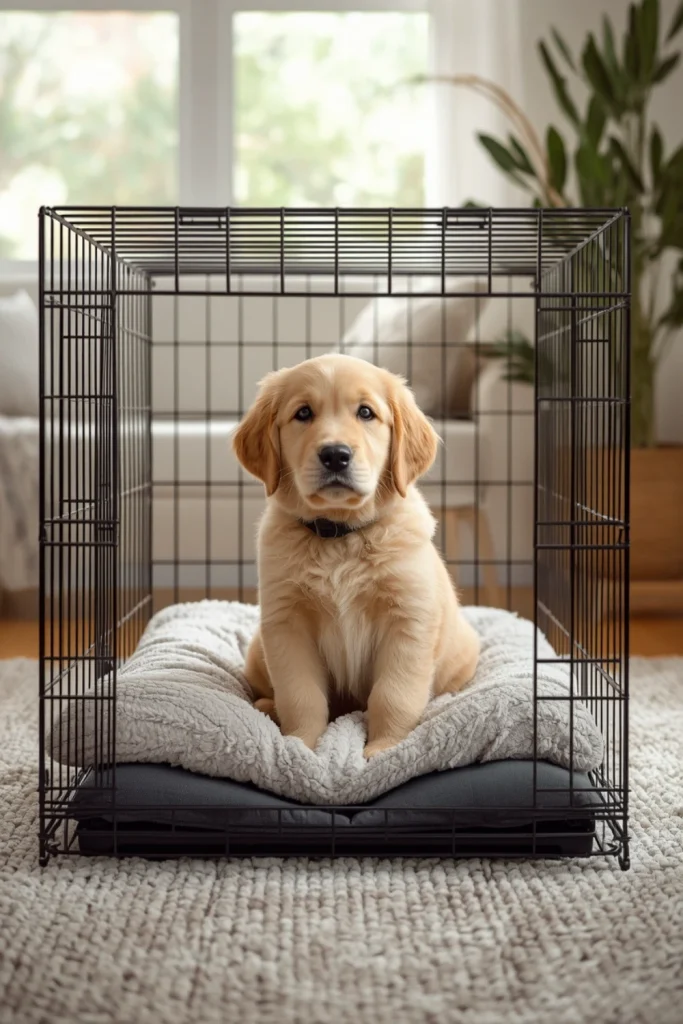
The first step to Help Your Puppy Love the Crate is choosing a crate that is comfortable and appropriately sized. Your puppy should have enough room to stand up, turn around, sit, and lie down naturally. However, an oversized crate can make house-training more difficult because some puppies may use one side as a bathroom while sleeping on the other. An adjustable crate with a divider can be useful for puppies that are still growing.
Consider the crate’s construction and ventilation as well. Wire crates provide plenty of airflow and visibility, while some plastic crates offer a more enclosed environment that certain puppies find comforting. Whichever style you choose, check regularly for sharp edges, loose parts, or areas your puppy could chew. A secure and comfortable crate gives your puppy a strong foundation for successful training.
2. Let Your Puppy Explore the Crate
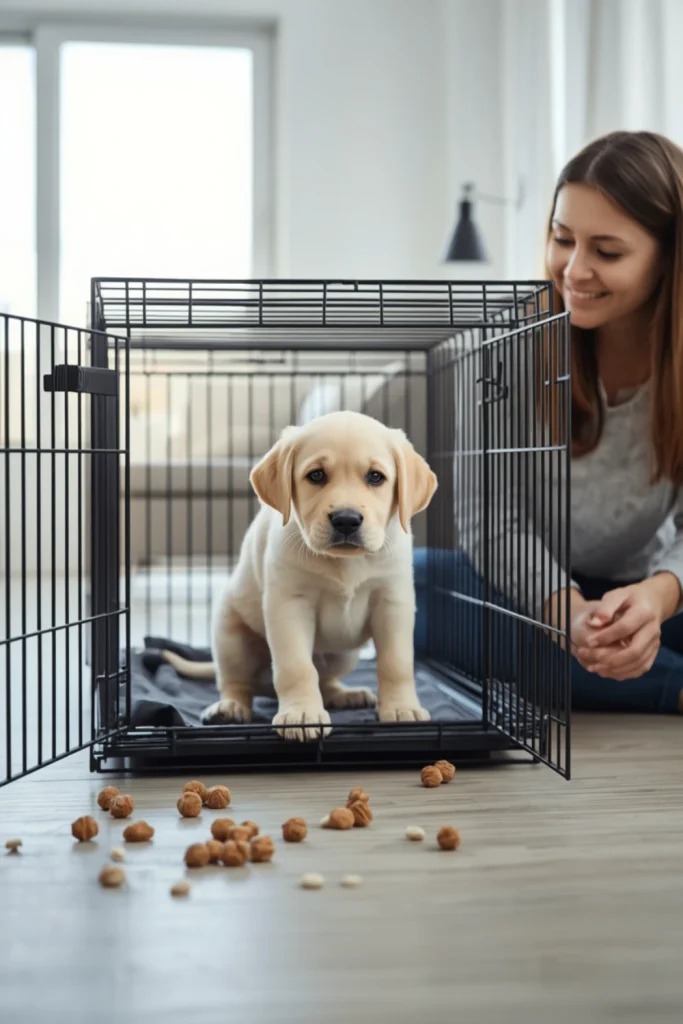
Never assume your puppy will immediately understand what the crate is for. Start by placing the crate in a familiar area and leaving the door completely open. Allow your puppy to investigate it at their own pace. You can place a few small treats around the entrance and gradually move them farther inside. If your puppy steps into the crate voluntarily, offer gentle praise and allow them to come back out.
Repeat this process several times during the day. Do not push, drag, or force your puppy into the crate. If your puppy appears nervous, make the exercise easier by moving the treats closer to the entrance. The objective is to allow your puppy to discover that entering the crate is their choice and that good things happen there. This gradual introduction can significantly improve your puppy’s confidence.
3. Make the Crate Comfortable
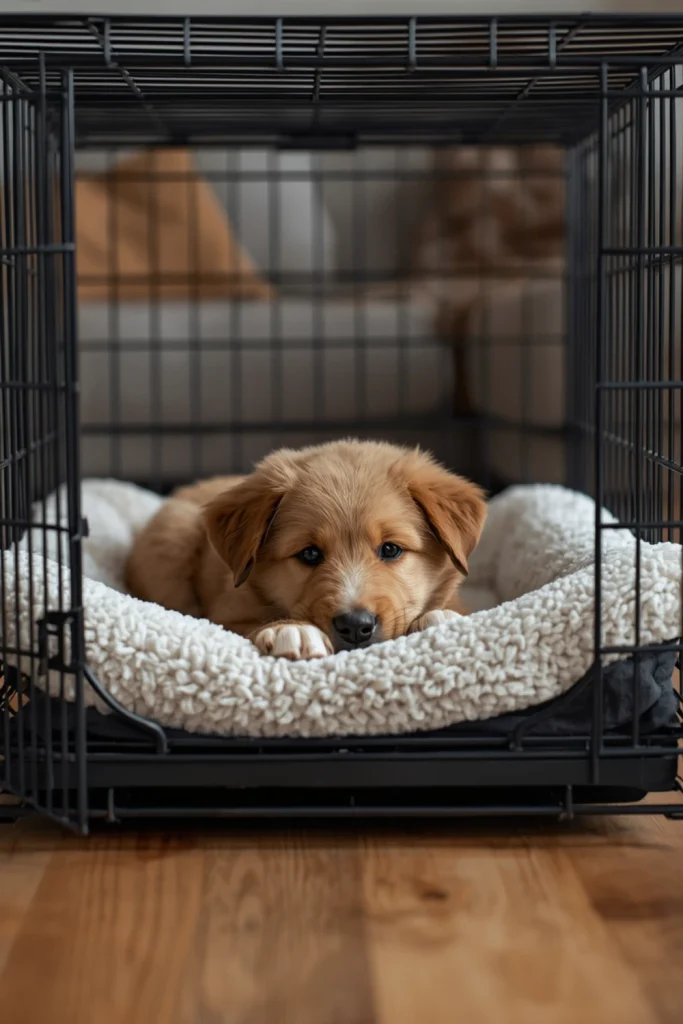
Comfort plays an important role when you want to Help Your Puppy Love the Crate. Place the crate in an area where your puppy can relax without being exposed to constant noise and traffic. At the same time, avoid putting it somewhere completely isolated from the family. Many puppies feel more secure when they can hear familiar voices and see their owners nearby.
Add suitable bedding if your puppy does not chew or destroy it. Some puppies enjoy soft washable mats, while others may be more comfortable with a simple durable surface. Avoid adding too many accessories. Anything inside the crate should be safe for your puppy. If your puppy tears bedding or toys into pieces, remove them and choose a safer arrangement. Comfort should always be balanced with safety.
4. Use Treats to Create Positive Associations
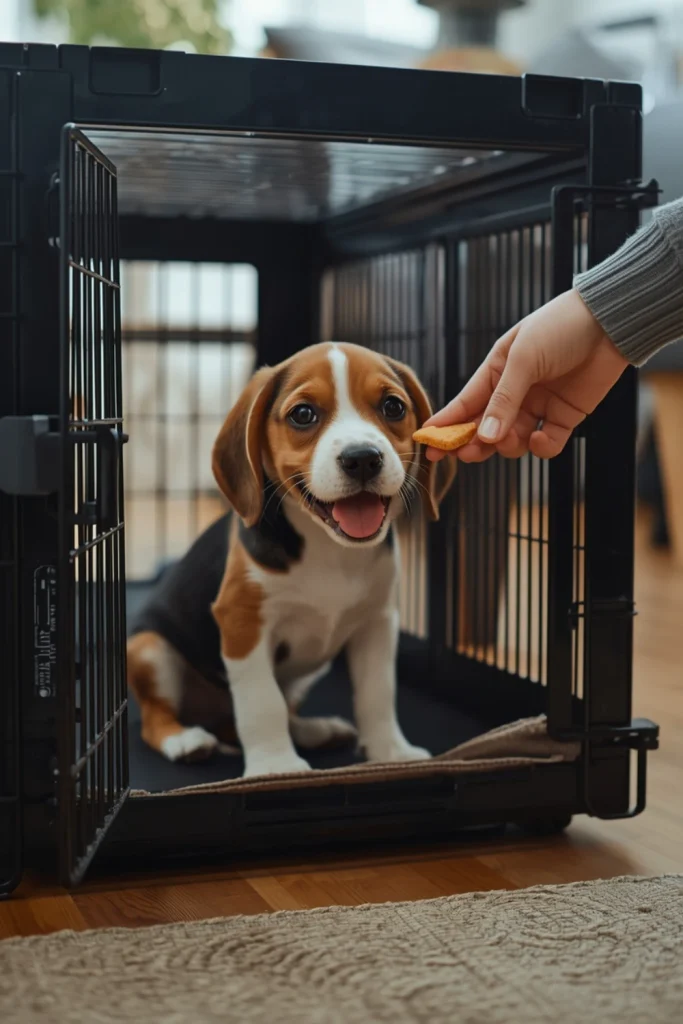
Treats can be an effective way to teach your puppy that the crate predicts positive experiences. Start by placing a treat near the crate entrance. Once your puppy confidently approaches, place another treat just inside. Gradually encourage your puppy to walk farther into the crate. Reward voluntary behavior rather than physically placing the puppy inside.
As your puppy becomes more comfortable, you can reward behaviors such as sitting, lying down, or remaining calm inside. Keep the rewards small and appropriate for your puppy’s diet. You do not need to give treats constantly. The goal is to create a positive association that eventually becomes strong enough that your puppy enters the crate willingly, even when there is no treat waiting.
5. Feed Meals Near or Inside the Crate
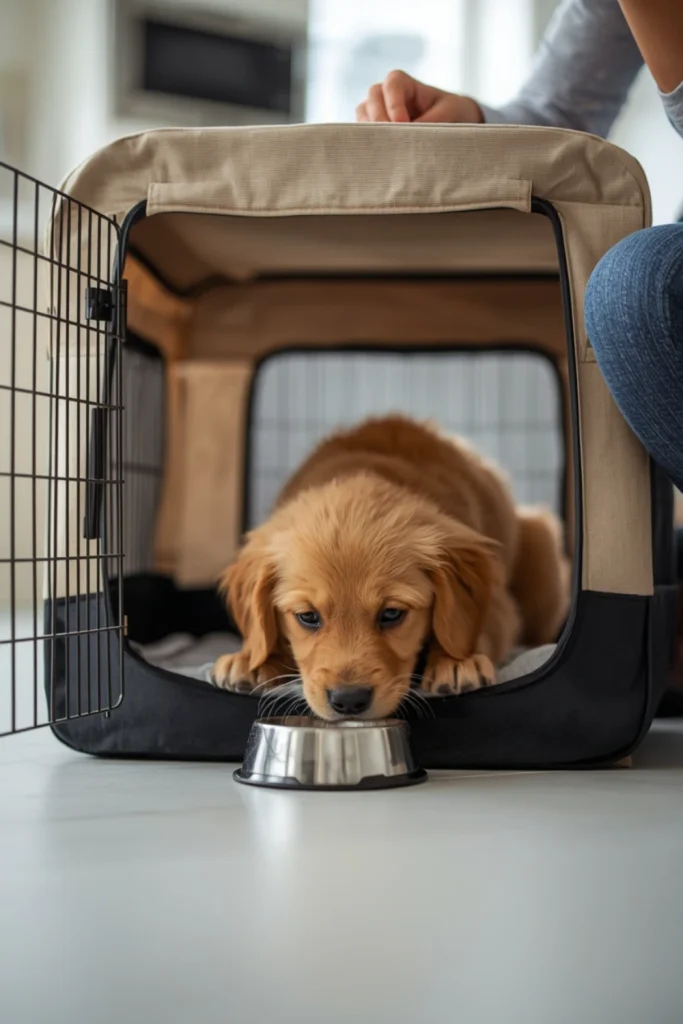
Mealtime can provide another opportunity to make the crate a positive place. If your puppy is comfortable entering the crate, place their food bowl near the entrance. Gradually move it farther inside as your puppy becomes more confident. For puppies that already enjoy entering, you can eventually offer meals inside the crate while keeping the door open.
Watch your puppy’s reaction carefully. If they refuse to eat or seem nervous, move the bowl back toward the entrance and slow down. Do not force the puppy to eat inside the crate. The objective is to allow positive experiences to build naturally. Regular meals can create a predictable association between the crate and something your puppy already enjoys, making the space increasingly familiar.
6. Practice Closing the Door for Short Periods
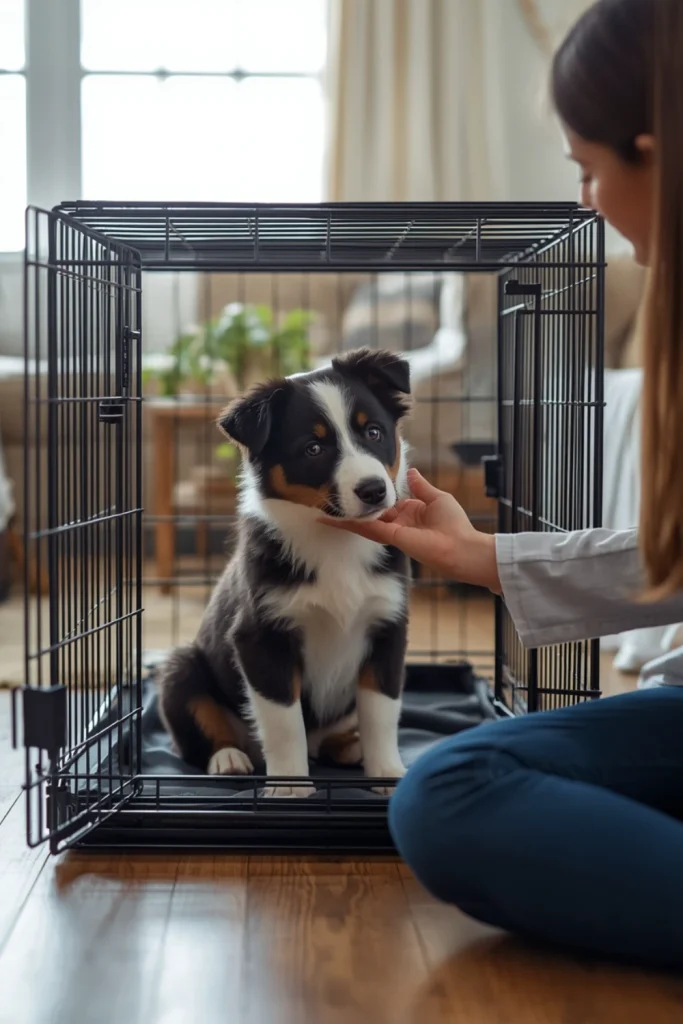
Once your puppy willingly enters the crate, you can begin practicing with the door closed. Start with only a few seconds while you remain directly beside the crate. Reward your puppy for remaining calm, then open the door. Gradually increase the duration as your puppy becomes comfortable. There is no need to rush toward long sessions.
The important part is to open the door while your puppy is still reasonably relaxed whenever possible. This helps prevent the crate from becoming associated with prolonged distress. If your puppy immediately becomes anxious when the door closes, return to an easier step and practice again. Successful crate training is built through many small experiences rather than one long session.
7. Give Your Puppy Calm Crate Time During the Day
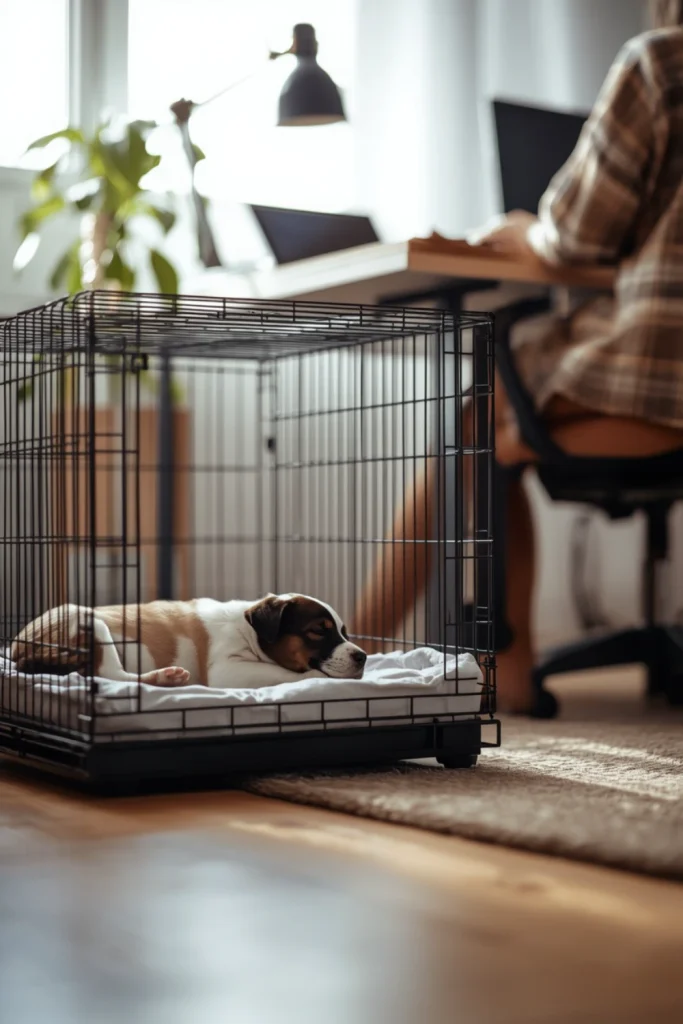
Daytime practice is essential because it prevents the crate from becoming associated only with nighttime or being left alone. Once your puppy is comfortable inside for short periods, encourage quiet rest during the day. You can sit nearby while your puppy settles, read a book, work at a desk, or perform another calm activity.
Gradually increase your distance from the crate. Walk around the room, briefly leave the room, and return without making a dramatic event of your departure or arrival. These exercises teach your puppy that being in the crate while you are nearby or temporarily out of sight is normal. Over time, your puppy can become more comfortable relaxing independently.
8. Establish a Relaxing Bedtime Routine
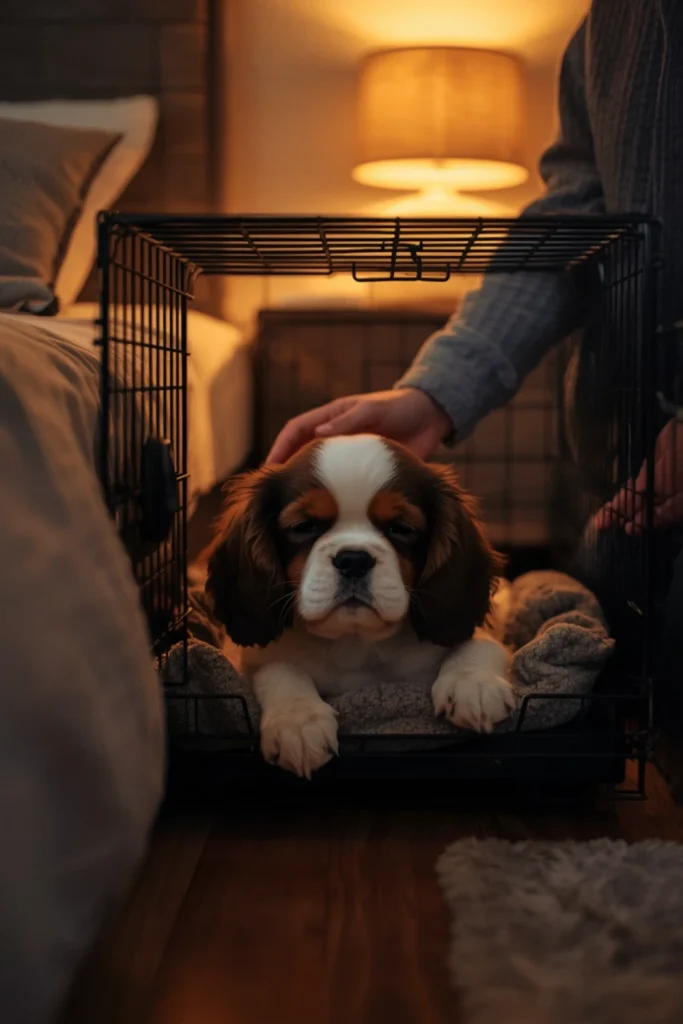
A predictable bedtime routine can make it easier to Help Your Puppy Love the Crate, particularly if your puppy struggles at night. Start winding down before bedtime by reducing energetic games and loud activity. Give your puppy an appropriate bathroom opportunity, followed by a few calm minutes together. Then guide your puppy toward the crate using a familiar verbal cue.
Keep the final moments quiet and predictable. Avoid exciting play immediately before crate time because it may make your puppy more alert rather than sleepy. With repetition, your puppy can learn that the sequence of bathroom break, quiet time, crate, and sleep signals the end of the day. A familiar routine can make bedtime feel more secure.
9. Keep the Crate Near You Initially
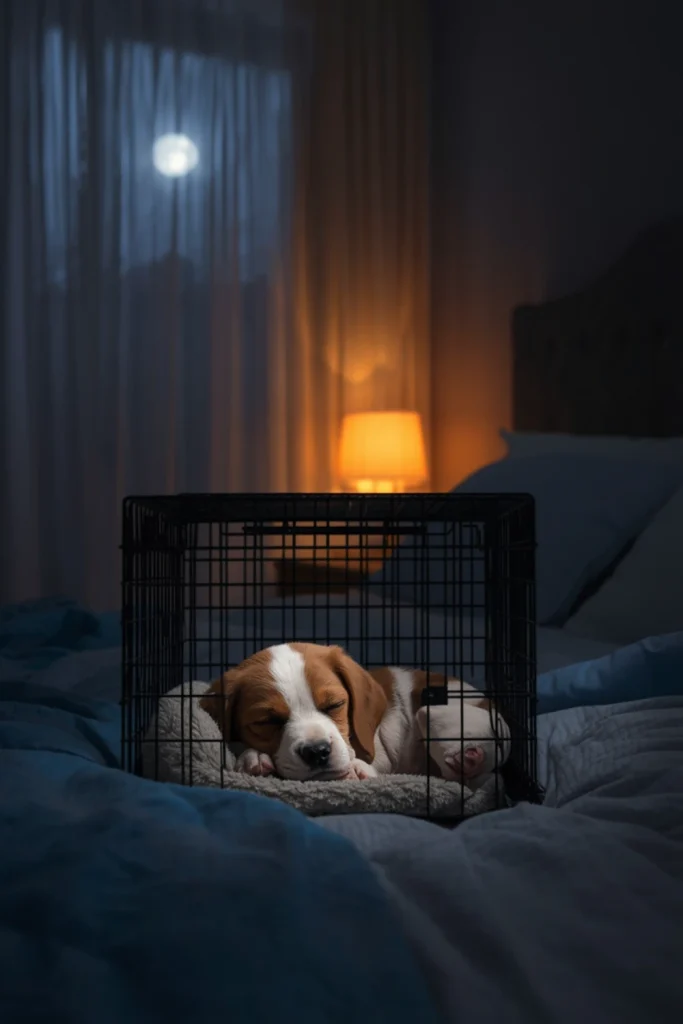
A puppy may feel vulnerable when sleeping alone in an unfamiliar environment. During the early stages, placing the crate near your bed can provide reassurance. Your puppy can hear your presence, and you can quickly determine whether nighttime whining is related to a bathroom need or difficulty settling. This can make the first few nights easier for both of you.
If you eventually want the crate in another room, move it gradually once your puppy is sleeping comfortably. Start by moving it a small distance and allow several nights for adjustment before moving it again. Avoid making a major location change while your puppy is already struggling. Building confidence first can make later transitions much smoother.
10. Teach a Simple Crate Cue
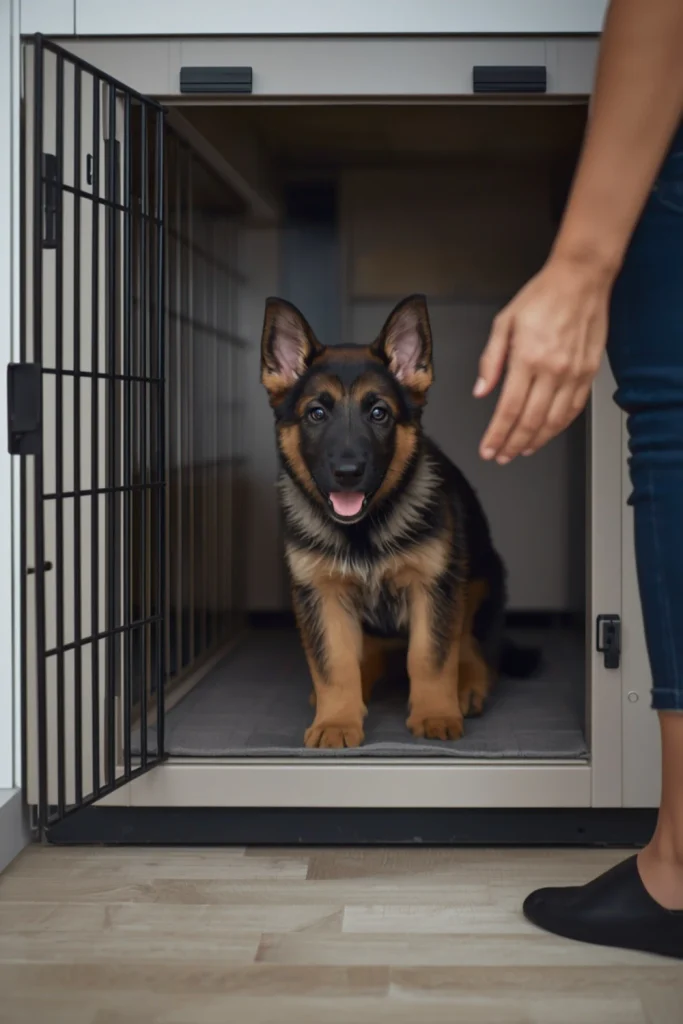
A consistent verbal cue can eventually make crate training easier. Choose a short word such as “crate,” “bed,” or another phrase you can use consistently. Say the cue calmly when your puppy is already moving toward the crate. Reward them for entering. Initially, you may use a treat to guide the puppy, but gradually reduce your reliance on the lure.
Practice the cue at different times of day rather than only when you need to confine your puppy. This helps prevent the word from becoming associated with separation or something negative. Keep training sessions short and rewarding. Eventually, your puppy can learn that the cue means walking into the crate leads to a comfortable and positive experience.
11. Provide Appropriate Mental Stimulation and Exercise
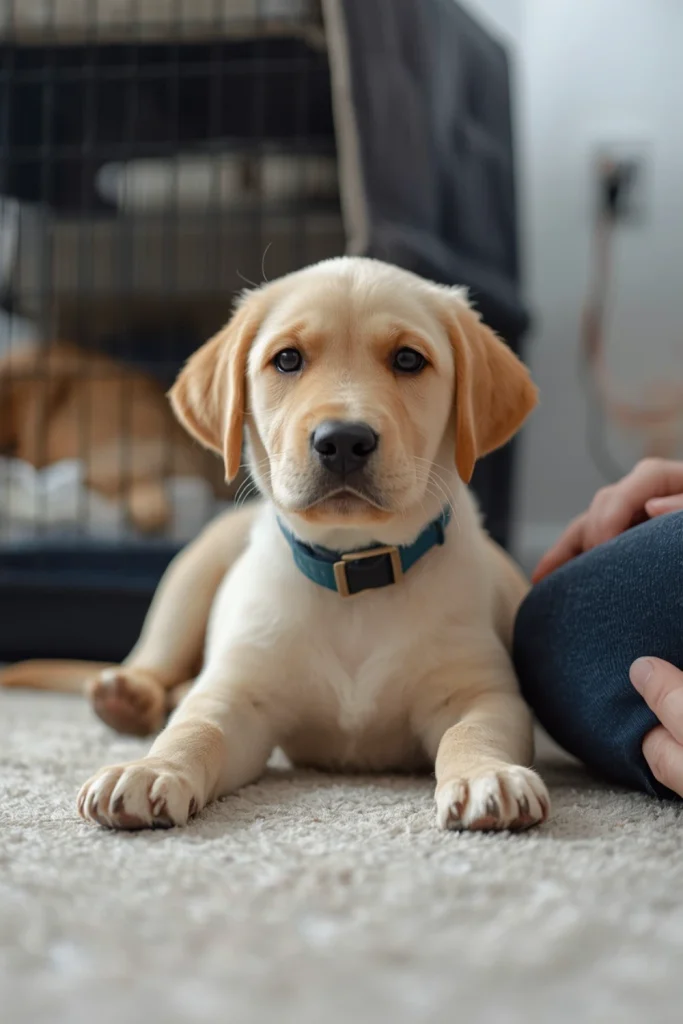
A puppy that has appropriate physical and mental activity throughout the day may find it easier to settle during crate time. Age-appropriate walks, gentle play, short training exercises, sniffing activities, and supervised exploration can help provide healthy stimulation. However, avoid trying to exhaust your puppy with excessive exercise. Puppies need plenty of sleep and recovery time.
Try to finish exciting activities before the crate session begins. Give your puppy a few minutes to calm down before asking them to settle. A smooth transition from activity to relaxation can be more effective than putting an overly excited puppy directly into the crate. A balanced daily schedule supports both healthy development and successful crate training.
12. Be Patient and Never Use the Crate as Punishment
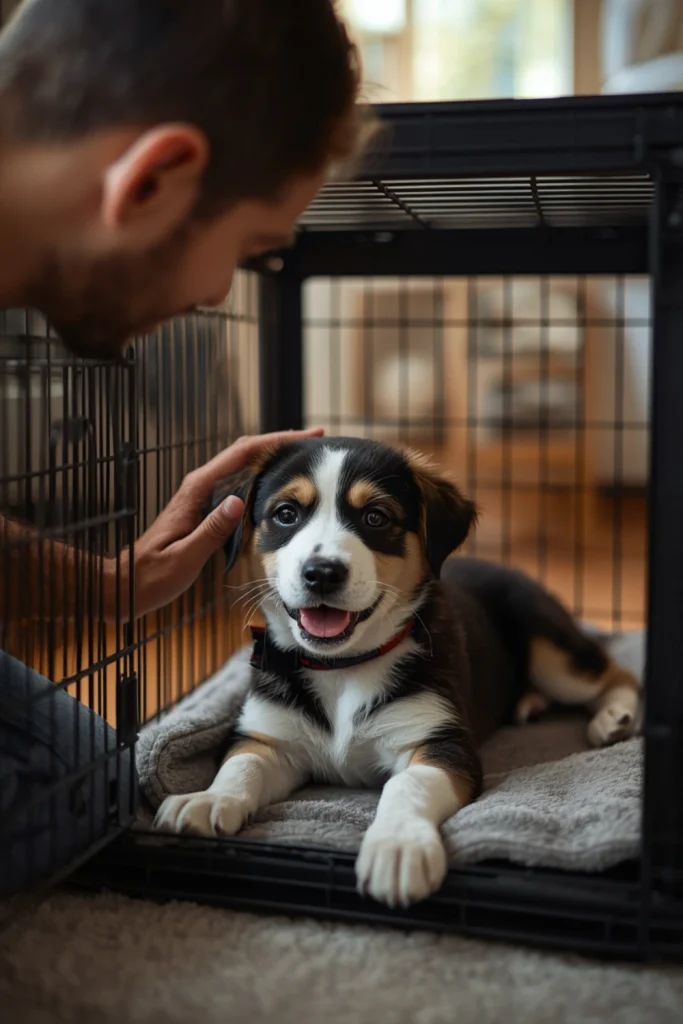
The final step to Help Your Puppy Love the Crate is patience. Puppies learn at different speeds, and progress is rarely perfectly linear. One day your puppy may settle quickly, while another day they may become restless. This does not necessarily mean the training has failed. Focus on gradual improvements and continue reinforcing positive behaviors.
Never use the crate as a punishment for accidents, chewing, barking, or other unwanted behavior. If your puppy begins to associate the crate with being scolded, they may start avoiding it. Instead, use positive reinforcement and appropriate behavior-management techniques. If your puppy shows intense or persistent distress, consider slowing down the training and speaking with a veterinarian or qualified reward-based dog trainer.
Final Thoughts
Learning how to Help Your Puppy Love the Crate does not require force or complicated training methods. The most effective approach is to make the crate comfortable, introduce it gradually, use positive reinforcement, and give your puppy plenty of opportunities to succeed.
Be patient with the process and remember that every puppy has a different personality and learning speed. With consistent practice, a calm routine, and appropriate rewards, the crate can become a familiar and enjoyable place for your puppy to sleep and relax. Most importantly, never use the crate as punishment. Your goal is to create a safe space your puppy willingly chooses.