
10 Easy Leash Training Exercises to Practice at Home
Good leash manners do not have to begin on a busy sidewalk or crowded park. Your home can be the perfect place to teach your puppy or dog the basic skills needed for calmer, more enjoyable walks. A quiet indoor environment gives your dog fewer distractions and allows you to focus on simple exercises.
These Easy Leash Training Exercises can help your dog learn to follow you, pay attention, respond to cues, walk beside you, and stay calm while wearing a leash. By practicing for just a few minutes each day, you can build useful habits before taking your training outdoors.
1. Practice Getting Comfortable With the Leash
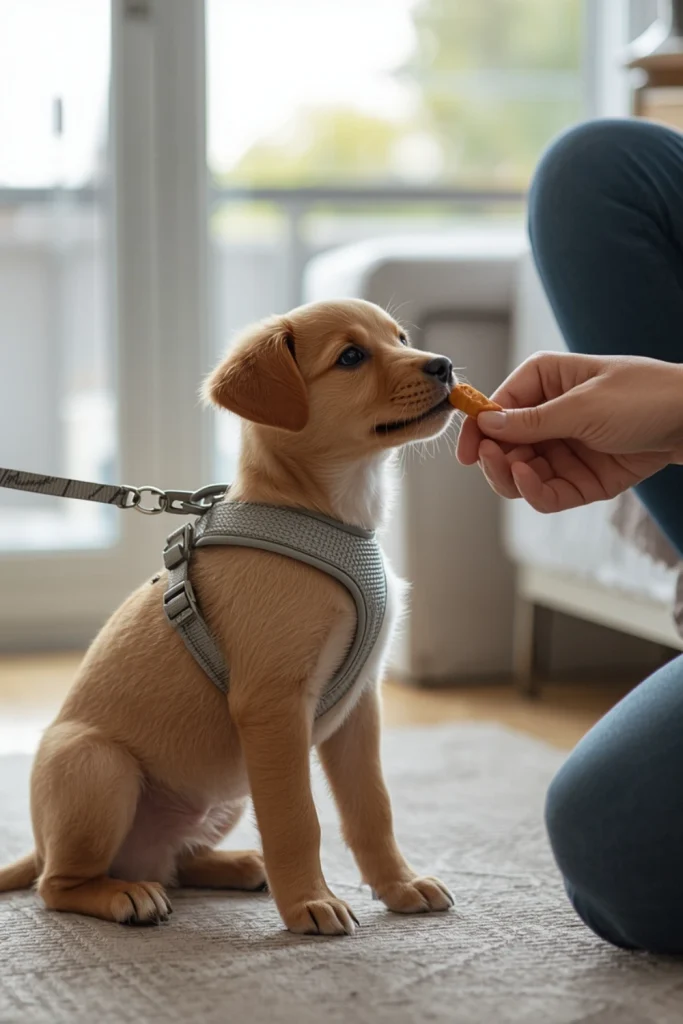
Before teaching your dog to walk on a leash, make sure it feels comfortable wearing one. Place the leash and harness or collar near your dog and allow it to sniff them. Reward calm behavior with a small treat or praise. Once your dog is relaxed, gently put on the equipment and allow your dog to wear it indoors for a short period while supervised.
Do not immediately expect your dog to walk perfectly. Let it move naturally around the room and become familiar with the sensation of the leash. If your dog tries to bite the leash or appears uncomfortable, calmly redirect its attention with a toy or treat. Repeat this exercise regularly until wearing the leash becomes a normal part of your dog’s routine.
2. Teach Your Dog to Follow You
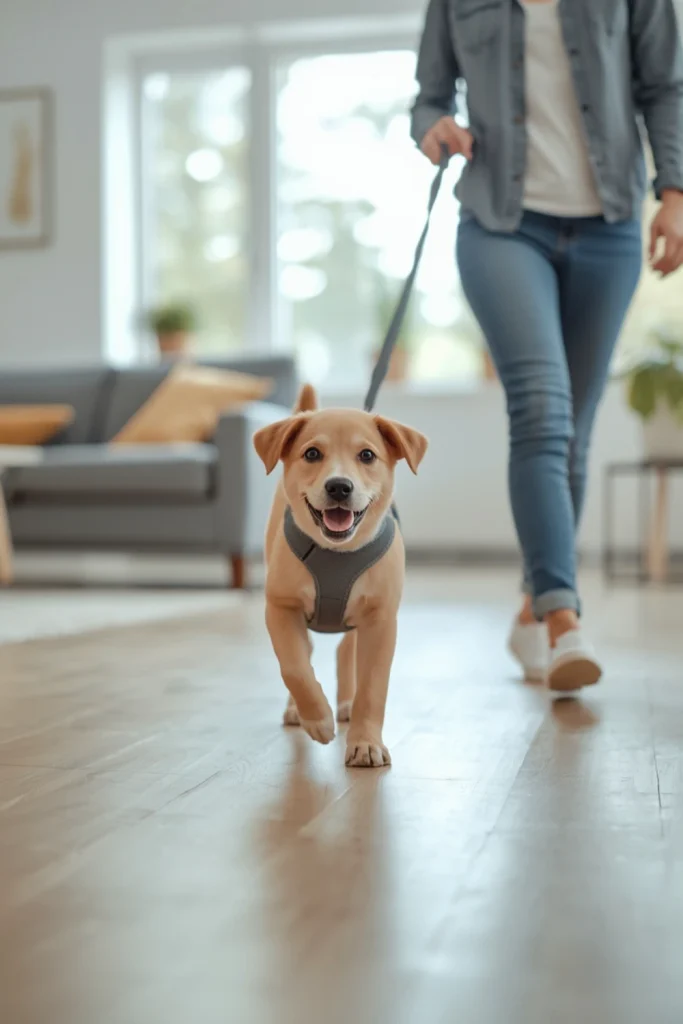
Teaching your dog to follow you is one of the simplest Easy Leash Training Exercises you can practice at home. Start in a quiet room with minimal distractions. Hold a small treat near your side, take a few steps, and encourage your dog to follow. When your dog moves with you, offer praise and a reward. Keep your movements slow and predictable during the first few sessions.
Once your dog understands the game, gradually reduce your dependence on holding the treat directly in front of its nose. Instead, use your voice and body movement to encourage your dog to follow. Reward your dog after it walks several steps beside you. This exercise helps build attention and teaches your dog that staying connected to you can be rewarding.
3. Practice the Name and Attention Game
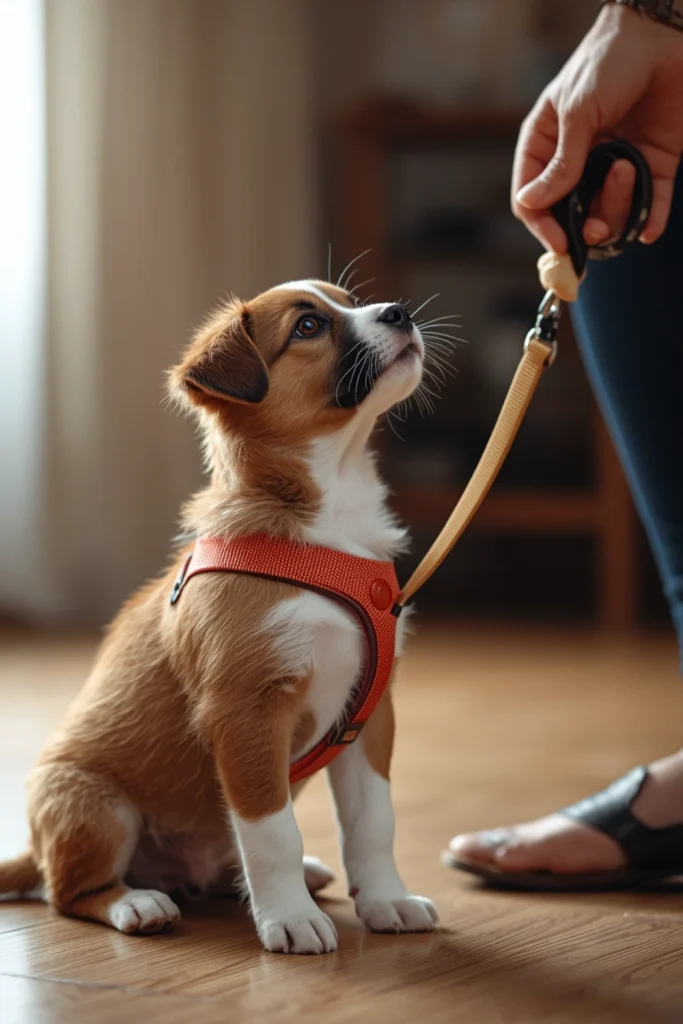
A dog that pays attention to its owner is generally easier to guide during leash walks. Begin by saying your dog’s name in a cheerful, calm voice. When your dog looks at you, immediately praise and reward it. Repeat the exercise several times in a quiet room. Keep the sessions short so your dog remains interested and motivated.
As your dog becomes more reliable, practice while your dog is mildly distracted. You can place a toy nearby or have another family member quietly move around the room. Say your dog’s name and reward it for looking toward you. This simple exercise teaches your dog that responding to you is valuable, which can become extremely useful when distractions appear during outdoor walks.
4. Practice Walking With a Loose Leash
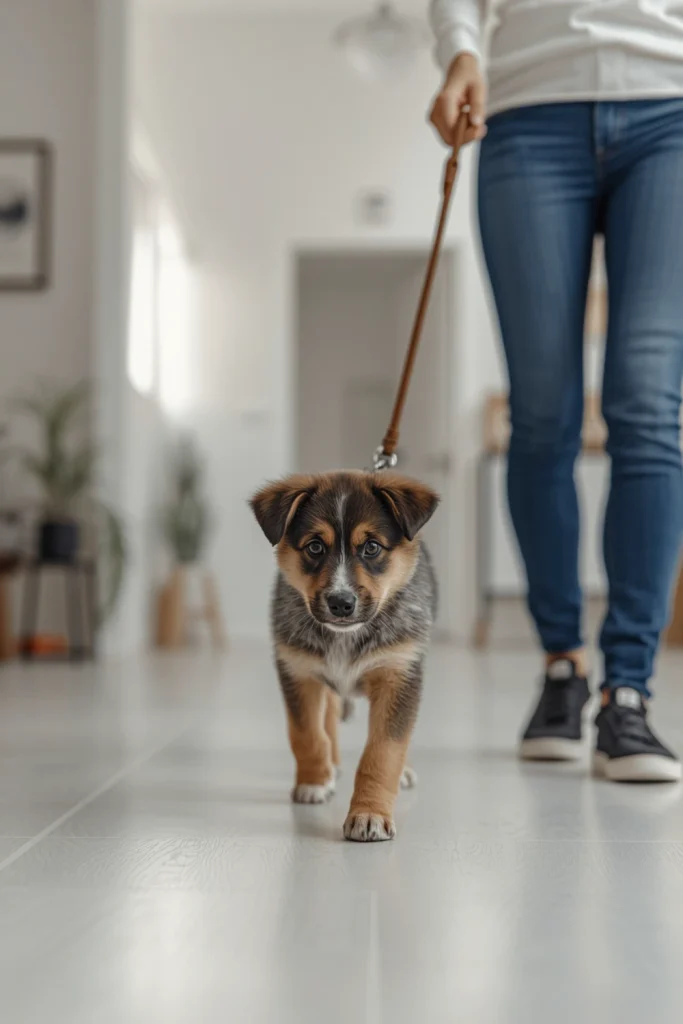
Loose-leash walking is an important skill to teach before expecting your dog to behave perfectly outdoors. Start by walking around a quiet room with your dog beside you. Keep the leash relaxed rather than tight. Whenever your dog stays close and the leash remains loose, praise and reward the behavior.
If your dog walks ahead and creates tension, calmly stop moving. Wait for your dog to return closer or turn its attention toward you. Once the leash becomes loose again, continue walking. Avoid repeatedly pulling your dog backward because this can create a cycle of leash tension. Instead, help your dog understand that relaxed walking allows the movement to continue.
5. Teach Your Dog to Stop When You Stop
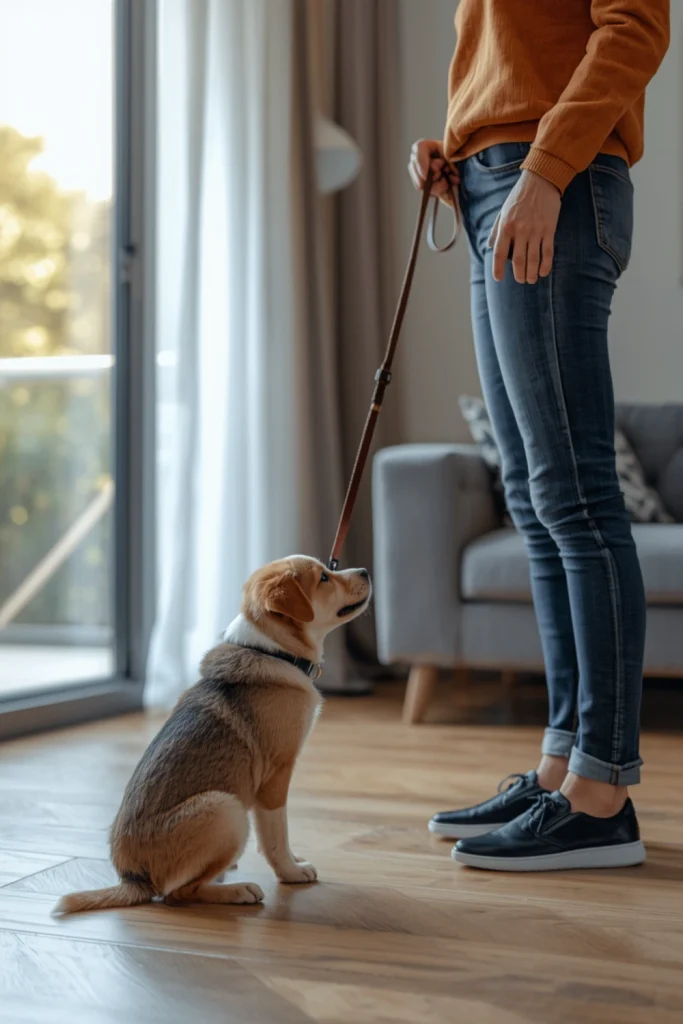
The ability to stop with you can make outdoor walks safer and easier. Begin by walking slowly around your home with your dog on a leash. After several steps, stop moving. Wait for your dog to notice that you have stopped. When your dog stops or comes closer, offer praise and a small reward. Repeat the process several times.
Gradually make the exercise more natural by changing where you stop. You can practice near doorways, around furniture, or in different rooms. Avoid making sudden movements that might frighten your dog. The goal is to teach your dog to pay attention to your movement and understand that when you stop, it should also pause rather than continuing to pull forward.
6. Practice Direction Changes
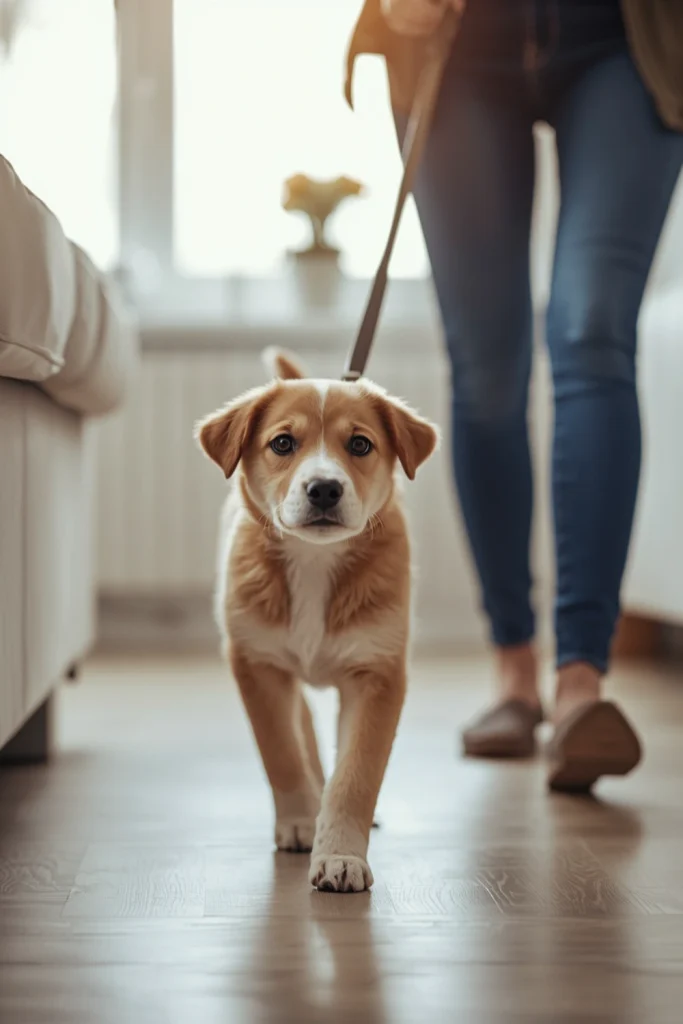
Direction changes are excellent for teaching your dog to pay attention to where you are going. Walk several steps through a room and then calmly turn in another direction. Encourage your dog to follow you and reward it when it catches up. Keep your movements smooth and avoid making sharp or frightening turns.
As your dog improves, change direction at different points during the exercise. Your dog will gradually learn that watching your movement and staying connected to you is important. This skill can become especially useful outdoors when you need to move away from distractions. Practicing inside first allows your dog to learn the basic idea without competing with traffic, other dogs, or unfamiliar noises.
7. Teach a Simple “Come With Me” Cue
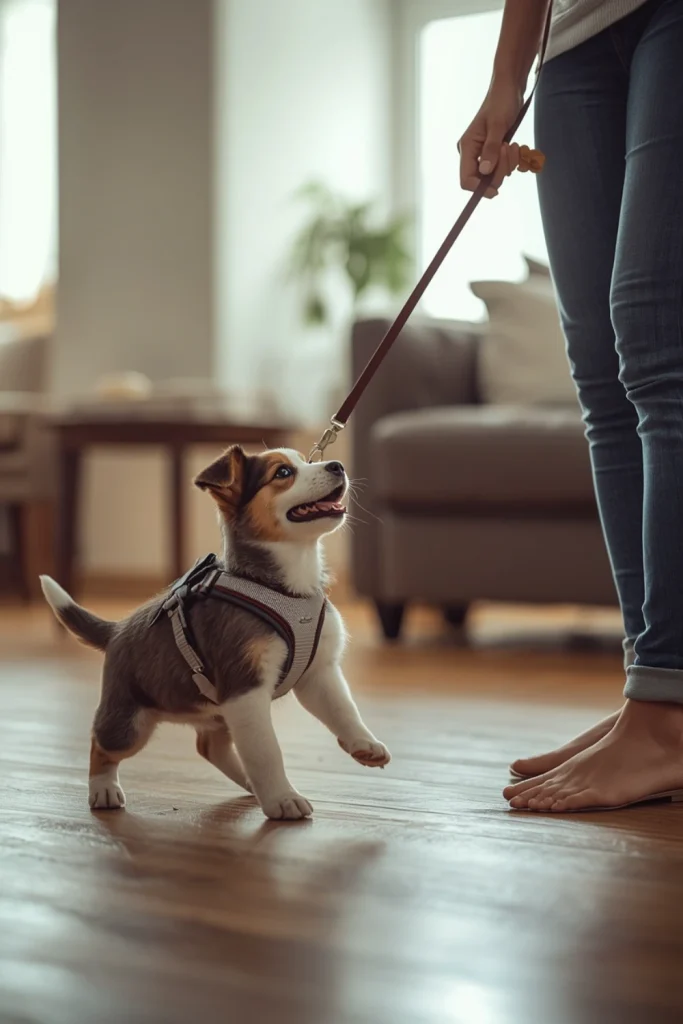
A simple cue such as “come with me” can help your dog understand that you want it to move alongside you. Choose a short phrase that everyone in the household will use consistently. Say the cue in a friendly voice and take a few steps backward or to the side. Encourage your dog to follow and reward it when it responds.
Practice this exercise without demanding long distances. Start with only a few steps and gradually increase the number as your dog becomes comfortable. You can combine the cue with treats, praise, or a favorite toy. The purpose is to make following you a fun and predictable behavior rather than something your dog associates with correction or pressure.
8. Practice Walking Around Household Distractions
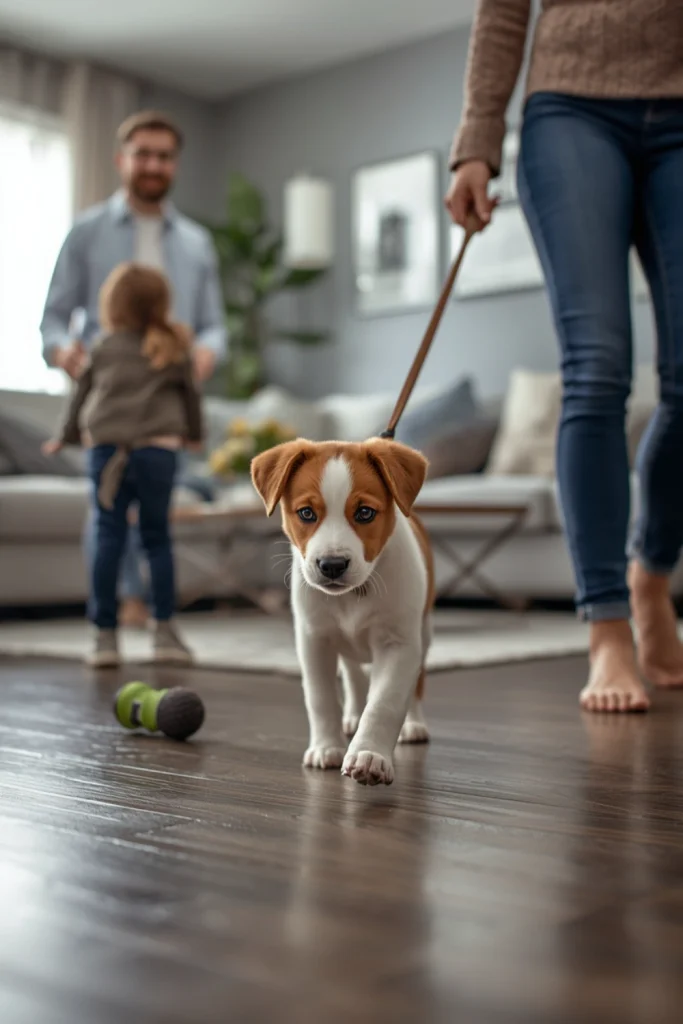
Your home may be quiet compared with the outdoors, but it still offers useful distractions. Practice walking your dog while another family member sits nearby, a toy is placed on the floor, or normal household activity happens around you. Start with easy distractions and reward your dog for continuing to pay attention.
Do not make the exercise unnecessarily difficult. If your dog immediately pulls toward a toy or becomes overly excited by another person, increase the distance and make the task easier. Reward calm behavior before gradually getting closer. This helps your dog learn that distractions do not automatically mean pulling toward them. Instead, your dog can notice something interesting and still choose to remain connected to you.
9. Practice Doorway Manners
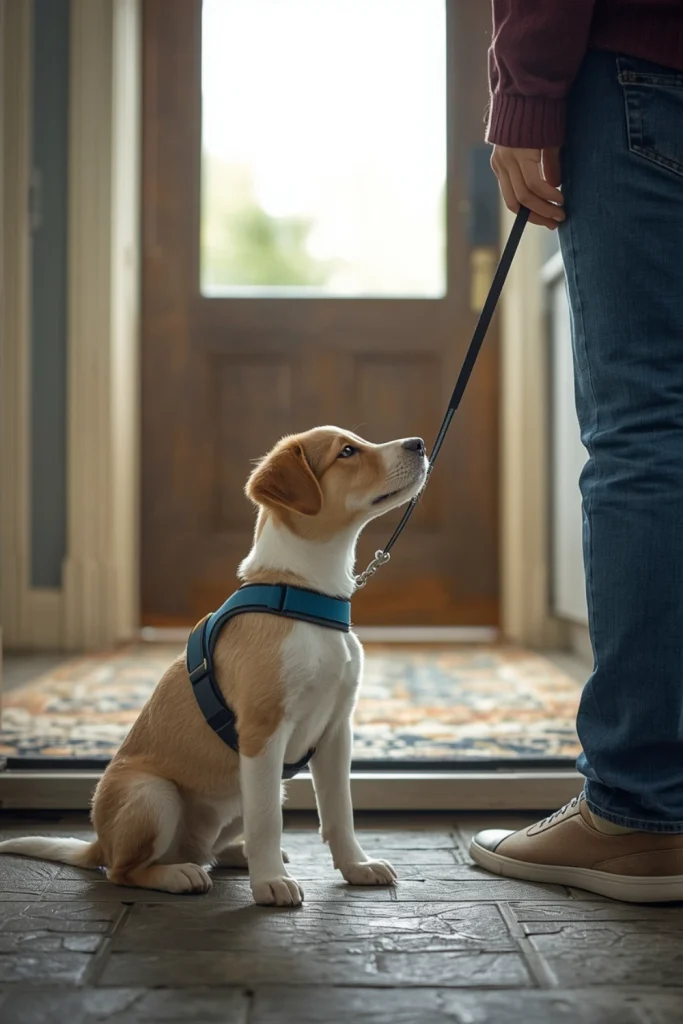
Doorways can become exciting places for dogs because they often predict outdoor adventures. Teaching calm doorway behavior before going outside can help prevent pulling and rushing. Put your dog’s leash on and walk toward a closed door. If your dog rushes ahead, pause and wait for calm behavior. Once your dog is relaxed, continue toward the door.
You can eventually practice opening the door slightly while your dog remains calm. If your dog tries to rush through, close it gently and wait. Reward your dog for waiting. Once your dog can remain calm while the door opens, you can give a release cue and walk through together. This exercise teaches patience and helps create safer transitions between your home and outdoor walks.
10. Practice Short Indoor Walking Routes
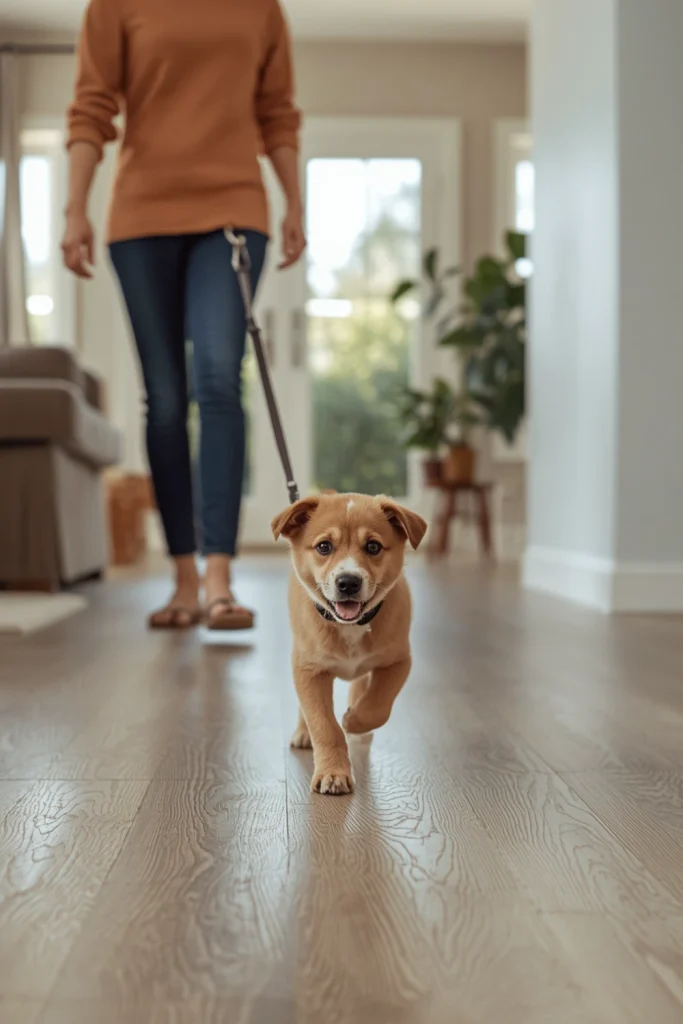
Once your dog has learned several basic skills, combine them into a short indoor walking routine. Walk from one room to another while practicing attention, loose-leash walking, stopping, direction changes, and following your cues. Keep the route simple and repeat it several times. Reward your dog for staying relaxed and responding to you.
You can gradually make the route more challenging by adding household distractions or changing rooms. Keep sessions short and finish while your dog is still successful. These combined Easy Leash Training Exercises help your dog understand how individual skills work together. When you eventually move outdoors, your dog will already have some experience following you while wearing a leash.
Final Thoughts
These Easy Leash Training Exercises can give your puppy or dog a strong foundation for enjoyable walks. You do not need a large yard or special training facility. A quiet room, a properly fitted harness or collar, a lightweight leash, and a few rewards are enough to begin.
Start with simple exercises and gradually build your dog’s skills. Practice attention, loose-leash walking, stopping, following, direction changes, and calm doorway behavior before introducing more distractions. Keep training positive and consistent, and remember that every dog learns at a different pace. With regular practice, the skills learned at home can become the foundation for calmer and more confident outdoor walks.