
10 Puppy Training Routine Ideas for Better Days
A well-trained puppy can make everyday life calmer, easier, and much more enjoyable. The good news is that puppy training does not have to feel complicated. With the right routine, simple exercises, and consistent practice, you can help your puppy learn good habits one small step at a time.
These Puppy Training Routine Ideas are designed for busy puppy parents who want practical ways to make training part of everyday life. From morning practice and potty training to basic commands, leash skills, calm behavior, and mental stimulation, these routines can help your puppy become more confident, responsive, and well-mannered.
1. Start the Morning With a Simple Training Routine
Morning is an excellent time to begin your puppy’s training routine because your puppy is usually ready to interact with you after sleeping. Start with a potty break and then spend a few minutes practicing a simple skill. You might ask your puppy to respond to its name, sit, or look at you before receiving a reward. Keeping the session short helps your puppy stay interested rather than becoming tired or distracted. A calm morning routine also teaches your puppy that the day begins with predictable activities and positive interaction.
You can gradually add other simple behaviors to your morning routine as your puppy develops. For example, ask for a sit before putting down breakfast or encourage your puppy to wait briefly before going through a doorway. These small moments can become valuable training opportunities without making your schedule feel complicated. The key is consistency. When the same behaviors are practiced every morning, your puppy starts to understand what you expect. Over time, a structured morning routine can help establish better habits for the rest of the day.
2. Build a Consistent Potty Training Routine
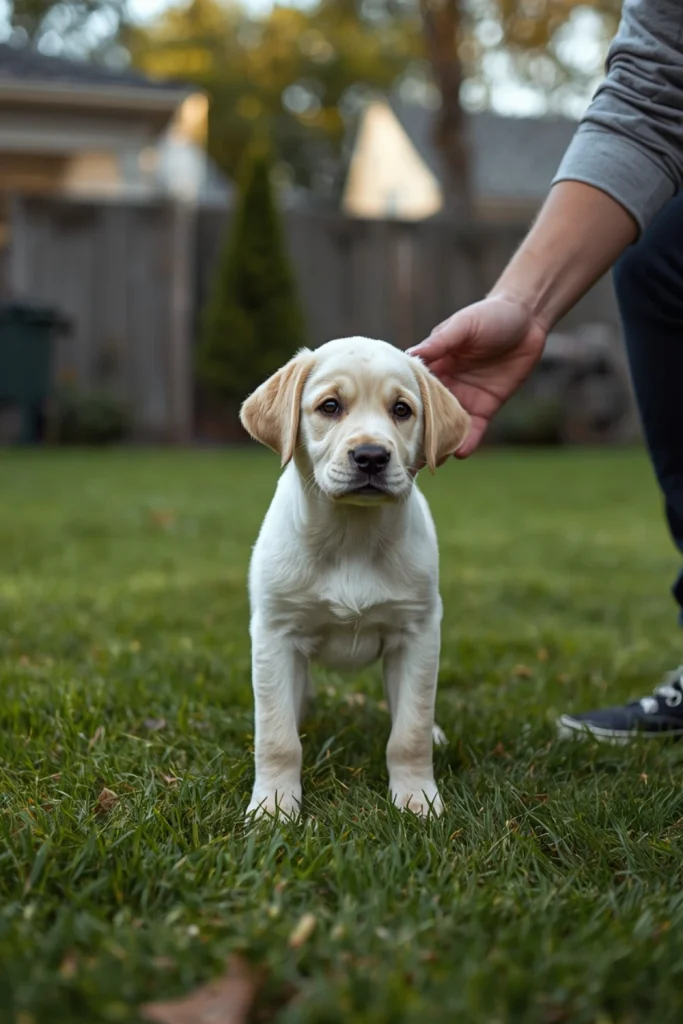
Potty training is one of the most important parts of a puppy’s daily routine. Young puppies need frequent opportunities to go outside or use their designated potty area because they are still developing bladder control. Creating predictable potty times can make the process easier to understand. Take your puppy out after waking, eating, drinking, playing, and sleeping. When your puppy goes in the correct place, calmly praise the behavior and provide an appropriate reward. This helps your puppy connect the desired behavior with a positive result.
Consistency matters more than perfection during potty training. Accidents are normal, especially with very young puppies, so avoid punishing your puppy when mistakes happen. Instead, clean accidents thoroughly and focus on increasing supervision and providing more frequent potty opportunities. Keep track of when your puppy usually needs to go so you can recognize patterns. As your puppy grows and gains better control, the schedule can gradually become less frequent. A predictable potty routine can reduce accidents and make your puppy feel more secure.
3. Practice Your Puppy’s Name Every Day
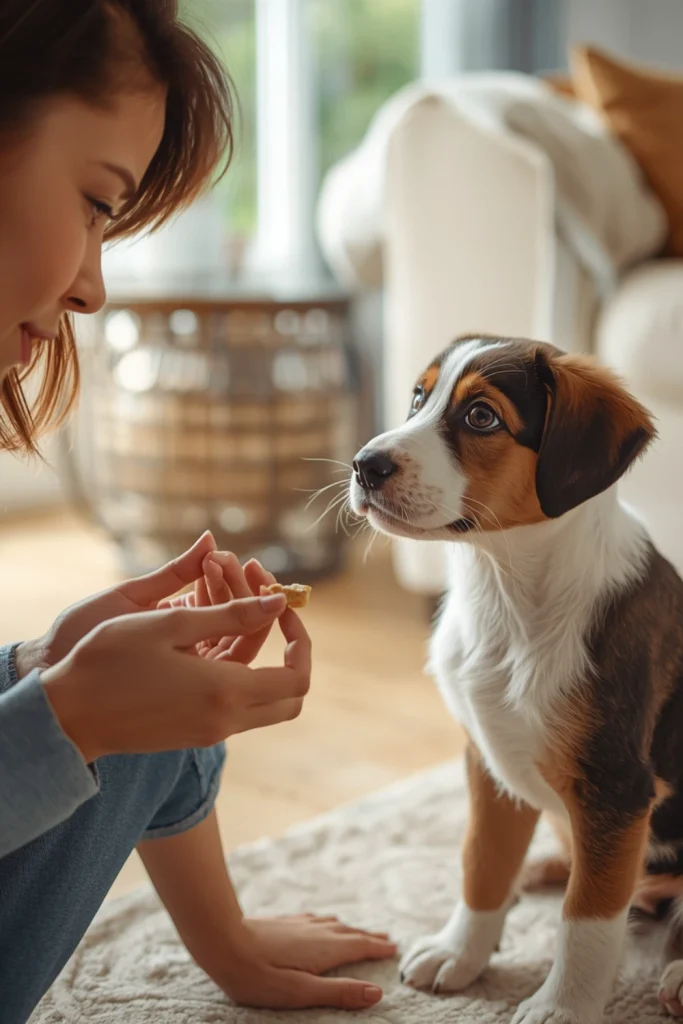
Teaching a puppy to recognize its name is one of the easiest and most useful training exercises. Start in a quiet environment where there are few distractions. Say your puppy’s name in a cheerful, clear voice and wait for your puppy to look toward you. The moment your puppy responds, offer praise or a small reward. Repeat this several times during short sessions. Avoid repeatedly saying the name when your puppy is ignoring you because your puppy may begin to learn that the word does not require a response.
Once your puppy consistently responds to its name indoors, gradually practice in different areas of the home. You can later try the exercise in a quiet yard or other controlled environment. The goal is to build a strong association between the puppy’s name and paying attention to you. This skill can become especially useful when you need your puppy to focus before giving another command. Including name training in your daily routine takes only a few minutes but can provide a foundation for many other puppy training exercises.
4. Add Basic Commands to Your Daily Routine
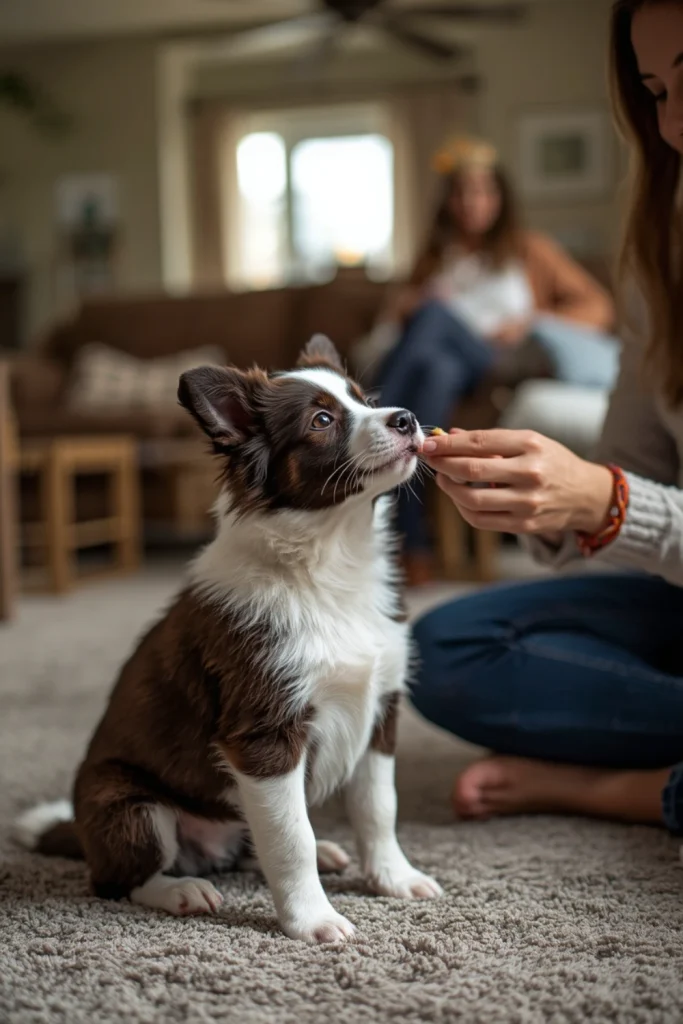
Basic commands give your puppy a simple way to understand what you want. Commands such as sit, down, come, wait, and leave it can become useful parts of everyday life. Start with one behavior at a time and practice it in short sessions. For example, you can practice “sit” before meals, “wait” before opening a door, or “come” during a controlled indoor game. Reward your puppy when it performs the behavior correctly. Keeping commands consistent helps your puppy understand that the same word means the same action.
Do not expect your puppy to master every command immediately. Puppies are learning both the behavior and the meaning of the words you use. Begin in a quiet environment and gradually introduce mild distractions as your puppy becomes more reliable. Training should remain positive and manageable. If your puppy becomes tired or loses interest, take a break and try again later. Adding basic commands to normal daily activities makes training feel natural and gives your puppy frequent opportunities to practice useful skills.
5. Create a Short Leash Training Routine
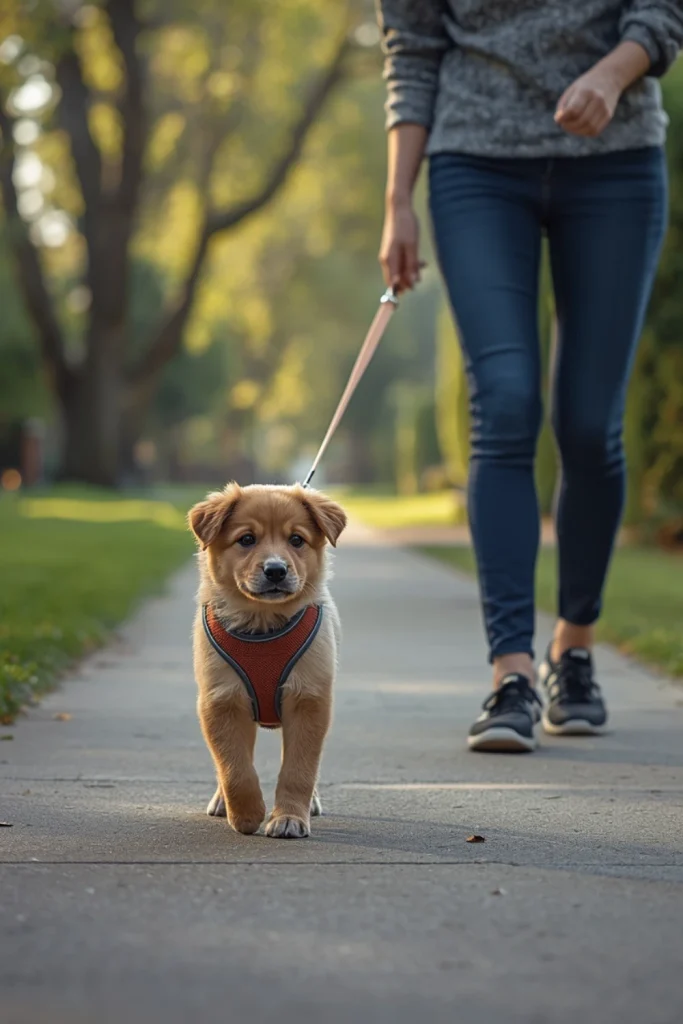
Leash training is an important part of helping your puppy become comfortable with walks. Before expecting your puppy to walk calmly outdoors, let the puppy become familiar with wearing a collar or harness and walking with a leash in a safe indoor area. Reward your puppy for staying near you and following your movement. If your puppy pulls, stop or change direction rather than turning the walk into a tugging competition. Short, positive practice sessions can help your puppy understand that staying close to you is rewarding.
As your puppy becomes more comfortable, move the training to a quiet outdoor area. There will naturally be more distractions outside, so keep expectations realistic. Let your puppy sniff and explore safely while also practicing short periods of walking beside you. Reward calm behavior and attention. Avoid overwhelming your puppy with long walks or busy environments before basic leash skills are established. A gradual approach can make leash training more enjoyable and help your puppy develop better walking habits.
6. Use Mealtime as a Puppy Training Opportunity
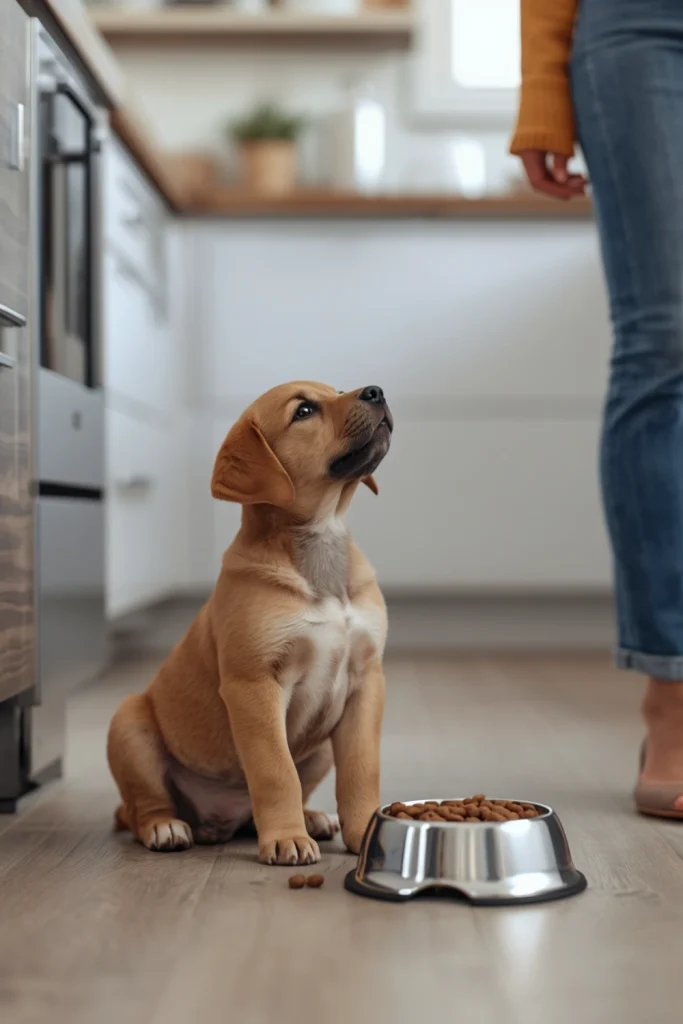
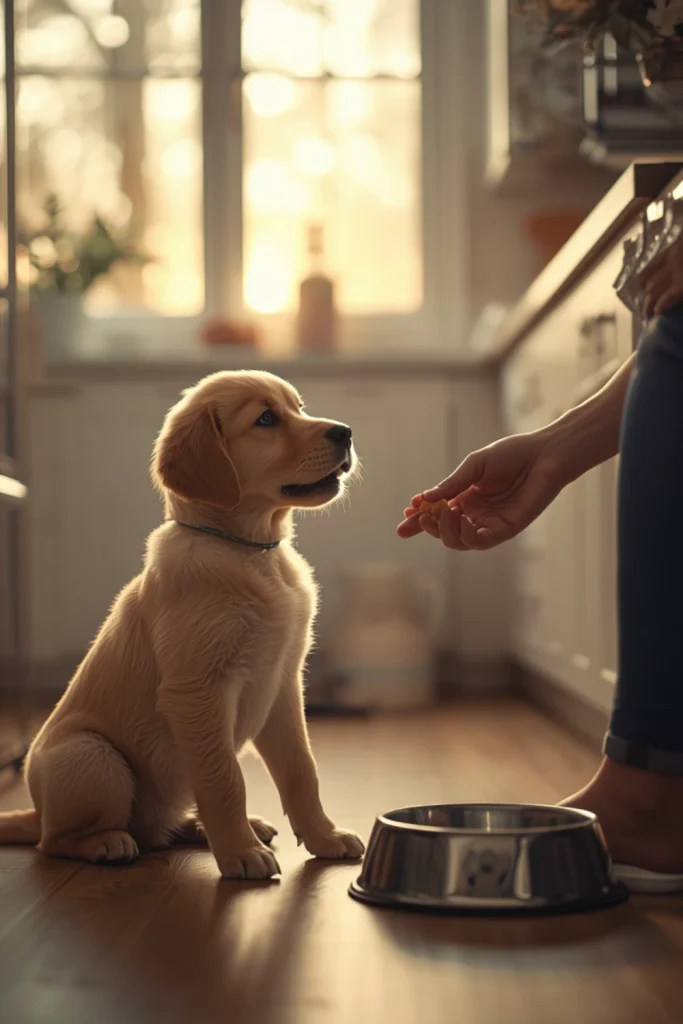
Mealtime can become one of the easiest training opportunities in your day because food naturally provides motivation for many puppies. Instead of simply placing the bowl down immediately, you can ask for a simple behavior such as sitting calmly. Once your puppy responds, provide the meal. This does not mean making every meal complicated. A few seconds of calm behavior can teach your puppy that patience and listening are valuable. You can also use a portion of your puppy’s regular food for short training exercises when appropriate.
Mealtime training can also help build impulse control. For example, you can gradually teach your puppy to wait briefly while you prepare the food or move the bowl into position. Keep the waiting period short for young puppies and increase it slowly as your puppy develops. The goal is not to create frustration but to teach calm behavior. By incorporating simple exercises into feeding time, you can turn an everyday activity into another opportunity for learning without adding a separate training session to your schedule.
7. Include Daily Play and Mental Stimulation
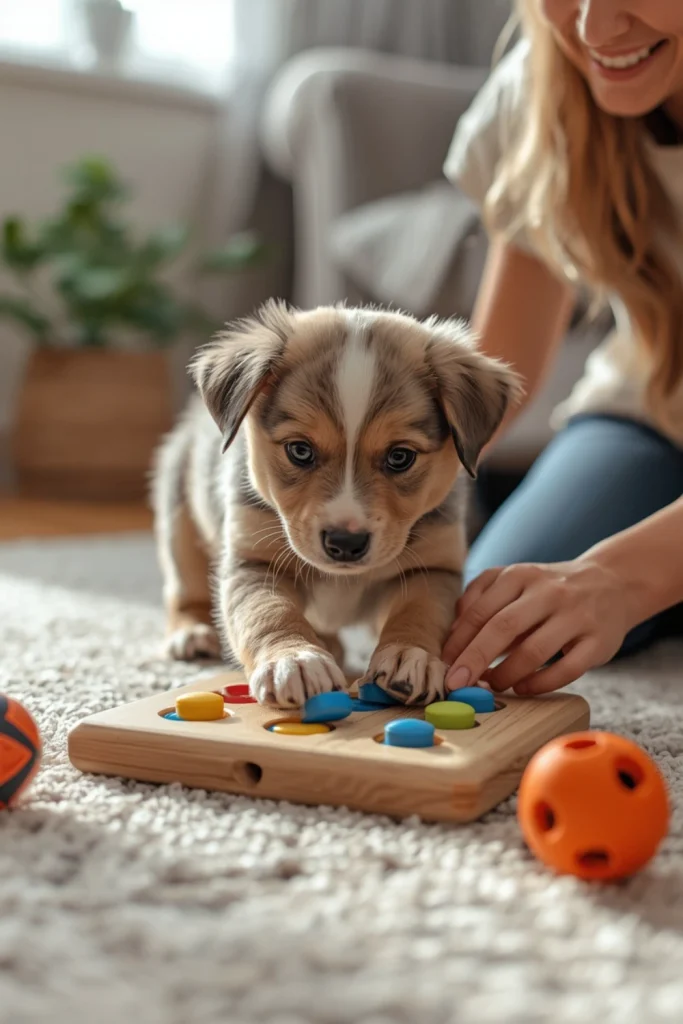
Training should not be limited to obedience commands. Puppies also need appropriate play and mental stimulation to stay engaged and learn how to use their energy productively. Simple activities such as finding a hidden toy, following a treat trail, playing gentle fetch, or exploring a safe puzzle toy can provide mental challenges. These activities can make your puppy’s routine more interesting while encouraging problem-solving and attention. Choose activities appropriate for your puppy’s age, size, and physical abilities.
Mental stimulation can also help prevent boredom, but it should not be treated as a replacement for appropriate physical activity or rest. Puppies need plenty of sleep and recovery time throughout the day. Keep games short and stop while your puppy is still interested. You can rotate toys and activities to maintain novelty. Adding a few minutes of brain games to your daily puppy training routine can make learning more enjoyable and give your puppy another healthy outlet for curiosity.
8. Teach Calm Behavior During Everyday Activities
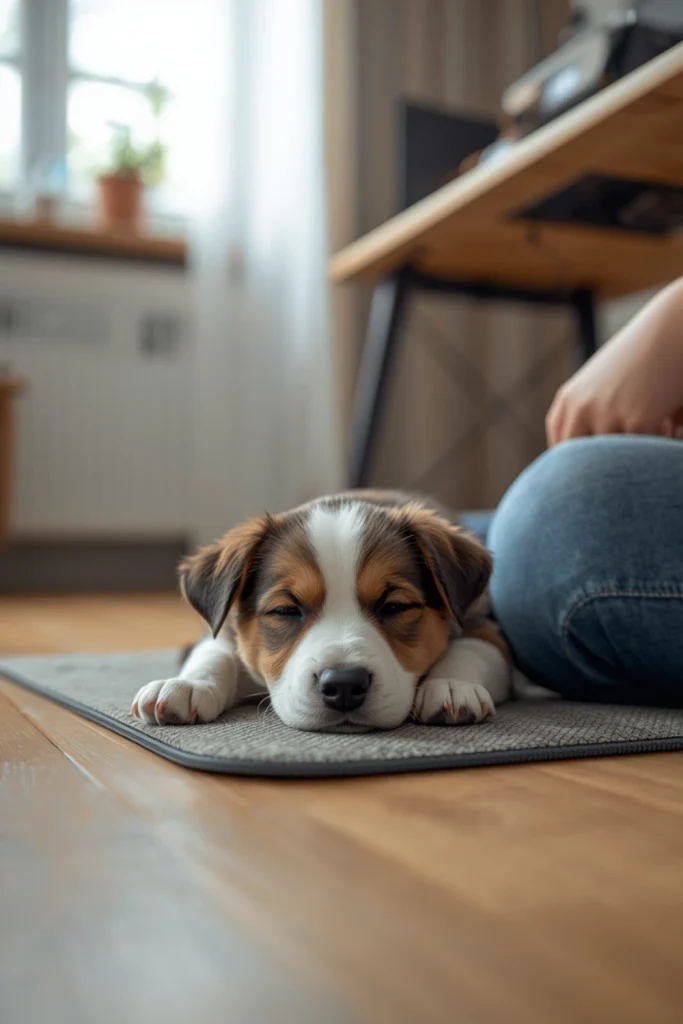
Many puppy owners focus heavily on commands but forget to teach puppies how to relax. Calm behavior is an important life skill because puppies need to learn that not every moment is playtime. You can encourage calm behavior by rewarding your puppy when it quietly rests on a bed or mat. Begin with short periods and gradually increase the time. You do not need to constantly interact with your puppy when it is calm. Sometimes simply allowing your puppy to relax without interruption can reinforce the idea that quiet behavior is normal.
Practice calmness during everyday activities such as watching television, working at your desk, preparing meals, or talking with family members. If your puppy becomes excited, avoid turning the situation into a game. Wait for a calmer moment and reward appropriate behavior. With repetition, your puppy can learn that relaxation also earns attention and rewards. Including calm behavior in your Puppy Training Routine Ideas can make daily life easier and help your puppy develop better emotional and behavioral habits.
9. Practice Recall Training Every Day
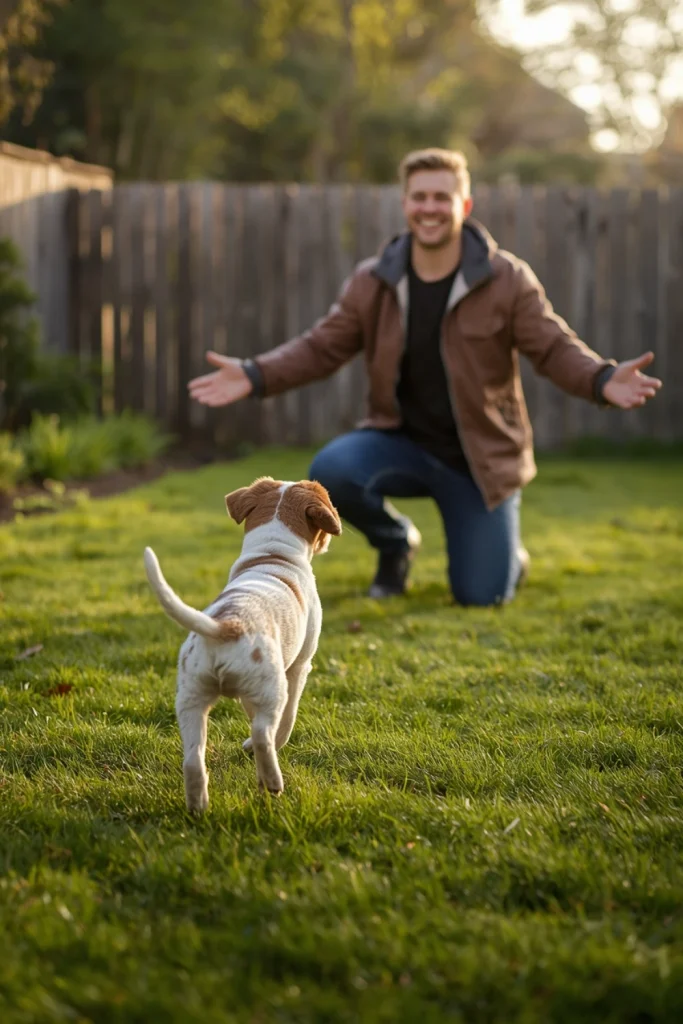
Recall training teaches your puppy to come toward you when called. It is one of the most valuable skills you can develop because reliable recall can improve communication and safety in appropriate controlled situations. Start indoors in a quiet area. Move a short distance away, say your recall word in an enthusiastic voice, and reward your puppy when it comes to you. Make the experience positive and rewarding. Avoid calling your puppy repeatedly if it is unlikely to respond because this can weaken the association between the cue and the desired behavior.
As your puppy improves, gradually increase the distance and introduce mild distractions. You can play simple recall games with another family member by taking turns calling the puppy and rewarding successful responses. Outdoors, use appropriate safety equipment and controlled environments rather than immediately testing recall in open areas. Remember that puppies are naturally curious and easily distracted. Building recall takes repetition and patience. A few minutes of practice every day can help create a stronger response over time.
10. End the Day With a Calm Training Routine
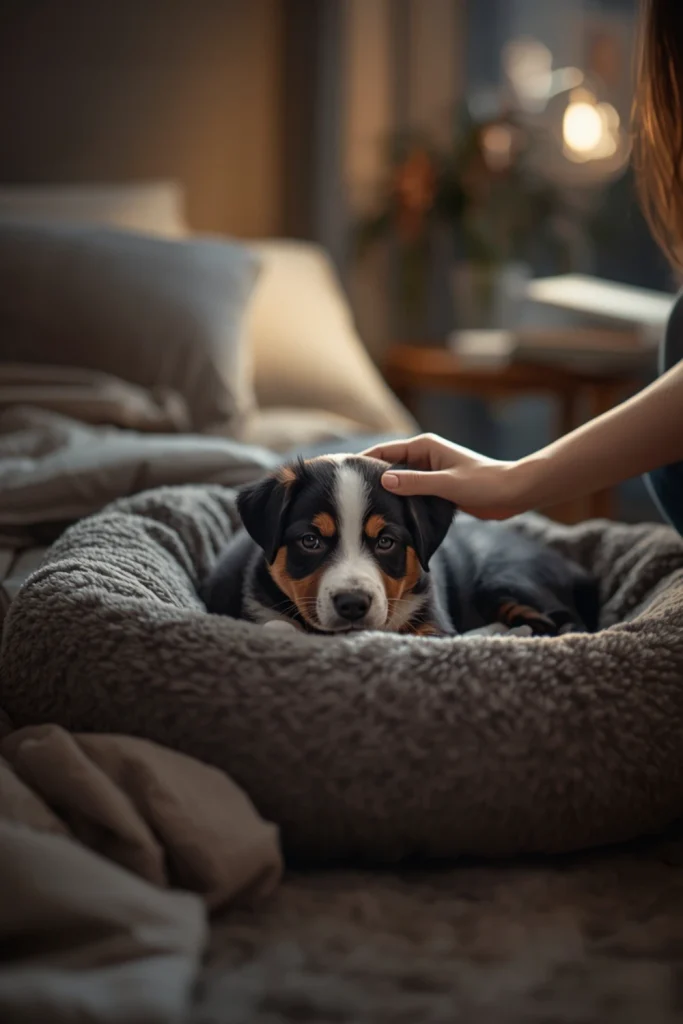
An evening routine can help your puppy transition from active daytime activities toward rest. Instead of ending the day with intense play, include a few minutes of calm training. You might practice a simple down command, settle on a mat, gentle handling, or quiet attention. Keep the session relaxed and avoid introducing difficult new behaviors late at night. The purpose of an evening routine is to reinforce calm habits while giving your puppy positive one-on-one time with you.
Consistency is especially useful at bedtime. Follow a predictable sequence such as a final potty break, a short calm interaction, and then settling in the puppy’s designated sleeping area. Every puppy is different, so adjust the routine according to age, energy level, and individual needs. Avoid expecting a very young puppy to sleep through the entire night without potty breaks. A peaceful evening routine can help create a smoother transition into sleep and make the next morning’s training easier.
Final Thoughts on Puppy Training Routine Ideas
A successful puppy training routine does not need to be complicated. The most effective approach is often a simple combination of consistency, patience, positive reinforcement, appropriate expectations, and daily practice. By turning ordinary moments into training opportunities, you can teach useful skills without spending hours on formal sessions.
These Puppy Training Routine Ideas can help you create a structured day that supports better habits, communication, confidence, and cooperation. Start with small goals, celebrate progress, and adjust the routine as your puppy grows. Remember that every puppy learns at its own pace. With regular practice and a positive approach, everyday routines can become valuable building blocks for a happy and well-mannered companion.