

8 Tips for Easier Puppy Potty Training at Night
Nighttime puppy potty training can be one of the most difficult parts of welcoming a new puppy into your home. Your puppy may wake up, whine, have an accident, or struggle to settle back down after a bathroom break. For new puppy owners, those interrupted nights can quickly become frustrating.
The good news is that nighttime potty training becomes easier when you create a predictable routine. With patience, proper timing, supervision, and positive reinforcement, your puppy can gradually learn to sleep for longer periods and understand when it is time to go outside. These Puppy Potty Training at Night tips will help you create a calmer bedtime routine while supporting healthy bathroom habits.
1. Establish a Consistent Bedtime Routine
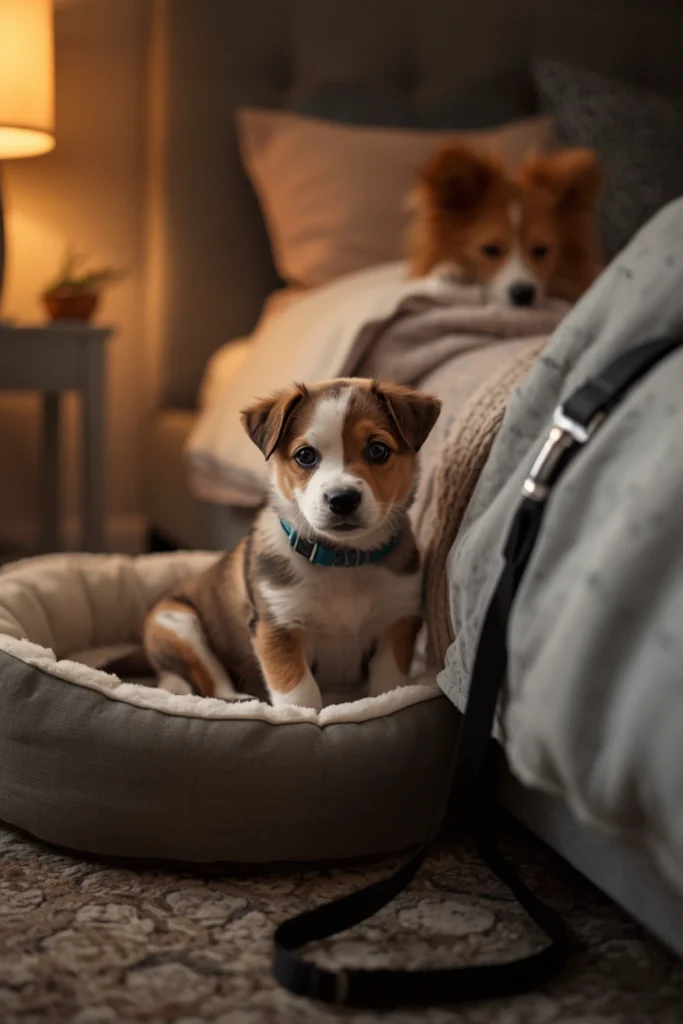
A predictable bedtime routine is one of the most helpful ways to make nighttime puppy potty training easier. Puppies learn through repetition, so following the same sequence each night helps them understand what is coming next. Start by providing a calm period before bedtime rather than allowing intense play immediately before sleep. Give your puppy an opportunity to relax, then take it outside for a final bathroom break.
Try to keep bedtime and the final potty trip around the same time every night. For example, you might have a quiet play session, prepare your puppy’s sleeping area, take the puppy outside, and then settle it down for the night. The exact schedule will depend on your puppy’s age and needs. Consistency is more important than choosing a particular clock time.
2. Always Take Your Puppy Out Before Bed
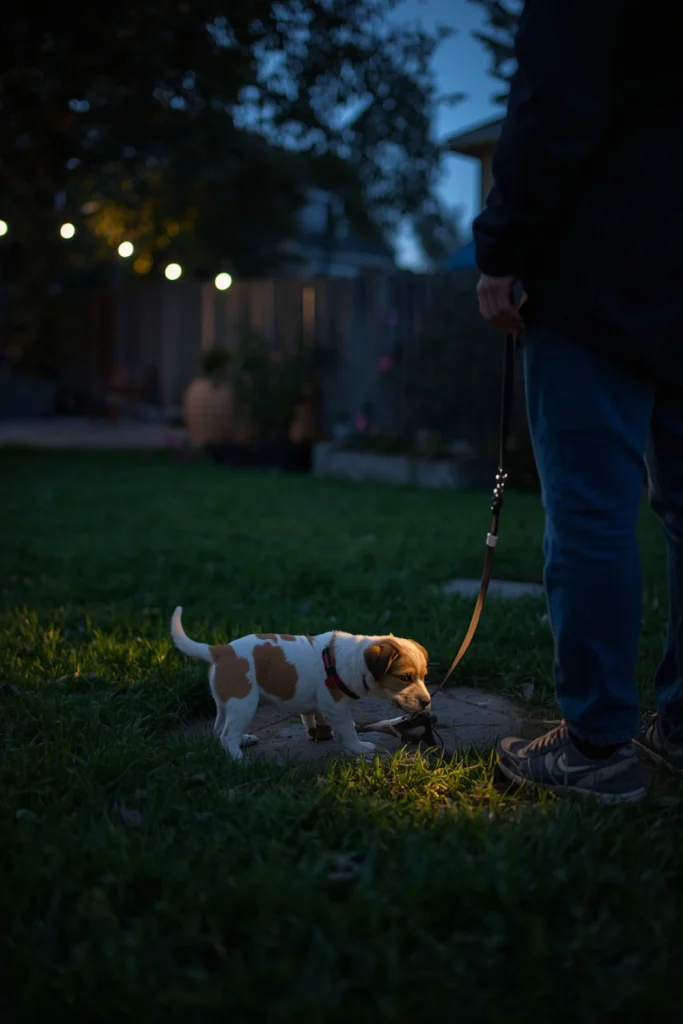
One of the simplest ways to reduce nighttime accidents is to give your puppy a proper potty opportunity immediately before bedtime. Even if your puppy went outside earlier in the evening, another bathroom trip before sleep can help empty the bladder and give your puppy a better chance of staying comfortable during the first part of the night.
Make the final trip calm and focused. Take your puppy to the usual potty area and give it enough time to finish. Avoid turning the final bathroom break into an exciting play session because you want your puppy to understand that nighttime is primarily for sleeping. After your puppy successfully goes, offer quiet praise and return home for bedtime.
3. Understand Your Puppy’s Age and Bladder Control
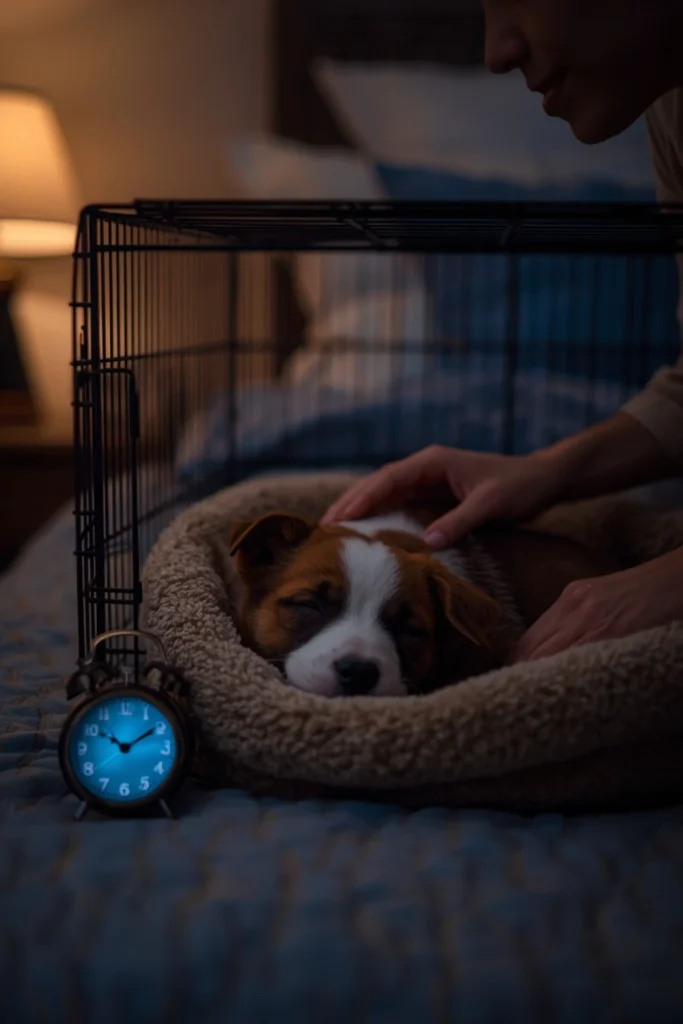
A young puppy cannot be expected to hold its bladder throughout the entire night. Bladder control develops gradually as puppies grow. The exact amount of time a puppy can comfortably wait varies depending on age, size, individual development, health, and other factors. Understanding this can prevent unrealistic expectations and unnecessary frustration.
If your puppy is very young, it may need one or more nighttime potty trips. As your puppy matures, you can gradually increase the time between bathroom breaks. Do not deliberately make a puppy wait for an excessively long period simply to speed up training. The goal is to gradually build reliable habits while respecting your puppy’s physical development.
4. Keep the Puppy’s Sleeping Area Comfortable
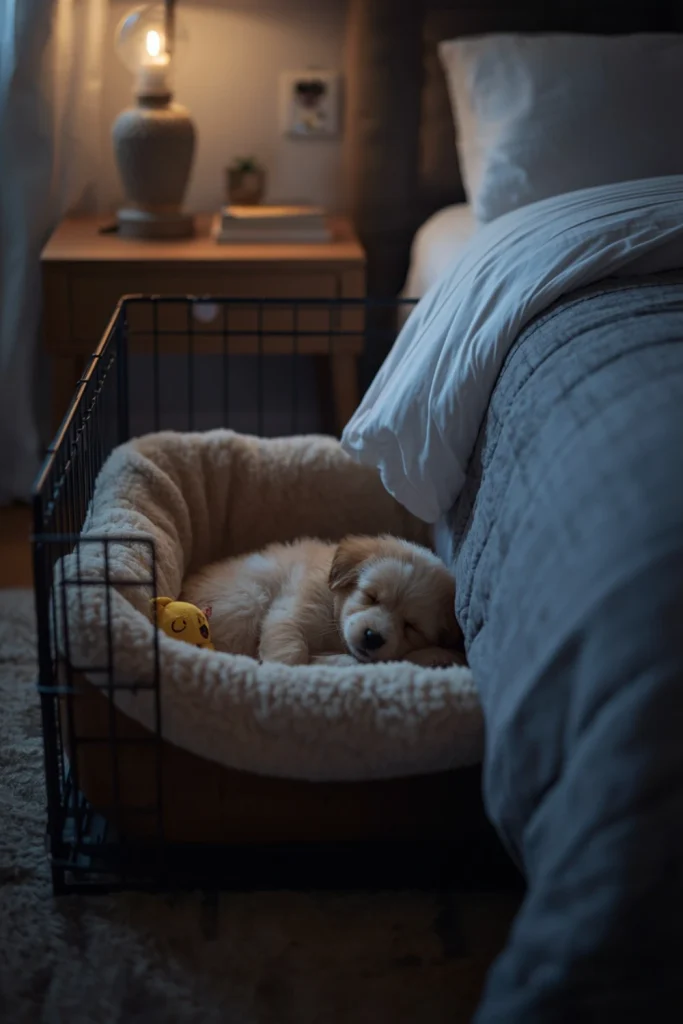
A comfortable sleeping area can make nighttime training easier because puppies are more likely to settle when they feel safe and secure. Whether you use a crate, puppy pen, or another safe sleeping arrangement, make sure the space is appropriately sized and comfortable. A crate should allow the puppy to stand, turn around, lie down, and stretch naturally without providing excessive extra space.
Place the sleeping area somewhere calm where your puppy can settle without being disturbed by constant household activity. Some owners find it helpful to keep a young puppy’s sleeping area near their bedroom during the early stages so they can hear signs that the puppy needs to go outside. Avoid using the sleeping area as punishment. Your puppy should associate it with safety, rest, and comfort.
5. Respond Quickly When Your Puppy Needs to Go
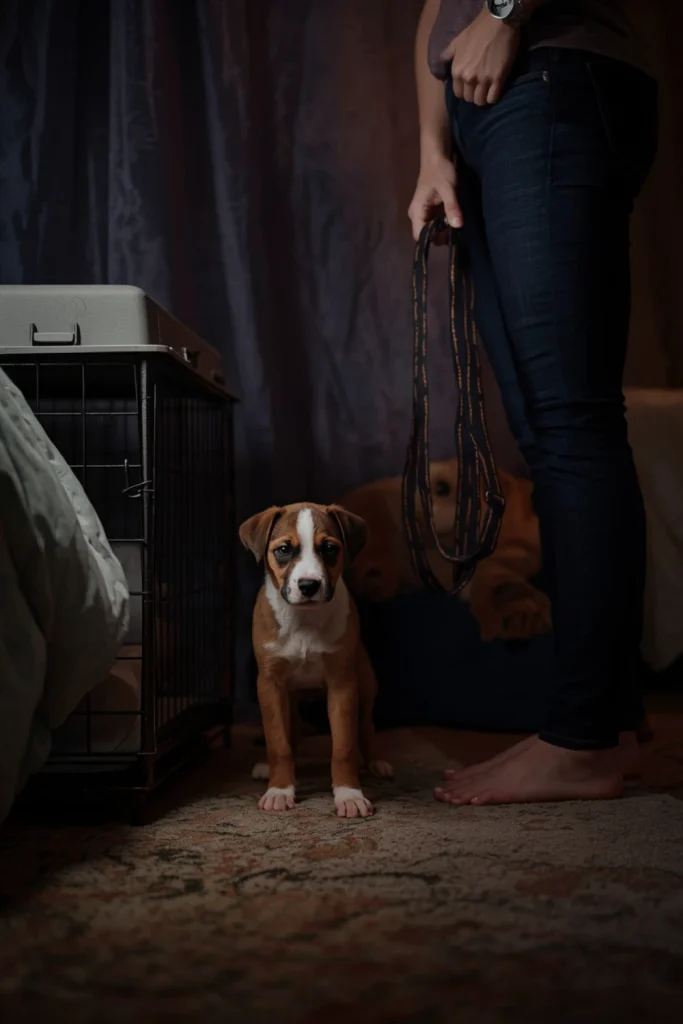
Learning to recognize nighttime bathroom signals is an important part of successful puppy potty training at night. A puppy may whine, move around, scratch at the crate, become restless, or suddenly wake up. These behaviors can sometimes mean the puppy needs to eliminate. Pay attention to patterns so you can distinguish a genuine bathroom need from a desire for attention or play.
If you believe your puppy needs to go, respond calmly and take it directly to the designated potty area. Keep the lights low and your voice quiet. Avoid playing, offering exciting toys, or allowing long periods of exploration. Once the puppy finishes, give gentle praise and return to the sleeping area. This teaches the puppy that nighttime bathroom trips are brief and purposeful.
6. Keep Nighttime Potty Trips Calm and Boring
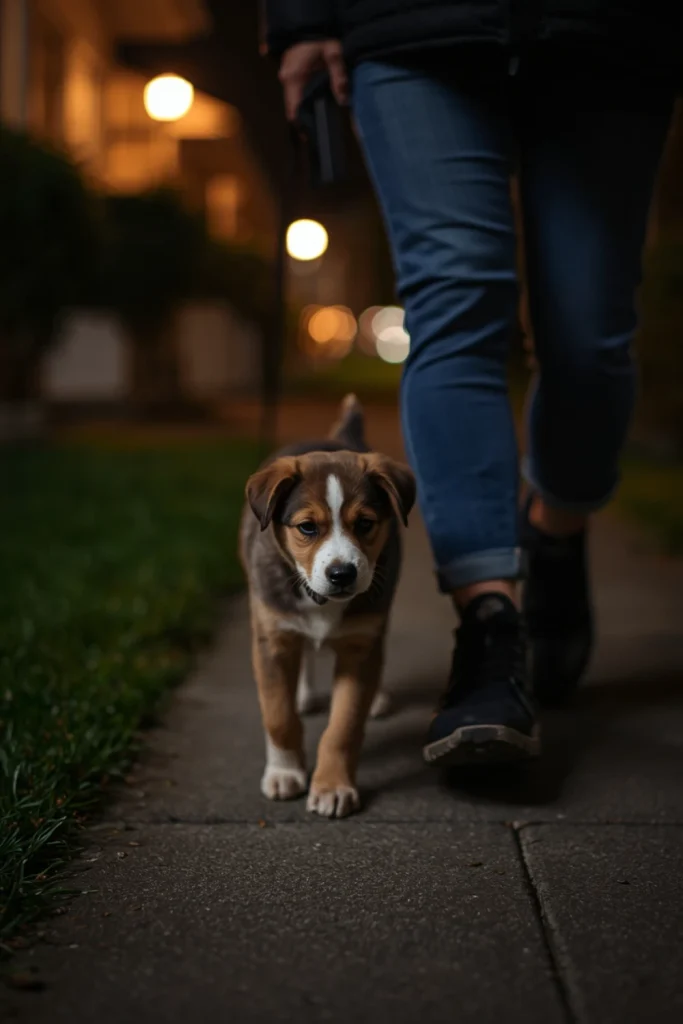
One of the most useful strategies for nighttime training is keeping bathroom trips quiet and predictable. Puppies can quickly learn that waking their owner leads to exciting attention or play if nighttime trips become entertaining. Instead, take your puppy outside, allow it to use the bathroom, offer calm praise, and return directly to bed.
Avoid turning on bright lights, starting games, giving long cuddles, or allowing your puppy to explore the entire house after a nighttime potty break. The purpose of the trip is simply to use the bathroom. A boring nighttime routine helps your puppy understand the difference between daytime activity and nighttime rest. As your puppy matures, this routine can make it easier to settle back to sleep after a bathroom break.
7. Avoid Punishment for Nighttime Accidents
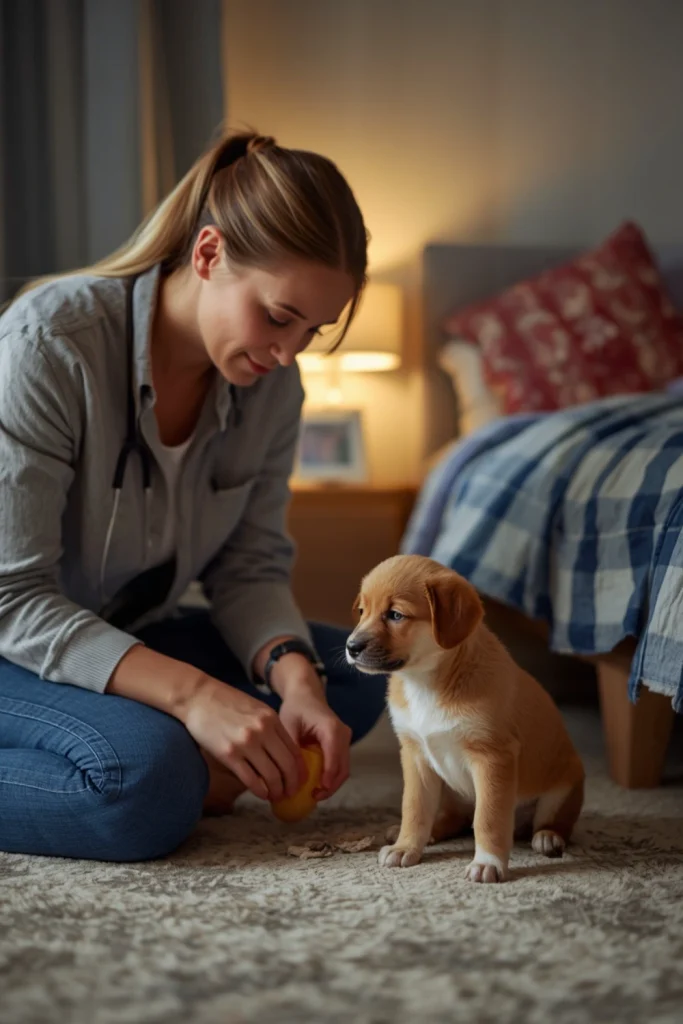
Accidents can happen during nighttime puppy potty training, especially when a puppy is very young. Punishing your puppy for an accident can create fear and confusion rather than teaching the correct behavior. Shouting, hitting, or rubbing your puppy’s nose in the mess does not explain where it should go next time. Instead, calmly clean the area and review your nighttime routine.
Use accidents as information. Perhaps the final potty trip happened too early, your puppy drank more water than usual, or it simply needs another nighttime break because of its age. Adjust the schedule rather than becoming frustrated with your puppy. If your puppy consistently wakes up around the same time to use the bathroom, you may be able to anticipate the trip and gradually adjust the routine as bladder control improves.
8. Gradually Increase Overnight Sleeping Time
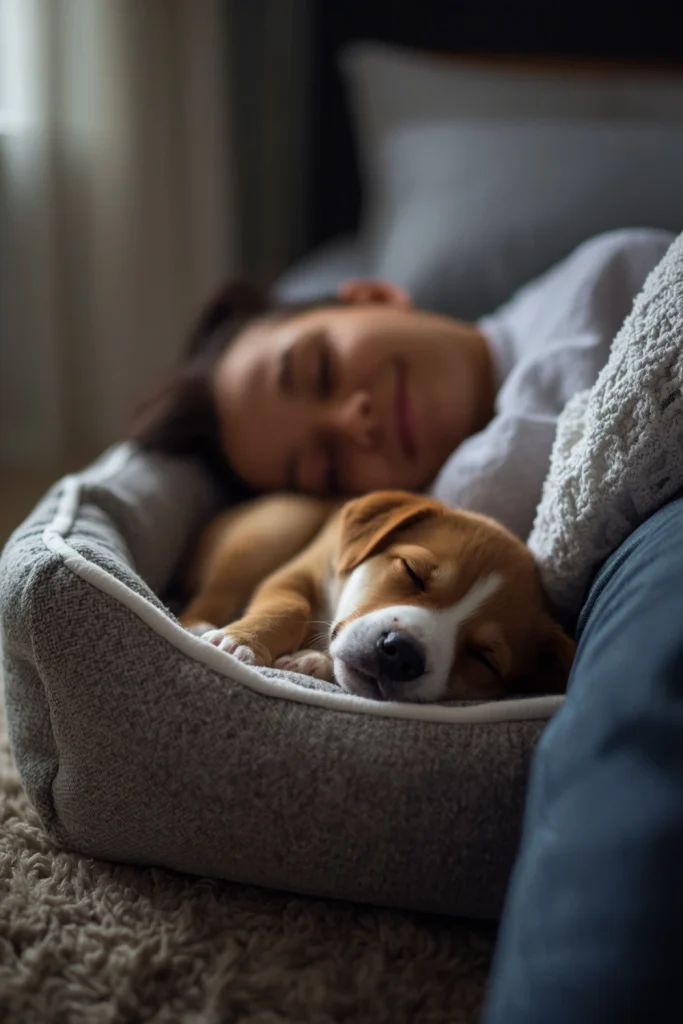
As your puppy becomes more reliable, you can gradually increase the amount of time between nighttime bathroom trips. Do not rush this process. If your puppy consistently stays dry and sleeps comfortably until a certain time, you can slowly extend the interval. Watch your puppy’s behavior and adjust the routine according to its needs.
Progress may not always be perfectly linear. A puppy may sleep through the night for several days and then suddenly have an accident. Changes in routine, increased water intake, stress, illness, excitement, or developmental changes can affect bathroom habits. If setbacks occur, return to a more frequent schedule temporarily. With continued consistency, many puppies gradually become capable of sleeping for longer periods without needing a bathroom break.
Final Thoughts
Successful Puppy Potty Training at Night is built on patience, consistency, and realistic expectations. Young puppies are still developing bladder control, so nighttime accidents should not automatically be viewed as bad behavior. A predictable bedtime routine, final potty trip, appropriate sleeping area, and calm nighttime bathroom breaks can make the process much easier.
Pay attention to your puppy’s signals and gradually adjust the schedule as your puppy grows. Avoid punishment, reward successful bathroom trips, and remember that occasional setbacks are normal. With time and consistent practice, your puppy can gradually learn to stay comfortable and dry for longer periods and eventually sleep through the night.