
12 Easy Dog Commands You Can Teach This Week
Teaching your dog new commands does not have to take months or require complicated equipment. With short, consistent sessions and the right rewards, you can start building useful behaviors in just a few minutes a day. These Easy Dog Commands are designed to be practical, beginner-friendly, and simple to practice at home.
Whether you have a young puppy, an adult dog, or a recently adopted companion, training can improve communication and everyday manners. In this guide, you will learn 12 easy commands you can start teaching this week, along with practical training methods, common mistakes, reward ideas, and tips for helping your dog succeed.
1. Teach Your Dog to Respond to Its Name
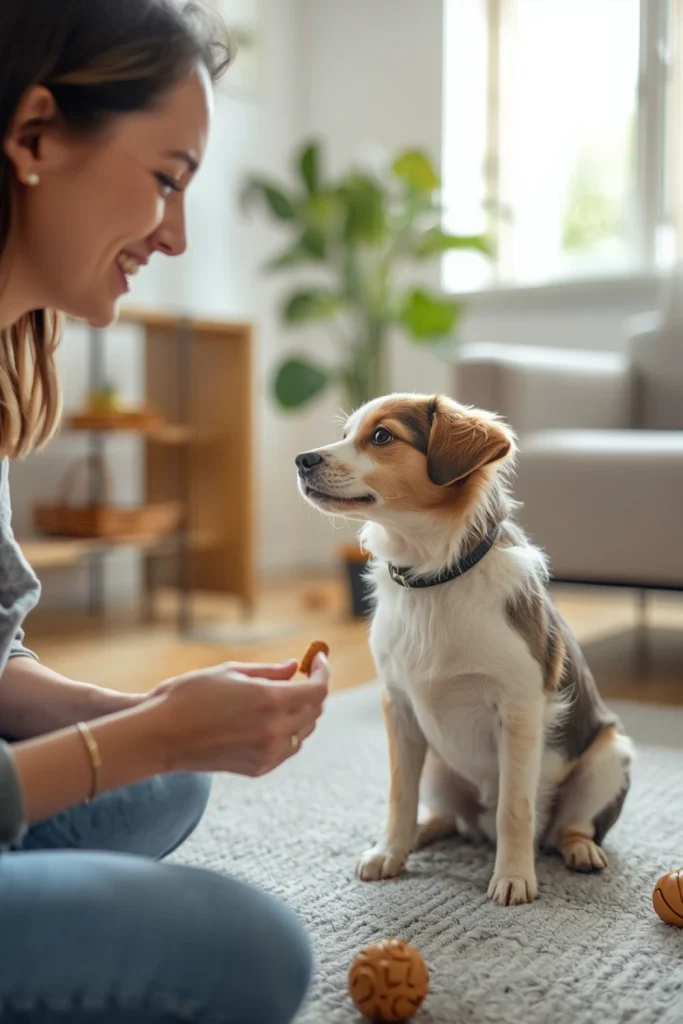
Name recognition is one of the easiest skills to practice and an important foundation for other Easy Dog Commands. Your dog’s name should become a cue that means, “Pay attention to me.” Start in a quiet room with minimal distractions. Say your dog’s name once in a cheerful voice. When your dog looks toward you, immediately praise and reward it.
Repeat this exercise several times during the day. Avoid using your dog’s name repeatedly when you are angry or when you are about to do something your dog dislikes. You want the name to have a positive association. As your dog improves, practice in different rooms and gradually introduce mild distractions.
2. Teach the “Sit” Command
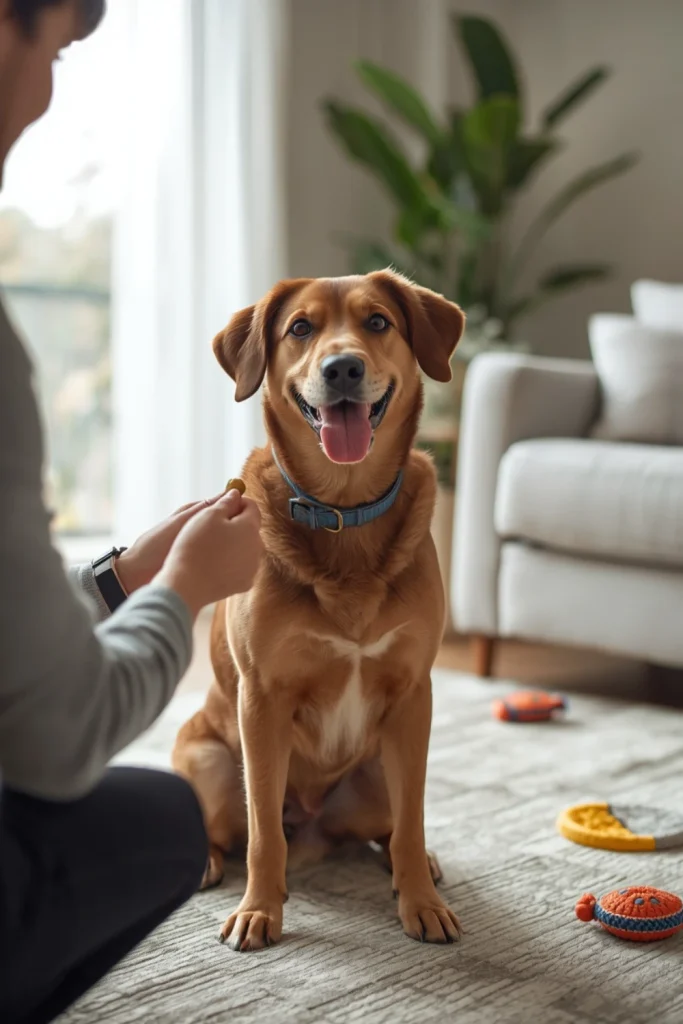
“Sit” is one of the most familiar dog commands because many dogs naturally perform the movement. It can be useful before meals, during greetings, at doors, and whenever you want your dog to pause and focus. Start by holding a small treat close to your dog’s nose.
Slowly move the treat upward and slightly backward. As your dog’s head follows the reward, its bottom may naturally move toward the floor. The moment your dog sits, say “sit,” praise it, and give the reward. After several repetitions, begin saying the command before guiding the movement. Practice in short sessions and gradually reduce your reliance on the treat as a lure.
3. Teach the “Come” Command
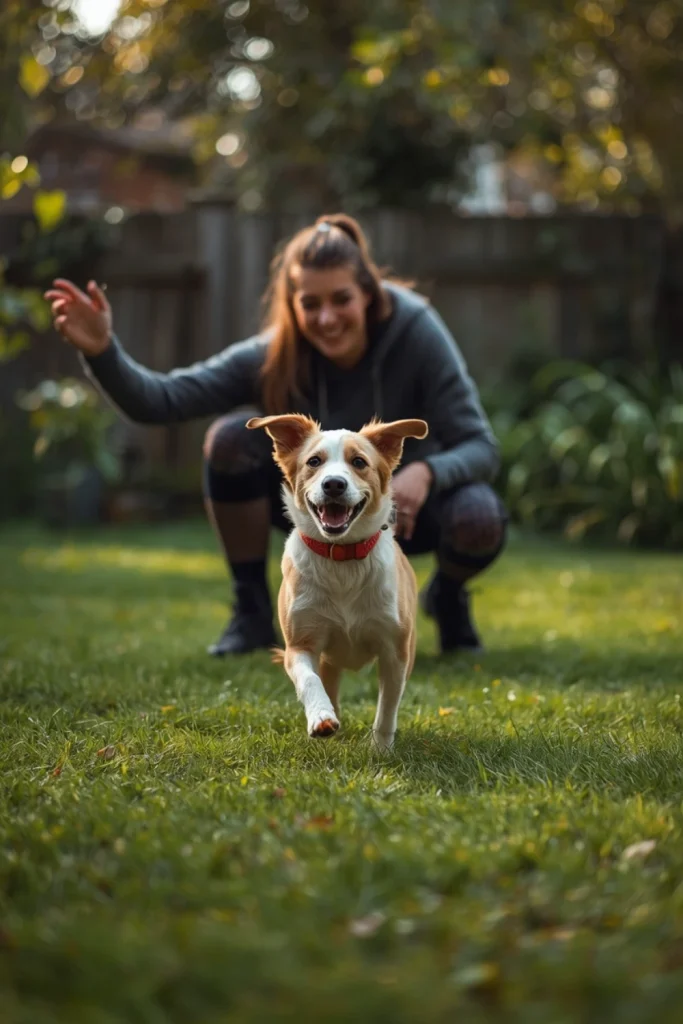
“Come” is one of the most valuable commands for everyday safety. It teaches your dog to return to you when called and can be useful during walks, playtime, and unexpected situations. Start recall training somewhere secure and quiet, such as inside your home or a safely enclosed yard.
Say your dog’s name followed by “come” in an enthusiastic voice. Move a few steps backward and encourage your dog to follow you. When it reaches you, reward immediately with praise, a treat, or a favorite toy. Make coming to you rewarding. Avoid repeatedly calling your dog for unpleasant experiences, because this can weaken the positive association with the command.
4. Teach the “Stay” Command
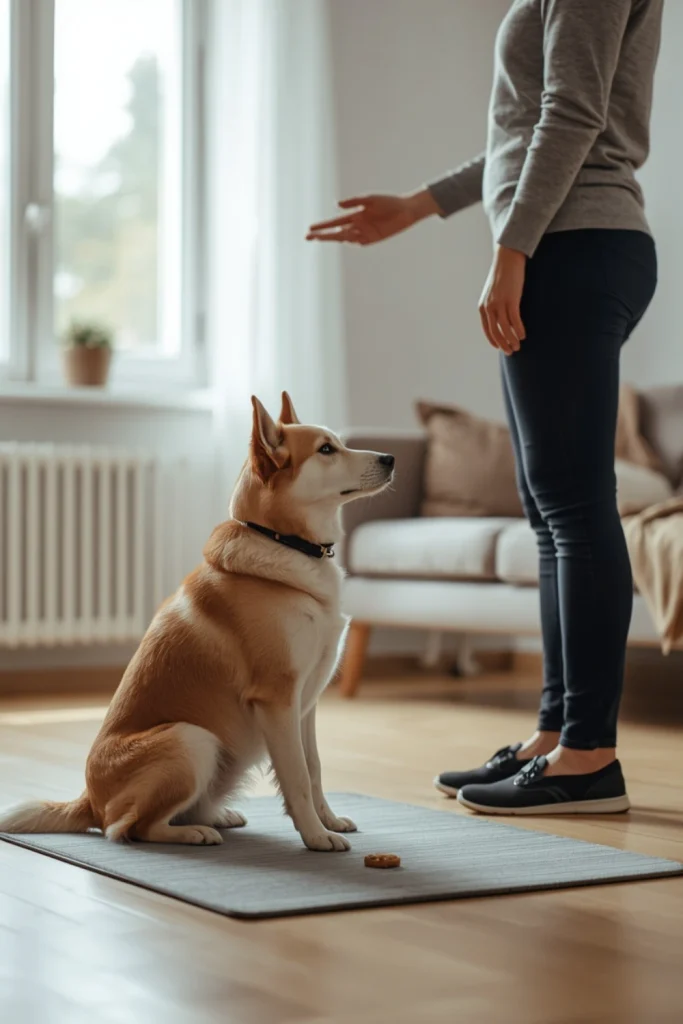
“Stay” teaches your dog to remain in a specific position until you provide another cue. This can be useful when answering the door, preparing food, moving around the house, or managing situations where your dog needs to remain in one place. Begin with your dog sitting comfortably.
Give the “stay” cue and use a clear hand signal. Wait for one or two seconds, then return to your dog and reward the behavior. Gradually increase the duration, distance, and distractions, but change only one factor at a time. If your dog gets up, calmly reset and make the next repetition easier. Successful training depends more on gradual progress than on forcing long stays immediately.
5. Teach the “Down” Command
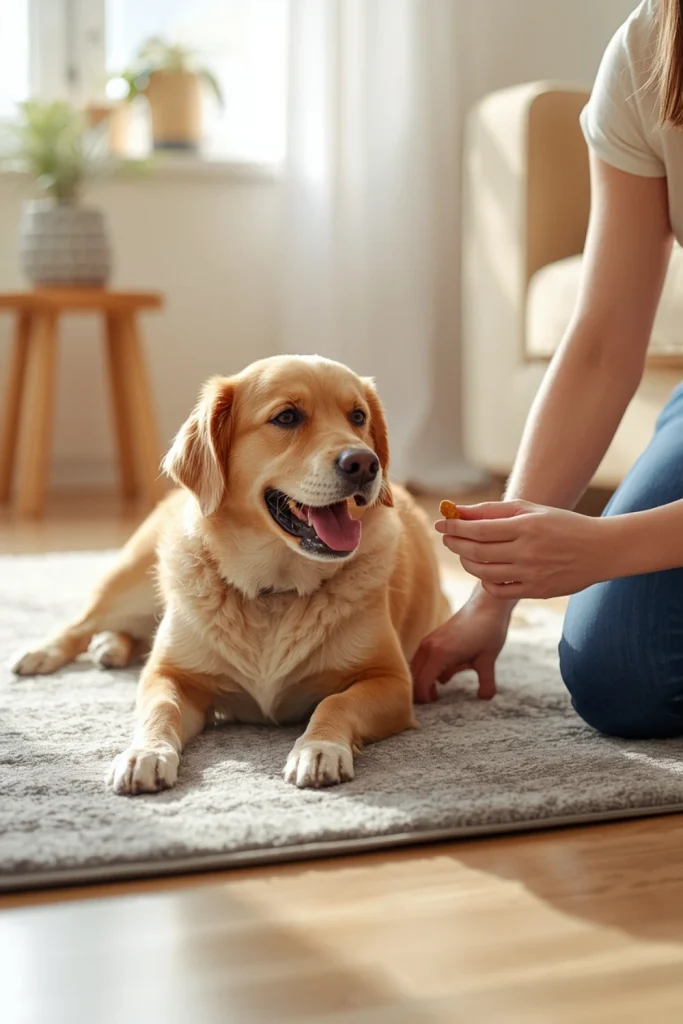
The “down” command teaches your dog to lie on the floor. It can encourage calm behavior and provide a useful alternative when your dog is overly excited. It is also a helpful foundation for teaching longer periods of relaxation.
Start with your dog sitting. Hold a treat near its nose and slowly lower your hand toward the floor, then move it slightly forward. When your dog follows the treat and lies down, say “down,” praise it, and provide the reward. Do not physically force your dog into position. Some dogs may find the movement difficult at first, so give them time and practice on a comfortable, non-slip surface.
6. Teach the “Wait” Command
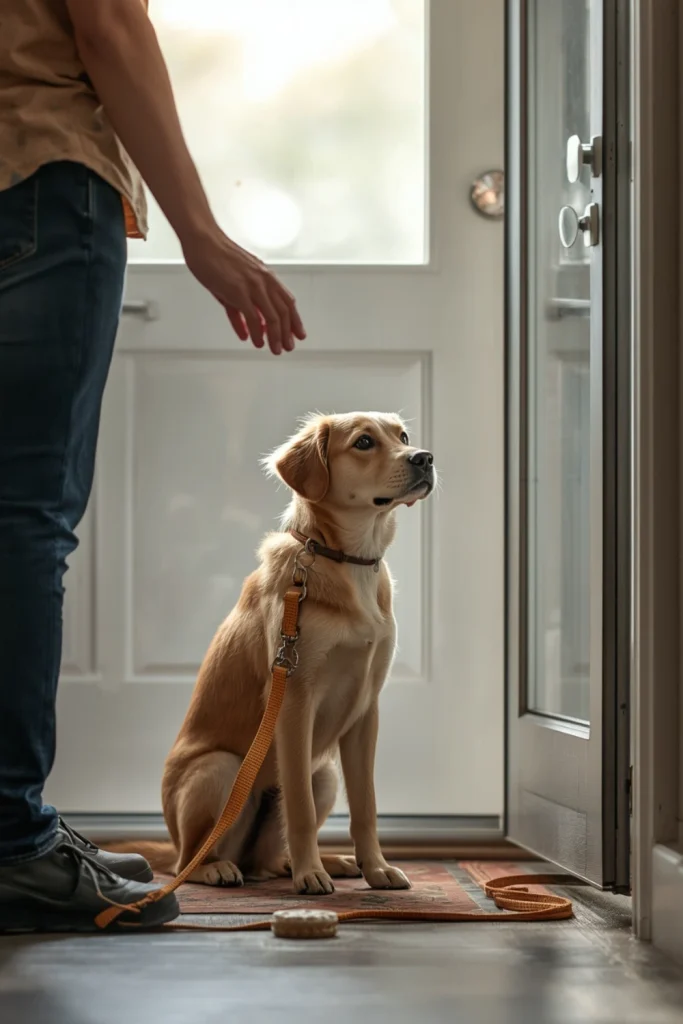
“Wait” is useful when you want your dog to pause temporarily before moving forward. You might use it at a doorway, before getting out of a car, before crossing a safe path, or while preparing a meal. Unlike a long-duration “stay,” wait can be used for brief moments of self-control.
Begin with a simple situation. Ask your dog to sit, say “wait,” and pause for just a second. Reward your dog for remaining in place. Gradually increase the time or introduce small movements. For example, you might reach toward a door before returning and rewarding your dog. Always increase difficulty gradually so your dog has a realistic opportunity to succeed.
7. Teach “Leave It”
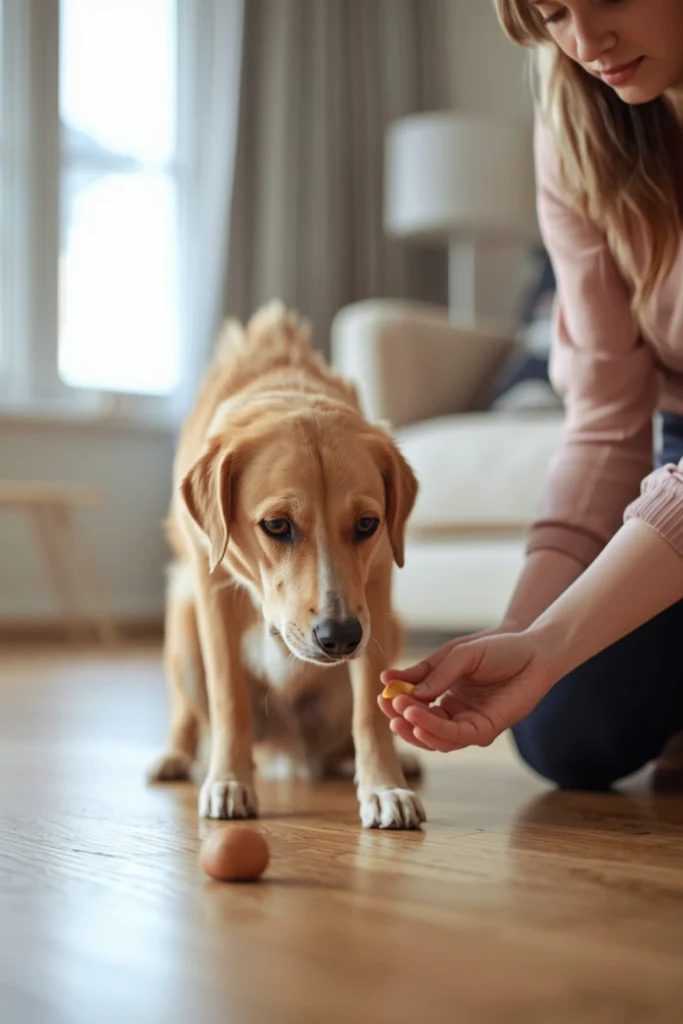
“Leave it” is one of the most practical Easy Dog Commands because dogs naturally investigate objects with their noses and mouths. The command can help teach your dog not to approach or pick up something you want it to ignore.
Start with a safe, low-value object and keep a better reward hidden in your other hand. When your dog stops trying to reach the object or turns toward you, reward it. Gradually introduce different safe objects and environments. Avoid using dangerous objects during practice. The purpose is to teach your dog that choosing to disengage from an item and focus on you leads to a positive outcome.
8. Teach “Drop It”
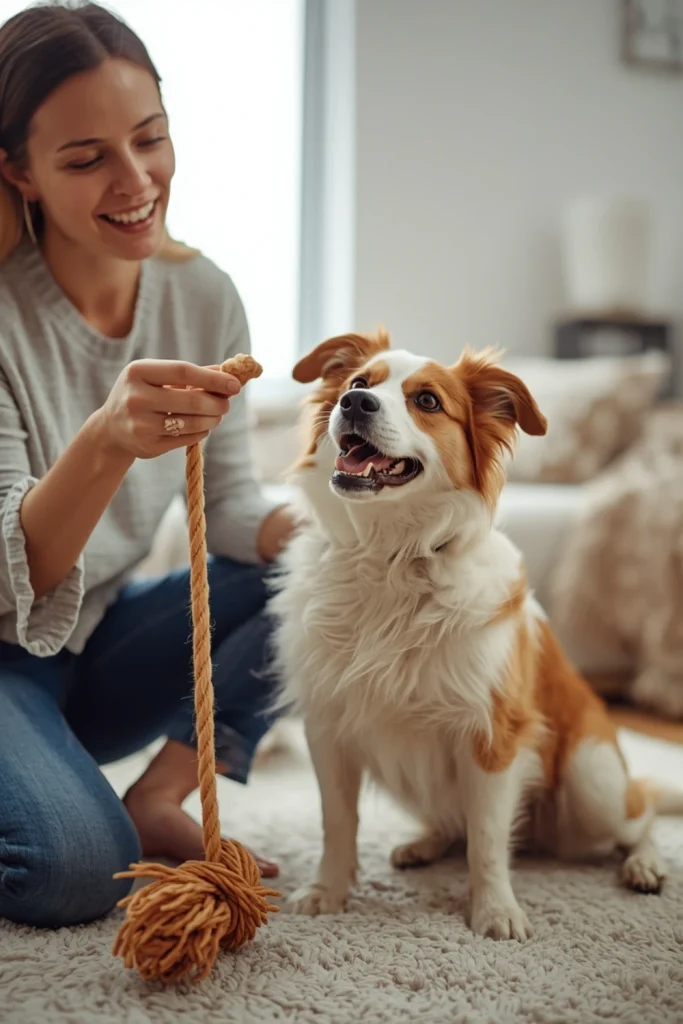
“Drop it” teaches your dog to release an object already in its mouth. This command is especially useful during toy games and can help when your dog picks up something inappropriate.
Begin with a toy your dog enjoys. Allow your dog to hold the toy, then present a more valuable reward. When your dog releases the toy, calmly say “drop it” and give the reward. When appropriate, return the toy so your dog learns that releasing an object does not necessarily mean losing it forever. Avoid chasing your dog for objects, as chasing can turn the situation into a fun game and encourage your dog to run away with things.
9. Teach Your Dog to Walk Nicely on a Leash
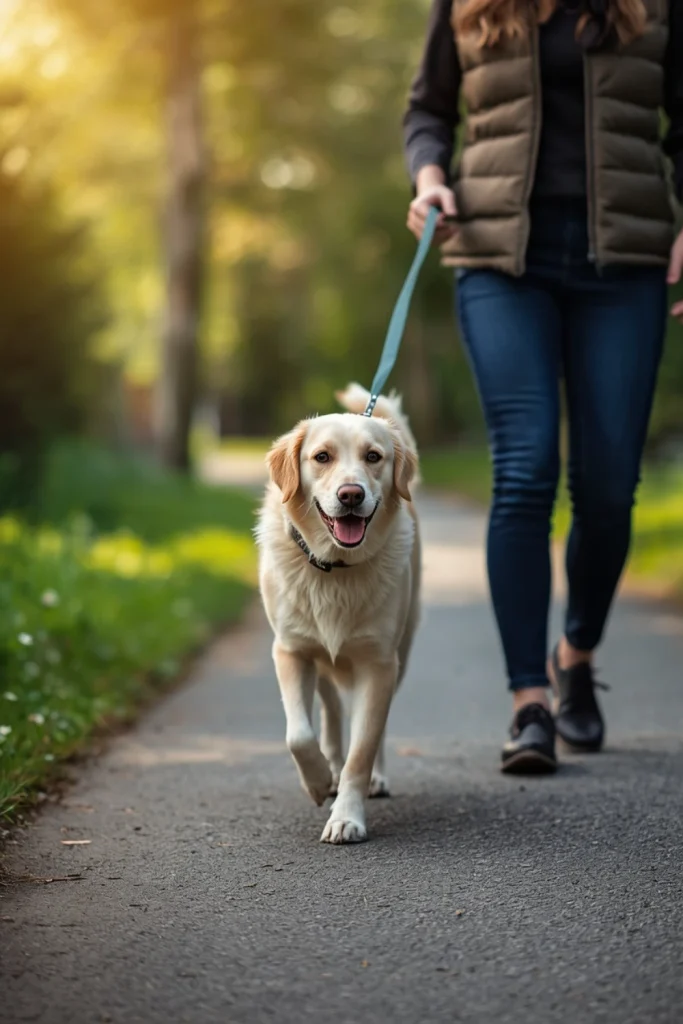
Loose-leash walking is an important everyday skill. You do not necessarily need your dog to walk perfectly beside your leg at every moment, but teaching your dog not to constantly pull can make walks more comfortable and manageable.
Start in a quiet area with limited distractions. Reward your dog whenever it walks near you with a loose leash. If your dog pulls strongly, stop or change direction instead of allowing pulling to take you toward whatever has caught its attention. Reward your dog when it returns focus to you. Gradually practice around mild distractions and increase the challenge as your dog’s walking skills improve.
10. Teach “Off” to Stop Jumping
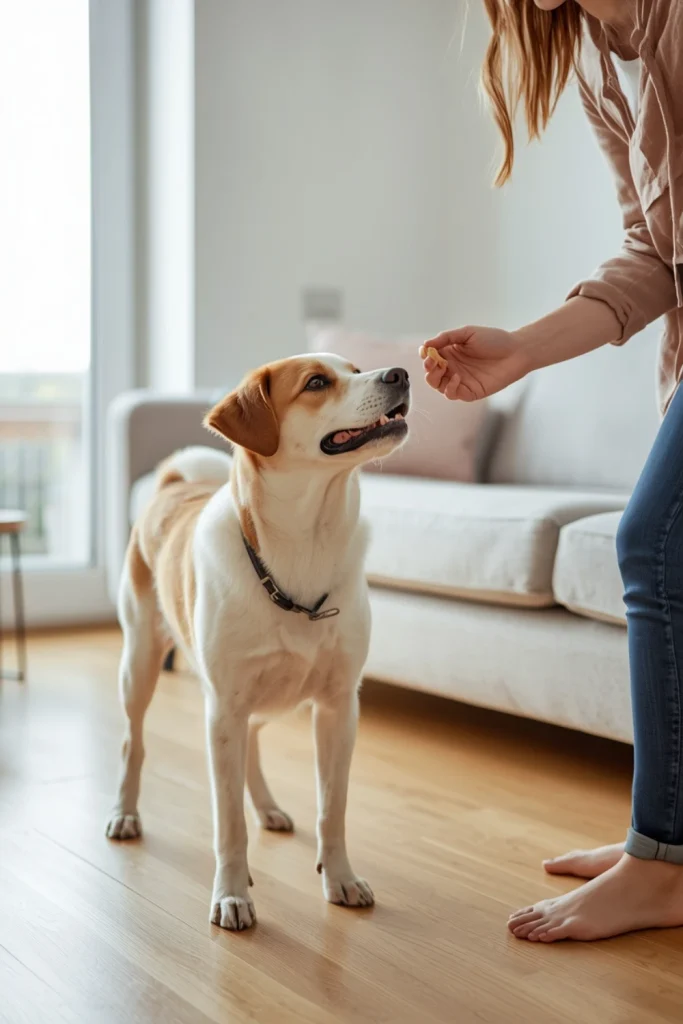
Many dogs jump on people because they have learned that jumping gets attention. Teaching an “off” cue can help you manage this behavior while also teaching your dog that calm behavior is more rewarding.
When your dog jumps onto you or another inappropriate surface, stay calm and avoid turning the moment into an exciting interaction. Use the “off” cue and encourage your dog back onto the floor. Once all four paws are down, reward calm behavior. Everyone in the household should respond consistently. If jumping sometimes receives attention and sometimes does not, your dog may continue trying the behavior.
11. Teach Your Dog “Place”
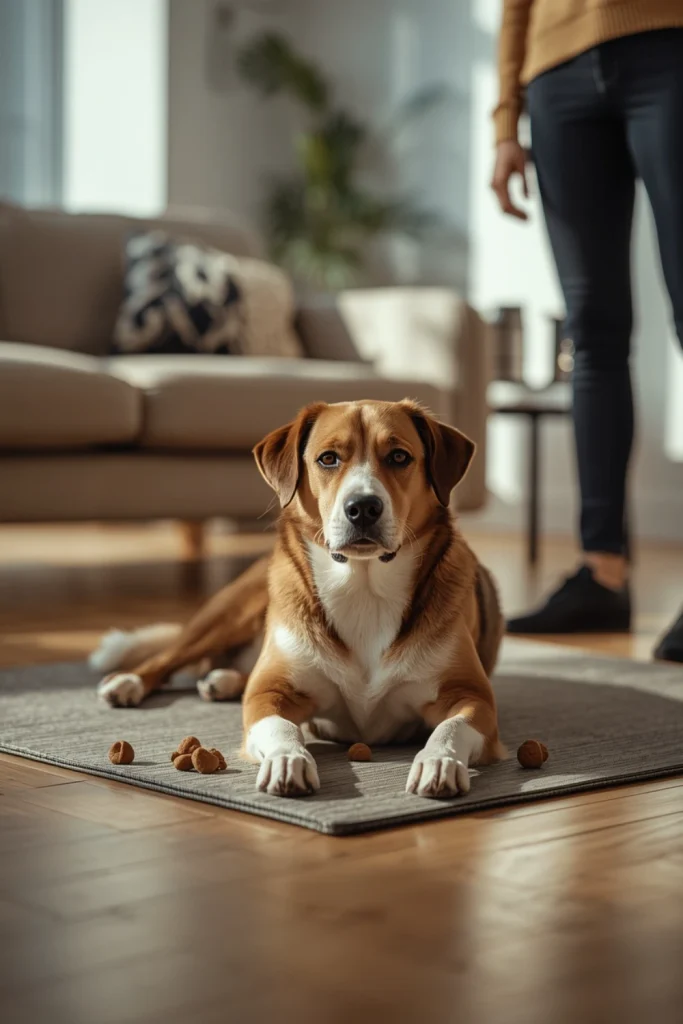
The “place” command teaches your dog to move to a specific bed, mat, or designated area. It can be helpful when guests arrive, during meals, while you are cooking, or whenever you need your dog to settle in a predictable location.
Choose a comfortable mat and make it rewarding. Encourage your dog to step onto it, then reward. Add the word “place” as your dog begins understanding the behavior. Gradually increase the amount of time your dog remains on the mat. Practice while you move around the room. Eventually, your dog can learn that its place is a safe and comfortable area where calm behavior is rewarded.
12. Teach Your Dog to Focus on You
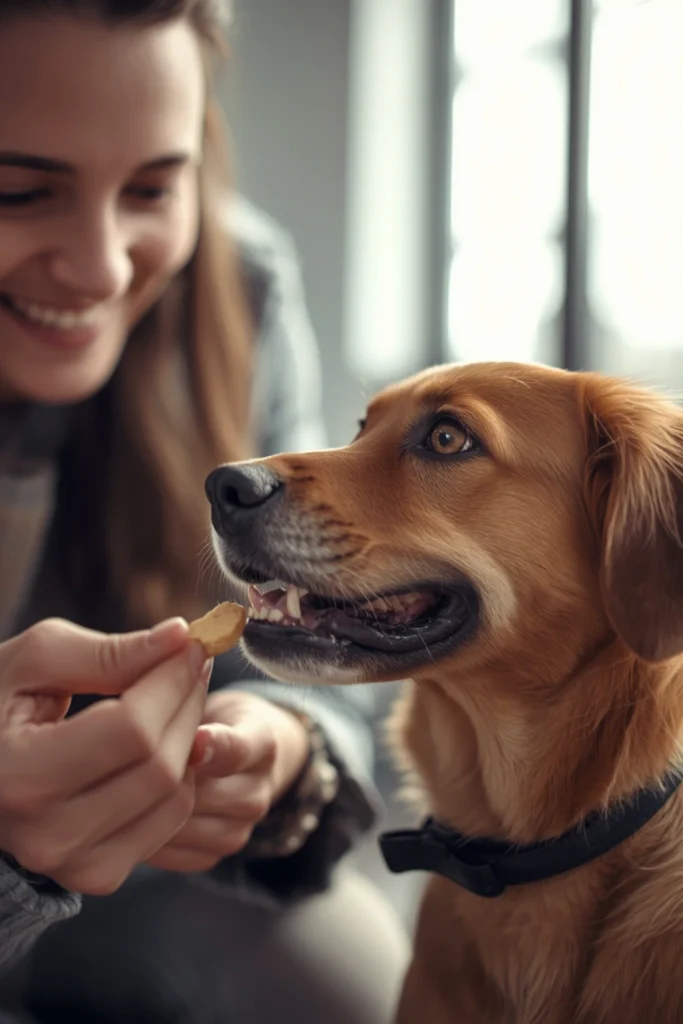
Teaching your dog to look at you on cue is an excellent foundation for many other Easy Dog Commands. When your dog can shift its attention toward you, it becomes easier to communicate during walks, training sessions, and distracting environments.
Start in a quiet room. Say your dog’s name or use a simple attention cue, then reward the moment your dog looks toward you. Repeat several times without demanding a long stare. Once the behavior becomes familiar, practice while standing farther away and around mild distractions. The goal is not to force your dog to stare continuously but to teach it that checking in with you is worthwhile.
Final Thoughts
These Easy Dog Commands can give you a practical starting point for building better communication with your dog. From name recognition and sit to recall, stay, leave it, drop it, leash walking, place, and attention, each command can serve a useful purpose in everyday life.
The most important part of training is consistency. Keep sessions short, reward the behaviors you want, practice in different environments, and increase distractions gradually. Do not expect perfection after a few sessions. Your dog is learning a new language, and progress takes repetition.
If you dedicate a few minutes each day to training, you can gradually turn these simple commands into reliable everyday skills. Most importantly, make training a positive experience. A dog that enjoys learning is more likely to stay engaged, and regular training can strengthen the bond between you and your canine companion.