
15 Simple Puppy Training Ideas to Try at Home
A new puppy can bring endless happiness into your home, but those playful paws and curious habits also come with a learning curve. The good news is that puppy training does not have to be complicated. With a little patience, consistency, and the right approach, everyday moments can become valuable training opportunities.
These Simple Puppy Training Ideas are designed for beginners who want to train their puppies at home. From teaching basic commands and potty habits to improving recall, reducing biting, and encouraging calm behavior, these practical ideas can help you raise a confident and well-mannered companion.
1. Teach Your Puppy to Recognize Its Name
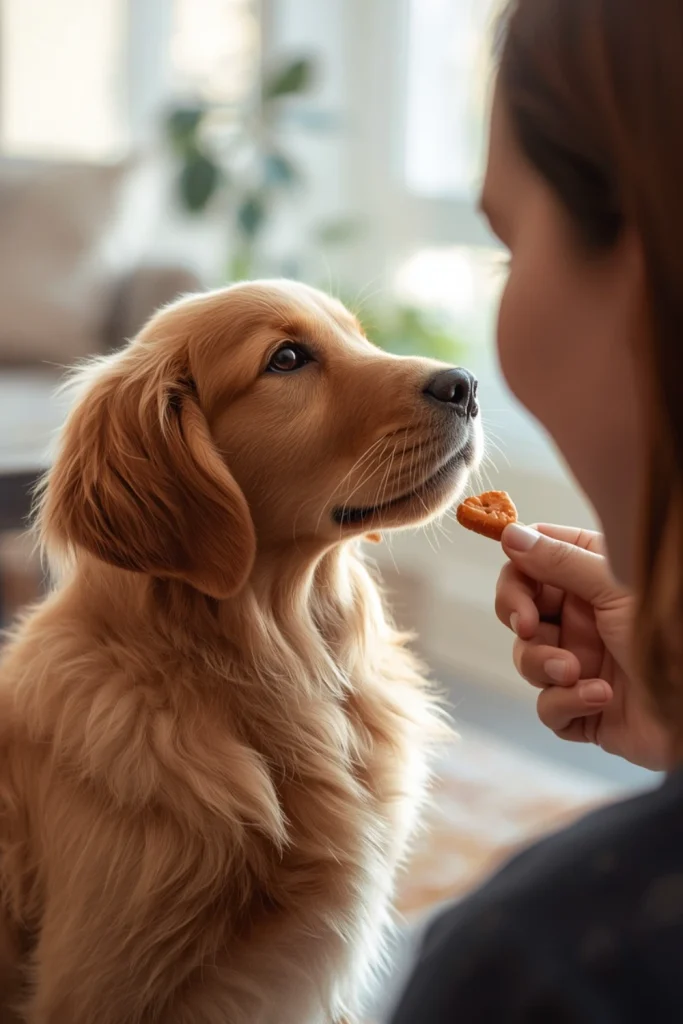
One of the best Simple Puppy Training Ideas for beginners is teaching a puppy to recognize its name. A puppy’s name becomes an important communication tool because it can be used to get their attention before giving other commands. Start in a quiet room where there are few distractions.
Say your puppy’s name once using a happy, friendly voice. When your puppy looks toward you, immediately offer praise and a small reward. Repeat this exercise several times throughout the day. Keep the sessions short because young puppies can lose concentration quickly.
Avoid using your puppy’s name repeatedly when correcting unwanted behavior. You want your puppy to associate their name with positive experiences. Once they reliably respond indoors, practice in other rooms and eventually in safe outdoor environments where there are more distractions.
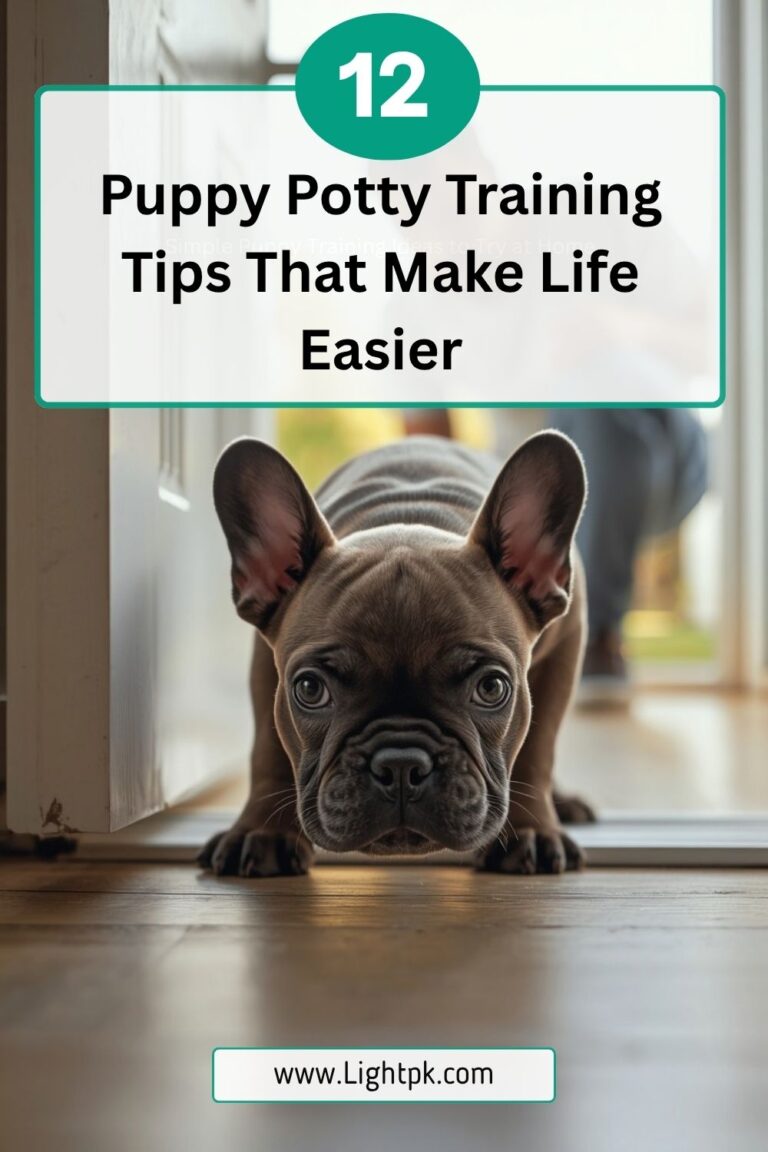
2. Create a Simple Potty Training Routine
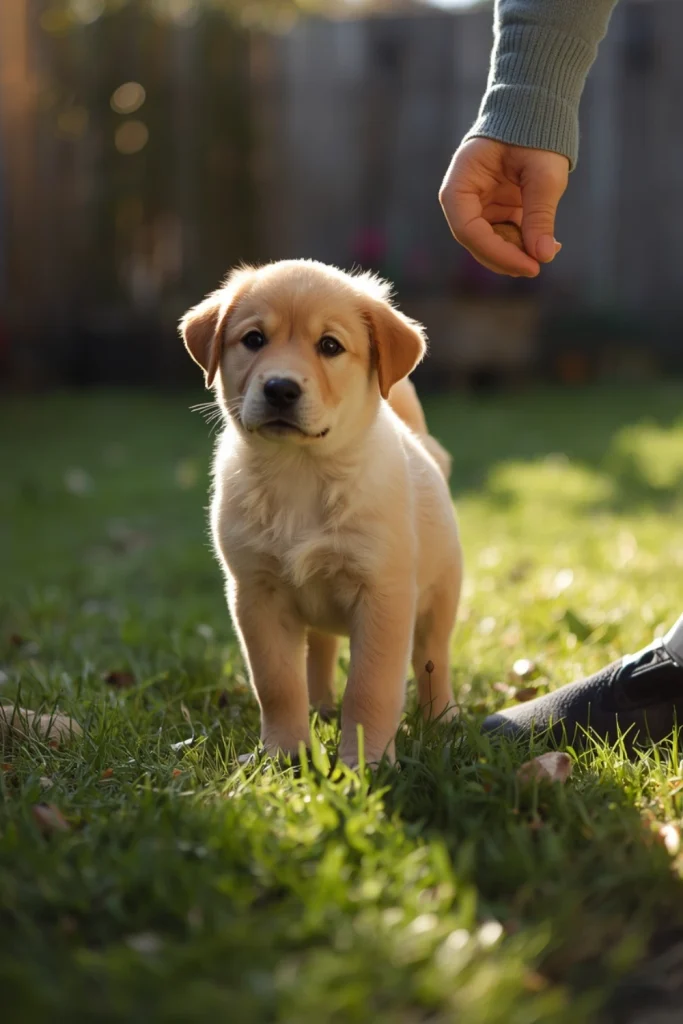
Potty training is one of the first challenges most new puppy owners face. A consistent routine can make the process easier to understand. Take your puppy to the appropriate bathroom area after waking, eating, drinking, playing, and sleeping. Young puppies often need frequent opportunities because their bladder control is still developing.
When your puppy eliminates in the correct location, provide immediate praise and an appropriate reward. The timing matters because your puppy needs to connect the reward with the behavior. If an accident happens inside, remain calm and clean the area thoroughly rather than frightening the puppy.
A predictable routine helps your puppy understand what is expected. Keep track of bathroom breaks if necessary, especially during the early weeks. As your puppy grows and becomes more reliable, you can gradually extend the time between bathroom opportunities.
3. Teach the Sit Command
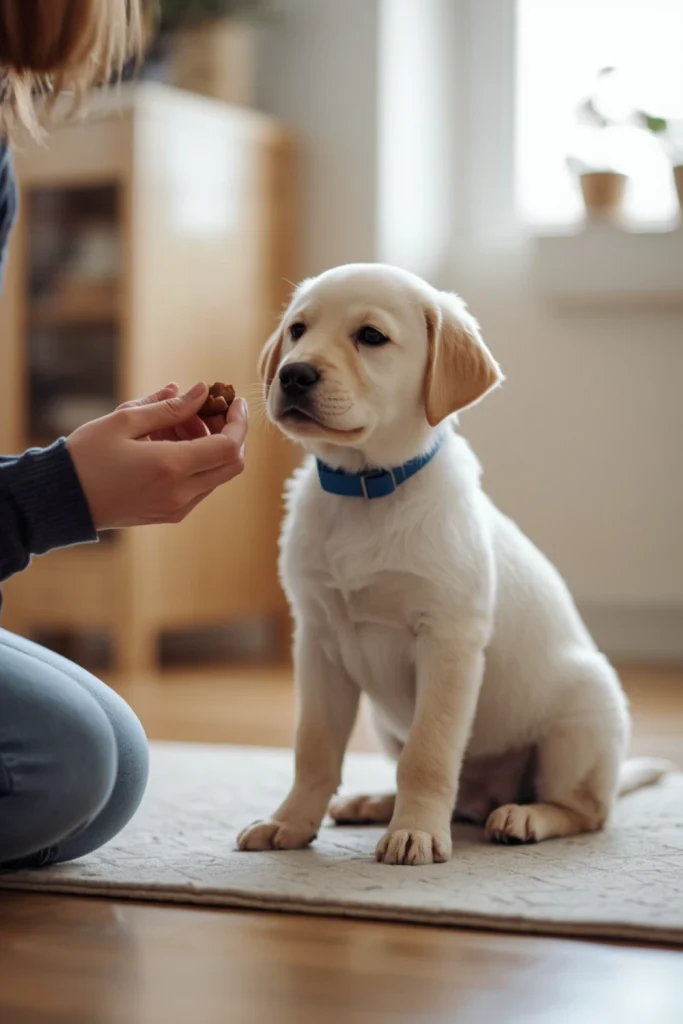
“Sit” is one of the easiest commands for a puppy to learn and is useful in many everyday situations. You can use it before meals, before opening doors, during greetings, or when your puppy needs to calm down. It also introduces the basic idea that following a cue can lead to a reward.
Hold a small treat near your puppy’s nose and slowly move it upward and slightly backward. As your puppy follows the treat, their bottom will naturally move toward the floor. When they sit, say “sit,” praise them, and provide the reward.
Practice the behavior in a quiet environment before introducing distractions. Once your puppy understands the movement, begin using the verbal cue before guiding them into position. Over time, your puppy should learn to respond to the cue without needing the treat as a lure.
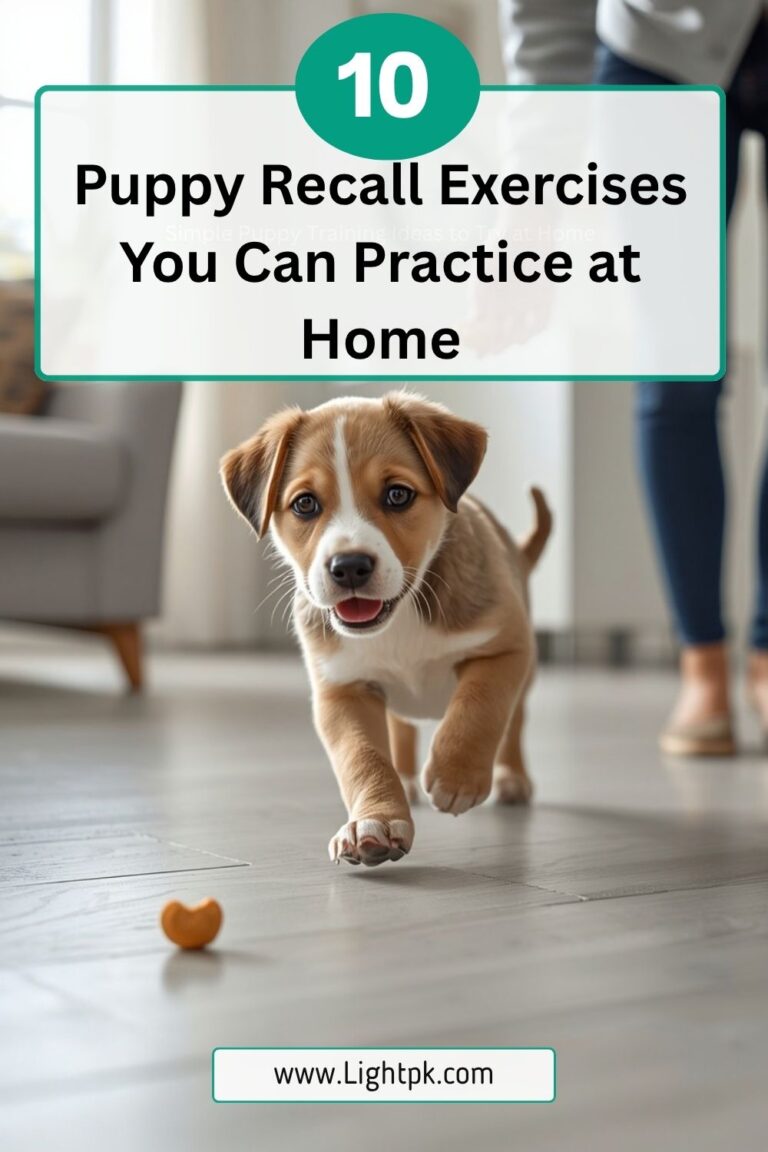
4. Practice the Come Command Indoors
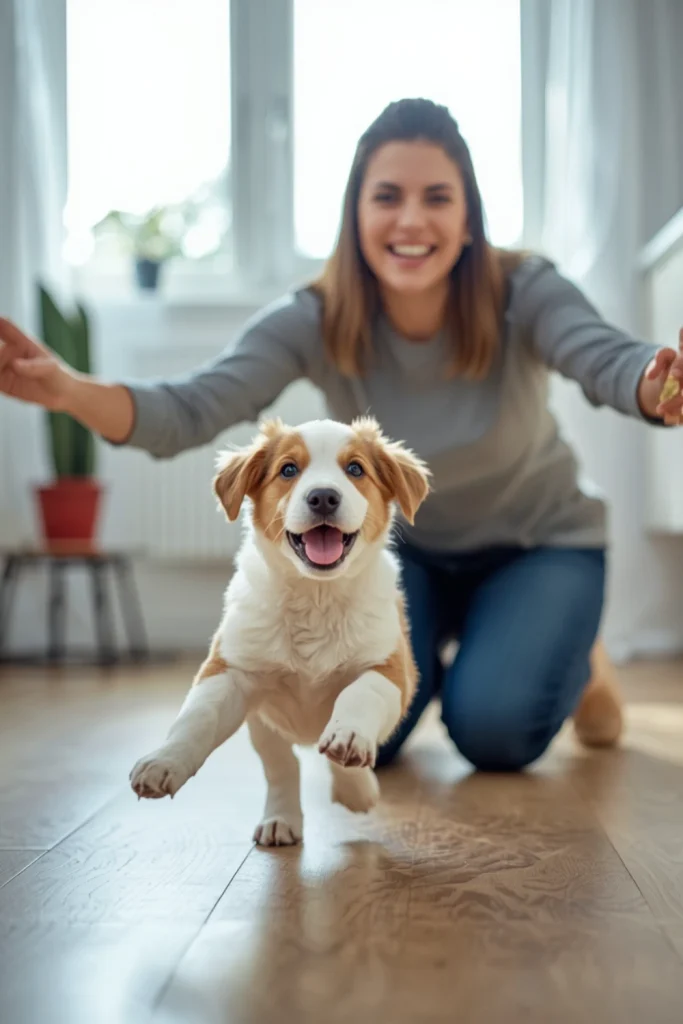
Teaching your puppy to come when called is an important skill and one of the most useful Simple Puppy Training Ideas. Starting indoors gives you a controlled environment where your puppy can practice without many distractions.
Ask a family member to hold your puppy or simply wait until your puppy is a short distance away. Say your puppy’s name followed by “come” in an enthusiastic voice. Encourage your puppy toward you and reward them generously when they arrive.
Make coming to you a positive experience. Avoid calling your puppy only when something unpleasant is about to happen, such as ending play every time. As your puppy improves, practice recall from different rooms and then in secure outdoor areas.
5. Reward Good Behavior Immediately
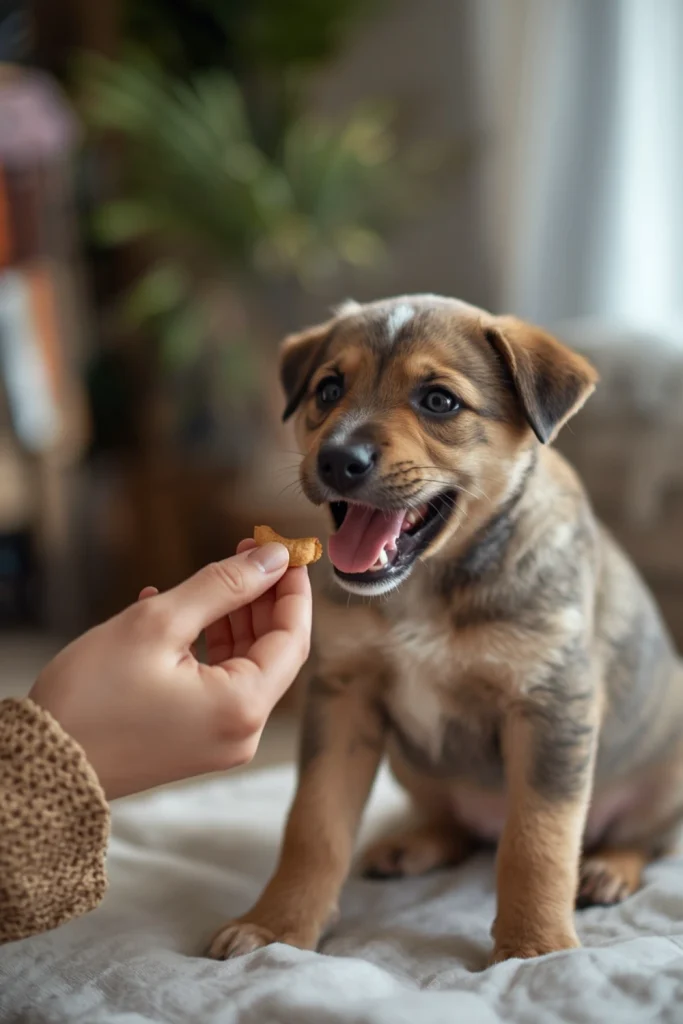
Puppies learn through consequences. When a behavior produces something enjoyable, they are more likely to repeat it. This is why positive reinforcement is one of the most effective Simple Puppy Training Ideas for new owners.
Whenever your puppy does something you want to encourage, provide a reward soon after the behavior. Rewards can include small treats, praise, toys, petting, or a short play session. For example, reward your puppy for sitting calmly rather than jumping on you.
Timing is important. If you wait too long, your puppy may not understand what earned the reward. Keep rewards small and vary them according to the situation. As your puppy becomes more reliable, you can gradually use praise, play, and other rewards alongside occasional treats.
6. Teach Your Puppy to Wait
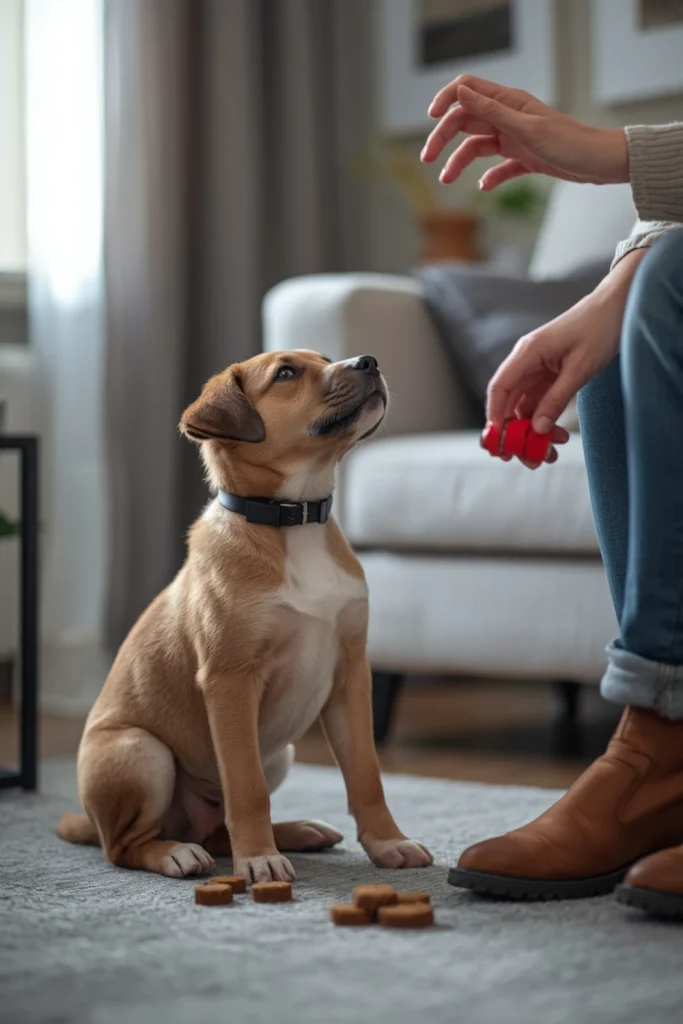
Puppies are naturally curious and excited, so they often want immediate access to food, toys, doors, and people. Teaching “wait” can help them develop patience and impulse control.
Begin with something your puppy wants, such as a food bowl or toy. Ask your puppy to sit, use a simple hand signal, and wait for a very short period. Then release your puppy and allow access to the reward. Start with only a second or two and gradually increase the duration.
Do not make the exercise too difficult. If your puppy repeatedly breaks the wait, shorten the duration. The goal is to build success gradually. You can eventually use “wait” before meals, at doors, when crossing safe areas, and during other daily routines.
7. Teach Your Puppy to Leave It
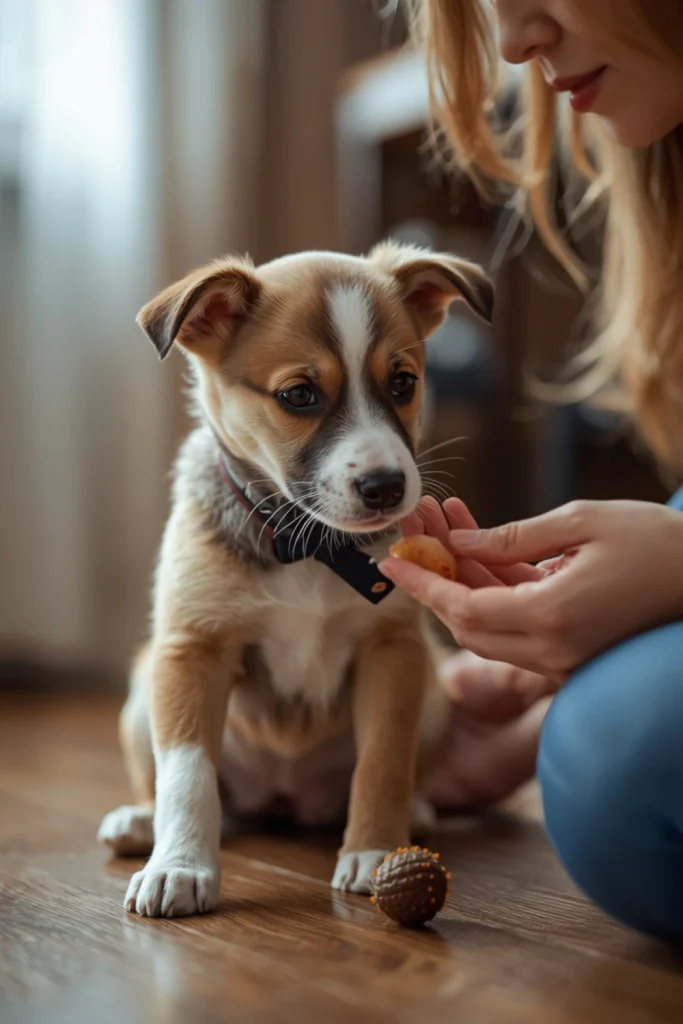
Puppies investigate the world with their mouths, which means they may try to pick up food, household objects, shoes, plants, or other things they should not have. Teaching “leave it” gives your puppy an alternative behavior when something interesting appears.
Start with a low-value object in your closed hand. Allow your puppy to investigate without giving access. When they stop trying to get the object or look away, reward them with something better. Once they begin understanding the exercise, add the verbal cue “leave it.”
Practice gradually with safe objects. Do not immediately test your puppy with highly distracting items. The goal is to teach them that ignoring an object can produce a rewarding outcome from you.
8. Stop Puppy Biting by Redirecting to Toys
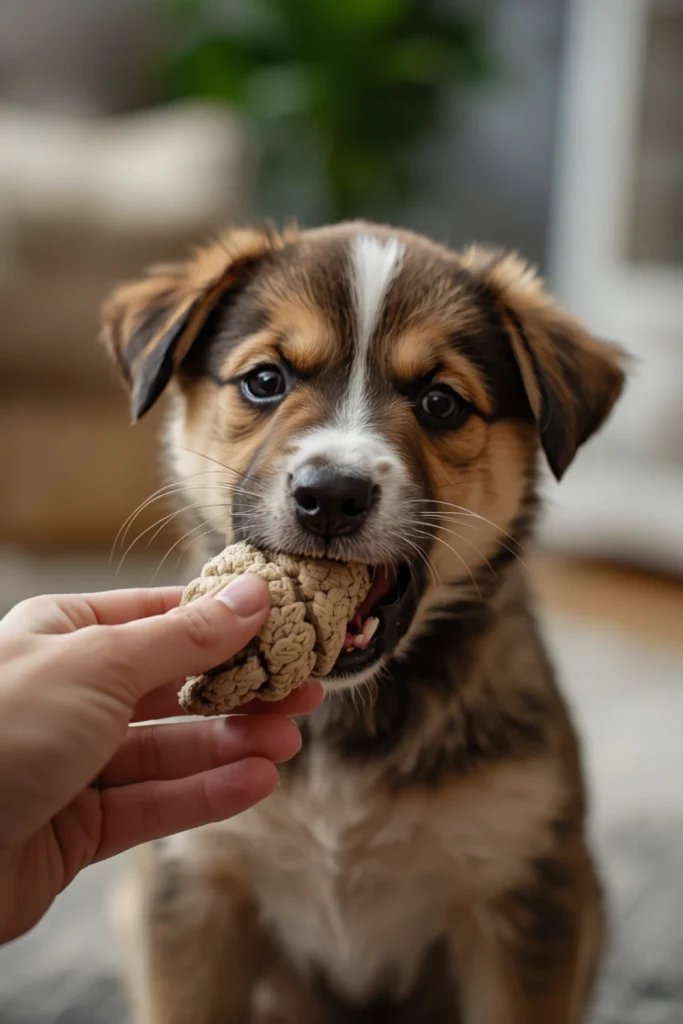
Mouthing and biting are common puppy behaviors, particularly during play and teething. Instead of trying to eliminate chewing completely, teach your puppy which objects are appropriate to chew.
If your puppy mouths your hand during play, calmly stop the interaction and offer a suitable puppy-safe toy. When the puppy begins chewing the toy, praise them. This teaches your puppy that toys are an appropriate outlet for chewing.
Everyone in the household should follow similar rules. Avoid encouraging rough games involving hands, clothing, or fingers. Keep suitable toys available and remove objects that could be dangerous if swallowed. With consistent redirection, your puppy can gradually develop better chewing habits.
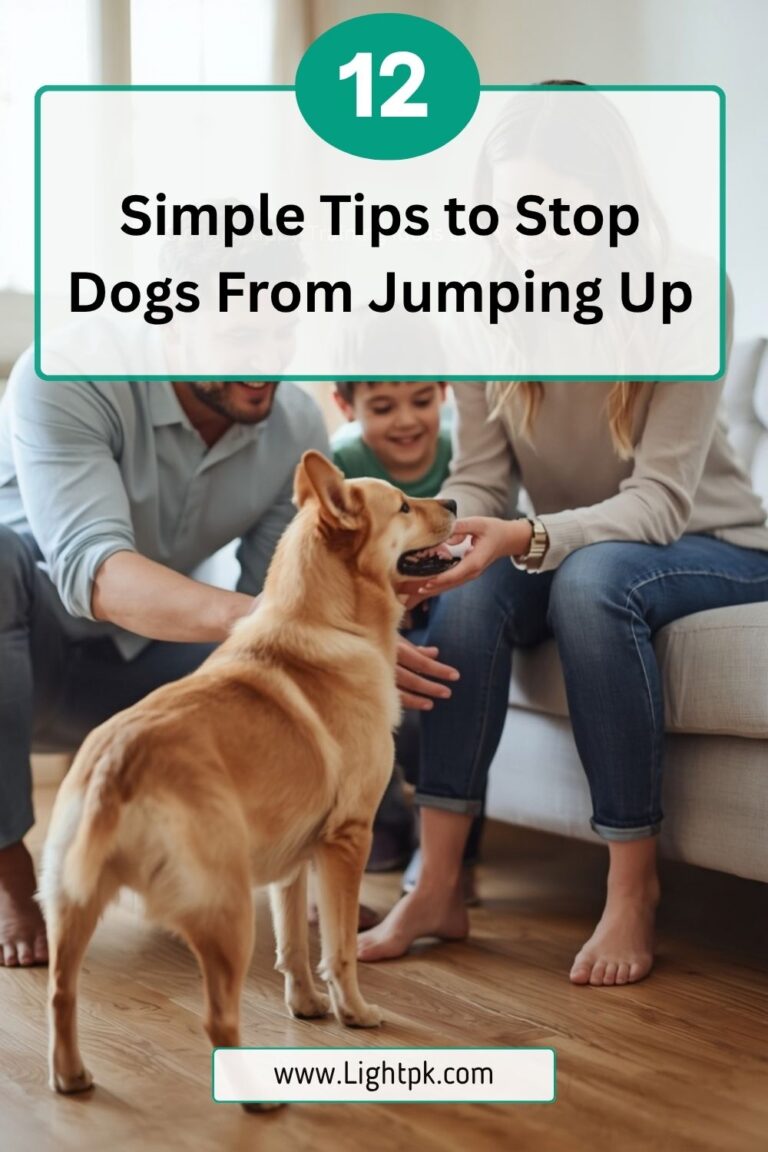
9. Teach Calm Greetings
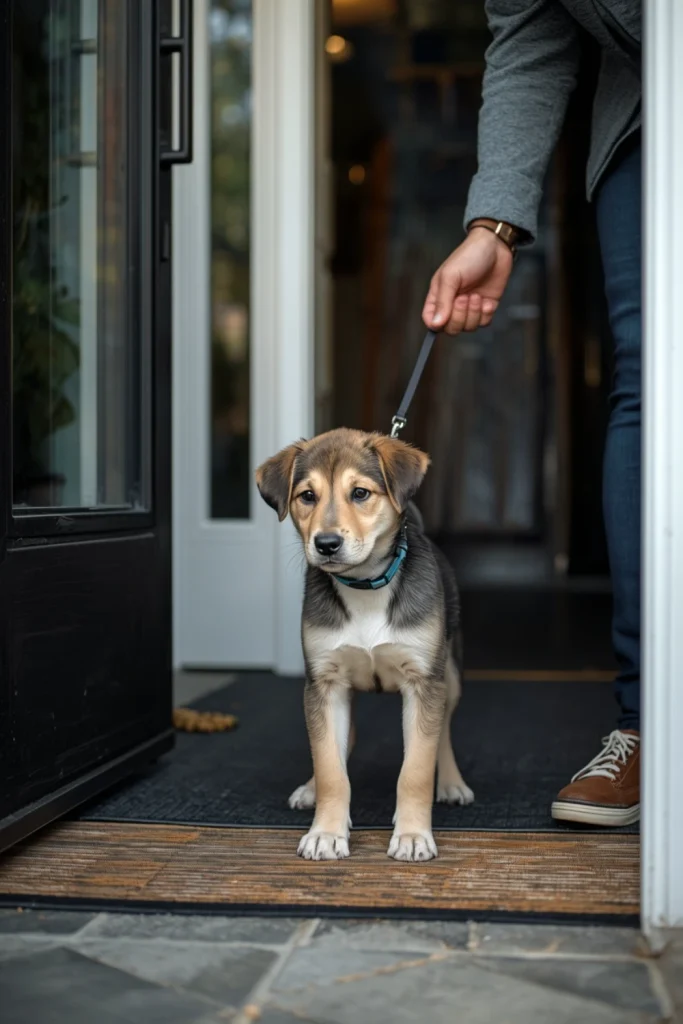
Puppies often become extremely excited when someone enters the house. Jumping, barking, running around, and grabbing clothing can make greetings difficult. Teaching calm greetings early can prevent these behaviors from becoming stronger habits.
Reward your puppy when they keep all four paws on the floor. If they jump, calmly remove attention and wait for them to settle. Once they are calm, provide praise or attention. Everyone who interacts with the puppy should follow the same approach.
You can also teach your puppy to sit when greeting people. Practice first with familiar family members before introducing visitors. Keep greetings calm and short, especially if your puppy becomes overstimulated.
10. Introduce Leash Training Inside the Home
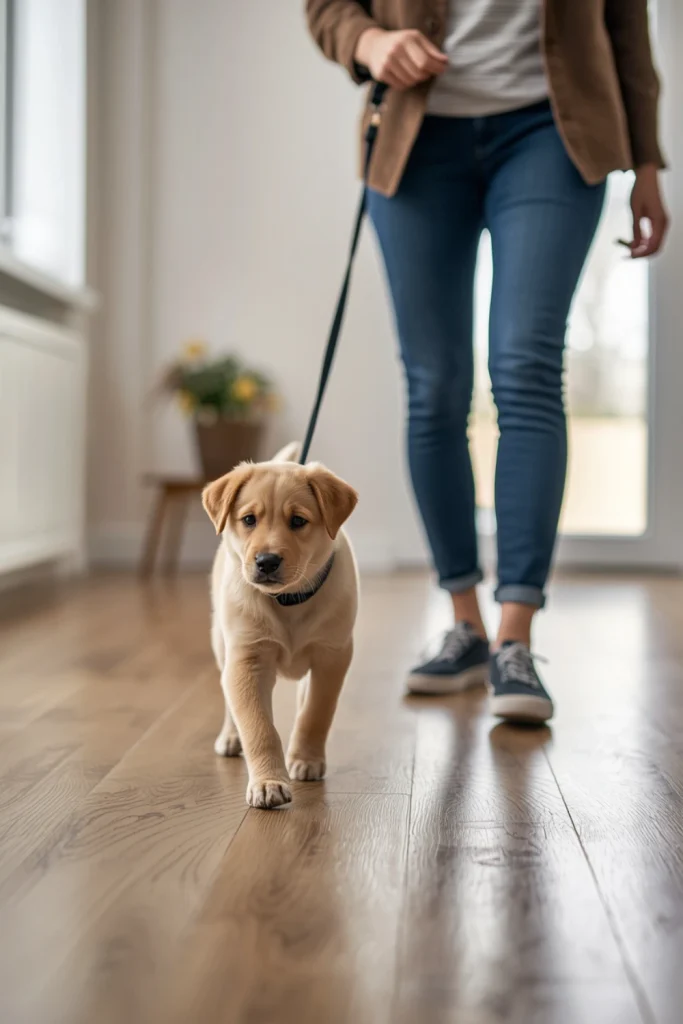
A puppy may initially find a leash strange or uncomfortable. Rather than waiting until the first outdoor walk, introduce the collar, harness, and leash in a familiar environment.
Allow your puppy to wear the equipment for short periods while supervised. Reward calm behavior and let them walk around naturally. Then begin taking a few steps while encouraging your puppy to stay near you.
If your puppy pulls, stop rather than pulling back aggressively. Wait for the leash to become loose and reward your puppy for returning attention to you. Once your puppy understands the basic concept indoors, you can gradually practice in a quiet outdoor location.
11. Create a Daily Training Schedule
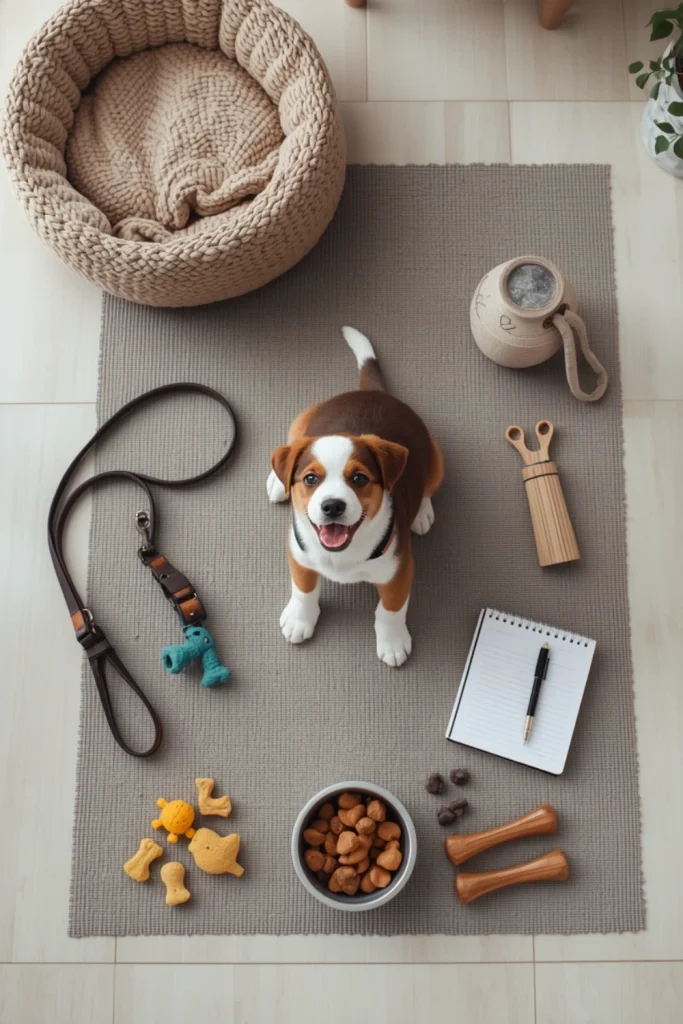
A simple daily schedule can make puppy training much easier. Puppies thrive when they have predictable opportunities for eating, sleeping, playing, potty breaks, and learning. A routine also helps owners remember to practice consistently.
You do not need to create a complicated timetable. A basic structure might include a morning potty break, breakfast, short training, play, rest, and another training opportunity later. Adjust the schedule according to your puppy’s age and individual needs.
Short training sessions can be incorporated into normal activities. Ask for a sit before meals, practice recall between rooms, or reward your puppy for settling quietly while you work. These small moments can become powerful learning opportunities.
12. Teach Your Puppy to Settle on a Bed
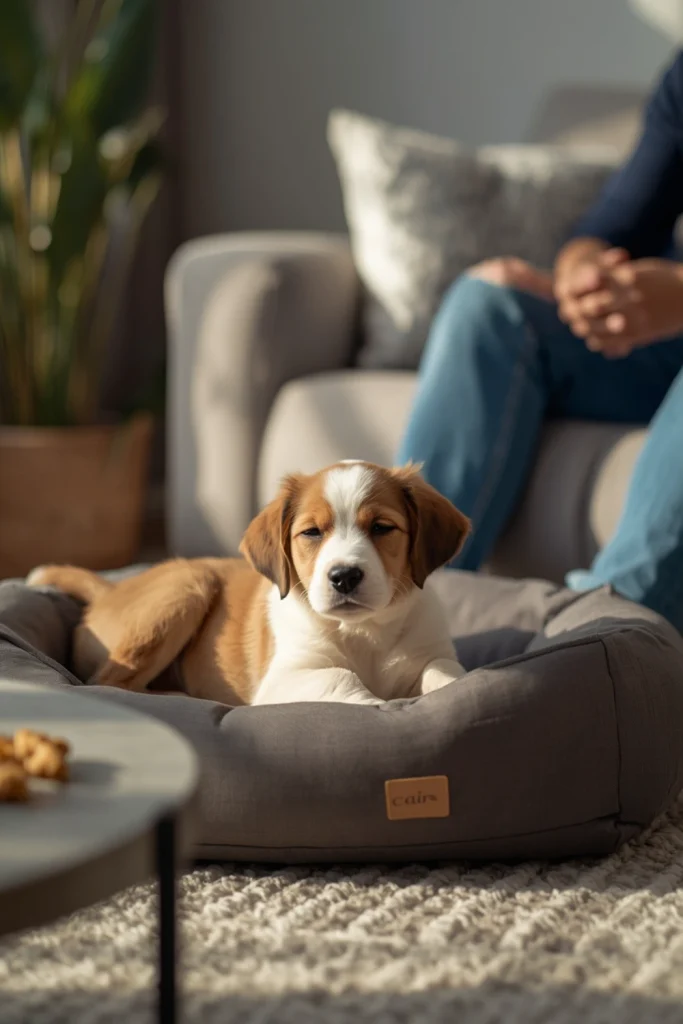
Learning how to relax is just as important as learning commands. Puppies need plenty of rest, and teaching them to settle on a bed or mat can help them develop calm behavior.
Place a comfortable puppy bed in a quiet area. Whenever your puppy chooses to lie down there, calmly reward them. You can eventually introduce a cue such as “bed” or “place.” Start with short periods and gradually increase the time your puppy remains relaxed.
Avoid constantly entertaining your puppy. If every moment is filled with play and attention, they may struggle to settle independently. Providing quiet time helps puppies learn that resting is a normal part of the day.
13. Practice Training During Playtime
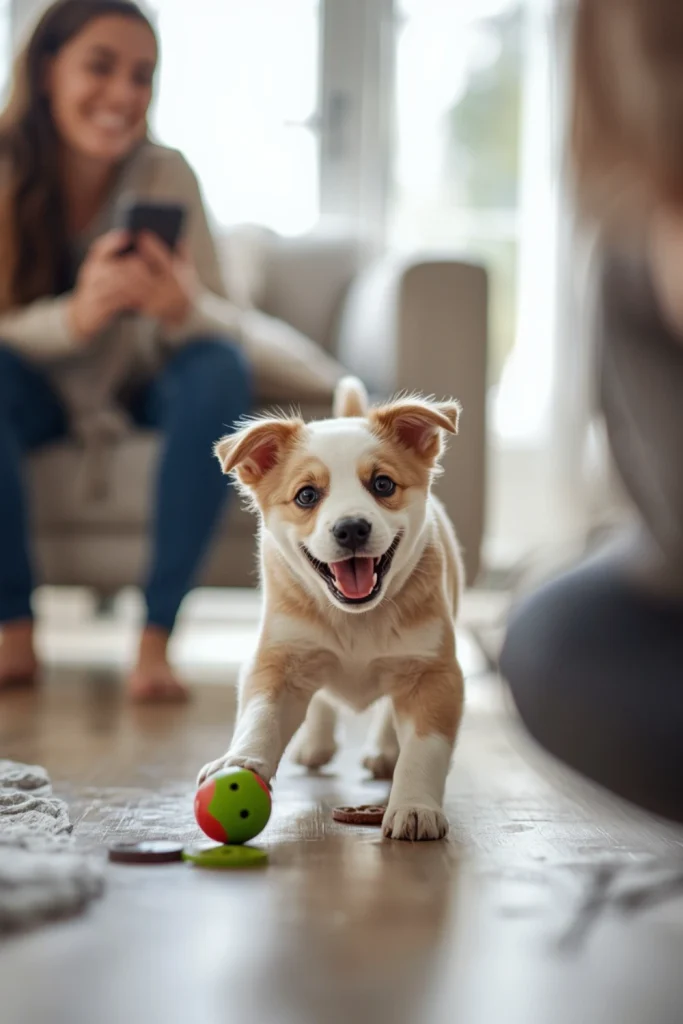
Playtime can become an excellent opportunity for learning. Instead of separating training and play completely, combine the two. You can practice commands such as “come,” “sit,” “wait,” and “drop it” during short games.
For example, during a toy game, ask your puppy to wait briefly before releasing them toward the toy. When they return with the toy, practice “drop it” and reward them by continuing the game.
This approach can make training more enjoyable and help puppies remain engaged. Keep games appropriate for your puppy’s age and physical development, and provide breaks when they become tired.
14. Introduce New Sounds and Experiences Gradually
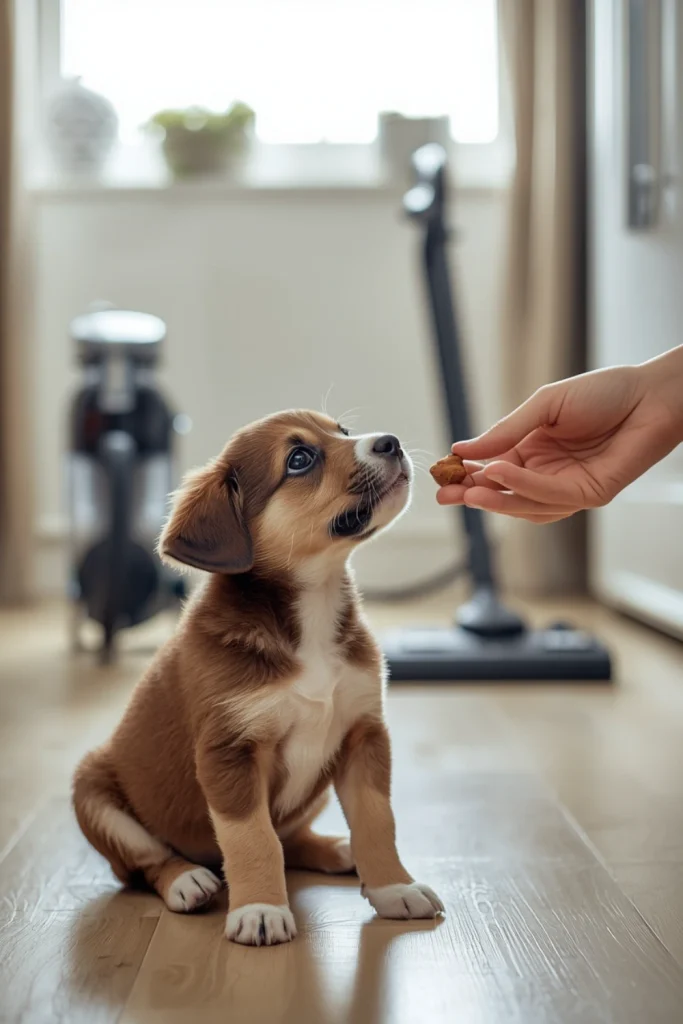
Puppies need opportunities to experience different sights, sounds, surfaces, people, and environments. Gradual exposure can help them become more comfortable with the world around them.
At home, introduce ordinary sounds such as vacuum cleaners, doorbells, kitchen appliances, and household activity at a manageable level. Reward calm behavior and give your puppy space to move away if they seem worried.
Socialization should be gradual rather than overwhelming. Follow appropriate veterinary guidance about safe exposure to public areas and unfamiliar animals, especially before your puppy has completed recommended vaccinations.
15. Practice Every Day and Celebrate Small Progress
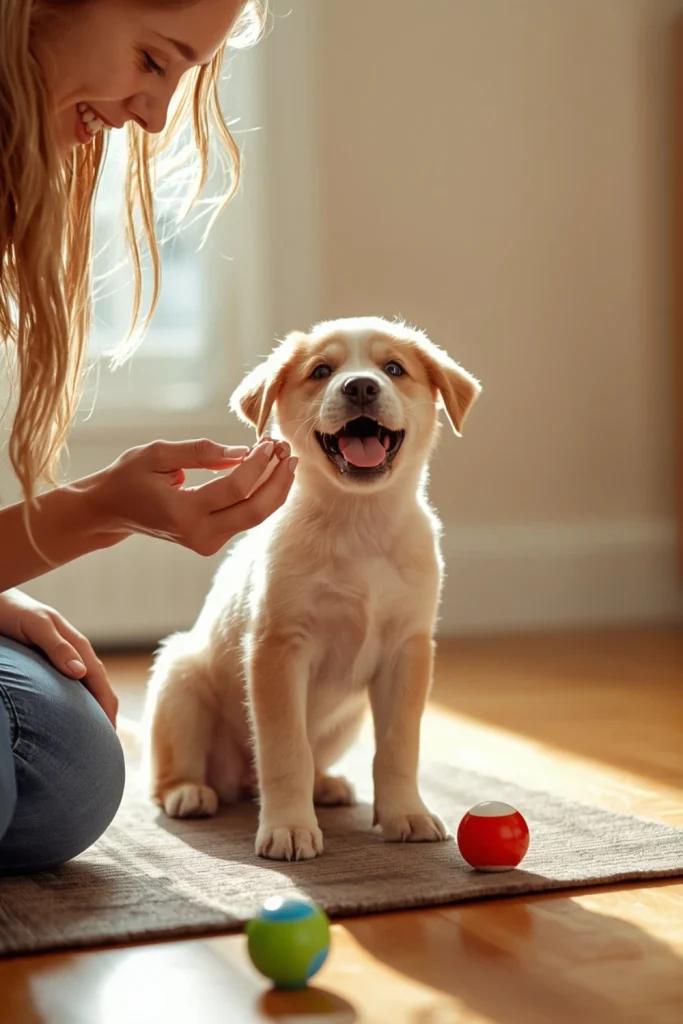
The final idea in this list of Simple Puppy Training Ideas is to practice consistently. Puppies learn through repetition, so occasional training sessions are less effective than small daily lessons.
You do not need to spend hours training. A few minutes in the morning, another short session later, and small training opportunities throughout the day can create steady progress. Focus on one or two behaviors at a time instead of overwhelming your puppy.
Celebrate improvements, even when they seem small. If your puppy responds correctly three times today compared with one time yesterday, that is progress. Training is a long-term process, and patience can make the experience much more enjoyable for both you and your puppy.
Final Thoughts on Simple Puppy Training Ideas
The best Simple Puppy Training Ideas do not require expensive equipment or complicated techniques. They rely on patience, consistency, positive reinforcement, and regular practice. Teaching your puppy basic behaviors at home can become a natural part of your everyday routine.
Start with simple skills such as responding to their name, potty training, sitting, coming when called, waiting, and leaving unwanted objects. As your puppy improves, introduce leash training, calm greetings, socialization, mental stimulation, and settling on a bed.
Remember that puppies are still learning about the world. Mistakes are normal, and progress may happen gradually. Instead of expecting perfection, focus on small improvements and create as many opportunities as possible for your puppy to make good choices.
Training should also be enjoyable. Use toys, treats, praise, play, and everyday rewards to make learning interesting. When your puppy associates training with positive experiences, they are more likely to remain engaged and willing to learn.
By using these Simple Puppy Training Ideas consistently, you can build a strong foundation for good behavior while strengthening the relationship between you and your puppy. Start with one idea today, practice it regularly, and gradually add new skills as your puppy becomes more confident.