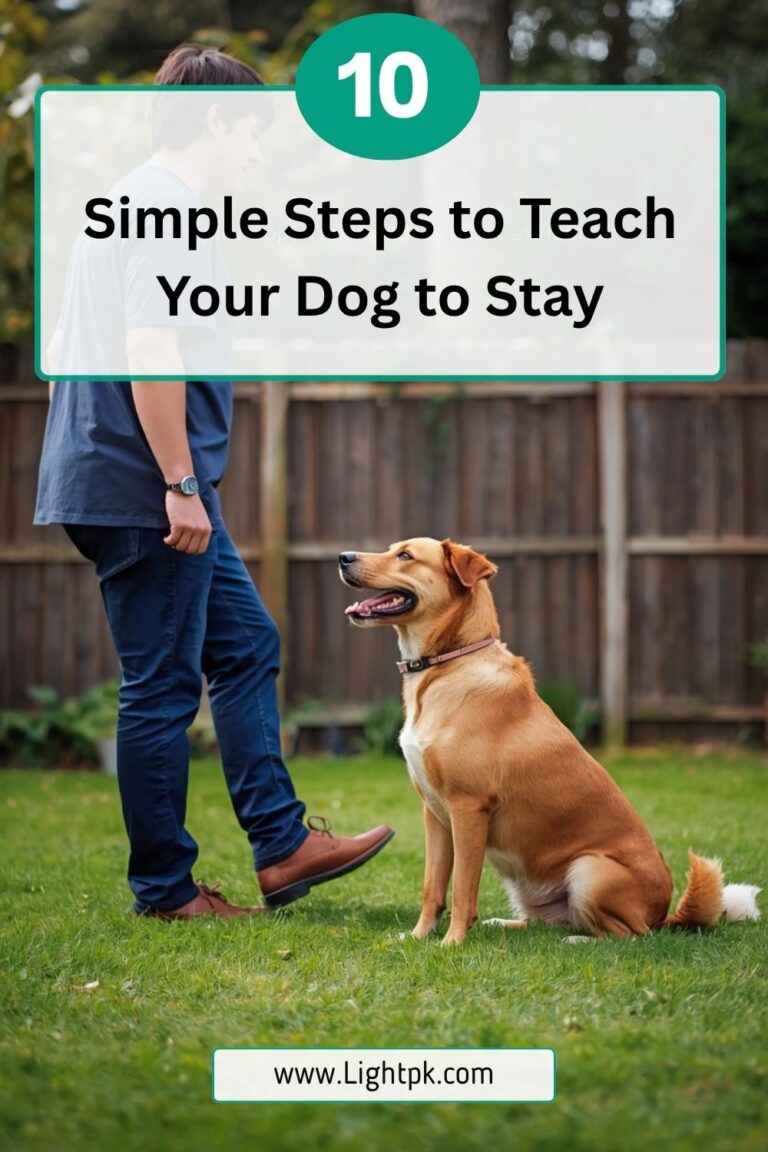

10 Basic Dog Commands Every Dog Should Learn
Training your dog does not have to be complicated. With the right approach, a few simple words can become powerful tools that improve communication, encourage good behavior, and make everyday life easier for both you and your dog. Learning Basic Dog Commands is one of the best ways to begin building a strong relationship with your canine companion.
Whether you have a playful puppy, an adult rescue dog, or a dog that simply needs better manners, basic training can make a noticeable difference. In this guide, you will discover 10 essential dog commands, how to teach each one at home, common mistakes to avoid, and practical tips for creating a positive training routine.
1. Teach Your Dog the “Sit” Command
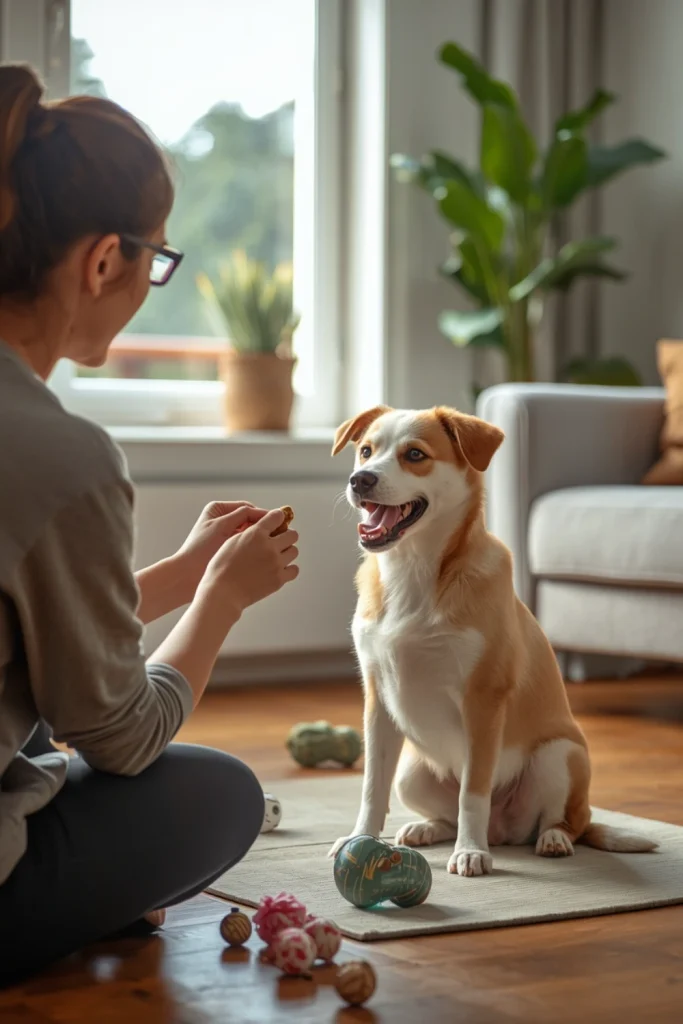
“Sit” is one of the most useful and recognizable Basic Dog Commands. It can help your dog settle down before meals, greet visitors politely, wait at doors, and focus on you during training. Because the behavior is natural for most dogs, “sit” is often a good command to introduce early.
To teach it, hold a small treat near your dog’s nose and slowly move your hand upward and slightly backward. As your dog’s head follows the treat, the natural movement may cause the dog’s bottom to move toward the floor. As soon as your dog sits, say “sit,” praise the behavior, and provide the reward. Repeat the exercise several times in short sessions. Eventually, begin using the verbal cue before guiding your dog into position.
2. Teach Your Dog the “Stay” Command
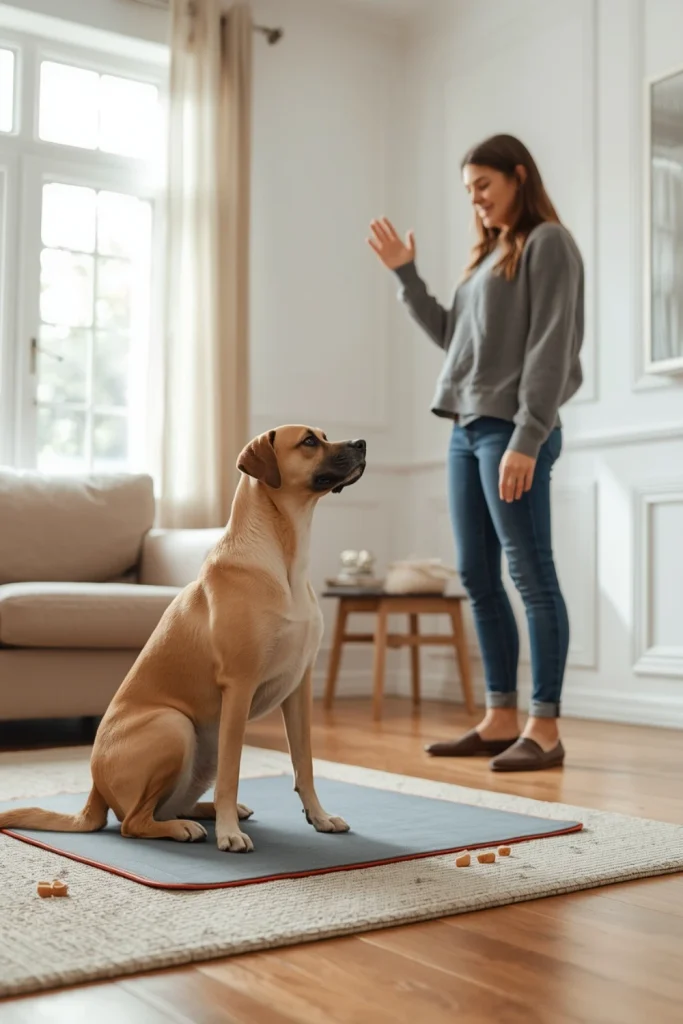
“Stay” teaches your dog to remain in one position until you give another signal. It can be extremely useful when you need your dog to wait while you open a door, prepare food, answer the phone, or move around the house. A reliable stay also helps develop patience and impulse control.
Begin by asking your dog to sit. Show an open hand and calmly say “stay.” Wait for just one or two seconds before returning to your dog and rewarding the behavior. Gradually increase the time, distance, and distractions one at a time. Avoid progressing too quickly. If your dog gets up, calmly reset and make the exercise easier. The goal is to teach your dog that remaining in place brings positive results.
3. Teach Your Dog the “Come” Command
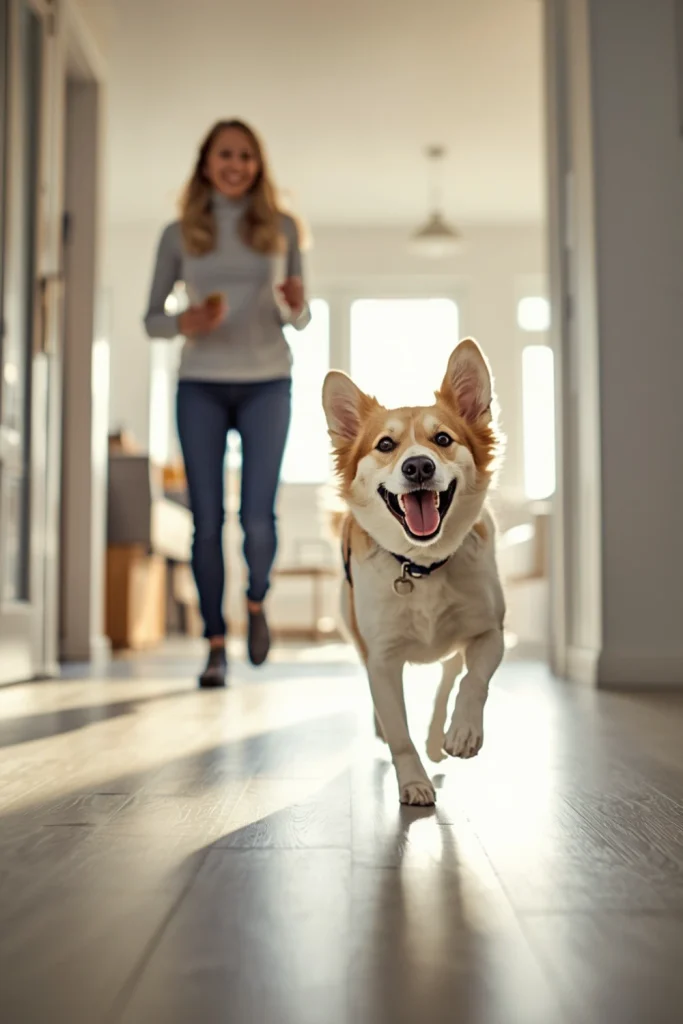
“Come” is one of the most important commands for dog safety. It teaches your dog to return to you when called. A strong recall can be helpful during walks, outdoor activities, and unexpected situations where your dog needs to move away from danger.
Start recall training in a quiet indoor area. Say your dog’s name followed by “come” in a cheerful voice. Move backward a few steps and encourage your dog to follow you. When your dog reaches you, reward generously with praise, a treat, or a favorite toy. Avoid calling your dog to punish it or immediately end every enjoyable activity. Your dog should learn that coming to you is consistently rewarding.
4. Teach Your Dog the “Down” Command
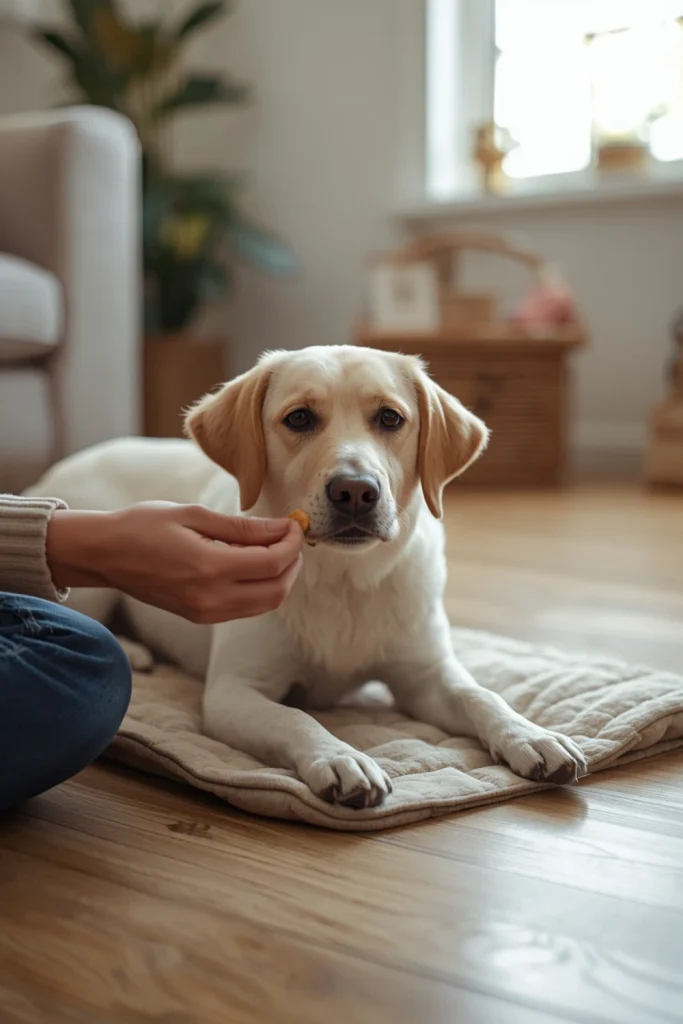
The “down” command teaches your dog to lower its body onto the floor. It can help encourage calm behavior and can be useful when your dog becomes overly excited. For some dogs, learning to lie down can also make it easier to remain settled for longer periods.
Start with your dog in a sitting position. Hold a treat close to its nose and slowly move your hand toward the floor and slightly forward. When your dog’s body follows the treat and reaches the floor, say “down,” then reward immediately. Practice on a comfortable surface and avoid physically forcing your dog into position. Some dogs may need more time to understand the movement, so patience is important.
5. Teach Your Dog the “Leave It” Command
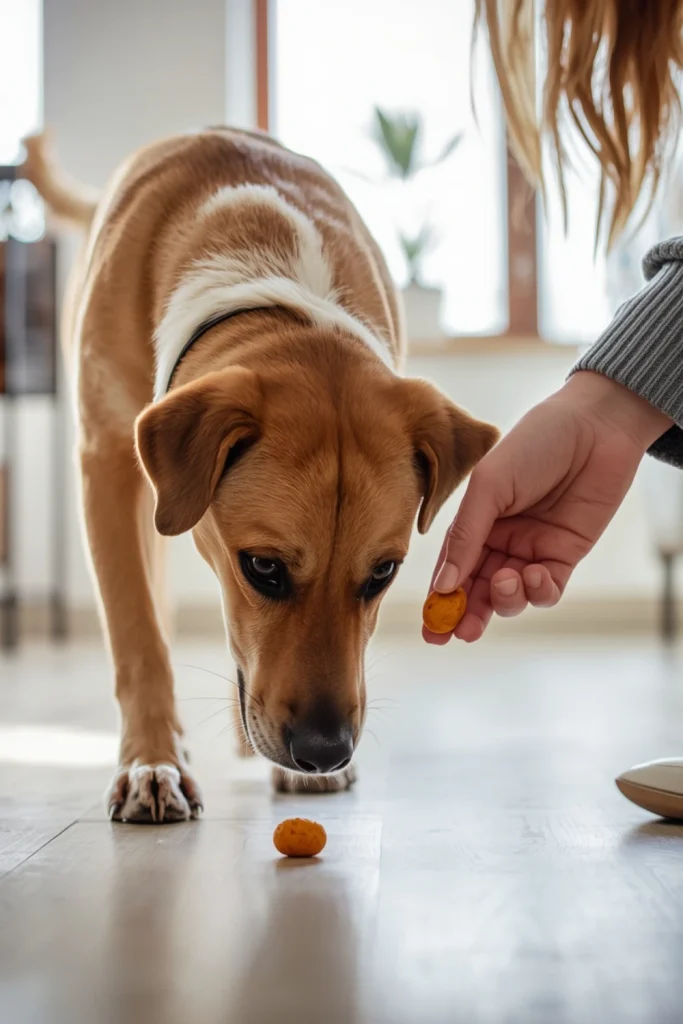
“Leave it” is an especially useful safety command. Dogs naturally explore the world with their mouths, and they may try to pick up food, household objects, plants, or other items that they should not eat or touch. Teaching “leave it” gives your dog a clear instruction to stop showing interest in something.
Begin with a low-value item in one hand and a better reward hidden in the other hand. Allow your dog to notice the first item without giving it access. When your dog stops trying to get it or turns toward you, say “leave it” and reward with the better treat. Gradually practice with different objects and environments. Never use dangerous items as training exercises, and always supervise your dog.
6. Teach Your Dog the “Wait” Command
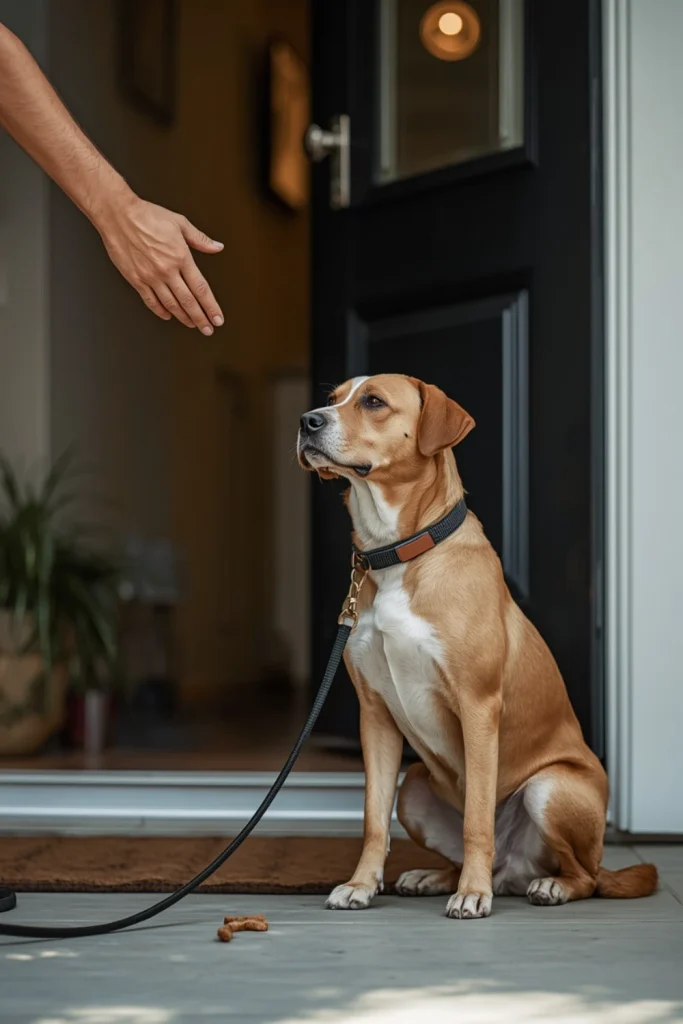
“Wait” is similar to “stay,” but it is often used for short pauses before your dog moves forward. You can use it before opening a door, crossing a threshold, getting out of a car, or receiving a meal. It teaches your dog to pause instead of immediately rushing toward something exciting.
Begin with an easy situation. Ask your dog to sit, say “wait,” and pause for a moment. Reward your dog for remaining still. Then gradually introduce small movements, such as taking one step away or reaching toward a door. As your dog improves, increase the difficulty slowly. Keep the training sessions positive. The purpose is not to make your dog fearful of moving but to teach patience and controlled decision-making.
7. Teach Your Dog the “Heel” or Loose-Leash Walking Command
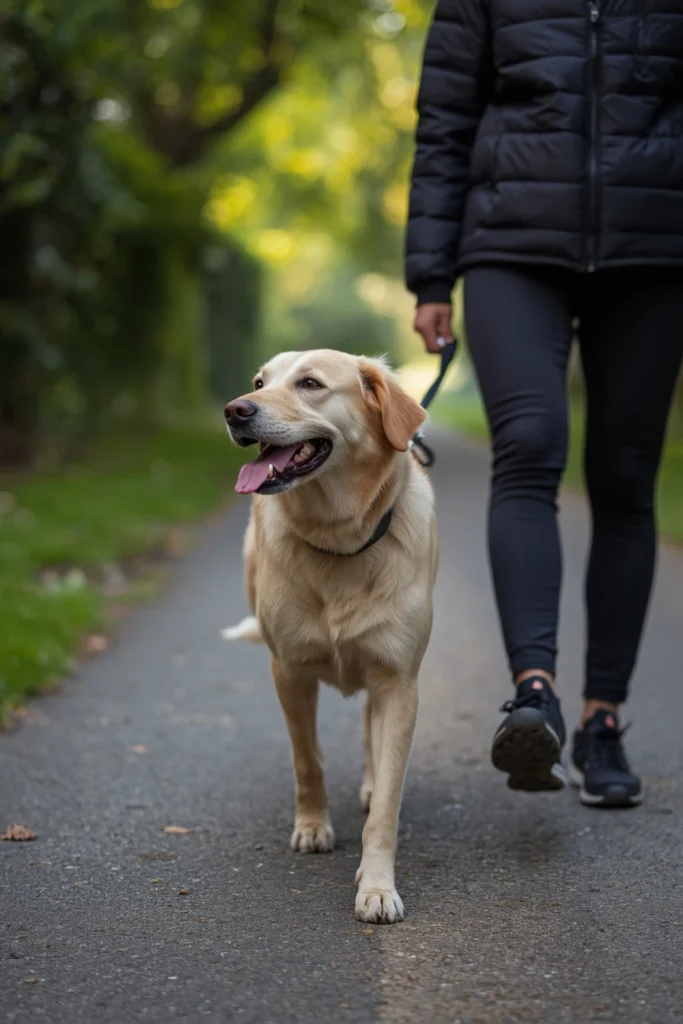
Walking politely beside you is an important part of everyday dog training. While “heel” traditionally means staying close beside the handler, many owners primarily need their dog to learn loose-leash walking without constantly pulling forward.
Start indoors or in a quiet outdoor area where there are few distractions. Hold the leash comfortably and reward your dog when it walks beside you without pulling. If your dog moves too far ahead and the leash becomes tight, stop or change direction rather than allowing pulling to move the walk forward. Reward the moments when your dog returns its attention to you. With consistent practice, your dog can learn that staying near you makes walks enjoyable.
8. Teach Your Dog the “Drop It” Command
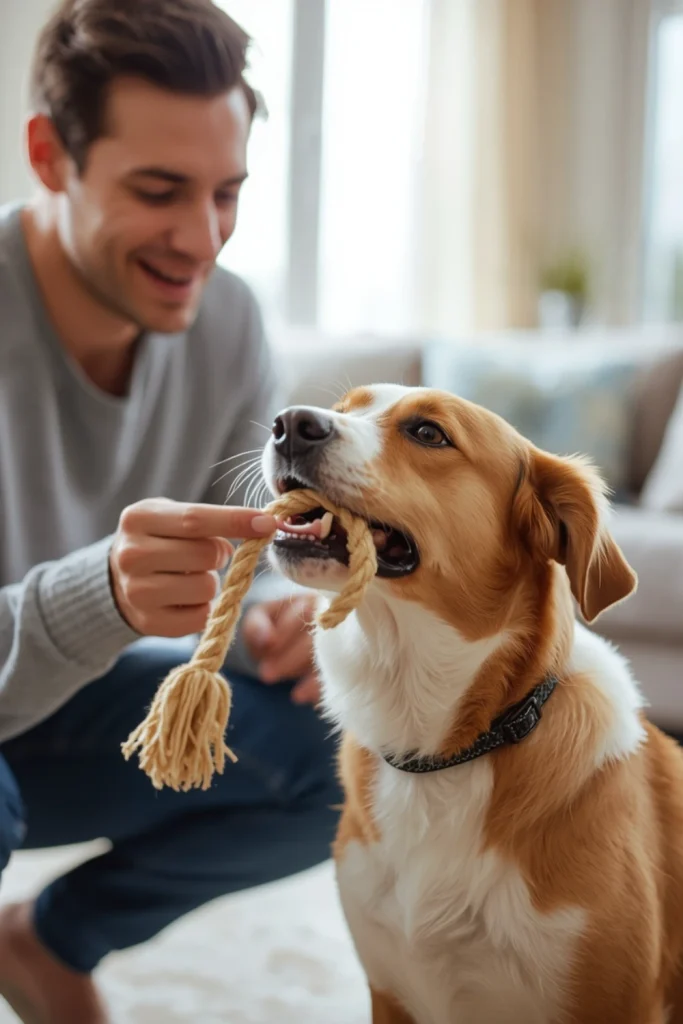
“Drop it” teaches your dog to release an object that is already in its mouth. This command can be particularly helpful during play when your dog picks up a toy, household item, or something it should not have. It can also prevent unnecessary chasing or grabbing games.
Start with a toy your dog enjoys but that it can safely release. Allow your dog to hold the toy, then present a desirable treat near its nose. When the dog opens its mouth and releases the toy, calmly say “drop it” and reward. You can then give the toy back when appropriate. This teaches your dog that releasing an object does not always mean losing it permanently, which can make the behavior easier to repeat.
9. Teach Your Dog the “Off” Command
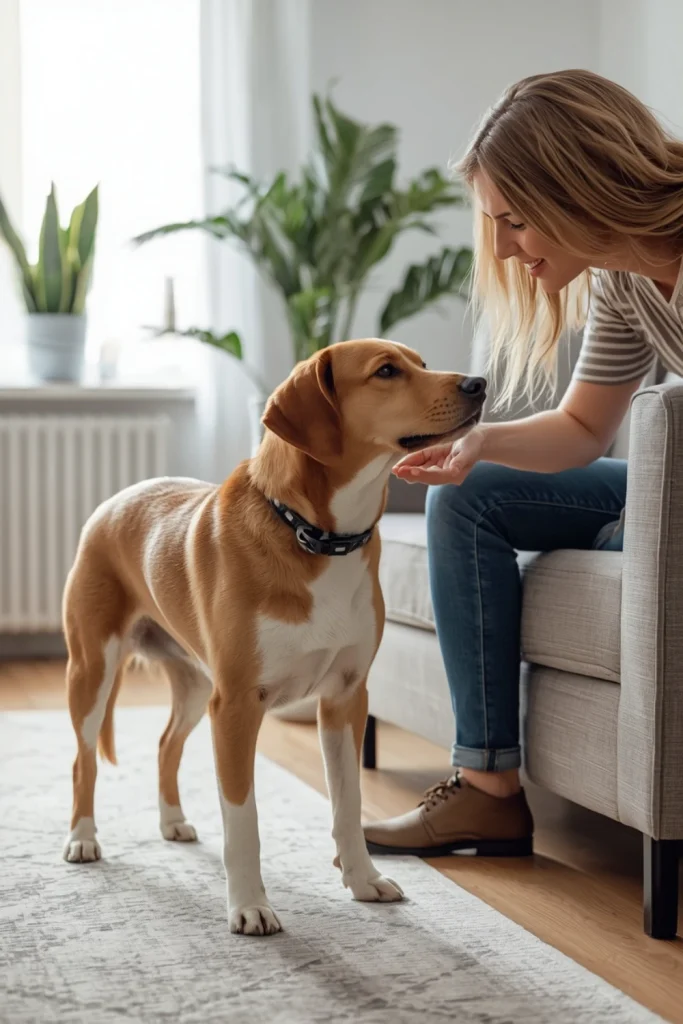
“Off” can be useful when a dog jumps onto people, furniture, counters, or other areas where you do not want it. Instead of physically pushing the dog away, training gives your dog a clear alternative behavior.
When your dog jumps onto an inappropriate surface, remain calm and use the cue “off.” Encourage the dog to return to the floor, and reward calm behavior once all four paws are down. Consistency is important because dogs learn from consequences. If jumping sometimes earns attention and sometimes receives a correction, the behavior may continue. Ask everyone in the household to respond consistently so your dog receives the same message from everyone.
10. Teach Your Dog the “Place” Command
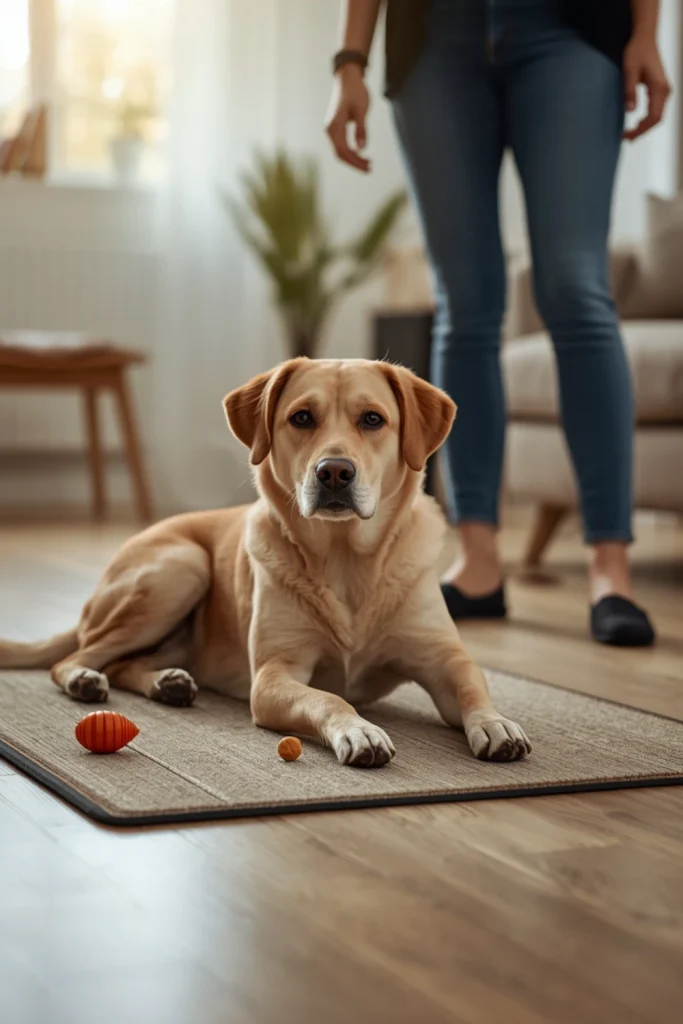
The “place” command teaches your dog to go to a specific bed, mat, or designated location and remain there until released. It can be useful when guests arrive, during family meals, while you are cooking, or whenever your dog needs a calm activity.
Choose a comfortable mat or dog bed and make it rewarding. Guide your dog onto the mat and reward when it steps onto it. Add the word “place” as the dog begins to understand the behavior. Gradually increase the amount of time your dog remains there before receiving its reward. Practice while you move around nearby. Over time, your dog can learn that its designated place is a comfortable and predictable area where calm behavior is rewarded.
Final Thoughts
Teaching Basic Dog Commands is one of the most valuable things you can do for your dog. Commands such as sit, stay, come, down, leave it, wait, heel, drop it, off, and place can improve communication while helping your dog navigate everyday situations more safely and calmly.
The key to successful dog training is consistency, patience, appropriate rewards, and gradual progress. Do not worry if your dog does not master a command immediately. Every dog learns at its own pace. Keep sessions short, make learning enjoyable, practice in different environments, and celebrate small improvements. With regular practice, these Basic Dog Commands can become useful parts of your dog’s everyday life.