12 Dog Training Tips for Busy Working Owners
Balancing a full-time job, family responsibilities, and dog ownership can feel challenging, especially when you want your dog to be well-behaved, happy, and confident. The good news is that you do not need hours of free time every day to teach your dog good habits. With a simple routine, short training sessions, and consistent rewards, you can make meaningful progress even with a busy schedule.
These Dog Training Tips for Busy Working owners are designed to fit into everyday life. Whether you have a playful puppy, an energetic adult dog, or a rescue dog learning household rules, small training opportunities can make a big difference. From using mealtimes for learning to practicing commands during daily activities, these practical ideas will help you build a stronger bond with your dog without overwhelming your schedule.
1. Use Short Training Sessions Every Day
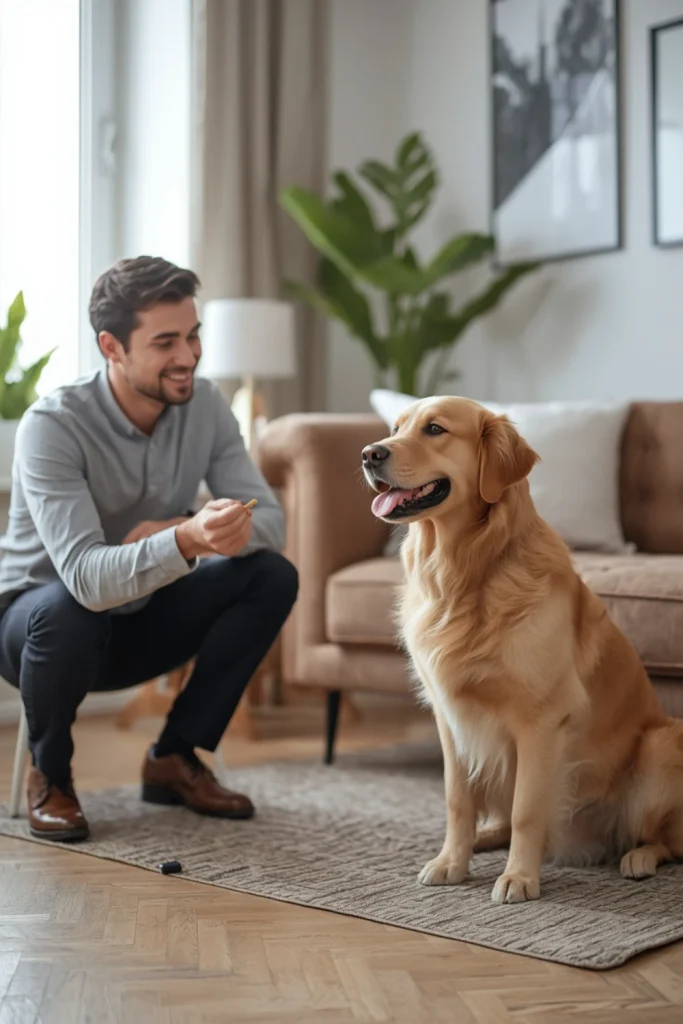
One of the most practical dog training tips for busy working owners is to keep training sessions short and focused. Instead of trying to find 30 uninterrupted minutes, spend three to five minutes practicing a command such as sit, stay, come, or leave it. Short sessions are easier to fit into a morning routine, lunch break, or evening wind-down. They can also help keep your dog engaged without becoming tired or frustrated.
Consistency matters more than the length of a single session. Practice the same skill several times throughout the week, rewarding correct responses with small treats, praise, or a favorite toy. End on a positive note whenever possible, even if that means repeating an easy command your dog already knows. If your dog struggles, simplify the exercise rather than repeating it until they lose interest. A few minutes of enjoyable learning each day can gradually build reliable habits.
2. Build Training Into Your Morning Routine
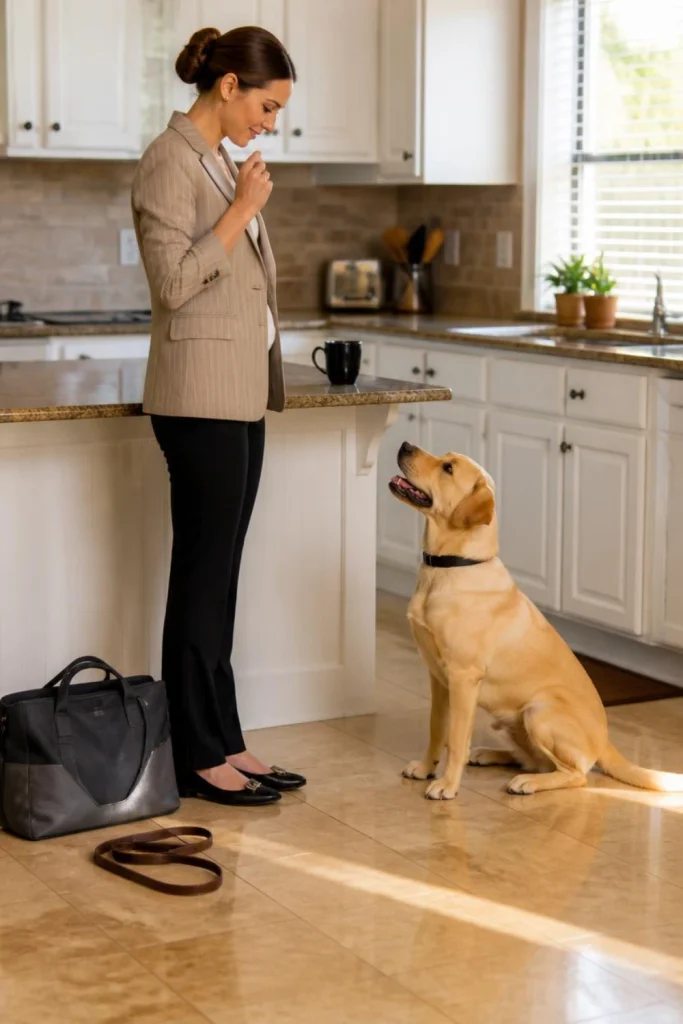
Your morning routine provides several opportunities to reinforce good behavior without setting aside a separate training period. Before breakfast, ask your dog to sit calmly before placing the food bowl down. Practice waiting briefly before opening the front door, or reward your dog for staying beside you while you put on your shoes. These small exercises help teach patience, self-control, and cooperation during activities you already perform every day.
Keep the expectations appropriate for your dog’s age and experience. A young puppy may only manage a very short wait, while an adult dog with some training may be ready for a slightly longer pause. Avoid turning every part of the morning into a demanding lesson, especially when you are rushing to leave. Choose one or two useful behaviors and practice them consistently. By attaching training to familiar daily activities, you can help your dog learn without making your schedule more complicated.
3. Use Mealtimes as Training Opportunities
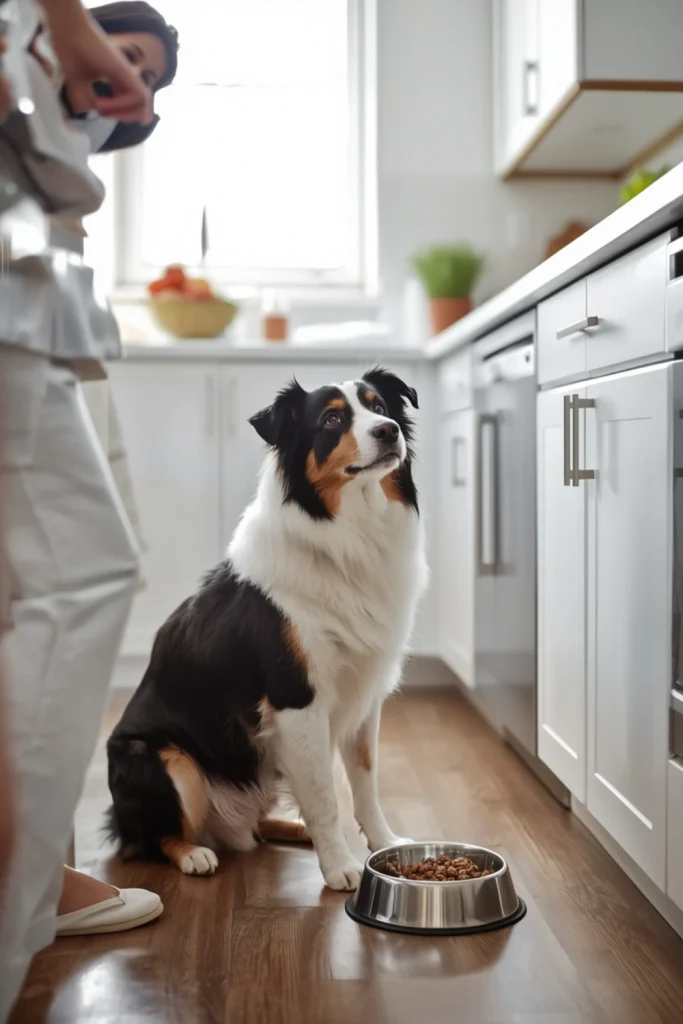
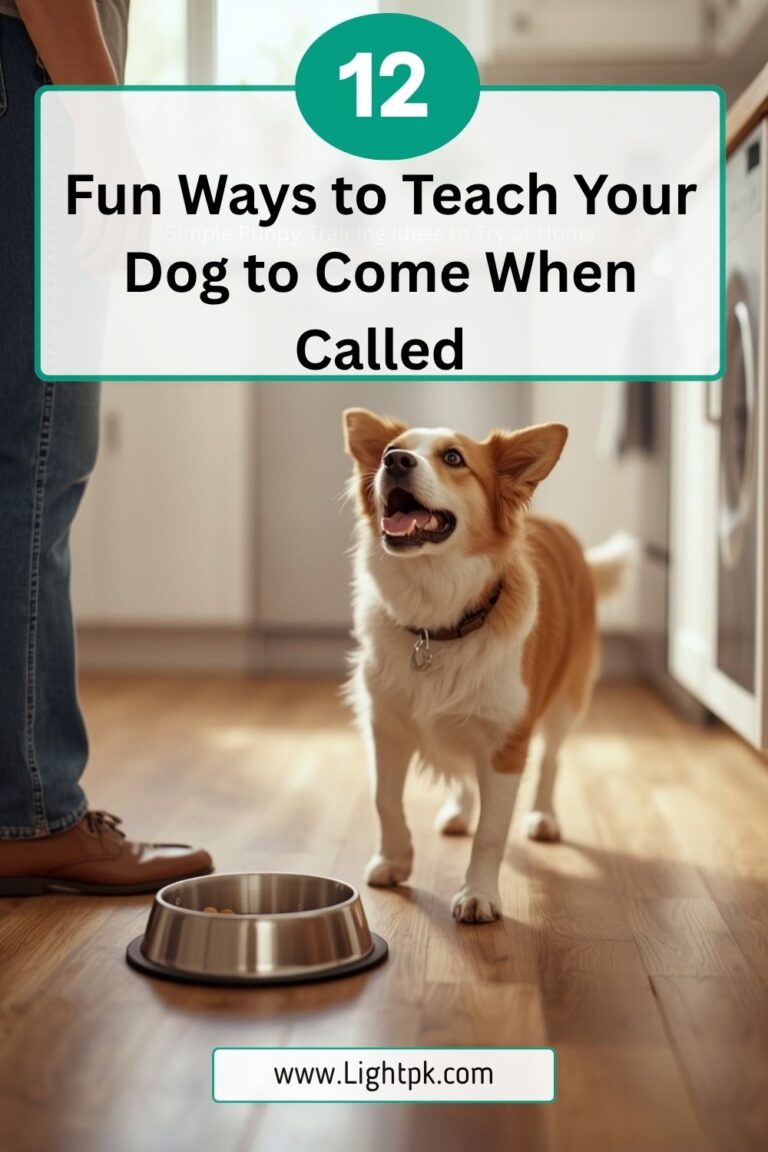
Mealtimes can become convenient training sessions because your dog is already interested in their food. Before placing the bowl down, ask for a familiar behavior such as sit or wait. Reward your dog for responding calmly, then provide the meal. You can also use a portion of their regular kibble to practice coming when called, responding to their name, or going to a designated mat. This approach allows you to reinforce useful behaviors without relying entirely on extra treats.
Keep mealtime training calm and fair. Do not withhold food for long periods while asking your dog to perform increasingly difficult commands. If your dog becomes frustrated or overly excited, simplify the exercise and provide the meal. Measure the daily food allowance so training rewards do not unintentionally add too many calories. For dogs with special dietary requirements, follow your veterinarian’s advice about suitable rewards. By using ordinary meals thoughtfully, you can make everyday feeding more engaging and productive.
4. Create a Consistent After-Work Training Routine
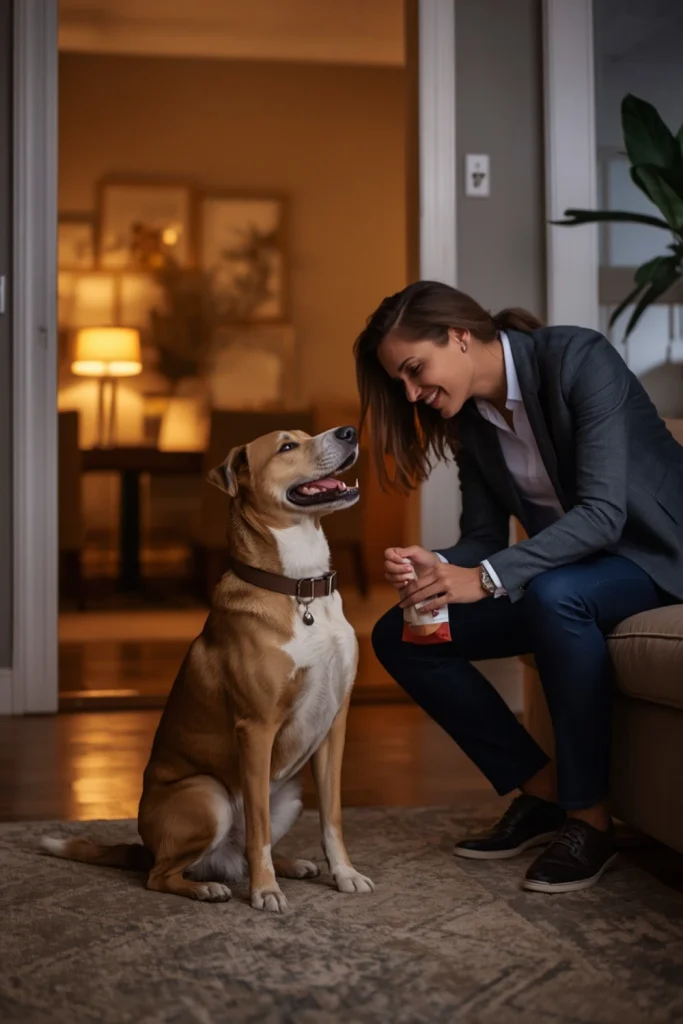
After a long workday, it can be tempting to postpone dog training until you have more energy. A better approach is to create a short, predictable routine that starts after your dog has had an appropriate toilet break and a chance to greet you calmly. Spend a few minutes reviewing one or two commands, practicing leash manners, or rewarding your dog for settling on a mat. A regular routine helps you remember training while giving your dog consistent opportunities to learn.
Choose a time that works with your household rather than following a schedule that feels impossible to maintain. Some owners prefer to train immediately after a walk, while others find a brief session before dinner easier. Avoid demanding focused work when your dog is extremely excited or overtired. Begin with an easy command to encourage success, then finish with a calming activity such as sniffing for a few pieces of kibble. A manageable evening routine is more sustainable than an ambitious plan you can only follow occasionally.
5. Turn Daily Walks Into Training Sessions
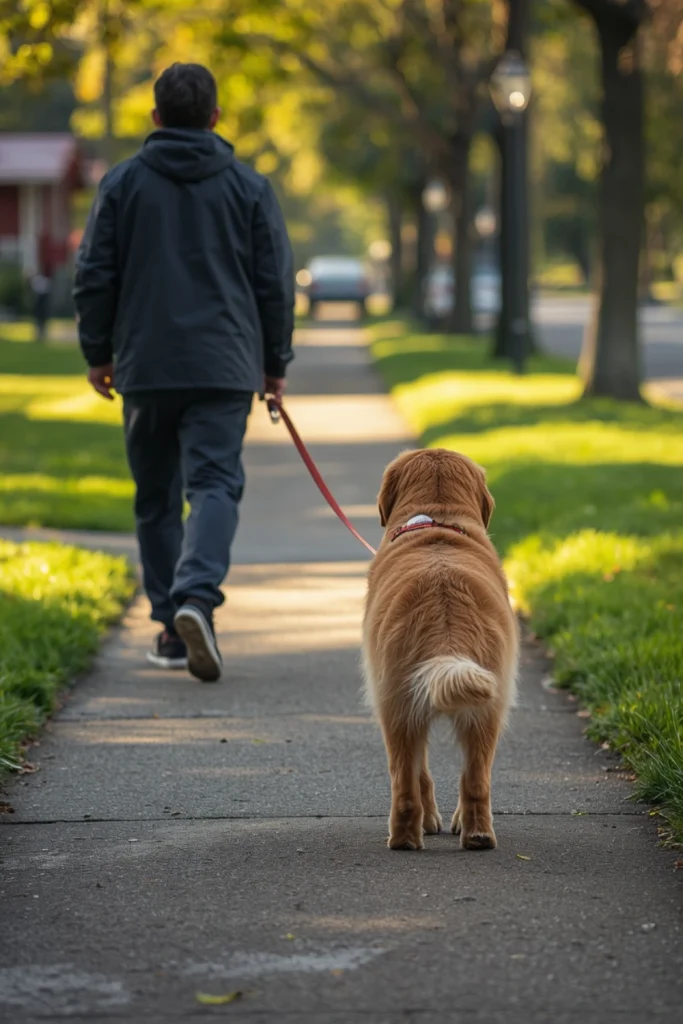
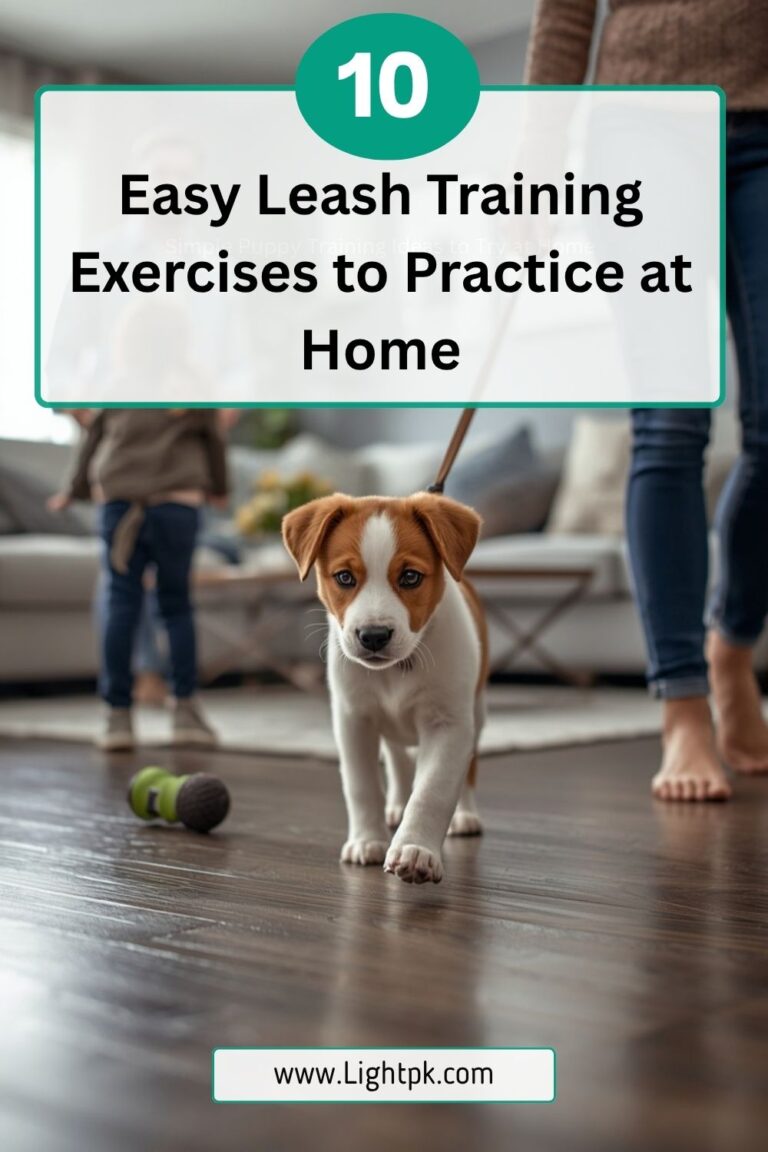
Daily walks are an excellent opportunity to practice useful skills while giving your dog exercise and time to explore. Reward your dog for walking with a loose leash, checking in with you, responding to their name, or calmly passing a familiar distraction at a comfortable distance. You can also practice a brief stop, ask for a sit, and then continue walking. These small repetitions help make training part of an activity your dog already enjoys.
Remember that walks should not become nonstop obedience drills. Dogs need opportunities to sniff, investigate safe surroundings, and move at an appropriate pace. Use a comfortable harness or collar that fits properly, and choose a route that matches your dog’s confidence and ability. If your dog becomes overwhelmed by traffic, unfamiliar dogs, or loud noises, increase the distance and make the situation easier. Reward-based practice during walks can improve leash manners while keeping the experience enjoyable for both of you.
6. Use Positive Reinforcement for Better Results
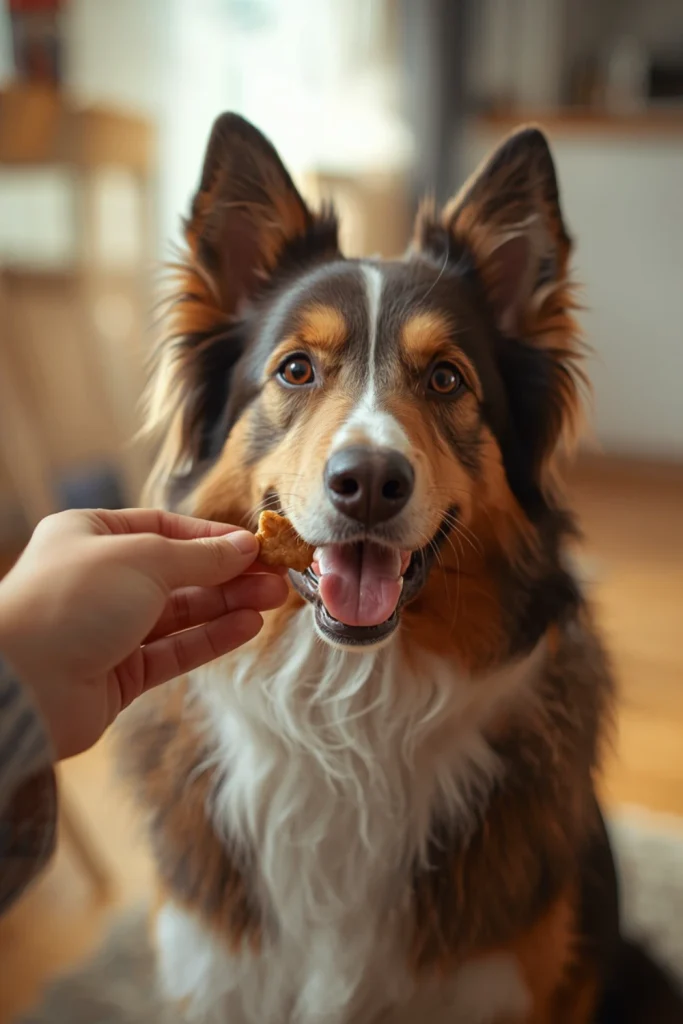
Positive reinforcement means rewarding a behavior you want your dog to repeat. For busy owners, this method is especially useful because it can be applied in seconds throughout the day. Reward your dog for coming when called, settling quietly while you work, waiting at the door, or walking politely beside you. Rewards may include a small treat, praise, a short game, or access to something your dog enjoys. Choose what motivates your individual dog and use it consistently.
Timing makes a difference. Try to deliver the reward immediately after the desired behavior so your dog can understand what earned it. Avoid shouting or punishing your dog for mistakes, as this can create confusion or fear and may interfere with learning. If a command is not working, consider whether the environment is too distracting or the behavior is too difficult at that stage. Make the exercise easier, reward small improvements, and gradually build reliability. Positive reinforcement supports learning while helping maintain a trusting relationship.
7. Teach Your Dog to Settle While You Work
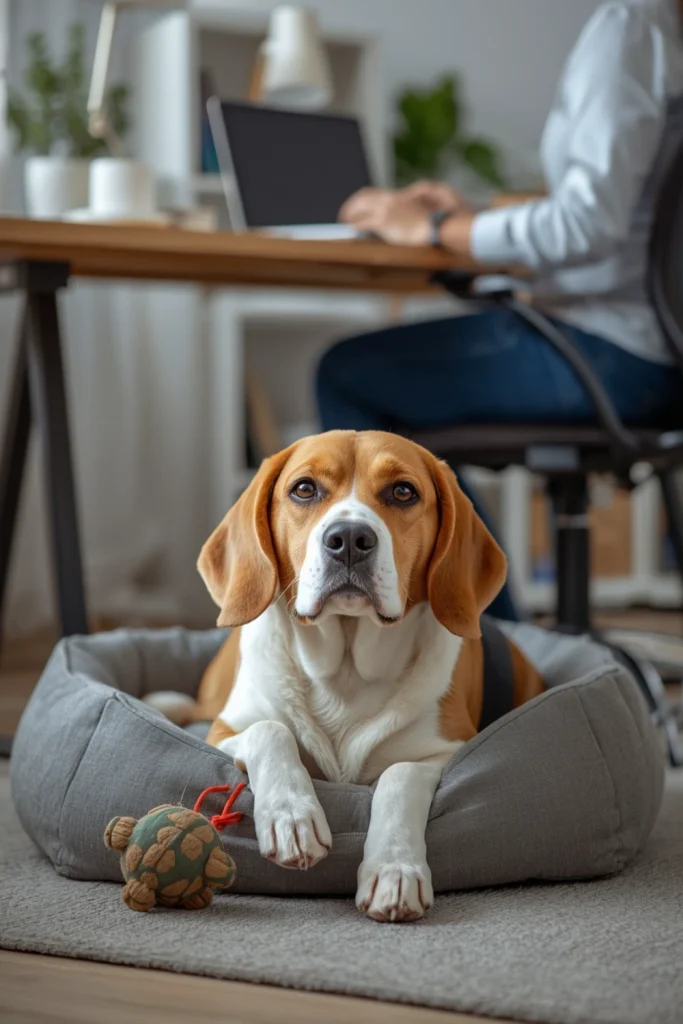
If you work from home or often need to finish tasks after returning from the office, teaching your dog to settle can make daily life easier. Start by placing a comfortable mat or bed near your workspace. Reward your dog for standing on it, lying down, or remaining relaxed for a few moments. Gradually reward longer periods of calm behavior while you read, answer emails, or complete another quiet activity. This helps your dog learn that relaxing nearby is a worthwhile behavior.
Begin with short periods and provide appropriate exercise, toilet breaks, and attention throughout the day. A dog that has unmet needs may find it difficult to settle, so do not expect a long nap immediately after an exciting arrival or without adequate activity. If your dog repeatedly gets up, reduce the duration and reward smaller successes. Use a safe resting area and suitable enrichment when needed. The goal is not to keep your dog inactive all day, but to teach a useful balance between activity and rest.
8. Use Puzzle Toys and Enrichment Activities
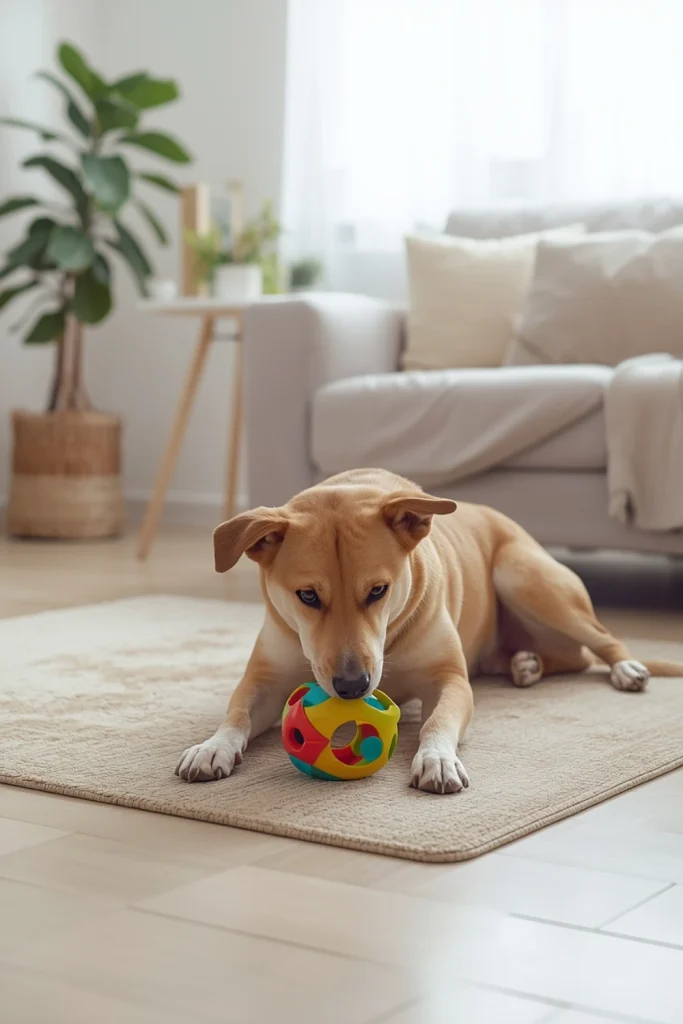
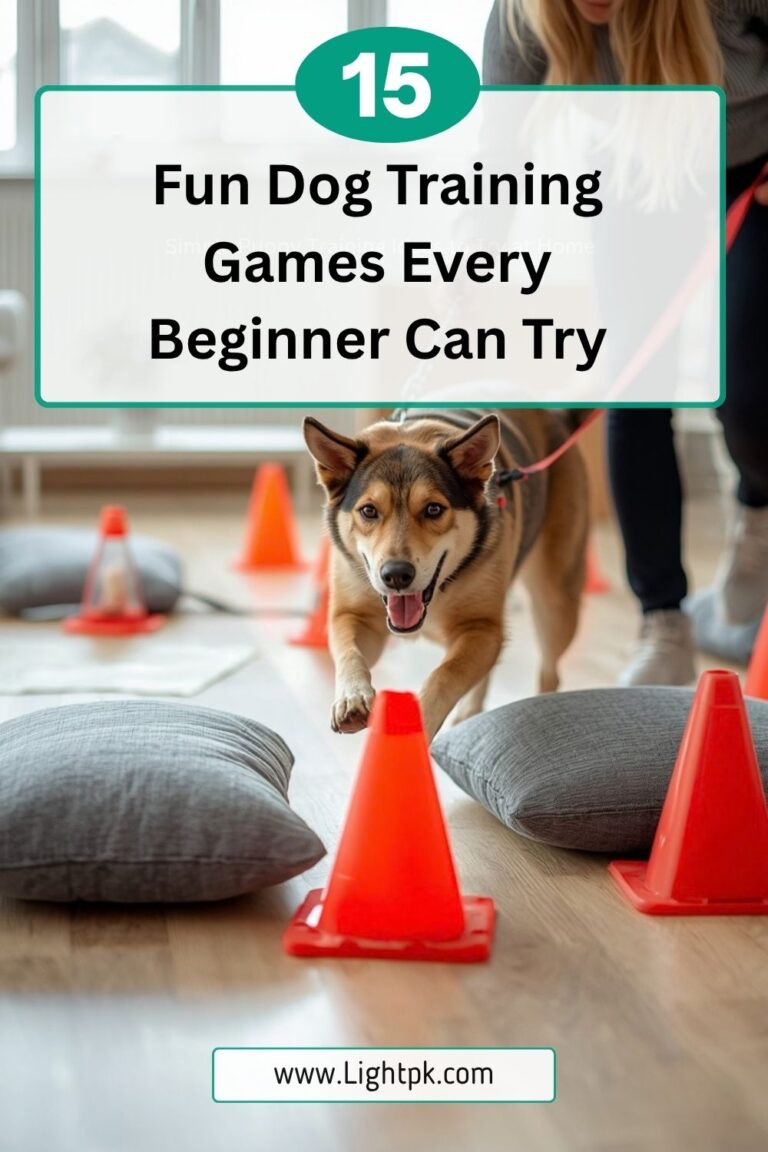
Mental enrichment can help keep your dog occupied and provide useful stimulation when you have limited time for direct interaction. Food puzzles, treat-dispensing toys, sniffing games, and simple search activities can encourage problem-solving and natural exploration. For example, you can scatter part of your dog’s measured kibble in a safe, supervised area and let them sniff it out. You can also offer an appropriate puzzle toy while you prepare dinner or complete a short household task.
Introduce new enrichment items while you are present so you can make sure they are safe and suitable for your dog. Choose toys that match your dog’s size and chewing strength, and remove any item that breaks or becomes hazardous. Rotate activities to maintain interest without overwhelming your dog with too many choices. Enrichment should complement walks, training, social interaction, and rest—not replace them. If you leave your dog alone during working hours, do not assume a puzzle toy makes a long absence suitable; arrange care and breaks according to your dog’s needs.
9. Practice Recall in Small, Everyday Moments
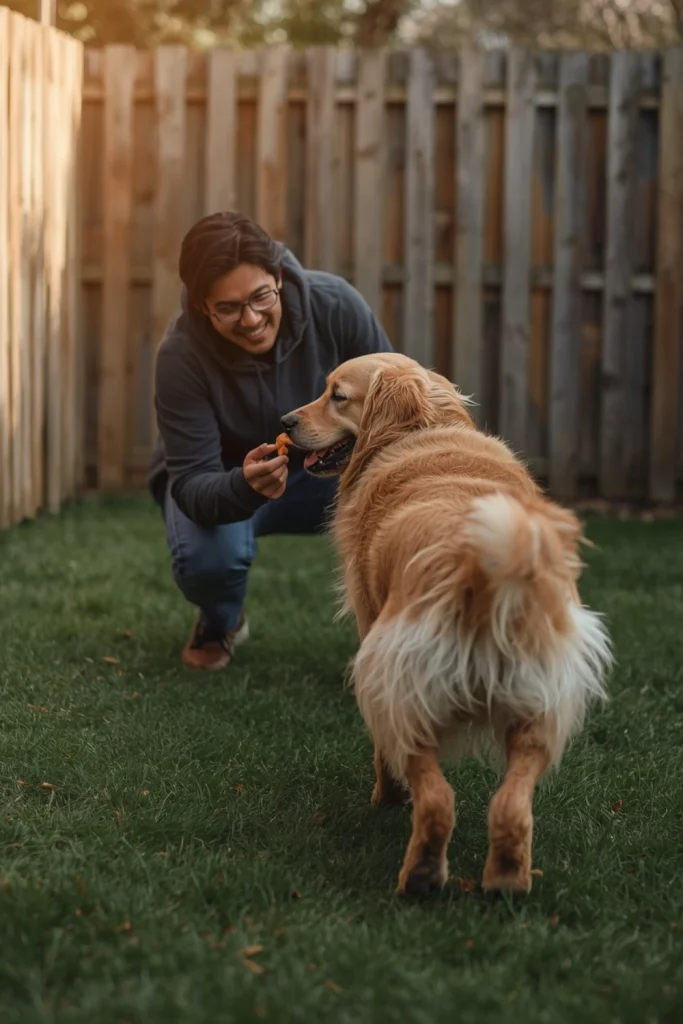
Recall, or coming when called, is one of the most useful skills you can teach your dog. Busy owners can practice it at home in short sessions instead of waiting for a dedicated training period. Say your dog’s name followed by a familiar cue such as “come” in a cheerful voice when your dog is nearby and likely to respond. When they approach, reward them immediately. Start in a quiet room or secure yard where distractions are limited, then gradually practice in more challenging environments.
Make coming to you a positive experience. Avoid calling your dog only when playtime ends, when you need to do something unpleasant, or when you are about to leave for work. Occasionally reward your dog for coming to you and then let them return to a safe activity. This helps maintain the value of the cue. Never assume recall is reliable around every distraction just because it works indoors. Use a secure fenced area or a long training line in appropriate settings until your dog has developed dependable skills.
10. Teach Good Manners at Doors and During Greetings
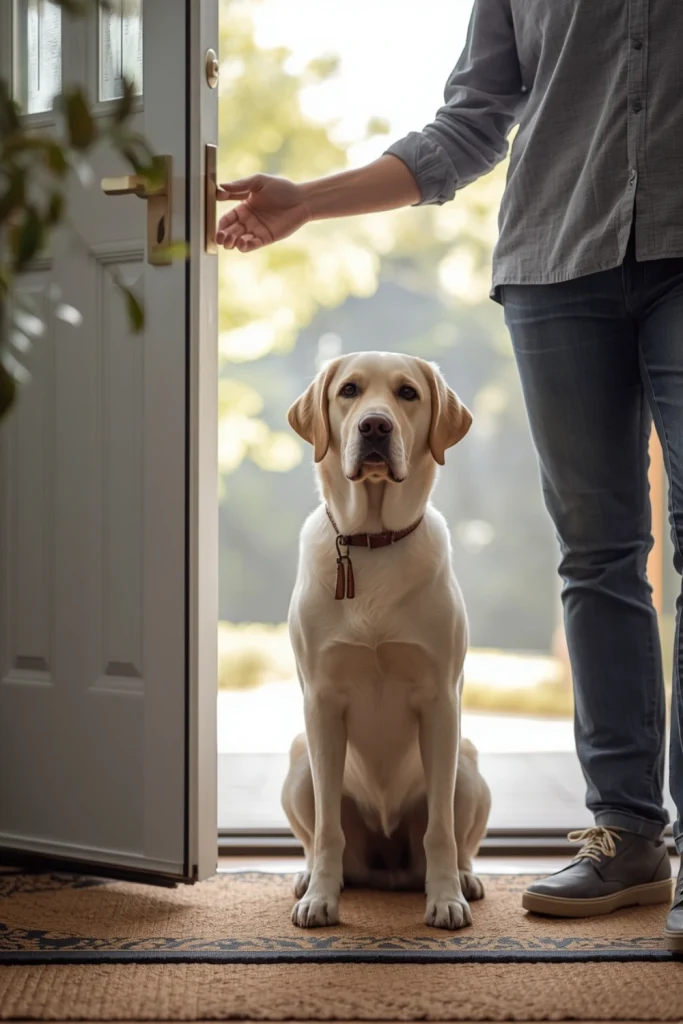
Door manners can be taught in short sessions during everyday departures and arrivals. Ask your dog to pause before the front door opens, reward calm behavior, and open the door a small amount. If your dog rushes forward, calmly close it and try an easier repetition. Practice only in a safe setup where your dog cannot bolt outside. Over time, your dog can learn that waiting calmly makes the door open, rather than pushing or jumping to get through first.
You can use similar principles when greeting family members or visitors. Reward your dog for keeping four paws on the floor, sitting politely, or approaching calmly. Ask guests to follow the same approach where possible so your dog receives consistent feedback. If your dog becomes overly excited, increase distance or give them a short opportunity to settle before greeting. These behaviors are especially useful for owners with busy schedules because they improve everyday safety and reduce the need to manage repeated jumping, rushing, or pulling.
11. Involve Family Members or a Trusted Caregiver
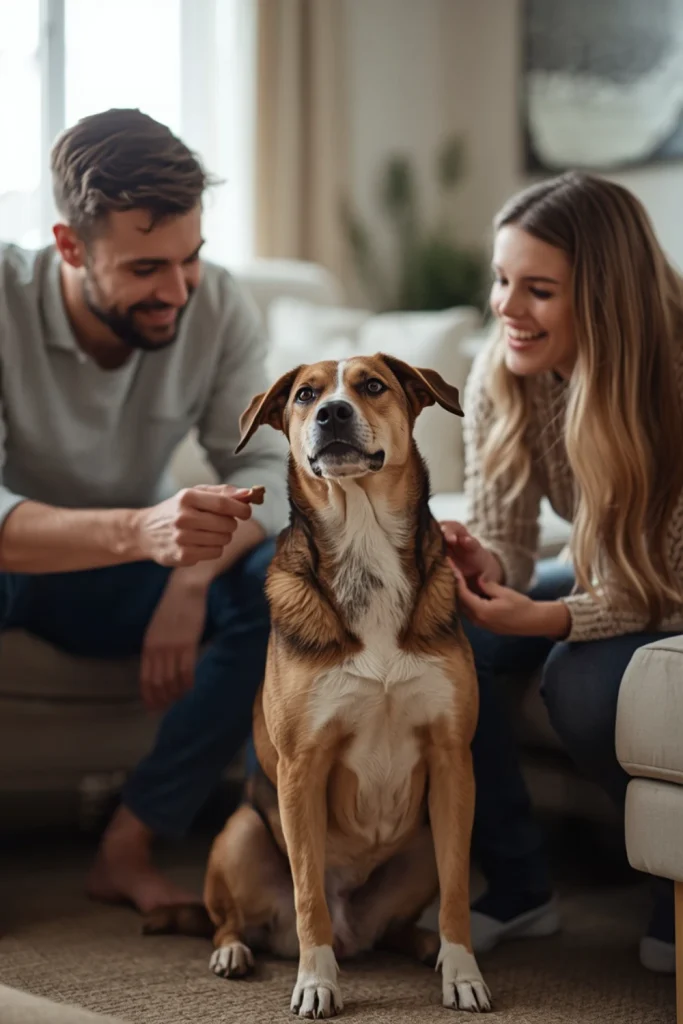
If you live with family members or housemates, involving them in training can help your dog receive consistent guidance even when your work schedule changes. Agree on the words used for important cues, the behaviors you want to reinforce, and the rules for common situations. For example, everyone should respond similarly when teaching the dog to wait at the door or settle on a mat. Consistency helps reduce confusion and makes it easier for your dog to understand what is expected.
If you regularly work long hours away from home, consider whether a trusted caregiver can provide appropriate breaks, walks, feeding, or companionship. Puppies, senior dogs, and dogs with medical or behavioral needs may require more frequent care than a healthy adult dog. Explain your dog’s routine, dietary needs, safety requirements, and training cues to anyone helping. A caregiver should use humane, reward-based methods and understand how to manage your dog safely. Sharing responsibilities is not a shortcut around training; it is part of making sure your dog’s needs are met when you cannot be present.
12. Track Progress and Keep Training Realistic
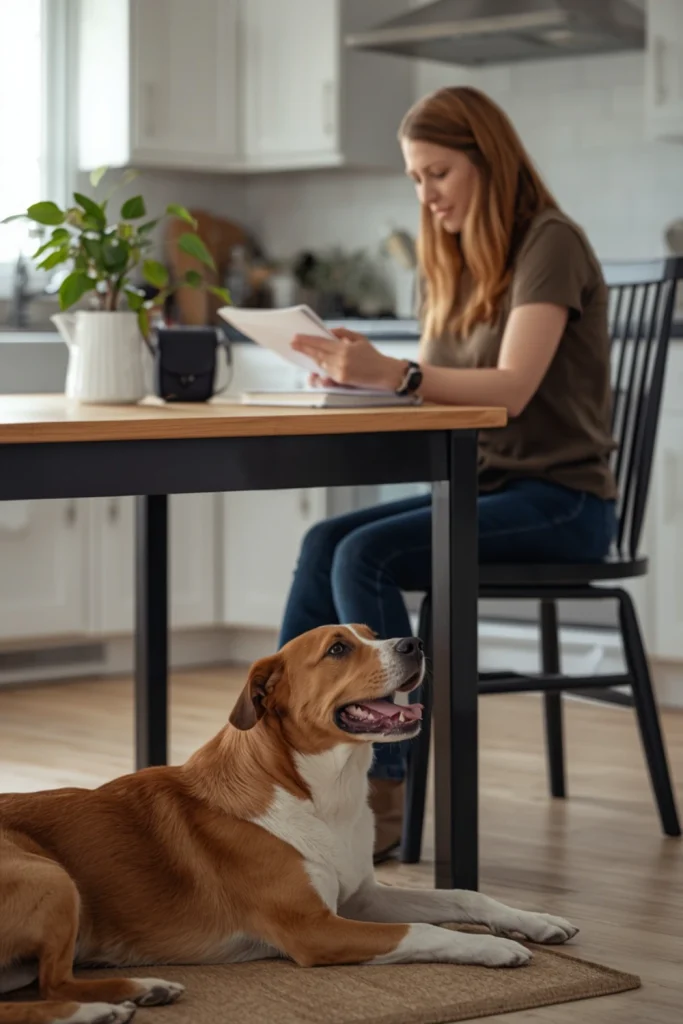
A simple training record can help you stay consistent when work and personal responsibilities compete for your attention. Write down the skill you practiced, how long the session lasted, what reward you used, and how your dog responded. You might note that your dog can sit calmly when the door opens slightly but still struggles when a visitor arrives. This gives you a clear starting point for the next session and prevents you from expecting progress in every situation at once.
Set realistic goals based on your dog’s age, temperament, health, and previous experience. A young puppy may need frequent short lessons and toilet breaks, while an adult dog may benefit from refreshing familiar skills and practicing around distractions. Some behaviors develop quickly, while others require many repetitions. If your dog becomes frustrated, frightened, or overwhelmed, lower the difficulty and seek professional support when necessary. The most useful training routine is one you can maintain consistently while meeting your dog’s overall needs.
Conclusion
Finding time to train your dog while managing a busy work schedule may seem difficult, but effective training does not have to take hours. These 12 Dog Training Tips for Busy Working Owners show how you can use short sessions, mealtimes, daily walks, positive reinforcement, enrichment activities, and consistent routines to teach important skills.
Start with one or two goals and practice them regularly. Reward good behavior, keep expectations realistic, and remember that every dog learns at a different pace. Most importantly, balance training with exercise, companionship, rest, and appropriate care throughout the day. With patience and consistency, you can help your dog become a well-mannered, confident companion while building a stronger bond that fits your lifestyle.