The Puppy Socialization Checklist Every Owner Needs
Bringing a new puppy home is an exciting experience, but those early weeks also offer valuable opportunities to help your puppy feel safe and confident in the world. From meeting different people to hearing everyday sounds, exploring new surfaces, and experiencing gentle handling, small positive moments can shape how your puppy responds to unfamiliar situations as they grow.
This Puppy Socialization Checklist will help you introduce your puppy to everyday life step by step without making the process overwhelming. Whether you are raising your first puppy or welcoming another furry family member, you will discover practical activities, safety tips, and simple training ideas you can follow at your own pace. The goal is not to make your puppy meet everyone, but to help them feel comfortable, secure, and ready to handle new experiences.
1. Introduce Your Puppy to Different Types of People
- Calm adults
- People wearing hats, glasses, or uniforms
- People with different hairstyles and appearances
- People walking with canes or using mobility aids
- Children playing at a safe distance
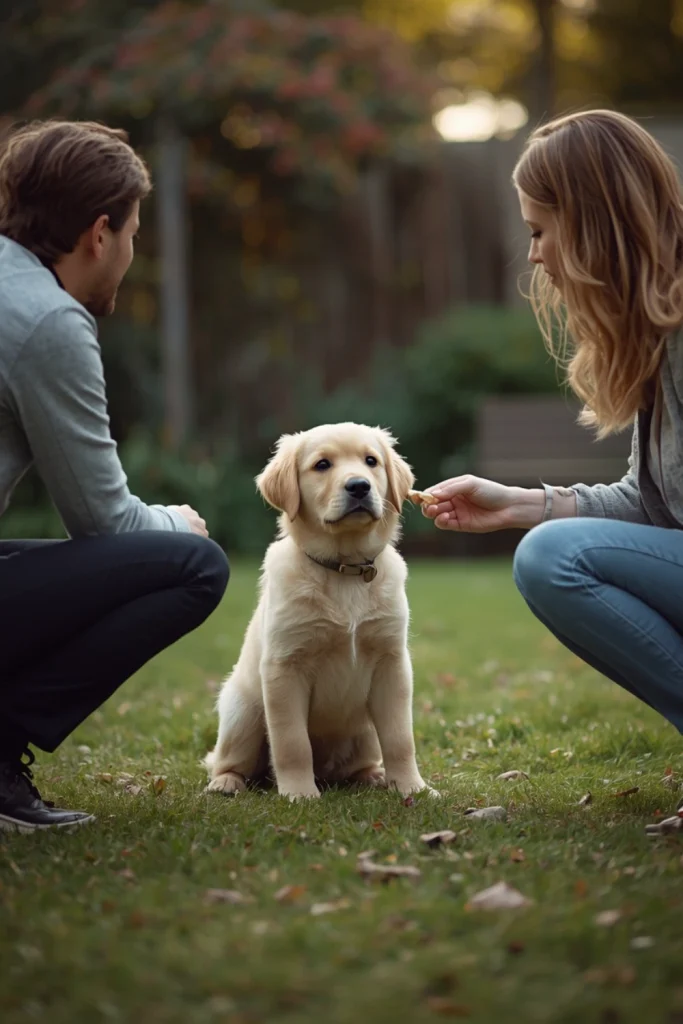
Helping your puppy observe different people is one of the most important steps in early socialization. Begin with calm encounters in familiar or quiet environments. Allow your puppy to watch people from a comfortable distance, and offer small treats whenever they remain relaxed or voluntarily look toward you. Your puppy does not need to greet every person they see. Watching someone pass peacefully is already a useful learning experience. Gradually introduce more variety as your puppy becomes comfortable, keeping each experience brief and positive.
Ask people to avoid crowding your puppy, leaning over them, or immediately reaching toward their head. If your puppy chooses to approach, allow a gentle greeting only when both the puppy and the person are comfortable. Watch for signs of stress, including hiding, a tucked tail, freezing, or repeated attempts to move away. Give your puppy space whenever needed. These early experiences should teach your puppy that people can be predictable and safe, not that they must tolerate unwanted attention.
2. Help Your Puppy Become Comfortable Around Children
- Observe children playing from a safe distance
- Hear children laughing and talking
- Watch children walking or riding scooters
- Practice calm behavior near supervised family activities
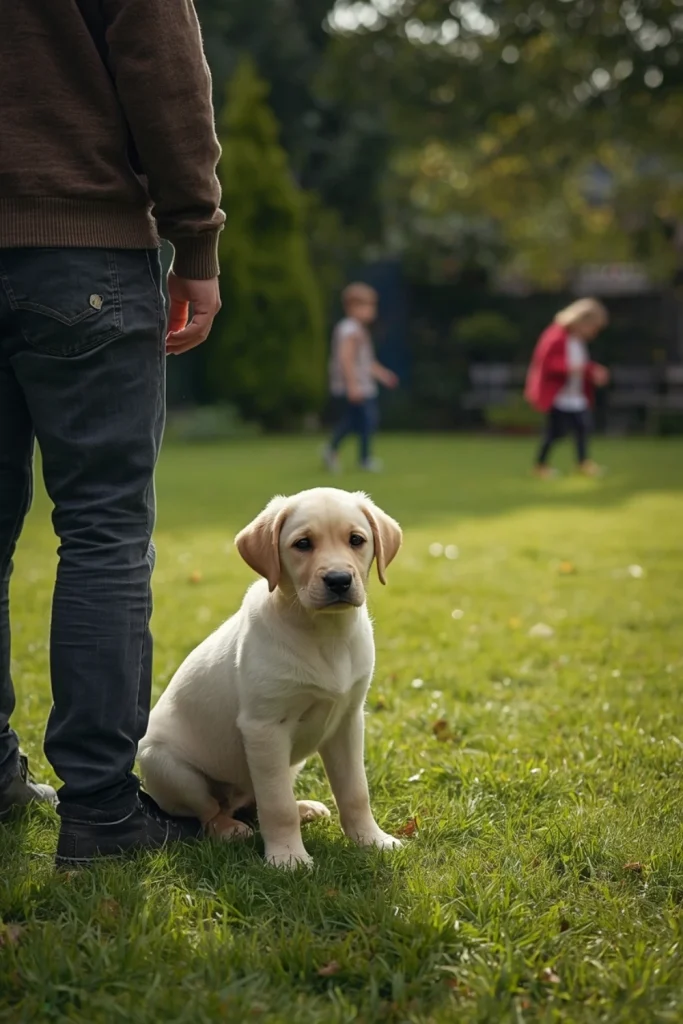
Children often move quickly, speak loudly, and make sudden gestures. These behaviors may surprise a puppy that has never spent time around them. Begin by letting your puppy observe children from a distance where they can remain relaxed. Reward calm watching, sniffing, and checking in with you. Choose a quiet setting rather than a crowded playground, and give your puppy the option to move away. The goal is to help them become comfortable with children’s presence without requiring direct interaction.
Always supervise interactions between puppies and children closely. Teach children not to chase, hug tightly, pull ears or tails, disturb sleeping puppies, or approach them while they are eating. Provide a puppy-only resting area where children cannot follow. Even a gentle puppy may nip during play, and even a friendly dog may react if frightened or handled roughly. Keep encounters short and calm, and end them if either the child or puppy becomes uncomfortable. Safe, respectful experiences help establish good habits for the future.
3. Introduce Your Puppy to Friendly, Healthy Dogs
- Observe calm dogs from a distance
- Meet a suitable, vaccinated dog when safe
- Practice parallel walking
- Keep early greetings brief
- End interactions before either dog becomes overwhelmed
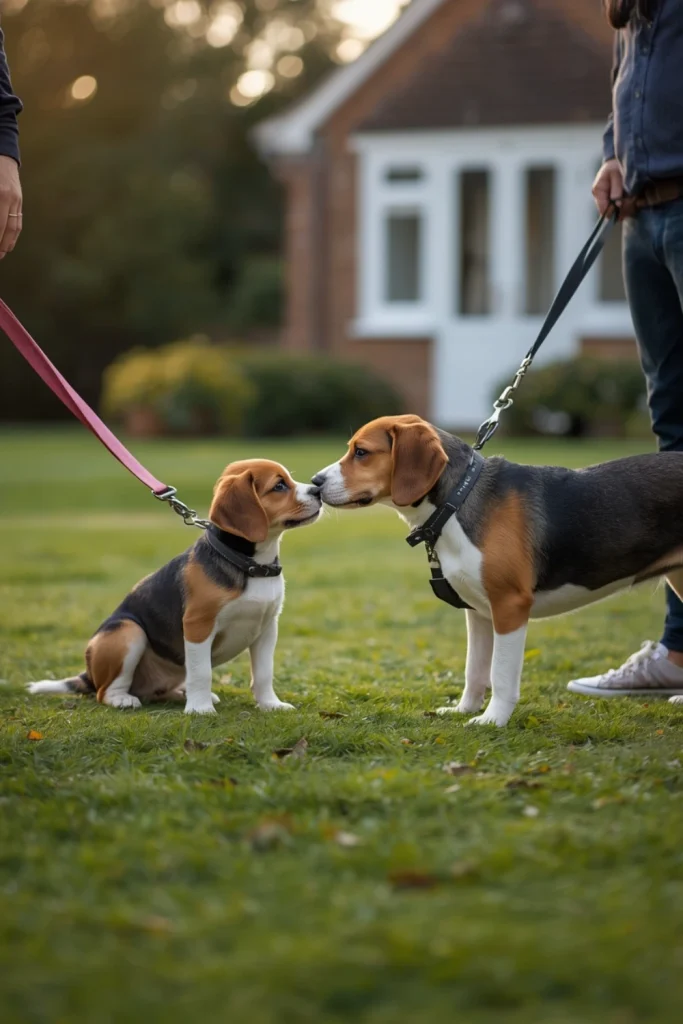
Positive experiences with suitable dogs can help puppies learn how to behave around their own species. Choose a calm, healthy dog whose owner understands canine body language and can manage the interaction responsibly. Start by allowing the dogs to observe each other from a comfortable distance. If both remain relaxed, you may gradually arrange a brief greeting or parallel walk. Reward your puppy for calm attention and give them time to investigate without rushing. Not every dog needs to become a playmate, and peaceful coexistence is a worthwhile goal.
Avoid taking a young puppy into unpredictable situations with unknown dogs before discussing disease risks and safe exposure with your veterinarian. Watch both animals closely for loose body posture, voluntary approaches, and the ability to move away. Stiffness, persistent avoidance, growling, or attempts to escape mean you should increase distance and end the interaction calmly. Never force a puppy to remain near a dog that frightens them. Carefully selected encounters provide better learning opportunities than allowing uncontrolled play with every dog you meet.
4. Let Your Puppy Explore Different Safe Surfaces
- Grass
- Smooth pavement
- Packed dirt
- A clean rubber mat
- A stable wooden floor
- A nonslip indoor surface
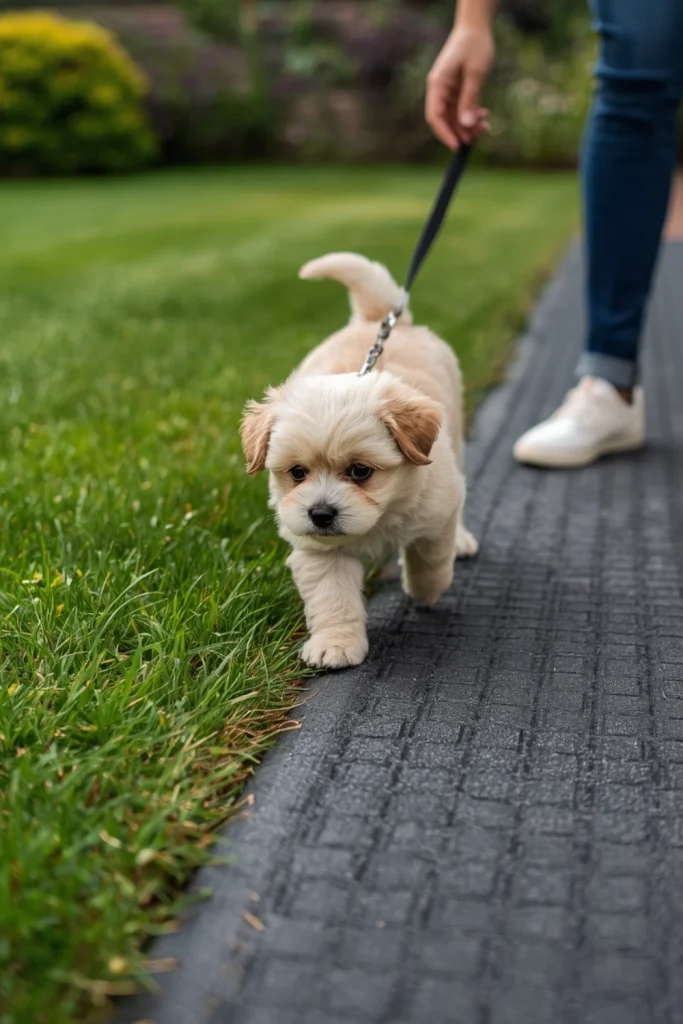
Puppies experience the world through their paws, noses, eyes, and ears. Different surfaces may feel unfamiliar, so introduce them gradually in a safe environment. Let your puppy step from a familiar floor onto a patch of grass or a clean mat. Reward voluntary exploration and allow time for sniffing. Some puppies will investigate immediately, while others may need several sessions before taking their first step. Give your puppy the opportunity to choose rather than pulling them across a surface they do not trust.
Avoid hot pavement, sharp stones, slippery flooring, broken glass, and surfaces that may contain chemicals or infectious material. Be especially careful with unfamiliar outdoor areas before your puppy has appropriate vaccination protection. You can introduce many textures at home using clean, stable materials. If your puppy hesitates, reward looking toward the surface or approaching it rather than insisting on a full crossing. Small successes build confidence and can help your puppy adapt more easily to new environments as they grow.
5. Introduce Everyday Household Sounds
- Vacuum cleaner
- Doorbell
- Washing machine
- Kitchen appliances
- Television and music
- Hair dryer heard from a distance
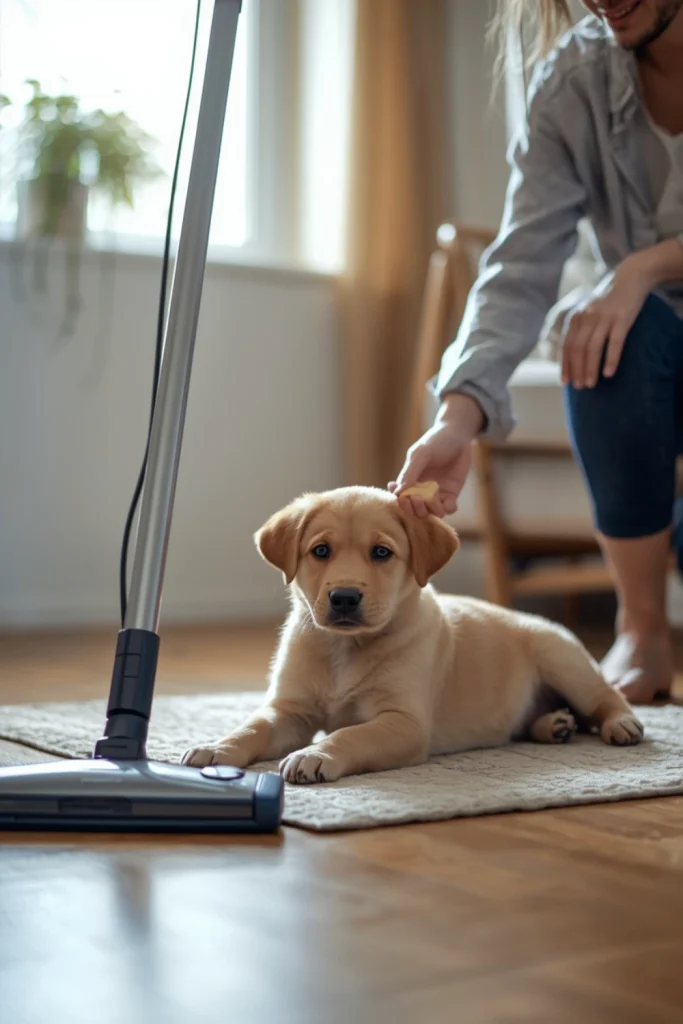
Household noises can be surprising for puppies, especially when they suddenly start nearby. Introduce sounds gradually rather than turning on a loud appliance next to your puppy. Start with a low intensity or greater distance and pair the sound with something pleasant, such as treats, a familiar toy, or a food puzzle. For example, let your puppy enjoy a snack in another room while the vacuum cleaner runs briefly. The puppy should be able to notice the sound without feeling trapped or overwhelmed.
Increase the duration or intensity only when your puppy remains comfortable. If they hide, tremble, bark intensely, freeze, or refuse food, reduce the challenge and try an easier version later. Never deliberately frighten your puppy to make them get used to a sound. The aim is to create positive associations, not to test how much noise they can tolerate. Short, successful sessions can help your puppy become more comfortable with the sounds that naturally occur in a busy household.
6. Practice Gentle Handling and Grooming
- Briefly touch your puppy’s shoulders and back
- Gently handle each paw
- Introduce brushing
- Look at the ears without forcing them open
- Briefly examine the mouth when comfortable
- Reward calm handling
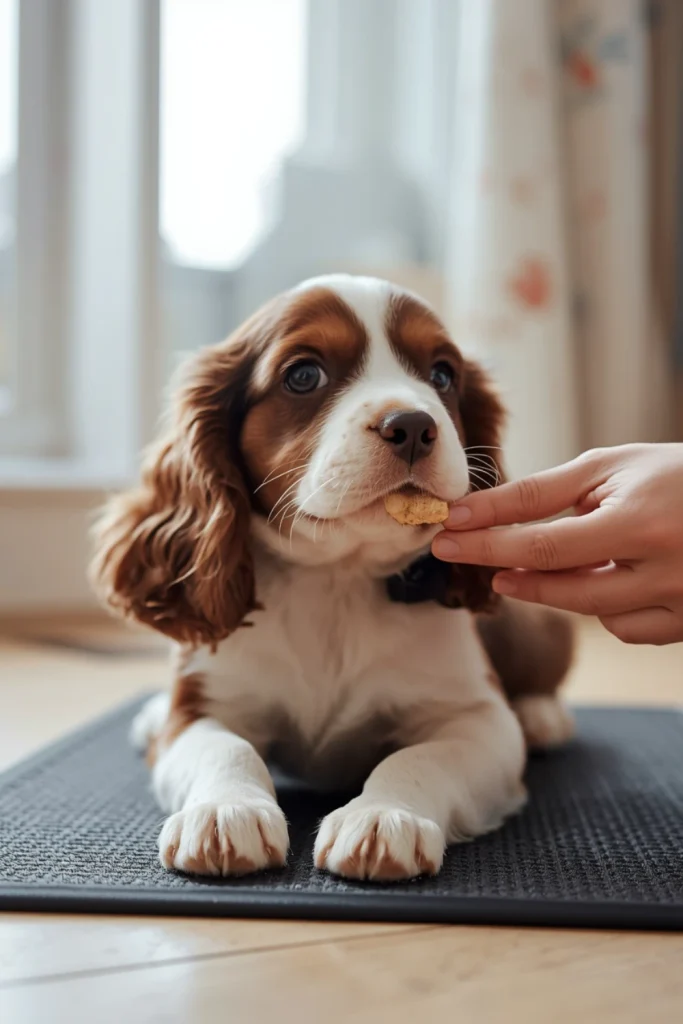
Gentle handling helps prepare puppies for everyday care, grooming appointments, and veterinary examinations. Start when your puppy is relaxed and use short sessions. Touch a comfortable area, such as the shoulder, then offer a treat and pause. Gradually introduce other areas over several sessions, including the paws and ears. Allow your puppy to move away if they become uncomfortable. A few seconds of calm handling can be more useful than a long session that leaves your puppy frustrated or frightened.
Introduce grooming tools slowly. Let your puppy sniff a soft brush before gently brushing once or twice. Reward calm behavior and finish while the experience is still pleasant. Never force your puppy to tolerate painful or frightening handling. If they suddenly become sensitive to touch, consult a veterinarian because discomfort may have a medical cause. Building cooperation early can make nail care, coat maintenance, and health checks easier for both you and your puppy.
7. Familiarize Your Puppy With Collars, Harnesses, and Leashes
- Let your puppy inspect a collar or harness
- Introduce wearing it briefly indoors
- Reward calm movement while wearing it
- Practice attaching a lightweight leash
- Walk a few steps in a safe area
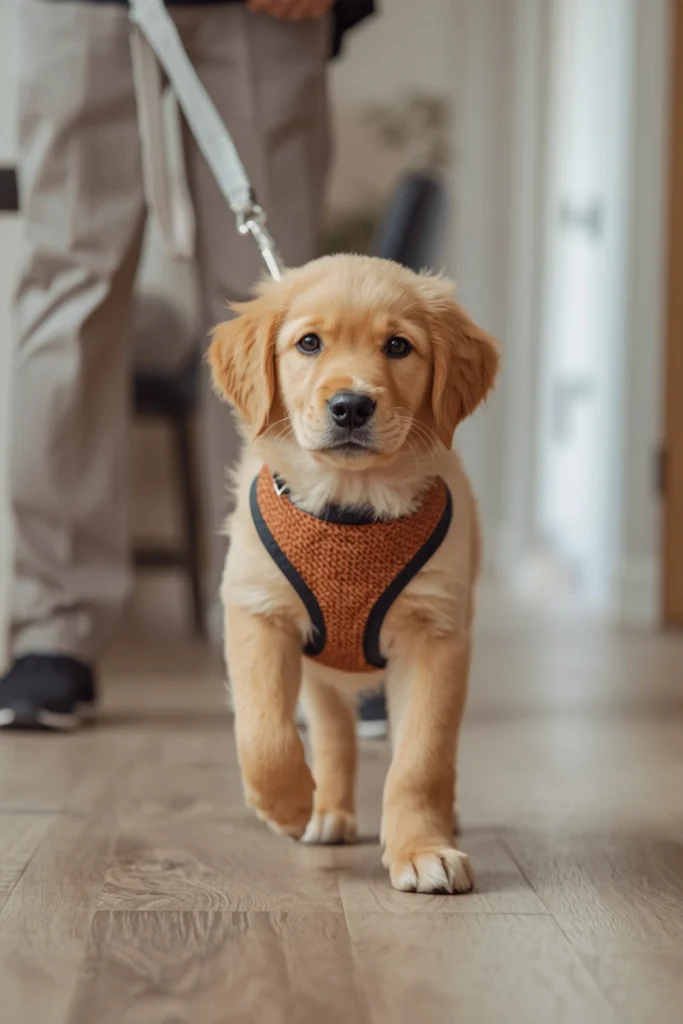
Collars, harnesses, and leashes are unfamiliar objects for many puppies. Begin by placing the equipment on the floor and rewarding your puppy for calmly investigating it. Introduce a properly fitted collar or harness for a short period while supervising your puppy. Pair wearing it with treats or a favorite game. Check that the equipment does not rub, restrict movement, or allow your puppy to slip out. If your puppy scratches at it or seems uncomfortable, remove it and introduce it more gradually.
Once your puppy accepts the equipment, attach a lightweight leash and let them move around a safe indoor space under supervision. Avoid dragging, pulling, or using leash pressure to force movement. Reward your puppy for following you and checking in voluntarily. Gradually practice in a quiet outdoor location once your veterinarian confirms it is appropriate. Positive early experiences can make future walks more comfortable and provide a foundation for loose-leash training.
8. Introduce Your Puppy to Car Travel
- Explore a parked car with the owner
- Sit in the stationary vehicle briefly
- Practice calm entry and exit
- Take a short, manageable journey
- Use an appropriate travel restraint
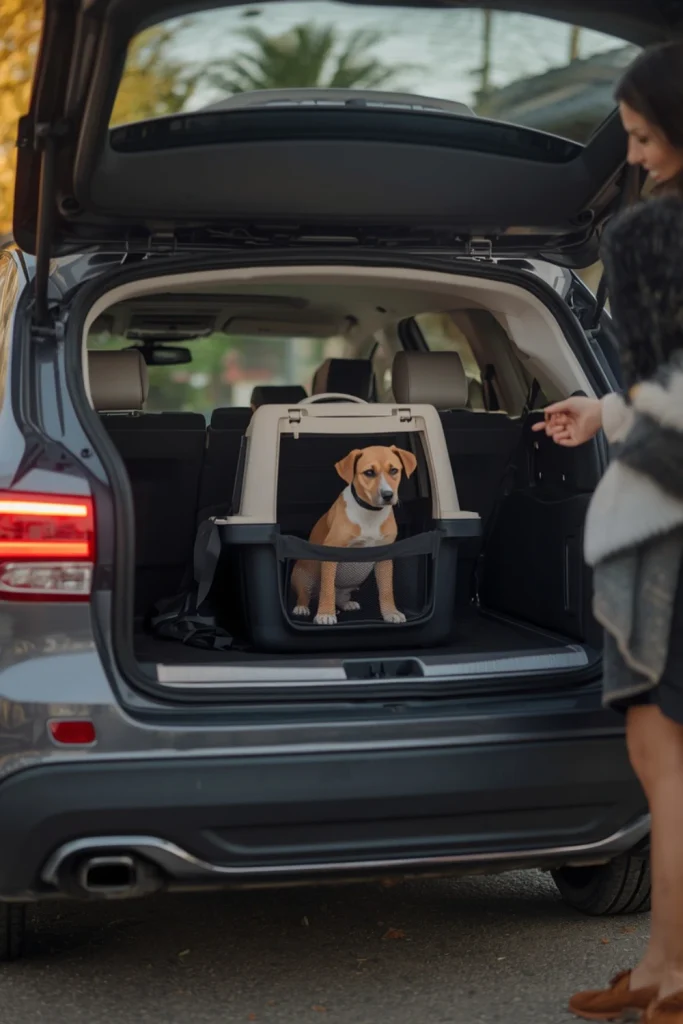
Car travel can introduce puppies to engine sounds, unfamiliar movement, and new smells. Start with a parked vehicle in a safe location. Let your puppy approach voluntarily, investigate the open door, and receive treats for calm behavior. If they remain comfortable, spend a short time sitting inside the stationary car before moving on to a brief journey. Keep the first trips manageable and, where practical, pair them with pleasant destinations rather than making every ride lead to an unpleasant experience.
Always secure your puppy in a suitable, properly installed travel carrier or a suitable crash-tested vehicle harness. Never allow your puppy to roam freely inside a moving car or sit on the driver’s lap. Keep journeys short at first and watch for signs of motion sickness, such as excessive drooling, vomiting, or distress. If your puppy becomes very anxious, slow the process down and ask your veterinarian for guidance. Gradual introductions can help establish a safer and more comfortable travel routine.
9. Help Your Puppy Experience Different Outdoor Environments Safely
- Observe a quiet neighborhood
- Visit a peaceful garden
- Watch distant pedestrians
- Experience a quiet park from a safe location
- Explore a new route when appropriate
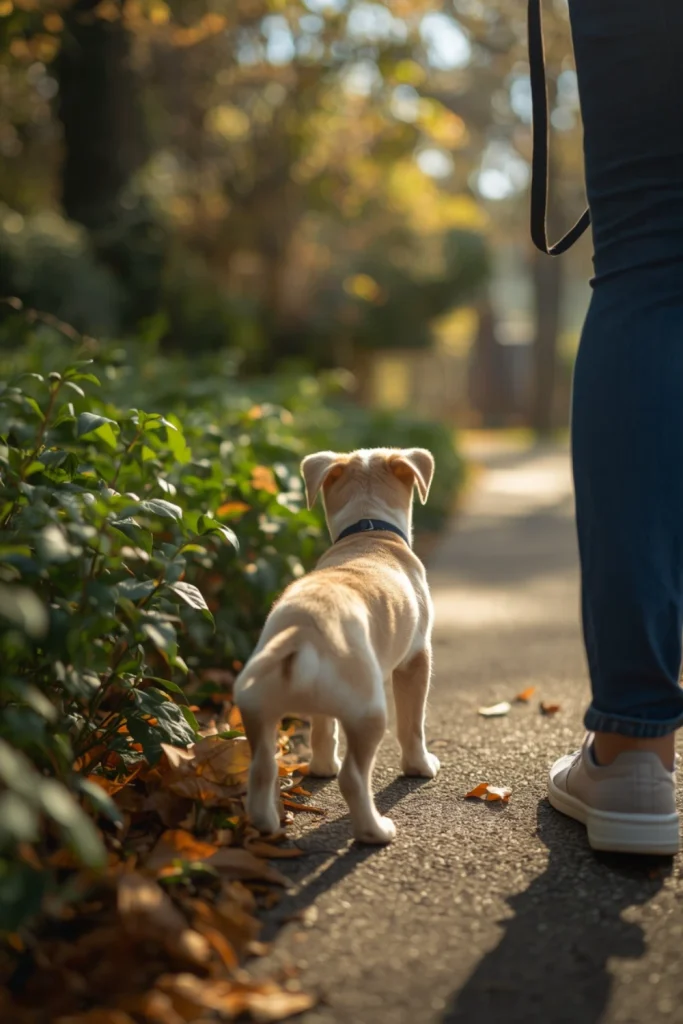
Different environments offer a variety of smells, sights, and sounds. Begin with quiet locations where your puppy can observe without being overwhelmed. Depending on vaccination guidance from your veterinarian, you might carry your puppy in a clean, secure carrier or allow them to explore an appropriate private outdoor area. Let them sniff, watch their surroundings, and take breaks. The aim is to introduce variety while maintaining safety, not to cover as much ground as possible.
As your puppy becomes more comfortable, gradually add new environments or slightly more activity. Check local rules about dogs and choose places that are suitable for young puppies. Avoid areas contaminated with animal waste or frequented by unknown dogs if your veterinarian advises against them. Keep outings short enough that your puppy remains relaxed and responsive. If they become tired, frightened, or overstimulated, return to a familiar place. Carefully managed exploration helps your puppy learn that new settings can be approached calmly.
10. Prepare Your Puppy for Veterinary Visits
- Practice standing on a nonslip surface
- Reward gentle paw and ear checks
- Introduce brief periods of calm waiting
- Explore a carrier if one is used
- Pair safe clinic visits with rewards when possible
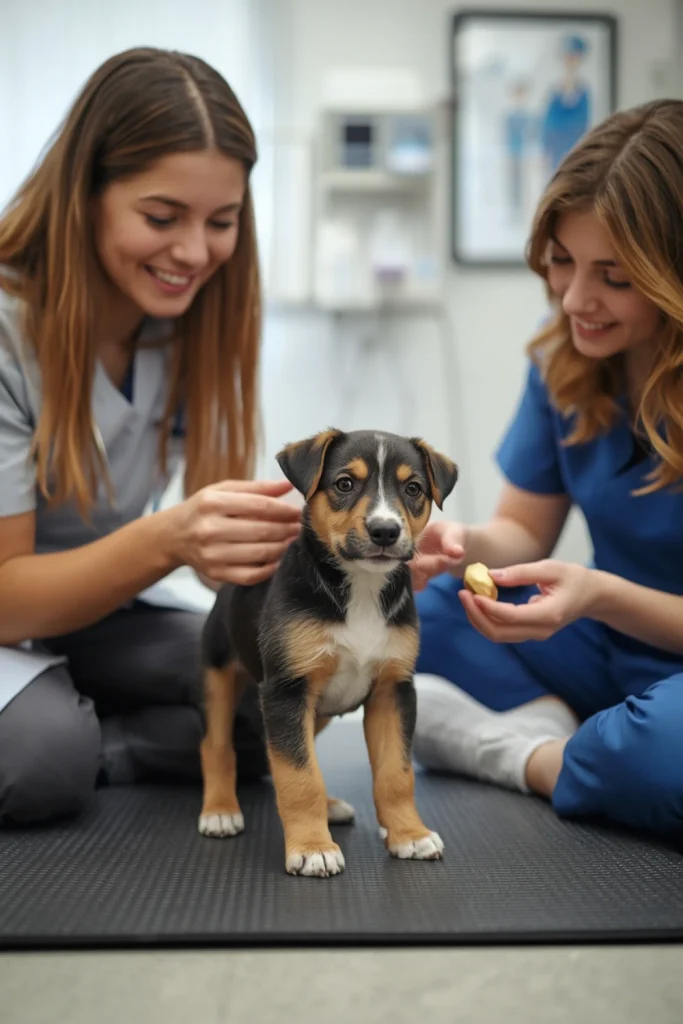
Veterinary visits are an essential part of your puppy’s health care, but new smells, unfamiliar people, and examination tables can be intimidating. You can prepare at home by rewarding your puppy for standing on a nonslip mat, briefly examining their paws, and calmly accepting gentle handling. If your puppy travels in a carrier, practice entering and resting inside it. Keep the sessions short and enjoyable, and avoid turning practice into a physical struggle.
Ask your veterinary clinic whether it offers brief introductory visits or other ways to make appointments less stressful. Follow clinic instructions about vaccinations, exposure to other animals, and where your puppy should wait. During actual examinations, reward calm behavior when appropriate and tell the veterinary team if your puppy is nervous. Never delay necessary veterinary care just to complete training first. Gentle preparation can make routine examinations easier, while a patient veterinary team can help your puppy build positive associations with health care.
11. Teach Your Puppy to See Bicycles, Joggers, and Scooters Calmly
- Observe bicycles from a comfortable distance
- Watch joggers pass without chasing
- Notice scooters and skateboards from afar
- Reward looking back toward the owner
- Practice moving away calmly when needed
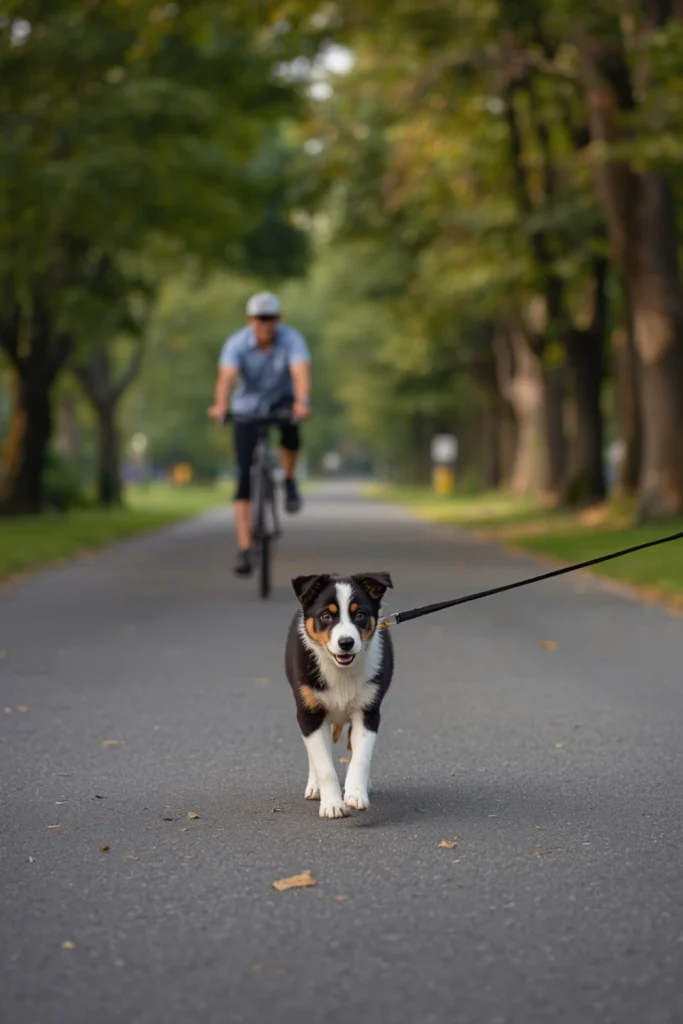
Fast-moving objects can trigger excitement, fear, or chasing behavior in puppies. Begin in an open area where bicycles and joggers are visible from a comfortable distance. Reward your puppy for noticing movement and then turning back toward you. Keep your puppy securely restrained and choose a position that allows you to move away. Do not begin beside a busy road or on a narrow path where passing people cannot give you space.
As your puppy gains confidence, practice in slightly more active locations while maintaining enough distance for relaxed behavior. Teach a simple cue such as “let’s go” to help you move away smoothly. If your puppy barks, lunges, or tries to chase, increase the distance rather than correcting them harshly. These encounters are opportunities to teach calm observation and attention, not to test whether your puppy can tolerate a crowded environment.
12. Introduce Your Puppy to Everyday Clothing and Accessories
- Hats and caps
- Sunglasses
- Raincoats and umbrellas
- Backpacks and bags
- Reflective jackets
- People wearing uniforms
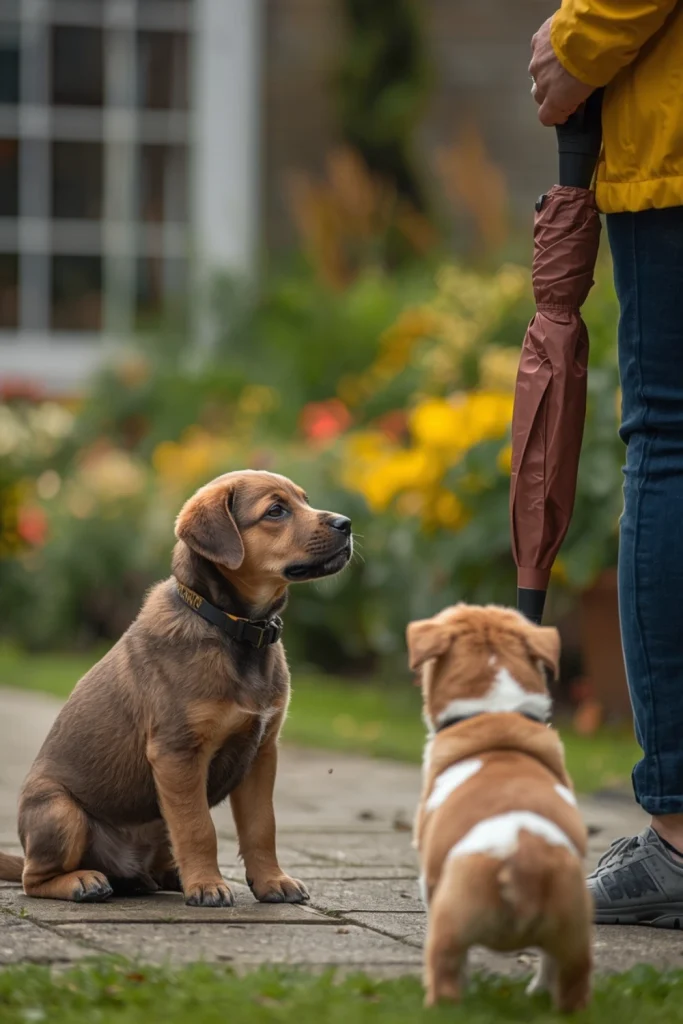
Puppies may react differently to people who look unfamiliar because of their clothing, equipment, or silhouettes. Introduce these visual differences gradually. Let your puppy observe a family member wearing a hat or carrying an umbrella from a comfortable distance. Reward calm behavior and allow the puppy to approach only if they choose. You can also place harmless items such as a backpack on the floor for the puppy to sniff. Keep the atmosphere relaxed and avoid sudden movements that might startle them.
Once your puppy is comfortable, introduce movement in small steps. For example, have a family member pick up a bag, take a few steps, and reward the puppy for remaining calm. Open umbrellas slowly and from a distance because the sudden change in shape can surprise some dogs. Never use unfamiliar clothing or accessories to frighten your puppy. Repeated, gentle exposure can help them recognize that unusual appearances are simply part of everyday life.
13. Practice Calm Greetings With Visitors
- Hear the doorbell at a manageable volume
- Go to a designated mat or safe area
- Observe visitors entering calmly
- Reward four paws on the floor
- Allow greetings only when the puppy is comfortable
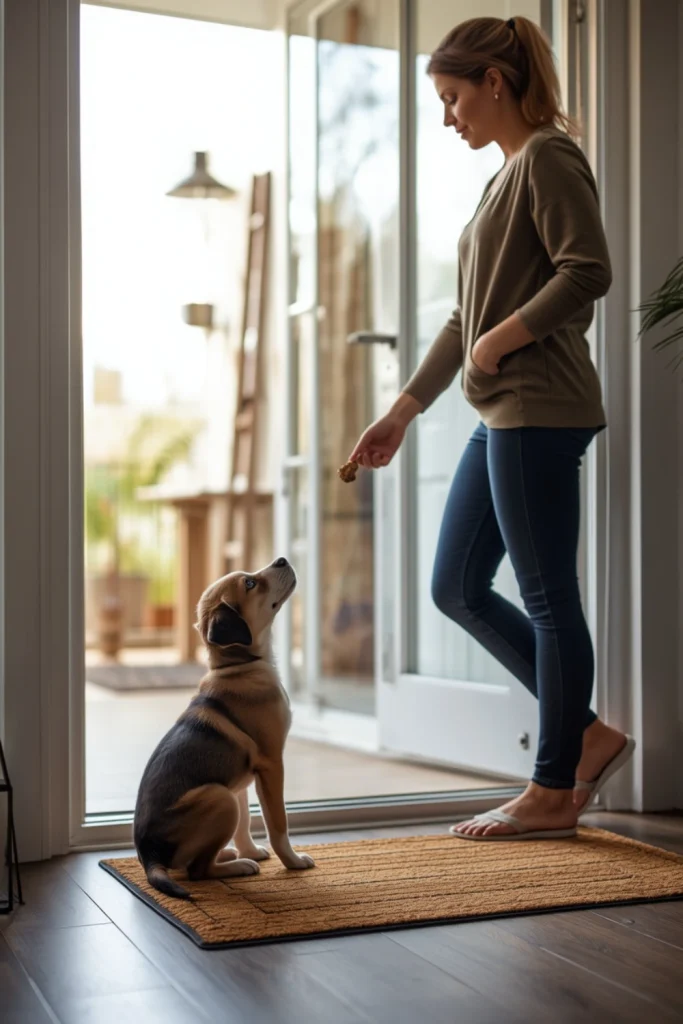
Visitors can be exciting for puppies, especially when everyone wants to say hello at once. Prepare a simple routine before guests arrive. You might reward your puppy for moving to a mat or remaining behind a baby gate while the visitor enters. Ask guests to ignore the puppy initially and avoid reaching over them. Once the puppy is calmer, you can decide whether a greeting is appropriate. If your puppy is shy, allow them to observe from a safe distance without requiring contact.
Reward calm behavior such as keeping all four paws on the floor, looking toward you, or settling on the mat. If your puppy jumps, calmly create space and try again when they are more settled. Provide a quiet retreat with water and a suitable toy if your puppy needs a break. Do not allow visitors to chase a puppy that moves away. A predictable greeting routine teaches your puppy that guests do not have to create chaos or pressure.
14. Build Positive Associations With Food, Toys, and New Places
- Use familiar treats during new experiences
- Bring a favorite toy to a quiet outdoor location
- Try a simple sniffing game in a safe area
- Reward voluntary exploration
- Keep water and rest breaks available
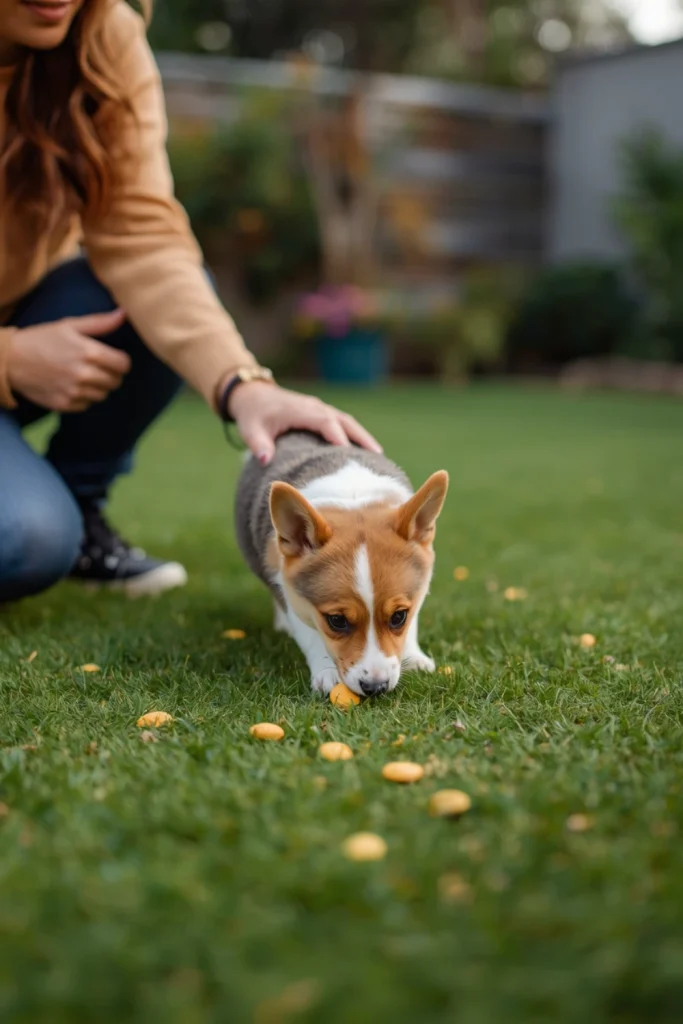
Familiar rewards can help puppies feel more comfortable while exploring unfamiliar surroundings. Bring a few small treats or a favorite toy when introducing a new sound, surface, or location. For example, let your puppy sniff a new patch of grass, then reward them for voluntarily exploring. You can also scatter a few treats on clean ground for a simple sniffing game. Sniffing allows puppies to investigate the world at their own pace and can make a new environment feel less demanding.
Choose rewards that suit your puppy and use them in places where food is safe and permitted. Avoid ground surfaces with rubbish, chemicals, animal waste, or unknown substances. If your puppy is too worried to eat, do not keep offering food while forcing the experience. Instead, increase the distance or return to a familiar setting. Food and toys should support confidence, not distract you from signs of stress. A successful session is one in which your puppy can explore and recover comfortably.
15. Introduce Resting Alone and Short Periods of Separation
- Create a comfortable resting area
- Offer a safe puppy-appropriate chew or food toy
- Practice brief moments out of sight
- Return calmly before distress escalates
- Gradually build independence at your puppy’s pace
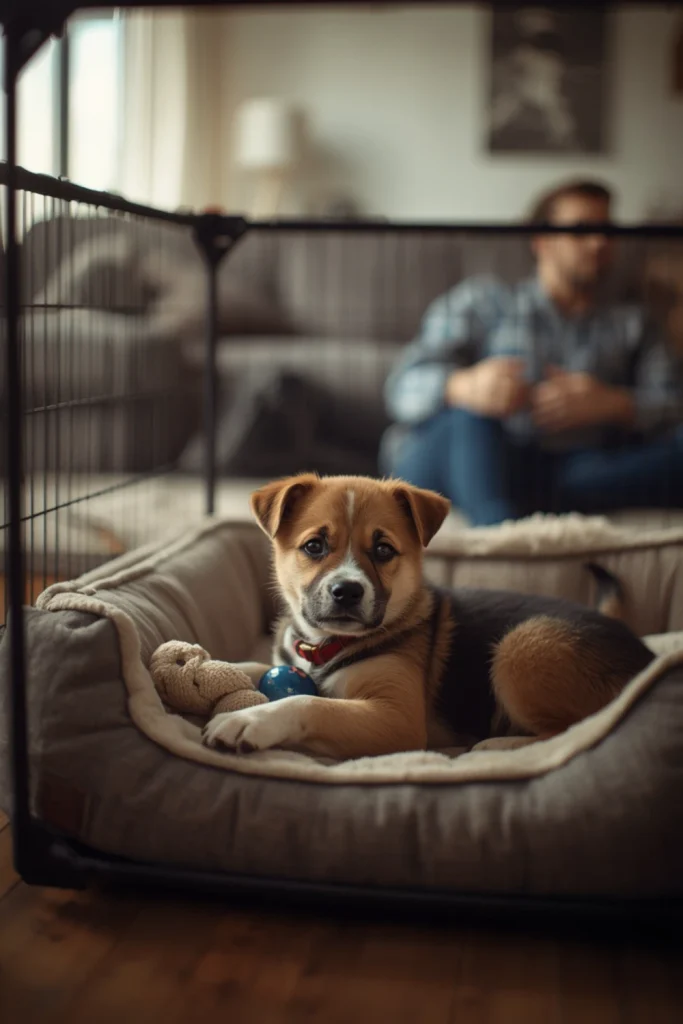
Socialization includes learning to feel safe during ordinary household routines, including short periods when the owner is not immediately beside the puppy. Provide a comfortable resting area, such as a suitable pen or puppy-proofed room, and help your puppy develop positive associations with it. Offer a safe chew or food toy and stay nearby initially. Gradually introduce very brief moments out of sight when your puppy is relaxed. Keep the first steps easy and return calmly without making departures or arrivals overly exciting.
Do not leave a frightened puppy to cry for long periods in the hope that they will eventually give up. Signs such as frantic vocalizing, persistent pacing, drooling, or attempts to escape may indicate significant distress. If these behaviors occur, reduce the difficulty and seek professional advice if needed. Puppies need companionship, frequent toilet breaks, and age-appropriate supervision. Building independence gradually is different from expecting a young puppy to manage long periods alone. Patient practice can help establish a secure routine over time.
Conclusion
The Puppy Socialization Checklist Every Owner Needs is not about rushing through a long list of experiences. It is about helping your puppy discover the world in small, safe, and positive steps. From meeting different people and hearing household sounds to exploring surfaces, practicing gentle handling, and learning to rest comfortably, each activity can contribute to a more confident companion.
Be patient, observe your puppy’s body language, and celebrate small improvements. Some experiences may take only a few minutes, while others require repeated practice over several days or weeks. Always consider your veterinarian’s advice about vaccination and disease risks, and seek qualified help if your puppy shows persistent fear. With consistency, respect, and positive reinforcement, you can turn ordinary daily routines into meaningful learning opportunities that support your puppy throughout life.